
Reviewed · WARSAW OLD TOWN & ROYAL ROUTE WALKS
Warsaw: Old and New Town Private Walking Tour
Warsaw walks like a living textbook. In this private 4-hour stroll, you start at Sigismund’s Column and work your way through Old Town highlights, major landmarks, and the “royal” thread that ties key palaces together. I love how the tour links streets to real decisions and events, especially around the Royal Castle and the Constitution of 3 May. I also like the honest way it treats WWII damage and reconstruction, so the pretty facades have context.
The one thing to watch: admission fees are not included, so if you want to go inside the Royal Castle, you’ll need a separate ticket and a little extra time at the site. If you’re short on energy or hate cobblestones, plan for a proper walking session on mostly pedestrian streets.
In This Review
- Key things you’ll notice on this Warsaw walk
- Starting at Sigismund’s Column: the capital’s origin story in one spot
- Royal Castle and the Constitution of 3 May: why this building matters
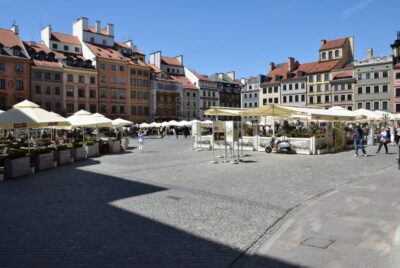
- Old Town Square, tenement houses, and the Warsaw Mermaid
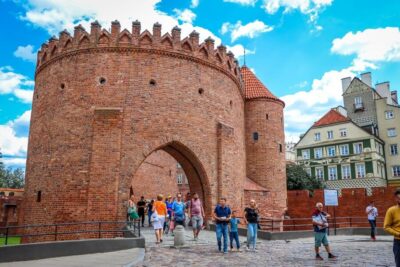
- Barbican, Kanonia Street, and walking the old city walls
- The cathedral stop: tombs that cover centuries of Polish life
- Krasinski Palace, the Supreme Court, and the Warsaw Uprising monument
- Grand Theatre, National Opera, and the Tomb of the Unknown Soldier
- The Royal Route finish: Royal Castle to Royal Łazienki to Wilanów
- Price and value: why $16 can make sense here
- Who this private tour is best for (and who should consider something else)
- The practical plan for your best experience
- Should you book this private tour of Old and New Town?
- FAQ
- Where is the meeting point for this tour?
- How long is the tour?
- Is admission included for sites like the Royal Castle?
- Is this a private tour?
- What languages are available?
- Can I book with flexible plans?
Key things you’ll notice on this Warsaw walk
- Sigismund’s Column to Royal Castle: you start with the story behind Warsaw becoming the capital
- Old Town Square’s contradictions: markets, celebrations, and darker episodes in one area
- Barbican + city walls: this isn’t just scenery; it’s a walkable reminder of defense and control
- Tombs inside the cathedral: medieval princes, the last king, and Paderewski in one stop
- Uprising memory: the tour connects WWII ruins to the monument and the rebuild mindset
- Royal Route wrap-up: you finish with the connections between Royal Castle, Royal Łazienki, and Wilanów Palace
Starting at Sigismund’s Column: the capital’s origin story in one spot
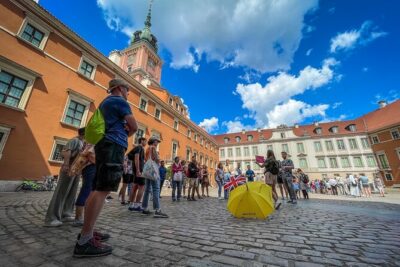
Your guide meets you by Sigismund’s Column on Castle Square. This matters more than it sounds. It’s the point where the tour frames Warsaw’s identity shift: the 16th-century move of Poland’s capital from Kraków to Warsaw. Standing here, you get an immediate sense of why the Royal Castle zone is treated as the political heart of the city.
From this opening moment, you’re not just sightseeing buildings. You’re learning how Warsaw’s role changed, then watching those changes “show up” in architecture and street planning. It’s a smart way to get your bearings fast, especially in a city that carries both pride and pain.
More of the Old Town and the Royal Route, on foot
- Warsaw: Chopin Concert in the Old Town★ 4.8 · 2,287 reviews
- Warsaw: Old Town Highlights Walking Tour in English★ 4.7 · 1,516 reviews
- Warsaw: Old Town Guided Walking Tour★ 4.9 · 599 reviews
Royal Castle and the Constitution of 3 May: why this building matters
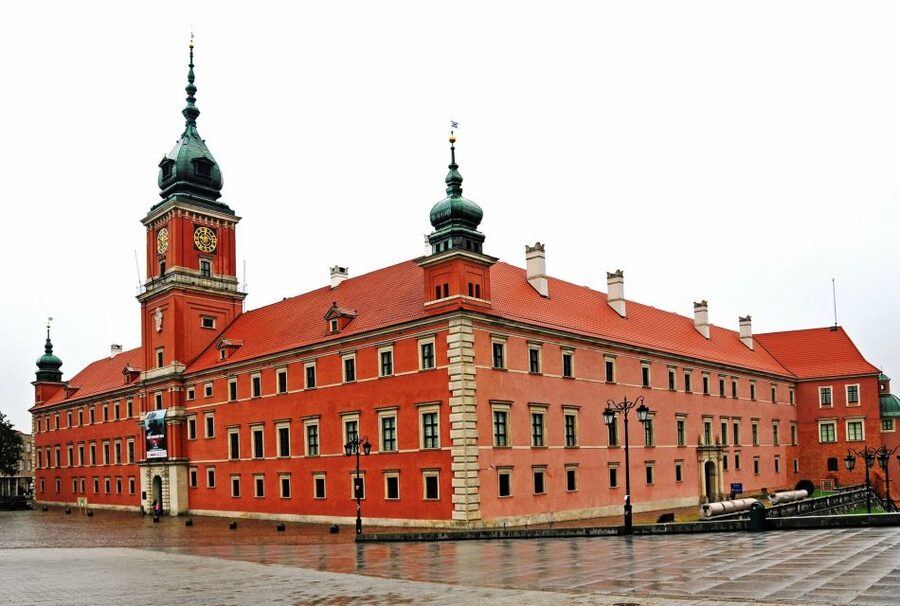
Next comes the Royal Castle area, where you’ll see the former home of Polish rulers and the setting for the Constitution of 3 May—described as the first in Europe and the second in the world. Even if you’re not a law-history person, this is an important turning point. It helps you understand Warsaw as a place where ideas were formally shaped and power was displayed.
The tour keeps it flexible. You can simply look at the Castle from outside as part of the main walk, but the wording also gives you the option to collect your ticket and go inside. Since admission fees aren’t included, decide ahead of time:
- If you enjoy portraits, art, and interiors, you’ll likely want the extra stop.
- If you prefer to stay strictly on the walking route, the exterior views plus the guide’s storytelling can still work well.
If you do go in, you’ll be in the right place for the Castle’s famous art links, including works by Rembrandt and paintings by Bernardo Bellotto, also known as Canaletto. That Bellotto connection is a big deal: he’s closely tied to Warsaw’s visual identity, which makes this stop feel less like a random museum and more like a “Warsaw through Warsaw eyes” experience.
Old Town Square, tenement houses, and the Warsaw Mermaid
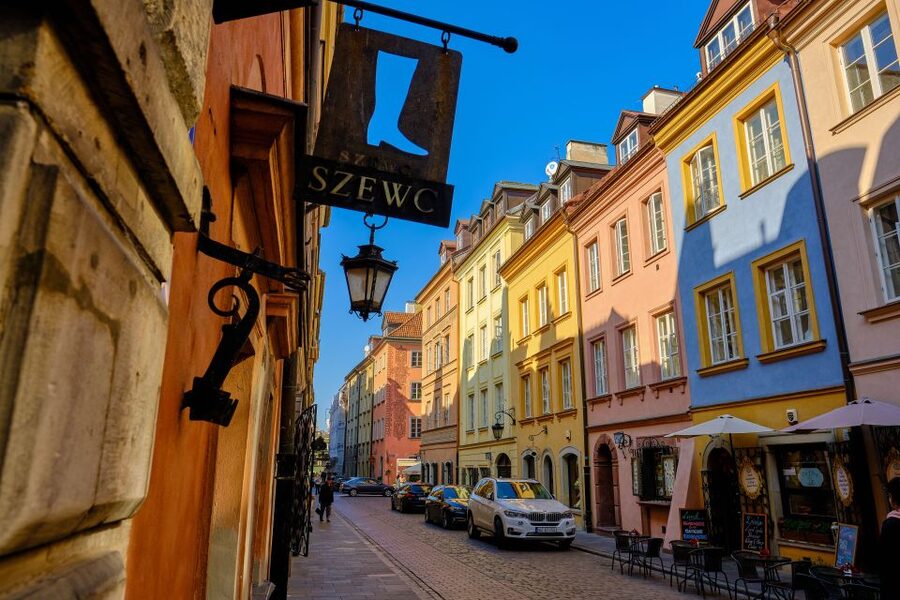
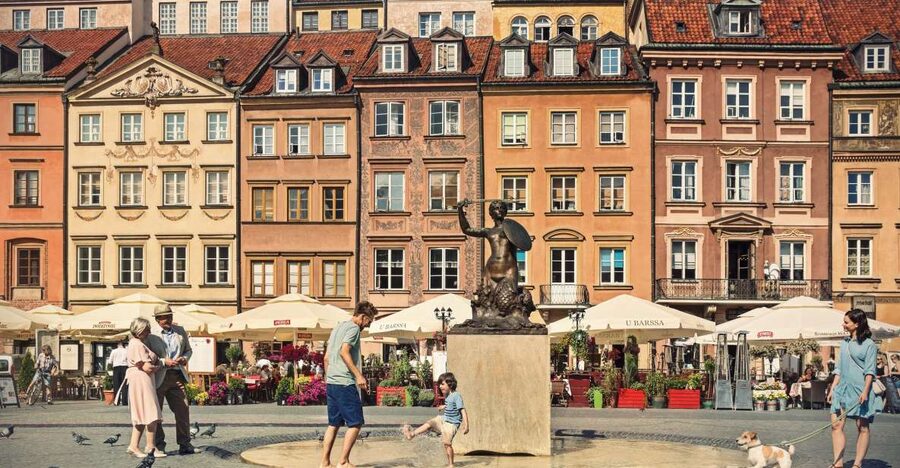
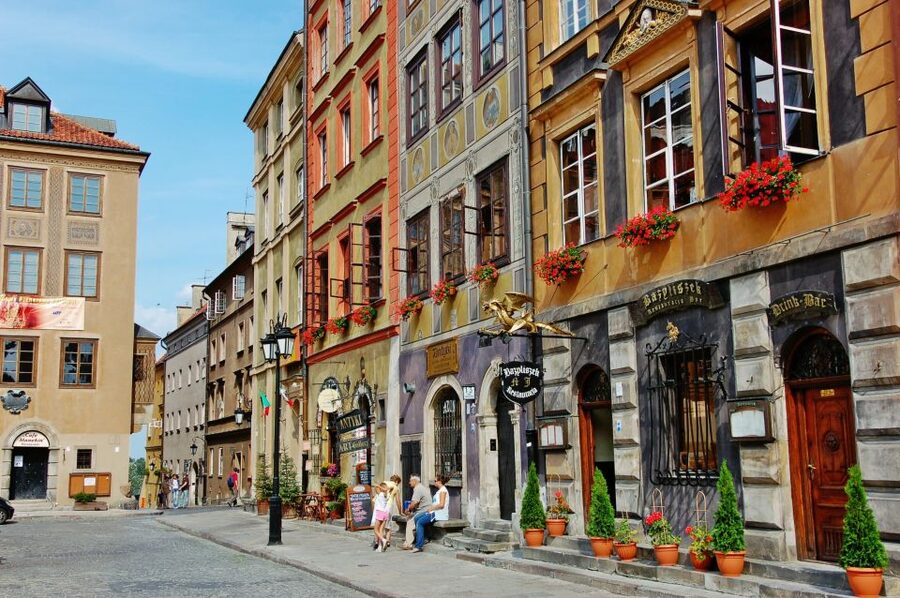
Then you move into the Old Town atmosphere. The streets leading to Old Town Square are exactly the kind of place where a guide’s context earns their fee. Yes, you’ll admire the famous colorful tenement houses. But the tour also points out the square’s layered past, including the fact that it hosted festivities and markets—and also executions. That contrast can hit harder in the real space than it does in a brochure.
One of the most fun parts is the quick stop for a selfie with the Warsaw Mermaid, the city’s emblem and guardian. It sounds like a small tourist moment, but it works because it anchors the symbolism you’ve just heard about. You start to notice how Warsaw uses icons, not just buildings.
If you like photos, keep your phone ready here. Old Town’s angles and facades can be picture-perfect, but the most interesting frames come when your guide points out details you’d otherwise miss—window patterns, street alignment, and the “why” behind the look.
Barbican, Kanonia Street, and walking the old city walls
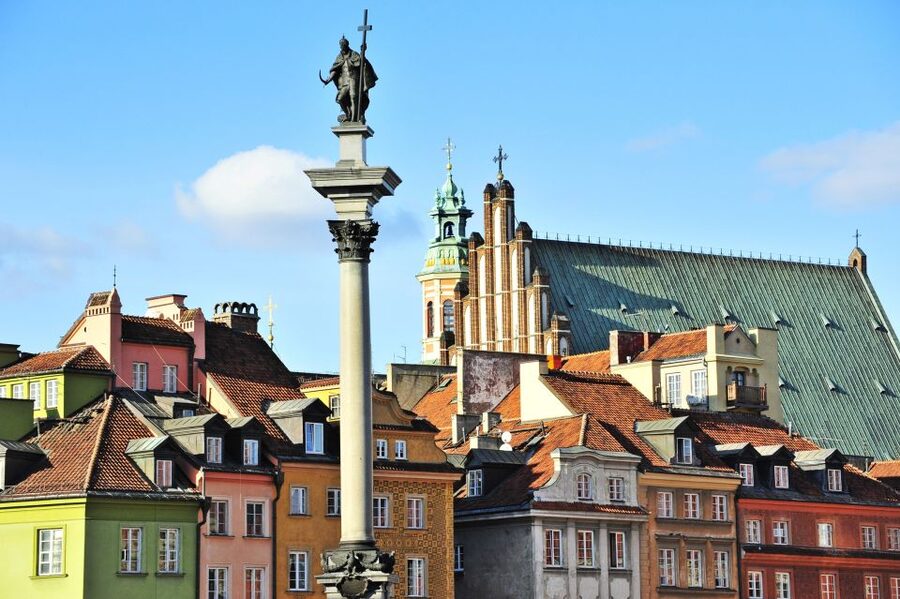
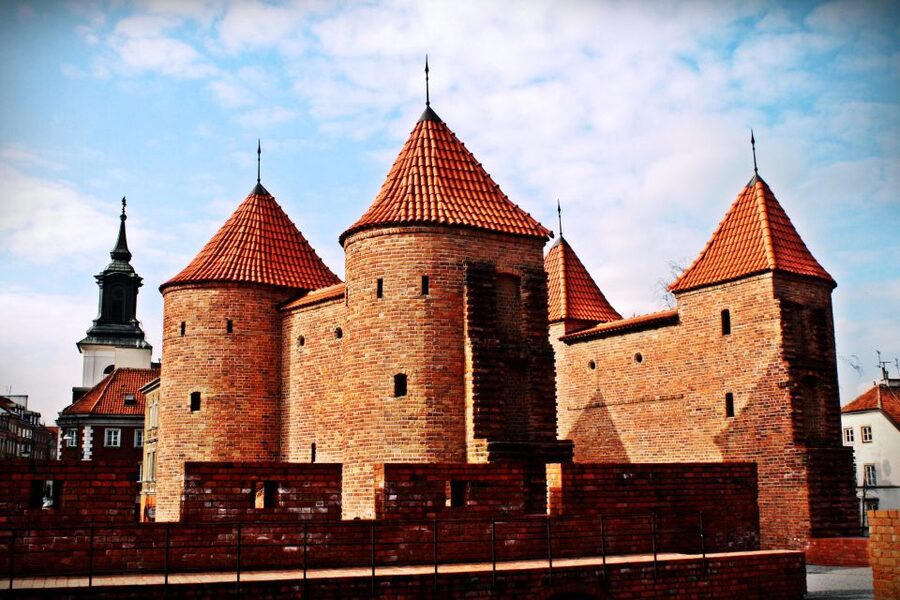
After Old Town Square, the tour pivots into defense and city structure: the Barbican, then the area around Kanonia Street where you’ll see the bell. The Barbican doesn’t feel like a relic when a guide explains what it was built to do. It reads as a survival object—made for protection, shaped by control, and now preserved as a visible boundary.
Then comes one of the best on-foot experiences in this whole route: walking parts of the old city walls. Even if you know Warsaw’s history in broad strokes, these walls make the story physical. You can sense how the city guarded entrances, how movement was channeled, and how the river and surrounding terrain mattered.
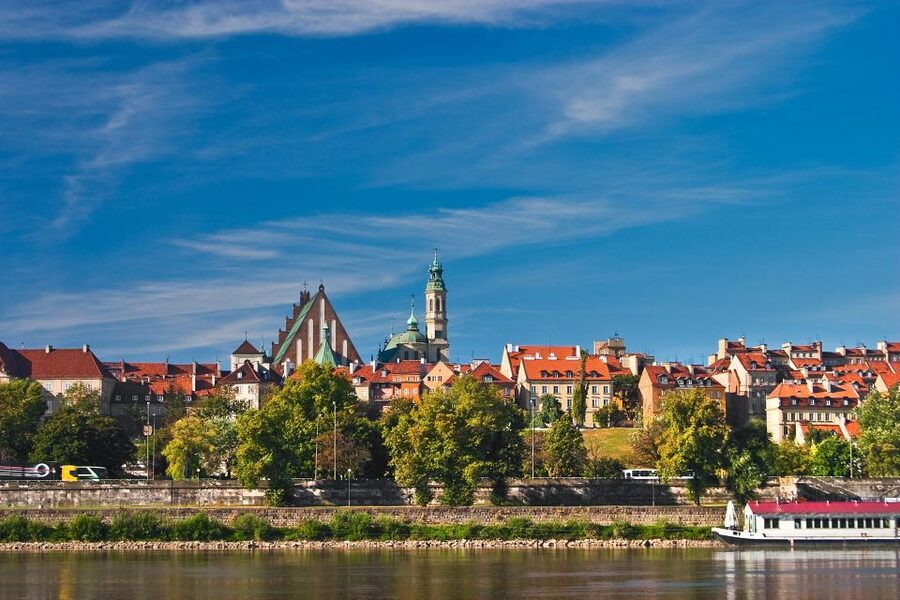
You’ll also get a photo moment at an observation point at Gnojna Góra, for views toward the Vistula. This is where the tour often changes tone. After dense architecture and monuments, you finally get open space and river light. It’s a nice reset for your legs, too, before you head into interior memorial stops.
The cathedral stop: tombs that cover centuries of Polish life
Next is the cathedral, a stop that feels both solemn and unusually specific. Here, you’ll see tombs connected to several big threads:
- medieval Mazovian princes
- Stanislaw August Poniatowski, described here as the last king of Poland
- Ignacy Jan Paderewski, both pianist and politician
This grouping is powerful because it shows how leadership, culture, and national identity overlap. Warsaw isn’t presented as just a capital of palaces; it becomes a capital of individuals who shaped what Poland meant—politically and culturally.
If you’re the type who likes to connect history to names, this is a strong moment to slow down and really read what you can. Even without going deep into religion, the cathedral stop has a clear purpose in the story the guide is building.
On foot through Warsaw: more guided walks



Krasinski Palace, the Supreme Court, and the Warsaw Uprising monument
From the cathedral area, the walk moves into the 19th and 20th-century civic zone. You’ll pass Krasinski Palace, the Supreme Court building, and then the monument to the Warsaw Uprising.
This is where the tour’s “contrast” theme turns from abstract to direct. You’ll hear about the devastation of Warsaw during World War II and then how rebuilding reshaped what you see today. That means the sights around you are not just old; they’re also “re-created,” repaired, or reinterpreted through the postwar period.
One practical tip: keep an eye on the guide’s phrasing here. Good guides translate monuments into cause-and-effect. Ask a question if something feels vague. When a guide is flexible, you can often steer the story toward the part you care about—war, government, or everyday city life.
Grand Theatre, National Opera, and the Tomb of the Unknown Soldier
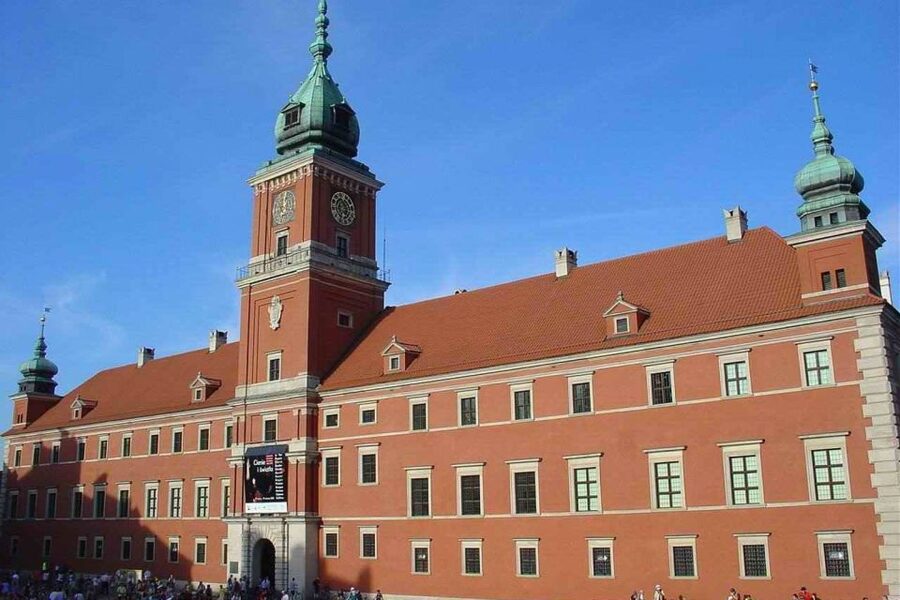
Then the tour shifts into a more cultural and commemorative axis, hitting major landmarks like the Grand Theatre, the National Opera, and the Tomb of the Unknown Soldier.
I like this sequence because it doesn’t treat commemoration as only “war stuff.” Instead, it frames Warsaw as a place that mourns and also builds cultural institutions. In a city that went through massive destruction, it’s worth noticing how performance spaces and national memorials share space in the public mind.
If you’re short on time later in your trip, these stops give you good targets. After the tour, you can decide what to return to based on your interests—music, theatre, or memorials—without feeling like you missed something essential.
The Royal Route finish: Royal Castle to Royal Łazienki to Wilanów
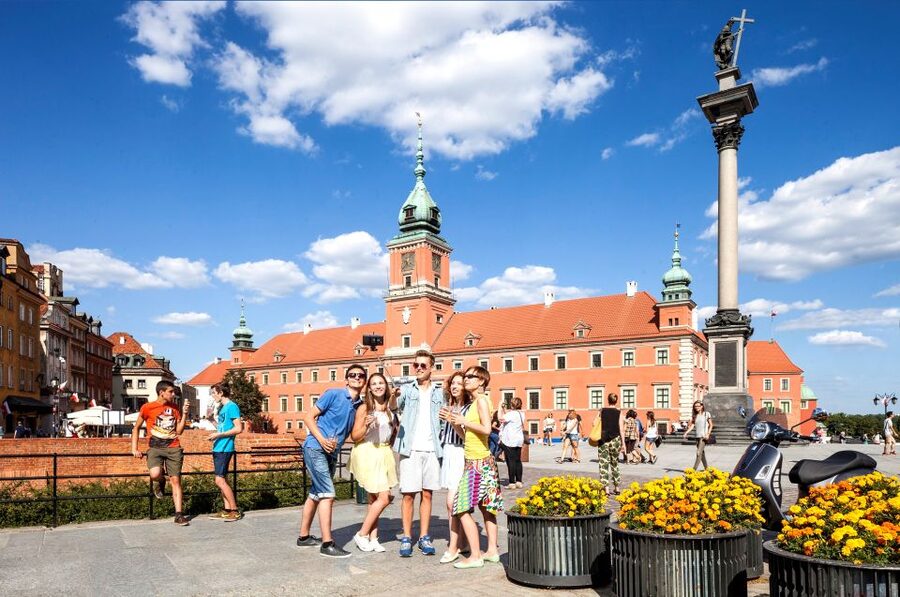
The tour ends with a short walk along the Royal Route, the link between three former residences of Polish rulers: the Royal Castle, Royal Łazienki, and Wilanów Palace. Even though you only get a partial walking taste here, the idea matters. It makes Warsaw feel connected beyond just the Old Town core.
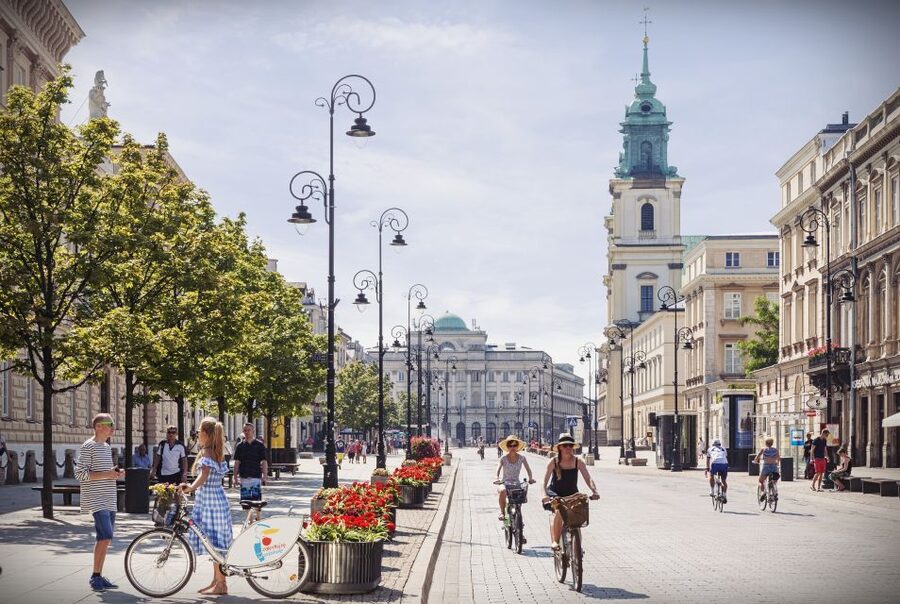
You’ll also stop at the Presidential Palace, the campus area of Warsaw University, and then move through beautiful churches and townhouses before you part ways with your guide to explore on your own.
This closing section is a good way to leave with options. You’ll understand what to look for next on your own, and you’ll know which areas feel like “stay longer” zones.
Price and value: why $16 can make sense here
At $16 per person for a 4-hour private walking tour with a live guide, the value is mostly about focus. You’re not paying for transportation or museum admission included in the price. You’re paying for:
- a guided narrative that connects landmarks into one story
- the pacing and route logic of a designed 4-hour loop
- the chance to ask questions while you’re standing in front of the exact thing you’re learning about
And you’re not stuck with one rigid script. Multiple guides associated with this tour format are praised for adjusting to your interests and keeping the balance between facts and interpretation. Some also use photos or maps as a way to show what Warsaw looked like before or after major destruction—so the reconstruction theme becomes easier to grasp.
Because admission fees aren’t included, your true cost depends on whether you choose to go inside the Royal Castle. If you do, factor that in. If you don’t, you still get a strong “outside-to-inside context” experience from the storytelling.
Who this private tour is best for (and who should consider something else)
This tour works especially well if you:
- want a structured intro to Warsaw that feels human, not just chronological
- like history tied to places you can walk to in one afternoon
- enjoy photography and want a guide to point out where small details matter
- want a private setting where a guide can respond to questions and pace
It may be less ideal if you:
- hate walking long distances or walking on uneven streets
- need a very short, low-effort outing
- only want museum interiors and would rather skip outdoor context
The practical plan for your best experience
A few things will help you get more out of the 4 hours:
- Wear shoes you’d happily walk on for another hour after the tour ends. Cobblestones add up.
- If the Royal Castle interior interests you, plan your time so the ticket stop doesn’t feel rushed.
- Bring your curiosity. When a guide has room to adapt, asking what changed after WWII or how the Royal Route fits together can turn the walk into a personal course.
Should you book this private tour of Old and New Town?
I’d book it if you want a guided “first Warsaw” that doesn’t stop at pretty facades. The combination of Old Town atmosphere, the Royal Castle area, walls and viewpoints, cathedral tombs, uprising memory, and the Royal Route wrap-up is a lot of emotional and factual ground for a single afternoon.
If you’re someone who enjoys cities with layered stories—and you’re okay making a few stops that are reflective rather than purely cheerful—this format is a strong match. Just decide in advance whether you want to pay for any interior access like the Royal Castle, so there are no last-minute surprises.
FAQ
Where is the meeting point for this tour?
The guide meets you at Sigismund’s Column on Castle Square in Warsaw, with your name.
How long is the tour?
The walk lasts 4 hours.
Is admission included for sites like the Royal Castle?
No. Admission fees are not included, though the tour mentions you can collect a ticket to look inside the Royal Castle if you have extra time.
Is this a private tour?
Yes. It’s listed as a private group walking tour.
What languages are available?
The live guide is offered in English, German, Russian, Spanish, Polish, French, Italian, and Portuguese.
Can I book with flexible plans?
Yes. You can reserve now and pay later, and there’s free cancellation up to 24 hours in advance for a full refund.
More Tours in Warsaw
- Warsaw: Old Town Highlights Walking Tour in English
★ 4.7 · 1,516 reviews - Warsaw: City Sightseeing Hop-On Hop-Off Bus Tour
★ 3.6 · 1,415 reviews - Warsaw: Polish Vodka Museum Tour with Tasting
★ 4.6 · 788 reviews - 3-Hour Guided Cycling Tour of Warsaw
★ 4.9 · 624 reviews
More Tour Reviews in Warsaw
- Warsaw: Chopin Concert in the Old Town
★ 4.8 · 2,287 reviews - Warsaw: Traditional Galar Cruise on The Vistula River
★ 4.6 · 1,640 reviews - Warsaw: Old Town Highlights Walking Tour in English
★ 4.7 · 1,516 reviews - Warsaw Concert: Chopin – Painted by Candlelights with Wine
★ 4.8 · 1,442 reviews
The Old Town and Royal Route, More Walks
- Warsaw: Chopin Concert in the Old Town
★ 4.8 · 2,287 reviews - Warsaw: Old Town Highlights Walking Tour in English
★ 4.7 · 1,516 reviews - Warsaw: Old Town Guided Walking Tour
★ 4.9 · 599 reviews - Old Town Warsaw Walking Tour
★ 4.5 · 333 reviews
Fresh on the site: newer Warsaw reviews
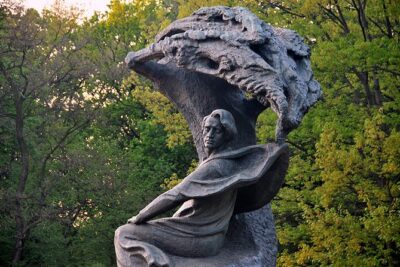


Warsaw Old Town & Royal Route Walks: the other contenders.
 ★ 4.8Chopin Concert in the Old TownFrom $262,287 reviews
 ★ 4.7Old Town Highlights Walking Tour in EnglishFrom $261,516 reviews
 ★ 4.9Old Town Guided Walking TourFrom $13599 reviews
 ★ 4.5Old Town Warsaw Walking TourFrom $26333 reviews
 ★ 4.9Warsaw Old Town 1.5-Hour or Full 3-Hour Segway TourFrom $69209 reviews
 ★ 5.0Everyday concerts of Chopin’s music at the Old Town in WarsawFrom $26192 reviews
 ★ 5.0Segway Tour Warsaw: Old Town Tour – 1,5-Hour of Magic!From $72112 reviews
 ★ 4.7Old Town Highlights Private Walking TourFrom $10768 reviews
Browse the lists this tour appears in