
Reviewed · WARSAW UPRISING & WWII HISTORY
Majdanek – German camp from II World War – Private Tour – 1 DAY TRIP FROM WARSAW
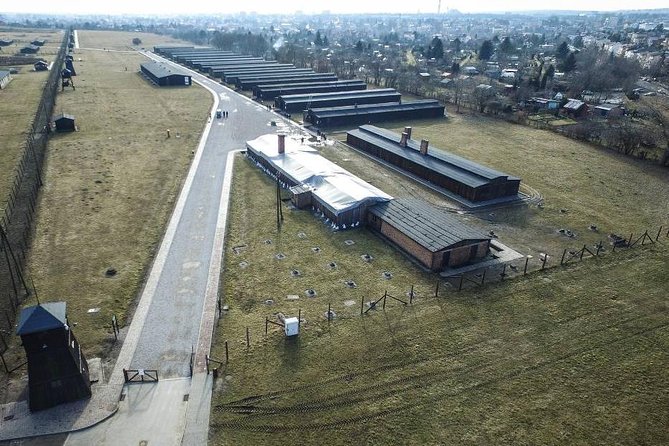
Majdanek slows you down fast. This private day trip from Warsaw takes you to the Majdanek State Museum, set on the ground of a Nazi German camp, and it’s handled with structure so you can focus on what matters: understanding the place without feeling rushed. I especially like the private, small-group setup, because it’s easier to ask questions and talk things through. I also like that the round-trip transfers and lunch are built in, so you’re not juggling timetables for a long day.
One possible drawback: this is an emotionally heavy visit, and the schedule is long—about 11 hours from start to finish—so it may not feel like the right kind of trip if you want something light.
You’ll spend the core of the day inside the museum’s 70 historical buildings and major exhibition areas, led by an English guide who puts the parts into context. Expect a serious pace, real time to absorb, and practical comfort from a package that handles the driving and the basics.
In This Review
- Key things to know before you go
- Majdanek’s Museum Layout: 70 Buildings, One Coherent Story
- The early start and door-to-door transfers from Warsaw
- Inside the museum: what you’ll see in the 4-hour guided visit
- The “Window of Time” and the prisoners’ road fragment
- Barracks 43: from the ghetto to the unknown
- Barracks 44: Lublin under German occupation
- Barracks 45: scale model and “past and present”
- Barracks 47: the multimedia “Shrine”
- Barracks 52: shoes from Aktion Reinhardt
- Barracks 62: who the prisoners were
- III Field buildings 14 and 15: living conditions
- Lunch in a regional restaurant: a real break, not a rushed bite
- Price and value: what $276.67 includes (and why it adds up)
- Who this private Majdanek trip is best for
- Practical tips to make the day easier (and more respectful)
- Should you book this Majdanek private tour from Warsaw?
- FAQ
- What time does the tour start?
- How long is the trip?
- Is pickup offered in Warsaw?
- Is the museum visit guided?
- How long will I spend at Majdanek State Museum?
- What is included in the price?
- Is lunch included, and are drinks included too?
- Do I need to worry about tickets on the day?
- What should I know about fitness and group size?
- Is cancellation free?
Key things to know before you go
- Door-to-door pickup in Warsaw reduces stress compared with piecing together trains and taxis.
- Private English guided tour means your questions stay in your group, not in a crowd.
- Museum highlights span decades of buildings from 1941–1944, not just one room.
- You get lunch included so the day doesn’t unravel when you’re tired.
- Group size maxes at 15, which usually keeps things calm even on a long day.
Majdanek’s Museum Layout: 70 Buildings, One Coherent Story
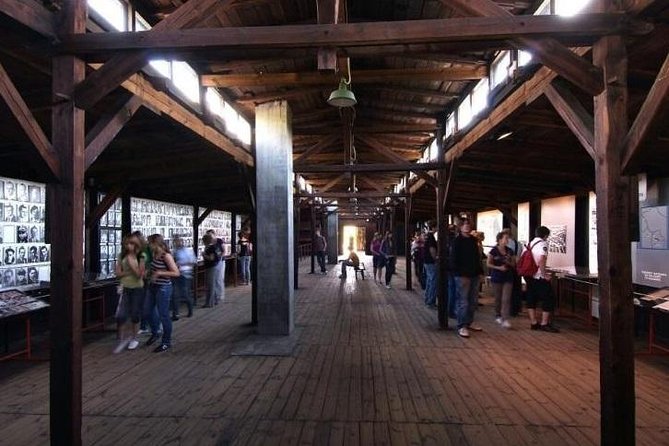
Majdanek isn’t presented like a quick checklist. The experience is spread across many historical buildings from 1941–1944, which helps you understand how a camp functioned as a system, not just a single location. Walking between buildings changes your perspective. You stop seeing one exhibit at a time and start getting the larger picture.
The museum’s approach also gives you time to move at your own speed inside each building. That matters at a memorial site, where rushing can feel wrong. A good tour plan helps you avoid that. Here, the guide keeps the flow organized so you don’t end up lost in labels.
More of Warsaw in 1944 and the war years
- World War 2 in Warsaw walking tour in English★ 4.7 · 237 reviews
- Warsaw: Warsaw Historical Group Tour with Pickup & Drop-Off★ 4.6 · 233 reviews
- Warsaw for WWII Buffs – private tour with hotel pickup★ 5.0 · 166 reviews
The early start and door-to-door transfers from Warsaw
Starting around 7:00 am is not subtle. This isn’t a half-day detour. But the tradeoff is real: you’re driven to the Majdanek area and taken back to your hotel or apartment in Warsaw.
For me, door-to-door is the big value point. It saves you from figuring out how to get to Lublin by public transport, and it saves energy you’ll want later. Over the course of a full day, that kind of “already handled” logistics feels like part of the experience, not just a convenience.
You’ll also appreciate that parking, taxes, and other handling fees are included, which means less small-print stress. The driver/coordinator provides help in English, so if anything comes up—timing, where to stand, what to do next—you’re not stuck improvising.
Inside the museum: what you’ll see in the 4-hour guided visit
The museum time is about 4 hours, and it’s built around the main exhibition stops. This is long enough to get meaning from the site, but not so long that you melt down from overwhelm.
Here are the specific parts you’ll see, and what each one tends to do for the story.
The “Window of Time” and the prisoners’ road fragment
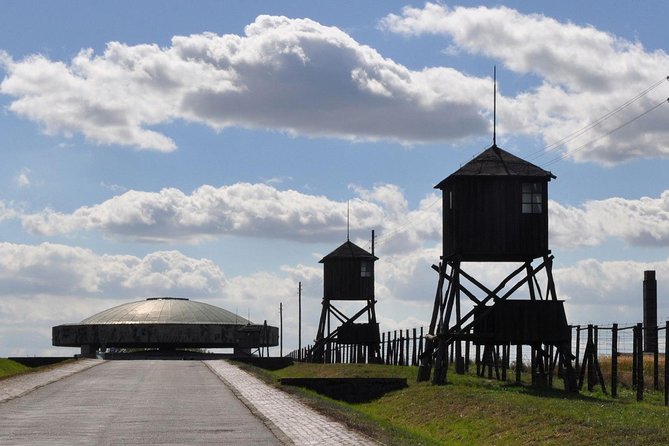
Early on, you’ll encounter a steel construction called the window of time. Its purpose is straightforward: it lets you see a fragment of the historical road built by prisoners at Majdanek. That small physical detail hits differently than a panel alone, because it connects you to something you can almost picture in motion.
It’s also a good “reset” moment. After you’ve started processing the gravity of the place, this kind of tangible artifact helps your brain anchor the history.
Barracks 43: from the ghetto to the unknown
Barracks 43 features an exhibition titled They Arrived at the Ghetto… And Went into the Unknown…. The phrasing alone signals what you’re meant to feel and understand: arrival was not the end of danger. It was the start of what came next.
For visitors, this is one of those stops that can make you slow your walking pace. The guide’s job here is to give you context so you can read what you’re seeing without guessing.
Other guided visits to Treblinka and Majdanek
Barracks 44: Lublin under German occupation
In Barracks 44, the exhibition focuses on Lublin under German Occupation. This helps ground the story locally, which matters because camp history isn’t floating in space. You’re dealing with a real place with a real civilian environment under German rule.
If you like having a sense of geography—how the surrounding world shaped what happened—this stop gives it to you.
Barracks 45: scale model and “past and present”
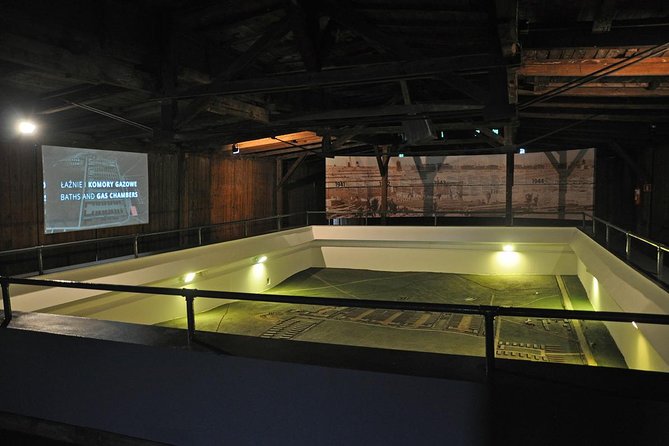
Barracks 45 includes a scale model of the camp, plus an exhibition called Majdanek. Past and present. Models are powerful because they let you map what you’re walking through. Instead of only thinking in fragments, you can understand how the buildings relate to each other.
This also helps you later, when your memory starts sorting details. The model gives you a spine.
Barracks 47: the multimedia “Shrine”
Barracks 47 is home to Shrine, a multimedia exhibition. Multimedia can be intense in any setting, and at a memorial site it’s used to communicate evidence and human meaning rather than shock value.
If you’re sensitive to audio or visuals, plan to take breaks. Even stepping back for a minute can help you keep your focus instead of getting overwhelmed.
Barracks 52: shoes from Aktion Reinhardt
Barracks 52 displays the shoes of the victims of Aktion Reinhardt. This is exactly the kind of exhibit that stays with you. It turns history into something heartbreakingly specific, and it tends to leave visitors quiet.
Some people find this stop especially hard. If you’re traveling with family, this is where a guide’s pacing helps. You can move through at a speed that feels respectful.
Barracks 62: who the prisoners were
Barracks 62 is titled The Prisoners of Majdanek. After walking through narrative and objects, this kind of exhibition often brings you back to people, not just buildings and dates. It’s where the place starts to feel less like a museum and more like a record of human lives.
III Field buildings 14 and 15: living conditions
You’ll also see Barracks 14 and 15 in the III Field, focused on living conditions (the signage is labeled as such). This section is important because it shifts the story from arrival and occupation to what day-to-day life became inside the camp.
Even if you’ve studied the topic before, camp living conditions often reveal new layers. The best part of having an English guide is that you’re not left interpreting alone.
Lunch in a regional restaurant: a real break, not a rushed bite
Lunch is included at a regional restaurant, and that sounds basic until you’re on the ground doing a heavy site visit. A provided meal matters because it prevents the common full-day problem: you’re tired, you’re emotional, and you end up eating something you don’t really want.
The tour package doesn’t include drinks for lunch, so you’ll want to plan for that. Still, it’s nice to know you won’t be hunting for food between the museum blocks.
One practical note: the site can feel cold, even in shoulder season. In fact, people have reported going on days with rain and cold, plus extra atmosphere like crows and a heavy silence. If that sounds like your idea of a good day, great. If not, dress like you’ll be outside for a while.
Price and value: what $276.67 includes (and why it adds up)
At $276.67 per person, this isn’t a bargain. But it also isn’t priced like a generic ticket-and-bus combo.
Here’s what you’re paying for, and why it matters:
- Private, English guided tour in your group only
- Entry tickets to the Majdanek site
- Lunch in a regional restaurant
- Door-to-door transfers from your Warsaw hotel or apartment
- Driver/coordinator help in English, plus parking, taxes, and handling fees
The biggest value is time and mental load. A museum like this demands attention. When you handle the logistics for me, I can focus on the meaning. And because the group max is 15, you’re unlikely to feel like you’re trapped in a tour conveyor belt.
In short: if you want a structured, private way to visit Majdanek from Warsaw, this package looks like fair value. If you’re the type who enjoys independent travel planning and you already know how you’ll get there comfortably, you could spend less on transport and guide. But you’d be taking on more coordination on a long day.
Who this private Majdanek trip is best for
This fits best if you want:
- A private experience where you can ask follow-up questions
- An English guide to keep the exhibitions coherent
- A full-day schedule that’s organized for you, start to finish
It’s also a good option for families who want a guided approach. The private format makes it easier to handle different comfort levels inside sensitive content—especially in the barracks and memorial areas.
The tour does say you should have a strong physical fitness level. That matters because you’ll be walking through a large site, and memorial environments can require steady mobility. If you’re unsure, consider your comfort with walking and standing for long stretches.
Finally, if you’re traveling for a solemn, educational visit, this kind of private timing helps you process without feeling surrounded by noise. Some visitors describe the silence in a way you can’t fake. A smaller group makes it easier to respect that.
Practical tips to make the day easier (and more respectful)
This is where preparation pays off.
Wear layers. People have mentioned cold and rain during visits. Even if the forecast looks friendly, the site atmosphere can feel sharp when you’re outside between buildings.
Bring a weather-ready jacket and plan on time outdoors. Some of the emotional impact comes from the stillness and the way the place feels in the air.
Expect strong sensory impressions. One visitor noted a very strong smell. You can’t predict it exactly, but you should be ready for it.
Use the private format wisely. If you’re not sure what an exhibition is trying to do, ask your guide. The whole point of private is that you can slow down for clarity.
If you want souvenirs, note that they’re not included. You’ll also want to remember that drinks for lunch aren’t included either, so bring cash or card for that part of the meal.
Because this runs about 11 hours, plan your day around it. Don’t stack extra plans late that evening. Your brain will still be working.
Should you book this Majdanek private tour from Warsaw?
I’d book it if you want a structured, private, English-guided Majdanek visit with the logistics handled: door-to-door transport, museum tickets, and lunch included. The value is strongest for people who’d rather spend their energy learning and processing than planning routes and timing.
I would think twice if you’re looking for something light and casual. This is a memorial site with emotionally intense exhibits like the shoes connected to Aktion Reinhardt and areas devoted to living conditions. If you’re not in the right headspace for that, no itinerary trick will make it feel easy.
If you’re comfortable with a long day and you want a calmer, question-friendly experience, this is a solid way to do Majdanek from Warsaw without unnecessary hassle.
FAQ
What time does the tour start?
The tour starts at 7:00 am.
How long is the trip?
The duration is approximately 11 hours.
Is pickup offered in Warsaw?
Yes. Door-to-door transport is provided from your hotel/apartment in Warsaw to the Lublin area and back.
Is the museum visit guided?
Yes. You get a private English guided tour for your group only.
How long will I spend at Majdanek State Museum?
The museum portion is about 4 hours.
What is included in the price?
Tickets for Majdanek, private English guiding, round-trip transfers, lunch at a regional restaurant, and support in English are included. Taxes, fees, and parking are also included.
Is lunch included, and are drinks included too?
Lunch is included. Drinks for lunch are not included.
Do I need to worry about tickets on the day?
You’ll have a mobile ticket.
What should I know about fitness and group size?
The tour requires strong physical fitness. The maximum group size is 15 travelers.
Is cancellation free?
Free cancellation is offered, with a full refund if you cancel at least 24 hours before the start time.
More Tour Reviews in Warsaw
- Warsaw: Chopin Concert in the Old Town
★ 4.8 · 2,287 reviews - Warsaw: Traditional Galar Cruise on The Vistula River
★ 4.6 · 1,640 reviews - Warsaw: Old Town Highlights Walking Tour in English
★ 4.7 · 1,516 reviews - Warsaw Concert: Chopin – Painted by Candlelights with Wine
★ 4.8 · 1,442 reviews
Visiting Treblinka and Majdanek
- Treblinka Death Camp 6 Hour Private Tour from Warsaw
★ 5.0 · 74 reviews - Majdanek Concentration Camp & Lublin Full Day Private Tour from Warsaw
★ 5.0 · 70 reviews - Half Day Treblinka Death Camp Small Group Tour from Warsaw with Lunch
★ 4.5 · 57 reviews - Warsaw: Treblinka Heartbreaking Concentration Camp Tour
★ 4.8 · 45 reviews
Warsaw in Wartime: More Reviews
- Small-Group Historical Guided Tour of Warsaw with pick up/drop off. Public Tour.
★ 4.5 · 343 reviews - World War 2 in Warsaw walking tour in English
★ 4.7 · 237 reviews - Warsaw: Warsaw Historical Group Tour with Pickup & Drop-Off
★ 4.6 · 233 reviews - Warsaw for WWII Buffs – private tour with hotel pickup
★ 5.0 · 166 reviews
Fresh on the site: newer Warsaw reviews

Warsaw Uprising & WWII History: the other contenders.
 ★ 4.5Small-Group Historical Guided Tour of Warsaw with pick up/drop off. Public Tour.From $60343 reviews
 ★ 4.7World War 2 in Warsaw walking tour in EnglishFrom $20237 reviews
 ★ 4.6Warsaw Historical Group Tour with Pickup & Drop-OffFrom $58233 reviews
 ★ 5.0Warsaw for WWII Buffs – private tour with hotel pickupFrom $169166 reviews
 ★ 4.5Warsaw Uprising Museum (1944) : PRIVATE SERVICE /inc. Pick-up/From $9518 reviews
 ★ 4.7Warsaw Uprising and WWII Old Town Walking Tour with MuseumFrom $11215 reviews
 ★ 4.5Warsaw Uprising Museum (1944) + POLIN Museum : SMALL GROUP /inc. Pick-up/From $11414 reviews
 ★ 5.0Warsaw History and Reality Walking TourFrom $1148 reviews
Browse the lists this tour appears in