
Reviewed · WARSAW OLD TOWN & ROYAL ROUTE WALKS
Historic Heart of Warsaw Walking Tour
Warsaw’s story comes alive street by street. This walking tour strings together the Old Town landmarks and the darker memorial sites into one clear path, so you understand what you’re looking at without needing to do homework first. I especially like the way the route balances famous icons with smaller moments like the Wishing Bell, and I also like how the guide keeps the pace friendly and question-friendly. The one watch-out: two major stops require you to buy museum entry tickets on your own.
You’ll walk for about 2 hours, and the group stays small (max 15), which makes it easier to ask questions and keep everyone moving. The tour is wheelchair-friendly, and service animals are welcome, so it’s built to be accessible for more visitors than the usual old-city wander.
You start near Sigismund’s Column and finish at the Warsaw Uprising Monument. Plan on a bit of walking at the end too, since the meetup point is about a 15-minute walk from where you finish, and the guide can help with directions back.
In This Review
- Key highlights you’ll feel right away
- Why this 2-hour Warsaw story walk works
- Meeting at Sigismund’s Column, then ending at the Uprising Monument
- Royal Castle stop: starting with Warsaw’s power center
- From King Sigismund’s Column to Kanonia’s quiet square
- The Wishing Bell and Gnojna Góra: two short stops with big payoff
- Rynek Starego Miasta and the mermaid symbol
- Archikatedra Sw. Jana Chrzciciela and the Warsaw Barbican
- Marie Curie birthplace: one ticket you’ll want to plan for
- Warsaw Ghetto boundary markers: memorial with clear boundaries
- Warsaw Uprising Monument: closing with a 1944 dedication
- Price and value: what $28.75 gets you (and what it doesn’t)
- Guide style you can bank on: humor, Q&A, and clear explanations
- Who this tour suits best (and who should think twice)
- Book it or skip it: my call
- FAQ
- How long is the Historic Heart of Warsaw Walking Tour?
- What’s the price per person?
- Is the tour offered in English?
- Where does the tour start and end?
- Which stops require paid admission tickets?
- Are the other stops free?
- Is the tour wheelchair-friendly?
- Can I bring a service animal?
- How big is the group?
Key highlights you’ll feel right away
- Small group (up to 15) means the guide can actually talk with you, not just lecture.
- A tight 2-hour route covering both Old Town and WWII memory sites.
- English tour with a mobile ticket, so you’re not juggling paper.
- Ticket add-ons are limited to the Royal Castle and the Marie Curie Museum.
- Accessibility friendly, with wheelchair support and service animals allowed.
- A real planning pack before you go, with helpful local recommendations.
Why this 2-hour Warsaw story walk works
This tour is built for comprehension, not just sightseeing. In roughly two hours, you get a guided route through major Warsaw markers, so your visit feels connected instead of scattered across the map.
I like that the stops don’t all look the same. You’ll see royal-era symbolism, religious architecture, defensive walls, and then memorial markers tied to the 1940 ghetto boundary and the 1944 uprising. That mix helps you keep a timeline in your head while still enjoying the scenery and details.
One other thing I appreciate: the pace stays realistic. Even with a few short stops and free photo moments, you’re not stuck for long in any one location. It’s a smart “start here” style tour for first-time visitors.
More of the Old Town and the Royal Route, on foot
- Warsaw: Chopin Concert in the Old Town★ 4.8 · 2,287 reviews
- Warsaw: Old Town Highlights Walking Tour in English★ 4.7 · 1,516 reviews
- Warsaw: Old Town Guided Walking Tour★ 4.9 · 599 reviews
Meeting at Sigismund’s Column, then ending at the Uprising Monument
The tour begins at Sigismund’s Columnplac Zamkowy, 00-001 Warszawa, Poland. You’ll end at Warsaw Uprising Monumentplac Krasińskich, 00-263 Warszawa, Poland, and it’s noted that you’ll be about 15 minutes walking distance from the meeting point.
That end location is actually useful. It places you near one of Warsaw’s most important 20th-century remembrance spots, so your Old Town day doesn’t feel like it stops at pretty buildings. And if you want to keep exploring afterward, you’ll already be in the right general area.
The tour is also near public transportation, which matters because Warsaw has a lot of ground to cover. If you’re building the rest of your day around this walk, it’s easier when you can hop on or off transit nearby.
Royal Castle stop: starting with Warsaw’s power center
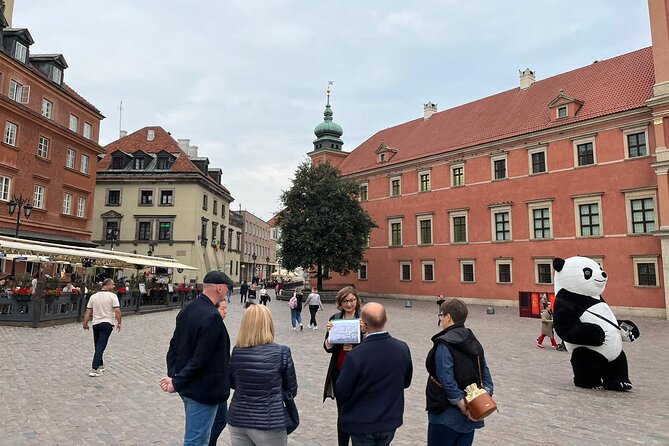
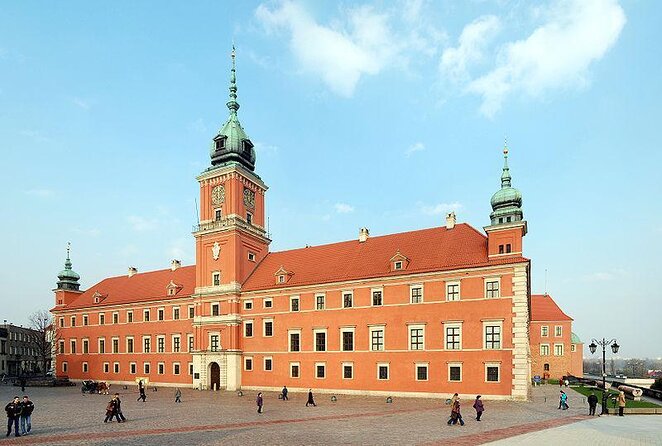
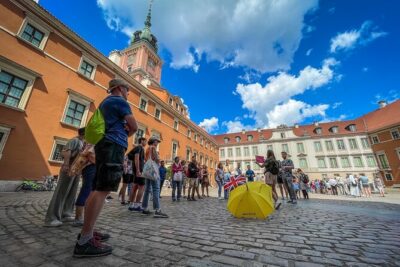
Your first major stop is the Royal Castle in Warsaw Museum. You’ll spend about 15 minutes here, and entry admission is not included.
Even without paying for extra museum time, this is a strong opening move. The Royal Castle serves as a big, visible anchor for understanding Warsaw’s story, and starting here gives you context before you move into smaller, more symbolic sites.
Practical tip: if you want more time inside the museum exhibits, budget extra for the ticket. The guided time at the building is set for a quick orientation rather than a full museum visit, so decide early whether you want museum depth or a smooth tour pace.
From King Sigismund’s Column to Kanonia’s quiet square
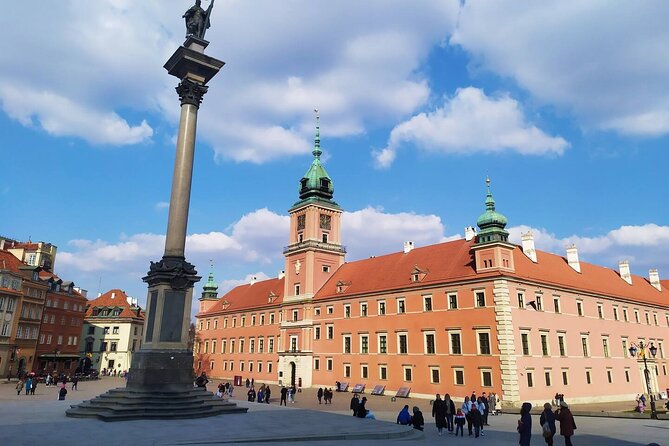
Next you’ll head to King Sigismund’s Column (Kolumna Zygmunta), where you’ll have about 10 minutes. Admission is free. This is a straightforward stop, centered on the monument and the statue of a Polish king.
After that, you’ll move to Kanonia, a charming square at the rear of the Cathedral of Saint John the Baptist, again about 10 minutes and free. What I like about this kind of stop is that it’s a breather. It’s not just a single landmark pose; it’s a small square that helps you understand how the city feels at human scale.
If you’re the type who likes architecture and atmosphere, these two pauses help you slow down. You’re learning, but you’re also resetting your eyes and your legs before the tour turns toward more “must-see” town-center views.
The Wishing Bell and Gnojna Góra: two short stops with big payoff
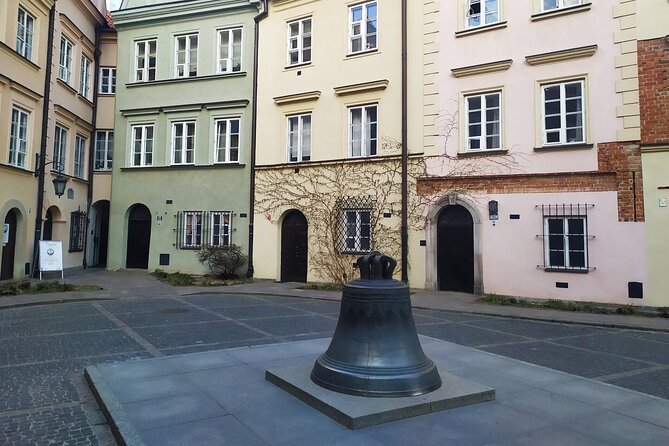
The Wishing Bell is a quick one—about 5 minutes—and it’s free. The guide points out that it’s an old bell from the 17th century that still attracts tourists from around the world.
This is one of those stops where the story behind the object matters as much as the object itself. It’s small time-wise, but it gives your Old Town walk a memorable moment you can point to later and say, I remember that.
Then you’ll go to Gnojna Góra, another about 10 minutes and free. This is described as a lesser-known lookout point in the Old Town of Warsaw with a stunning view of the Vistula River and the other side of the river.
What you get here is perspective. After walking through monuments and streets, a viewpoint makes the whole city feel larger and easier to picture. If you like photos, this is one of the better moments to take them—because the view is the main event.
On foot through Warsaw: more guided walks



Rynek Starego Miasta and the mermaid symbol
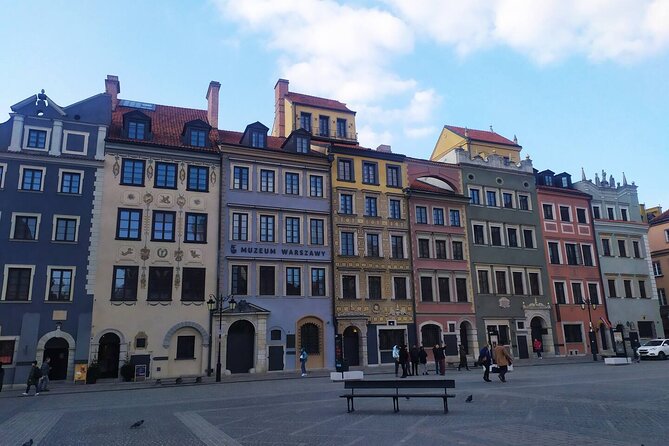
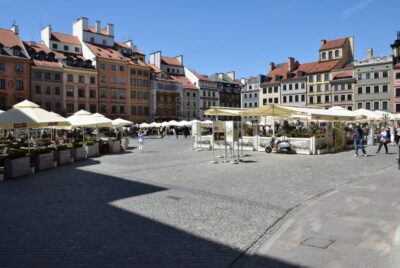
Rynek Starego Miasta is the heart of the Old Town, and you’ll spend about 10 minutes here. It’s free. You’ll see colorful tenement houses and the monument of Warsaw’s symbol: a mermaid.
This is a classic “get your bearings” stop. The Old Town can be visually busy—good busy, but still busy. Having a guide point out the key symbol and the feel of the square helps you see how the streets and landmarks connect.
If you’re taking photos, be ready to angle your camera for both the tenement colors and the mermaid monument. The square layout is built for strolling, so don’t treat it like a quick drive-by.
Archikatedra Sw. Jana Chrzciciela and the Warsaw Barbican
You’ll then reach Archikatedra Sw. Jana Chrzciciela, described as the most important church in Warsaw. You’ll have about 10 minutes, free.
Even if churches aren’t your top priority, this stop helps you understand why this area matters. It’s not just a pretty building; the tour frames it as a key spiritual and civic landmark, so you’ll likely look more deliberately than you would on your own.
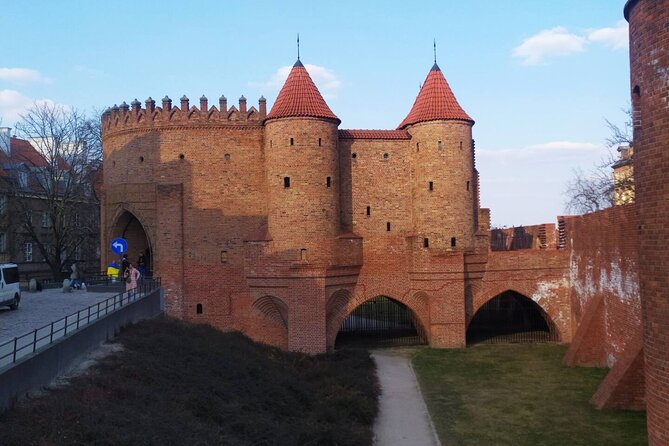
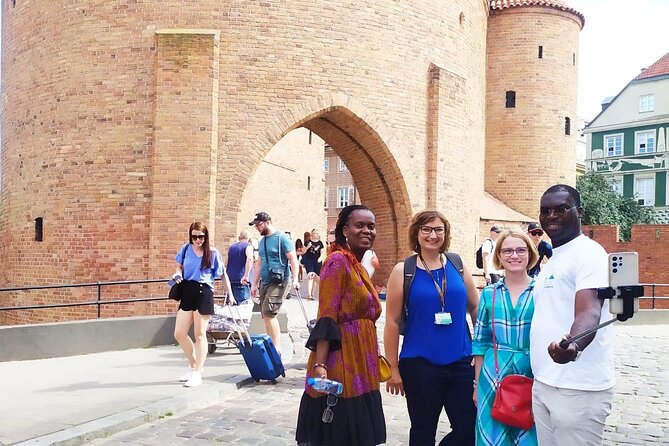
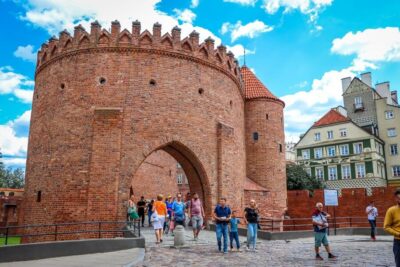
Right after, you’ll pass by the Warsaw Barbican (Barbakan Warszawski), with about 5 minutes and free entry. This is the medieval defensive walls that once encircled Warsaw.
I like the contrast here. A church gives you one kind of focus—belief, tradition, importance—while the Barbican gives you a defensive, survival-minded perspective. In a short walk, you’re seeing how Warsaw shaped itself for both meaning and protection.
Marie Curie birthplace: one ticket you’ll want to plan for
Next comes Muzeum Marii Sklodowskiej-Curie, with about 10 minutes and admission not included. This stop is tied to the birthplace of Maria Skłodowska-Curie, a double Nobel prize winner.
This is where your prep matters. If you want to go inside for more than the guided overview, you’ll need to pay the museum ticket separately. If you’d rather keep moving and save time, the guided stop still gives you a meaningful framework for what you’re looking at.
Because this is a personal story stop, it’s also a good moment to listen closely for how the guide connects her place in Warsaw to what you see in the city around her. It can make the site feel less like a name on a brochure and more like a location with a human story.
Warsaw Ghetto boundary markers: memorial with clear boundaries
Then the tour turns to Warsaw Ghetto boundary markers—memorial plaques marking the maximum perimeter of the former ghetto established in 1940. This stop is free and takes about 10 minutes.
I think this is the emotionally heavy section of the walk, and the value here is clarity. Instead of skipping around to random plaques, the guided approach gives you a sense of boundaries and purpose—what the marks mean and why they’re placed where they are.
You’ll also likely find that the nearby Old Town streets feel different after this stop. That’s not a bad thing. It’s often the whole point of a guided route: you see how the city layers over time, and the memorial keeps the timeline honest.
Warsaw Uprising Monument: closing with a 1944 dedication
Your final stop is the Warsaw Uprising Monument, about 10 minutes and free. The tour frames it as a monument dedicated to the Warsaw Uprising of 1944.
Ending here makes sense. Earlier stops show what Warsaw is known for—royal symbolism, iconic Old Town spaces, and major landmarks—then the tour lands on remembrance tied to a specific event. It creates a final emotional note that lingers, and it also explains why this part of Warsaw is treated as a must-see.
If you feel like slowing down at the end, do it. This is the kind of final stop where you’ll understand more simply by taking an extra minute to look and reflect, rather than rushing for your next plan.
Price and value: what $28.75 gets you (and what it doesn’t)
At $28.75 per person, you’re paying for a focused 2-hour guided walk with interpretation, plus extras that make your whole day easier. The tour includes a full info pack with FAQ and useful links, visual aids, and recommendations about where to eat and drink.
That’s good value because Warsaw rewards planning. Even if you know the big sights, it’s the connections that matter: why the stops are grouped, what each site represents, and how to turn a walk into real understanding.
What you should budget for is the admission ticket pieces. Royal Castle entry is not included, and the Marie Curie Museum ticket is also not included. If you plan to go inside both places, your total cost will be higher than the tour price alone. If you’re mostly in it for the guided context, the main guided route can still work well.
Guide style you can bank on: humor, Q&A, and clear explanations
The standout theme from the guides associated with this tour is communication. Guides like Olivia and Agnieszka are specifically called out for being funny and for making the city understandable, not just recited.
That matters because Warsaw’s story has layers. A guide who can explain what you’re seeing in plain language makes the monuments and memorial markers hit harder—in a good way—and helps you ask questions without feeling rushed.
Also, with a max group size of 15, you’re more likely to get responses to your own questions. That can turn a sightseeing walk into a real conversation.
Who this tour suits best (and who should think twice)
This is a great fit if you want a first-timer structure for Warsaw. It works especially well if you like walking, want an English guide, and prefer to see a lot of meaningful places without juggling details all day.
It also fits people who care about both the pretty Old Town feel and the WWII memorial side. The route doesn’t treat one as more important than the other; it gives each stop its moment.
I’d think twice if you’re only interested in museum interiors. The guided time at key sites is relatively short, and two major attractions require separate admission if you want more than the quick guided look.
Book it or skip it: my call
I’d book this tour if you want a compact way to understand Warsaw, from Old Town icons to the city’s memory markers, without feeling lost. The small group, the English-speaking guide, and the strong emphasis on making the stops make sense are the big wins.
If you already have a very detailed self-guided plan for both the Royal Castle and the Marie Curie Museum, you might decide to skip the guided walk and just hit those places alone. But if you want a clean route that teaches you while you walk, this one is a smart use of time.
FAQ
How long is the Historic Heart of Warsaw Walking Tour?
It lasts about 2 hours.
What’s the price per person?
The price is $28.75 per person.
Is the tour offered in English?
Yes, the tour is offered in English.
Where does the tour start and end?
It starts at Sigismund’s Column (Plac Zamkowy, 00-001 Warszawa) and ends at the Warsaw Uprising Monument (Plac Krasińskich, 00-263 Warszawa).
Which stops require paid admission tickets?
Royal Castle in Warsaw (museum) and the Muzeum Marii Sklodowskiej-Curie have admission tickets that are not included.
Are the other stops free?
Yes. The remaining listed stops (Sigismund’s Column, Kanonia, the Wishing Bell, Gnojna Góra, Rynek Starego Miasta, Archikatedra Sw. Jana Chrzciciela, Warsaw Barbican, Warsaw Ghetto boundary markers, and Warsaw Uprising Monument) are free.
Is the tour wheelchair-friendly?
Yes, the tour is wheelchair-friendly.
Can I bring a service animal?
Yes, service animals are welcome.
How big is the group?
The tour has a maximum of 15 travelers.
More Tours in Warsaw
- Warsaw: Old Town Highlights Walking Tour in English
★ 4.7 · 1,516 reviews - Warsaw: City Sightseeing Hop-On Hop-Off Bus Tour
★ 3.6 · 1,415 reviews - Warsaw: Polish Vodka Museum Tour with Tasting
★ 4.6 · 788 reviews - 3-Hour Guided Cycling Tour of Warsaw
★ 4.9 · 624 reviews
More Tour Reviews in Warsaw
- Warsaw: Chopin Concert in the Old Town
★ 4.8 · 2,287 reviews - Warsaw: Traditional Galar Cruise on The Vistula River
★ 4.6 · 1,640 reviews - Warsaw: Old Town Highlights Walking Tour in English
★ 4.7 · 1,516 reviews - Warsaw Concert: Chopin – Painted by Candlelights with Wine
★ 4.8 · 1,442 reviews
The Old Town and Royal Route, More Walks
- Warsaw: Chopin Concert in the Old Town
★ 4.8 · 2,287 reviews - Warsaw: Old Town Highlights Walking Tour in English
★ 4.7 · 1,516 reviews - Warsaw: Old Town Guided Walking Tour
★ 4.9 · 599 reviews - Old Town Warsaw Walking Tour
★ 4.5 · 333 reviews
Fresh on the site: newer Warsaw reviews



Warsaw Old Town & Royal Route Walks: the other contenders.
 ★ 4.8Chopin Concert in the Old TownFrom $262,287 reviews
 ★ 4.7Old Town Highlights Walking Tour in EnglishFrom $261,516 reviews
 ★ 4.9Old Town Guided Walking TourFrom $13599 reviews
 ★ 4.5Old Town Warsaw Walking TourFrom $26333 reviews
 ★ 4.9Warsaw Old Town 1.5-Hour or Full 3-Hour Segway TourFrom $69209 reviews
 ★ 5.0Everyday concerts of Chopin’s music at the Old Town in WarsawFrom $26192 reviews
 ★ 4.8Old and New Town Private Walking TourFrom $16116 reviews
 ★ 5.0Segway Tour Warsaw: Old Town Tour – 1,5-Hour of Magic!From $72112 reviews
Browse the lists this tour appears in