
Reviewed · WARSAW OLD TOWN & ROYAL ROUTE WALKS
Walk through the Warsaw Old and New Town: like Phoenix from the ashes
Warsaw rebuilds itself in two hours. This walking tour turns the Phoenix-from-the-ashes theme into street-level facts, from Chopin’s heart inside Holy Cross Church to Castle Square’s reconstruction stories (including the role of a Venetian painter). The main trade-off: it’s only about 2 hours, so most stops are short visits rather than long hangs inside each place.
I like that the loop is guided start-to-finish, with a licensed city tour company (PolinTours) picking you up at the Nicolaus Copernicus Monument and carrying you through both the Old Town and New Town. It’s offered in English, and since it’s private, you can get a more personal pace than the usual big-group shuffle.
In This Review
- Key points worth knowing before you go
- Warsaw’s ashes-to-rebuilt streets: what this tour is really about
- Meeting at Nicolaus Copernicus Monument: start strong, stay oriented
- Krakowskie Przedmieście and the first snapshot of Old Town Warsaw
- Holy Cross Church (Kosciol Swietego Krzyza) and Chopin’s resting place
- University of Warsaw’s oldest section: why it shows up on this walk
- Tomb of the Unknown Soldier and Saxon-era echoes
- The Presidential Palace: power in plain sight
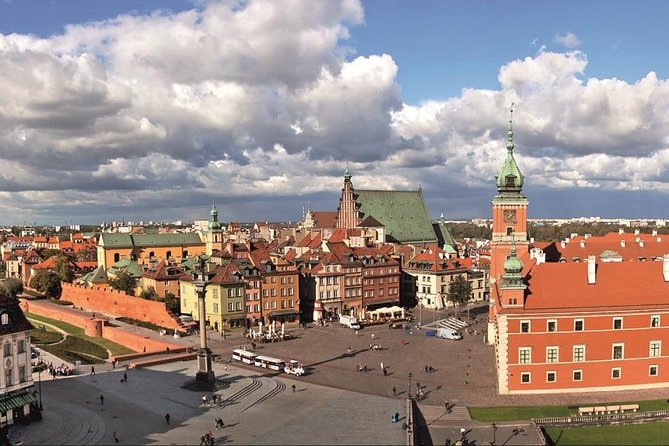
- Castle Square (Plac Zamkowy) and the Royal Castle: UNESCO, reconstruction, and a Venetian painter
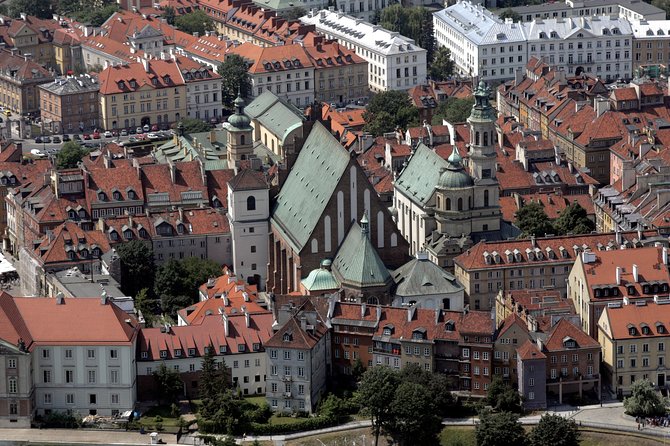
- St John the Baptist Archcathedral Basilica: WWII memory in the building itself
- Gnojna Gora and the Vistula look: quick air between big stories
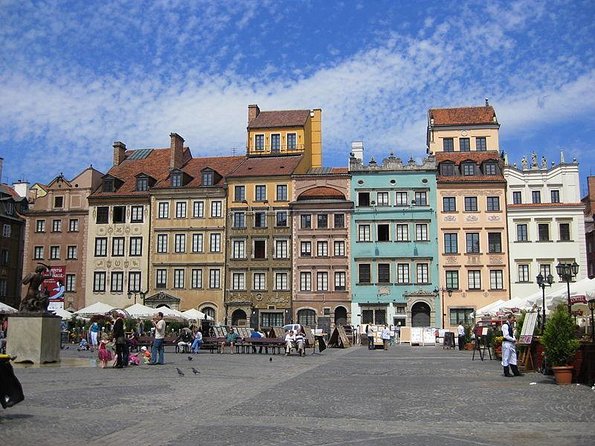
- Rynek Starego Miasta: the market square where legends have a place
- Passing through the city gate into the New Town
- Marie Curie Museum: the one stop where your budget can change
- Field Cathedral of the Polish Army and the Warsaw Uprising Monument finish
- Price and value: is $72.87 for 2 hours worth it?
- Who should book this Warsaw Old Town and New Town walk
- Should you book? My call
- FAQ
- How long is the Warsaw Old and New Town walking tour?
- Where does the tour start?
- Where does the tour end?
- Is the tour offered in English?
- Is this a private tour?
- What ticket do I need?
- Are admissions included?
- Is transport included?
- Are snacks included?
- What’s the cancellation policy?
- Can I bring a service animal?
Key points worth knowing before you go
- Chopin’s heart is part of the route at Holy Cross Church, not just something you read about later
- Castle Square comes with the reconstruction story—who financed it, and why it looks the way it does
- St John the Baptist Basilica is tied to WWII geography, since the war front ran through it
- You end at the Warsaw Uprising monument zone, so the tour finishes on a clear historical note
- Only one major museum stop may cost extra (Marie Curie’s birthplace isn’t included)
- Private-tour flexibility can happen fast, since one booking can turn into a one-on-one experience
Warsaw’s ashes-to-rebuilt streets: what this tour is really about
Warsaw can feel like two cities at once—modern buildings that grew after devastation, and carefully rebuilt blocks that refuse to be forgotten. This tour leans into that tension. You’ll walk through the Old Town’s UNESCO-listed heart, then cross into the New Town, keeping the focus on how people rebuilt identity, faith, government, and memory after WWII.
What makes this route valuable is that it explains the why behind what you see. Sure, you’ll look at famous facades and monuments. The guide also gives you the thread connecting them: Chopin’s legacy, royal-era symbolism, presidential power, and then the war years—ending at the Warsaw Uprising memorial area.
The title idea of like Phoenix from the ashes isn’t just poetic. You’ll hear it in the details, especially around Castle Square and the Old Town reconstruction story, where the explanation is practical: financing, design choices, and the surprising influence of a Venetian painter.
More of the Old Town and the Royal Route, on foot
- Warsaw: Chopin Concert in the Old Town★ 4.8 · 2,287 reviews
- Warsaw: Old Town Highlights Walking Tour in English★ 4.7 · 1,516 reviews
- Warsaw: Old Town Guided Walking Tour★ 4.9 · 599 reviews
Meeting at Nicolaus Copernicus Monument: start strong, stay oriented
You meet at the Nicolaus Copernicus Monument on Krakowskie Przedmieście, where the guide holds a PolinTours sign. The end point is the Warsaw Uprising Monument at plac Krasińskich, so you’re not stuck circling back through the same streets.
This matters because Warsaw’s Old Town can be confusing if you’re winging it. You’ll get your bearings fast: a guided route that links the “old” royal and UNESCO core to the “new” areas just beyond it.
The tour runs about 2 hours. That sounds quick until you realize the schedule is built around short, focused stops—often 5 to 15 minutes each. You’ll move, listen, look, and then move again. If you like your walking tours tight and story-forward, that’s a plus. If you prefer lots of free time to wander or linger, you may feel slightly rushed.
Krakowskie Przedmieście and the first snapshot of Old Town Warsaw
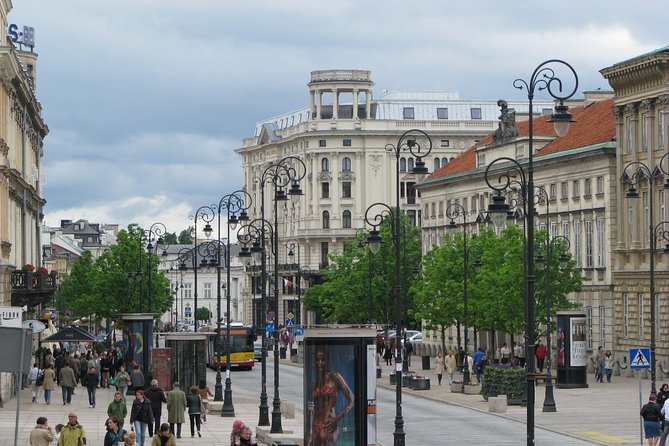
The walk begins on Krakowskie Przedmieście, with a short stop timed around roughly 10 minutes. This is the kind of start that helps you set context: you’re not yet in the densest Old Town streets, but the guide is already placing you in the wider Warsaw story.
Krakowskie Przedmieście is a useful warm-up because it connects you to the city’s “before” vibe—then you’ll immediately move into places tied to Polish identity and history.
Tip for you: keep your camera ready, but also keep one ear free. The most important details tend to land right as you arrive at a landmark, not after you’ve already walked past it.
Holy Cross Church (Kosciol Swietego Krzyza) and Chopin’s resting place
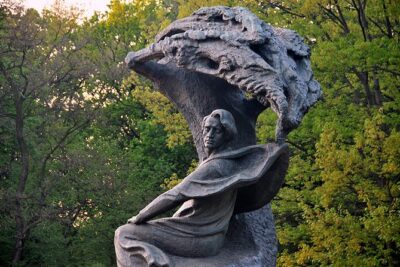
Next is Holy Cross Church, a quick stop of about 5 minutes. The headline detail is unforgettable: this is the church where the heart of Frèderic Chopin rests.
That’s not the sort of thing you usually stumble into on a casual walk. Having it guided makes it hit harder. Instead of reading a plaque after the fact, you get the meaning first—then you look at the place itself.
What I like here: the guide treats the stop like more than a postcard. Even with limited time, you come away with a clearer picture of why Chopin’s legacy belongs in this church.
Possible drawback: if you want to linger quietly and absorb everything slowly, the short duration can feel limiting. It’s more of a meaningful introduction than a long spiritual visit.
University of Warsaw’s oldest section: why it shows up on this walk
You also get about 5 minutes at the University of Warsaw, focusing on its oldest part. Even if you don’t think of universities as “tour stops,” this one works because it ties education to national continuity—an angle that fits Warsaw’s rebuild narrative.
It’s a small stop, but it gives you a sense that the story isn’t only about monuments. It’s about institutions that survived, adapted, and kept going.
If you’re the kind of person who likes seeing how cities invest in the future, this moment helps. If you only care about the biggest landmarks, it may feel like a quick glance—but it’s still a useful one.
On foot through Warsaw: more guided walks



Tomb of the Unknown Soldier and Saxon-era echoes
About 10 minutes go to the Tomb of the Unknown Soldier. The guide connects it with the estate of the Saxon kings in Poland, linking Polish remembrance with older European power structures.
This is one of those stops where the meaning is partly symbolic. You’re seeing a memorial built for collective memory, but you’re also being nudged toward the deeper timeline—how different eras shaped Poland’s political landscape.
In practical terms, it’s also a good pause in the route. You’ve been listening and looking at multiple sites close together; this gives your brain a moment to reset before the government buildings and the Old Town core.
The Presidential Palace: power in plain sight
The Presidential Palace stop is around 10 minutes. You’ll admire the seat of the Polish President and hear about its unprecedented history.
Even without going heavy on technical detail, this kind of stop helps you understand how political identity shows up in architecture. Poland’s story isn’t only about buildings surviving. It’s also about buildings being repurposed and reinterpreted across eras.
What to watch for: don’t treat it like a random photo stop. Try to listen for the guide’s framing about how institutions changed over time, because that’s what gives the structure meaning.
Castle Square (Plac Zamkowy) and the Royal Castle: UNESCO, reconstruction, and a Venetian painter
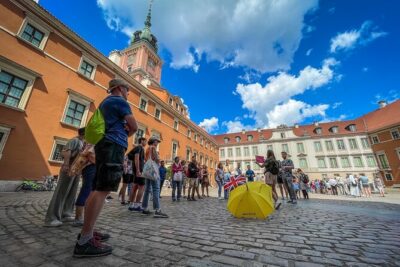
This is one of the tour’s main hits. Castle Square gets about 15 minutes, and it’s packed with story.
You’re in the Old Town UNESCO World Heritage Site, described as the youngest Old Town in the world, which is a wild fact the guide explains. Then you hear how the Old Town reconstruction was financed and the role of a Venetian painter—details that turn the look of the square into something you understand, not just something you admire.
You’ll also learn about the Royal Castle and the history of the first democratic constitution in Europe.
Why it’s valuable for you: reconstruction stories can sound abstract until someone ties them to specific choices. Here, you see why the square feels the way it does and why the world calls it heritage. The guide helps you notice the logic behind the design and the effort behind the rebuilding.
Possible drawback: Castle Square draws crowds on many days, so you may not get long to stand wherever you want. The stop is timed for getting the story out, not for hanging in perfect photo angles for a full hour.
St John the Baptist Archcathedral Basilica: WWII memory in the building itself
About 10 minutes go to the Archcathedral Basilica of St John the Baptist. This is described as the only church in Europe through which the war front ran during the Second World War.
That one detail changes how you experience the stop. You’re not just looking at a historical church; you’re hearing about how the building sits inside the lived geography of WWII. The guide also connects it to the heroic struggle of the Poles in the Warsaw Uprising and the role of the Russian army.
This can be an emotionally heavy moment, so pace yourself. If you find memorial-heavy stories intense, it helps that the tour doesn’t drag—about 10 minutes is enough for context without turning it into a long slog.
Gnojna Gora and the Vistula look: quick air between big stories
Next comes a short stop of about 5 minutes at Gnojna Gora. The payoff is simple: you look toward the Vistula.
This brief pause matters more than it sounds. After dense history stops, you get a physical reset and a chance to see the city in relation to water. It also helps you reconnect what the guide told you with the actual geography.
If you love views, this is short, so don’t expect a long photo session. Treat it as a breath and orientation break.
Rynek Starego Miasta: the market square where legends have a place
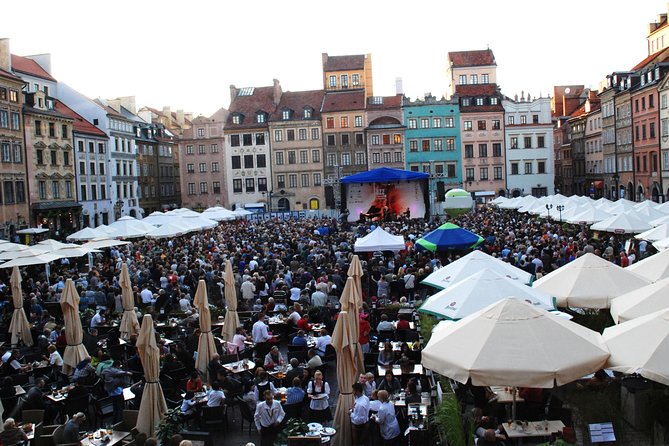
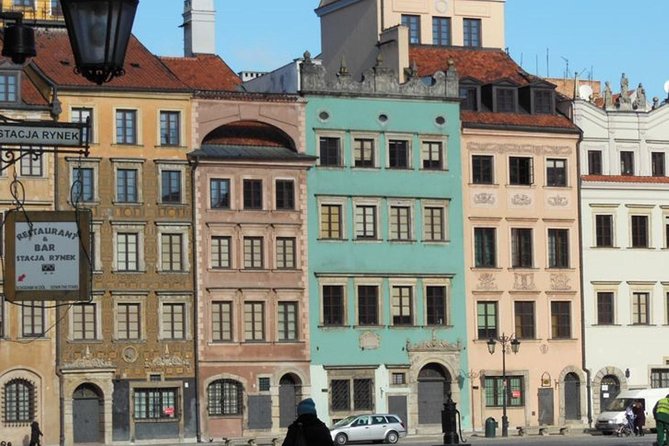
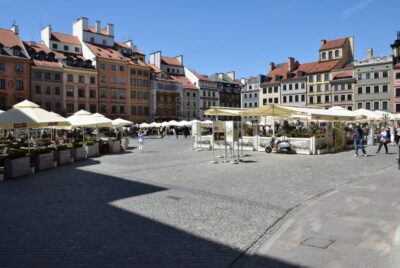
About 10 minutes are spent at Rynek Starego Miasta. Here you’ll walk the picturesque streets and learn the most famous landmarks of Warsaw’s Old Town.
At the market place, the guide shares legends and authentic stories. That blend is what makes this part work on a guided tour. You don’t just hear dates. You hear how stories got attached to buildings and corners.
What I like: the guide doesn’t leave you with trivia. The legends are given as part of the city’s identity, which is the point—Old Town is as much about meaning as it is about architecture.
Passing through the city gate into the New Town
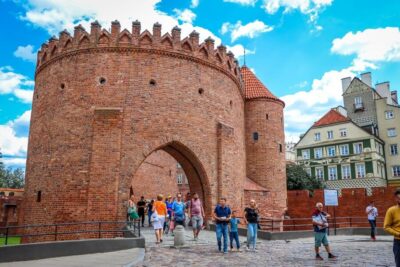
After the Old Town core, you’ll enter the New Town through the city gate. This transition is one of the tour’s quiet strengths. It keeps the walking route coherent instead of jumping you to a completely separate area.
You’ll start feeling the shift from the heavily rebuilt UNESCO center toward surrounding Warsaw neighborhoods and landmarks, which helps you understand the city as a whole.
Marie Curie Museum: the one stop where your budget can change
Around 10 minutes are allocated at Muzeum Marii Sklodowskiej-Curie, the birthplace of Marie Curie. This stop’s admission is not included, so it’s the main place where you might pay extra.
Because the museum is separate in cost, I think of it as optional in practice even though it’s on the walk. If you’re Marie Curie-focused, this could be your favorite educational stop. If you’re more focused on the wartime and Old Town theme, you might treat it as a shorter look and consider whether you want to pay to go in fully.
Practical advice: bring the extra money or be ready for an on-site payment (since admission isn’t included). Nothing ruins a good tour feeling like confusion at the one add-on.
Field Cathedral of the Polish Army and the Warsaw Uprising Monument finish
The final stretch ends at the monument of the Warsaw Uprising, with about 10 minutes at the Field Cathedral of the Polish Army.
This is a strong ending because the tour’s story arc gets clear: identity, power, faith, rebuilding, then the cost of fighting back. After walking through Chopin, royal symbolism, and reconstruction, finishing at the Warsaw Uprising memorial area gives the entire route a sense of closure.
If you’re someone who likes history with a moral center, you’ll probably appreciate how the guide threads it all together by the time you reach the final monument zone.
Price and value: is $72.87 for 2 hours worth it?
The price is $72.87 per person for about 2 hours, offered in English with a mobile ticket and group discounts.
Here’s how I’d size the value up:
- Time saved: you cover a lot of major stops in a compact loop, without you having to connect the dots yourself.
- A lot of key stops are free: most listed sites have free admission tickets for the tour component. The big exception is the Marie Curie museum admission.
- Context matters: this tour isn’t just walking past pretty things. It gives you specific story framing—Chopin’s heart, reconstruction financing and a Venetian painter, and WWII geography tied to St John the Baptist Basilica.
If you’re the type who enjoys learning while you walk, this is a fair price. If you only want self-guided photos and minimal talking, you might feel it’s overkill for a short visit.
One more value note: the tour is private, and one booking can turn into a one-on-one experience. That makes the price feel even better when the group is small, and it’s exactly the kind of setup that can lead to better questions and a calmer pace.
Who should book this Warsaw Old Town and New Town walk
This tour is a great match if you want:
- a history-focused walking route that moves fast enough to feel efficient
- clear explanations of major sites tied to Polish identity
- a guided route through both Old Town and New Town, instead of a single district
It may be less ideal if you:
- prefer slow exploring and lots of free time inside buildings
- want only one kind of theme (for example, only churches, only museums, or only WWII)
Should you book? My call
Book it if you want a guided “connect-the-dots” walk through Warsaw’s rebuilt Old Town and onward into the New Town. I think it’s especially worth it for the way it pairs landmark viewing with specific stories—Chopin’s heart, Castle Square reconstruction details, and the WWII tie-in at St John the Baptist.
Skip or reconsider if you’re already comfortable self-guiding major sights and you’d rather spend your time longer inside museums. This walk is built to cover key points in a tight window, so it gives you understanding more than it gives you hours of wandering.
FAQ
How long is the Warsaw Old and New Town walking tour?
It runs for about 2 hours.
Where does the tour start?
The meeting point is the Nicolaus Copernicus Monument on Krakowskie Przedmieście, 00-333 Warsaw, Poland.
Where does the tour end?
The tour ends at the Warsaw Uprising Monument at plac Krasińskich, 00-263 Warsaw, Poland.
Is the tour offered in English?
Yes, it’s offered in English.
Is this a private tour?
Yes. It’s private, so only your group participates.
What ticket do I need?
You’ll get a mobile ticket, and you’ll receive confirmation at the time of booking.
Are admissions included?
Most admission tickets for the tour stops are listed as free. Admission for the Marie Curie Museum is not included.
Is transport included?
No. Transport is not included.
Are snacks included?
No. Snacks are not included.
What’s the cancellation policy?
Free cancellation is available up to 24 hours before the experience start time for a full refund.
Can I bring a service animal?
Yes, service animals are allowed.
More Guided Walks Around Warsaw
- Warsaw: Old Town Highlights Walking Tour in English
★ 4.7 · 1,516 reviews - Warsaw: Old Town Guided Walking Tour
★ 4.9 · 599 reviews - Half-Day Polish Food Walking Tour with Guide and Dinner
★ 4.5 · 381 reviews - Old Town Warsaw Walking Tour
★ 4.5 · 333 reviews
More Tour Reviews in Warsaw
- Warsaw: Chopin Concert in the Old Town
★ 4.8 · 2,287 reviews - Warsaw: Traditional Galar Cruise on The Vistula River
★ 4.6 · 1,640 reviews - Warsaw: Old Town Highlights Walking Tour in English
★ 4.7 · 1,516 reviews - Warsaw Concert: Chopin – Painted by Candlelights with Wine
★ 4.8 · 1,442 reviews
The Old Town and Royal Route, More Walks
- Warsaw: Chopin Concert in the Old Town
★ 4.8 · 2,287 reviews - Warsaw: Old Town Highlights Walking Tour in English
★ 4.7 · 1,516 reviews - Warsaw: Old Town Guided Walking Tour
★ 4.9 · 599 reviews - Old Town Warsaw Walking Tour
★ 4.5 · 333 reviews
Fresh on the site: newer Warsaw reviews


Warsaw Old Town & Royal Route Walks: the other contenders.
 ★ 4.8Chopin Concert in the Old TownFrom $262,287 reviews
 ★ 4.7Old Town Highlights Walking Tour in EnglishFrom $261,516 reviews
 ★ 4.9Old Town Guided Walking TourFrom $13599 reviews
 ★ 4.5Old Town Warsaw Walking TourFrom $26333 reviews
 ★ 4.9Warsaw Old Town 1.5-Hour or Full 3-Hour Segway TourFrom $69209 reviews
 ★ 5.0Everyday concerts of Chopin’s music at the Old Town in WarsawFrom $26192 reviews
 ★ 4.8Old and New Town Private Walking TourFrom $16116 reviews
 ★ 5.0Segway Tour Warsaw: Old Town Tour – 1,5-Hour of Magic!From $72112 reviews
Browse the lists this tour appears in