
Reviewed · BEST OF WARSAW CITY TOURS
Warsaw Morning, Guided, Panoramic View, public city tour with hotel pick up
Warsaw in three hours sounds impossible, but this morning route does it by packing in the big scenes without making you feel rushed. I like the free hotel pickup and drop-off, and you’ll also appreciate the small group on an air-conditioned bus that lets the guide actually move with the group. The main thing to plan for is that there’s more walking than you may expect from a bus tour, so comfortable shoes help a lot.
What makes this tour genuinely useful is the way it pairs the postcard Warsaw you want with the harder parts of the city’s past. You’ll see the Royal Castle from the outside, glide through key neighborhoods, and get a guided thread connecting the World War II story to places like the former Jewish Ghetto and the Warsaw Uprising monuments. It’s a strong fit for first-timers and anyone short on time who still wants context, not just coordinates.
In This Review
- Key Points at a Glance
- A 3-Hour Morning Route That Actually Helps You Plan Days Ahead
- Price and Logistics: What You’re Paying For (and What You’re Not)
- Stop 1: Łazienki Royal Park and the WWII-Safe Neighborhood Advantage
- Stop 2: Monument to Ghetto Heroes, POLIN, and Learning Without a Museum Guide
- Stop 3: Umschlagplatz, a Short Stop With Heavy Weight
- Old Town: How the Tour Works Around the Most Walkable Parts
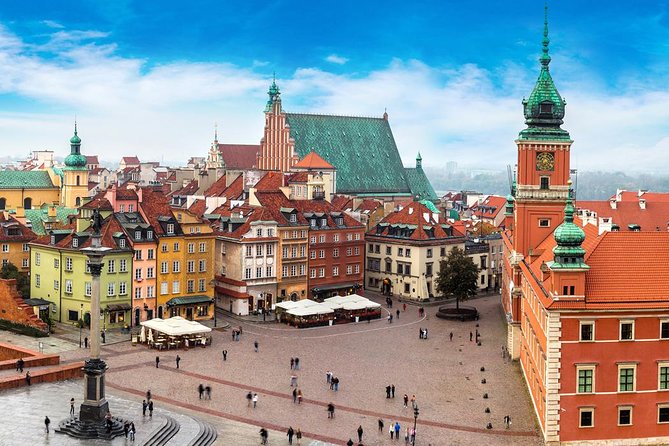
- Rynek Starego Miasta (Old Town Square)
- Warsaw Barbican
- Warsaw Uprising Monument
- Royal Castle From the Outside: Why It’s Still Worth Stopping
- Archcathedral Basilica of St. John the Baptist: Gothic Style Meets Rebuild History
- Comfort, Sound, and the Practical Tips That Can Make or Break It
- The WWII Story: Serious Topics, Respectful Pace
- Who This Tour Fits Best (and Who Might Prefer Something Different)
- Should You Book This Guided Morning Circuit?
- FAQ
- How long is the Warsaw morning city tour?
- What time do I need to be ready for pickup?
- Is hotel pickup and drop-off included?
- What language is the tour guide?
- How many people are in the group?
- Is lunch included?
Key Points at a Glance
- Free hotel pickup and drop-off keeps your morning simple and lets you start seeing sights right away
- Max 15 travelers means quicker questions and a calmer pace than big group tours
- A mix of bus driving and short walks covers more ground than you’d manage solo in half a day
- WWII sites + Old Town landmarks give you both the famous Warsaw and the context behind it
- POLIN timing built in so you can keep going at the museum on your own after the tour
- Refreshments are included (water and soft drinks), but build in a snack just in case timing isn’t perfect
A 3-Hour Morning Route That Actually Helps You Plan Days Ahead
This is the kind of tour you book early in your trip because it gives you structure fast. You don’t just “see stuff”; you learn what belongs together geographically and historically. The route is set up like a morning loop: park first, then ghetto-related sites, then Old Town and the Uprising memorial areas, with short stops for photos and walking.
The full experience is about 3 hours, starting at 10:00 am, with pickup around 9:45 am from hotels and city-center addresses. That timing matters. If you arrive in Warsaw that morning, you get your bearings without burning half a day. If you’re already there, you still get a practical sense of where to focus later.
Also, the format is efficient: an English-speaking guide leads while the bus handles transit between neighborhoods. Then you step out for bite-sized walks around key sites like the Old Town Square and the Barbican area. If you prefer to keep your feet moving but not for long stretches, this is a workable balance.
Warsaw in a morning: more city overviews
- Warsaw: Old Town Highlights Walking Tour in English★ 4.7 · 1,516 reviews
- Warsaw: City Sightseeing Hop-On Hop-Off Bus Tour★ 3.6 · 1,415 reviews
- Private Tour: Warsaw City Sightseeing by Retro Fiat★ 5.0 · 562 reviews
Price and Logistics: What You’re Paying For (and What You’re Not)
At $60.34 per person for about 3 hours, the value is mostly in what’s included with the guide and transportation. You get:
- a professional English guide
- an air-conditioned small group bus (up to 15 people)
- free hotel pickup and drop-off
- still water, Coca Cola, and Polish traditional chocolate candies
- a mobile ticket
What you do not get is lunch. That’s easy to fix. If your tour ends in the Old Town, you’ll likely want a meal right after, so plan for that instead of assuming food will be part of the deal.
One practical caution: a few details can feel inconsistent in real life. Some people reported the drinks arrived near the end rather than sooner, and a complaint came up about the candy matching what was advertised. None of that should ruin the tour, but it does support my advice: if you’re hungry, grab a small snack before pickup. You’ll enjoy the darker memorial stops more if you’re not also fighting low energy.
Stop 1: Łazienki Royal Park and the WWII-Safe Neighborhood Advantage
You start at Łazienki Krolewskie w Warszawie, the Royal garden area of Łazienki. The guide starts you in a district described as largely not destroyed during World War II, which is why many monuments there are said to be original and connected to the 18th century.
This stop is more than a pretty warm-up. It gives you a visual baseline for what Warsaw looked like before it was rebuilt again and again. If you’re new to the city, this matters because the rest of the route includes places that suffered major destruction and later reconstruction. Standing in a surviving 18th-century-style setting helps you feel the contrast.
Time on site is about 45 minutes, and you don’t need to rush it. Use this as your moment to slow down, take photos, and listen to the guide’s framing before the tour turns toward remembrance.
Tip from the realities of small group touring: bring a light layer. Parks can feel cool in the morning, and if the weather shifts, you’ll thank yourself during the bus-to-walk transitions.
Stop 2: Monument to Ghetto Heroes, POLIN, and Learning Without a Museum Guide
Next comes Pomnik Bohaterow Getta, the Monument to Warsaw Ghetto Heroes. This is where the tour makes its emotional pivot, connected to the Warsaw Ghetto Uprising during World War II. It’s brief—about 20 minutes total for this segment including the nearby area—but it’s clearly meant to be a stop where the guide sets the meaning before you move on.
Right next to the monument is POLIN, the Museum of the History of Polish Jews. The tour plan gives you a simple option: you can visit POLIN on your own afterward. The museum is described as interactive and you don’t need a guide to understand it.
That “after the tour” element is one of the smartest parts of this experience. It prevents the schedule from choking itself. You still get the important context via the walk and commentary, but you’re not forced to keep listening through a full museum day. If you want more time there, POLIN is a natural place to extend your morning into the next part of your trip.
A small heads-up: because this segment includes a museum you might want to return to later, check your timing for the rest of the loop. If you’re the type who needs every detail, you may end up wanting extra time at POLIN once you’re there.
Stop 3: Umschlagplatz, a Short Stop With Heavy Weight
Then you reach Umschlagplatz, described as one of Warsaw’s most heartbreaking places. The tour explains that Nazis loaded Jewish people into carriages there and transported them to Treblinka.
This stop is short—about 5 minutes—and that can feel sudden, but the intent is clear: keep the tour moving while still marking the location that matters. Since it’s only a brief window, you’ll get the most out of it if you pay attention rather than treat it like a quick photo stop.
If you’re sensitive to wartime content, plan your pacing mentally. You may want to take a moment to regroup before continuing into the Old Town, because the next parts are beautiful in a way that can be emotionally complicated when you just learned what was destroyed.
More of Warsaw with a guide alongside


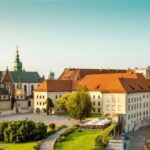
Old Town: How the Tour Works Around the Most Walkable Parts
The tour’s final sightseeing focus is the Old Town, with multiple stops designed to keep you from walking too long at once while still hitting the essentials.
Rynek Starego Miasta (Old Town Square)
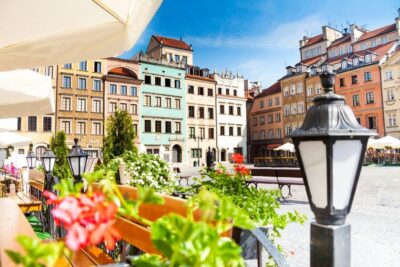
You’ll walk around Rynek Starego Miasta, the Old Town Square, for about 20 minutes. The guide frames it as a magical atmosphere—also with the sober reminder that the area was destroyed during the Warsaw Uprising.
Even if you’ve seen Old Town photos online, getting a guide’s explanation helps. You’re not just seeing a square; you’re seeing the story of reconstruction layered onto a public space where daily life returns after catastrophe.
Warsaw Barbican
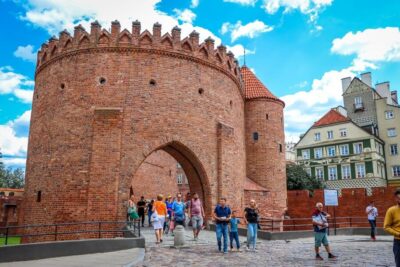
You also stop at the Warsaw Barbican (Barbakan Warszawski), described as a defensive wall with a Gothic style using red bricks. It’s brief—about 5 minutes—but it’s a great “texture” stop. The Barbican isn’t just a landmark; it gives you a physical sense of fortification and survival thinking.
Warsaw Uprising Monument
After the Barbican, you reach the Monument to Warsaw Uprising Fighters. It’s described as expressive and symbolic and is allocated around 5 minutes.
This is one of those stops where it helps to let the guide finish the explanation before you wander off for photos. The monument’s meaning lands better when you hear it once, then see it again with your own eyes.
Royal Castle From the Outside: Why It’s Still Worth Stopping
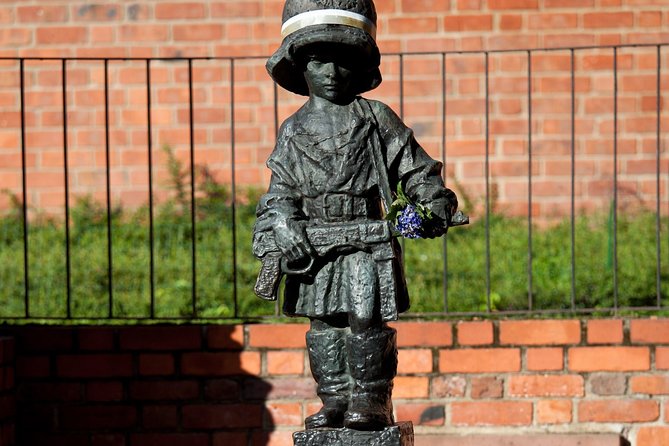
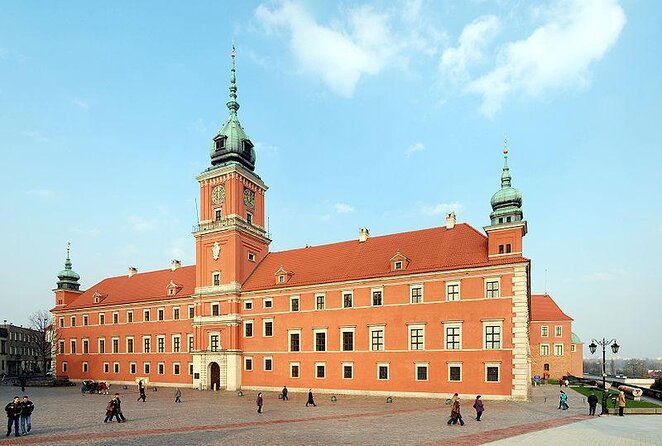
You’ll see Royal Castle in Warsaw from the outside as part of the tour route, allocated around 10 minutes. The key point the guide shares is that the castle was blown up during the Warsaw Uprising in 1944 and rebuilt in 1984.
This exterior stop is valuable for two reasons:
1) It anchors the whole day in the story of power and national identity.
2) It gives you the visual starting point if you decide to return later and go inside.
Just know what you’re booking here: the tour includes an exterior view rather than a guided museum session. If you want the deeper castle experience, plan for a separate stop later in your trip.
Archcathedral Basilica of St. John the Baptist: Gothic Style Meets Rebuild History
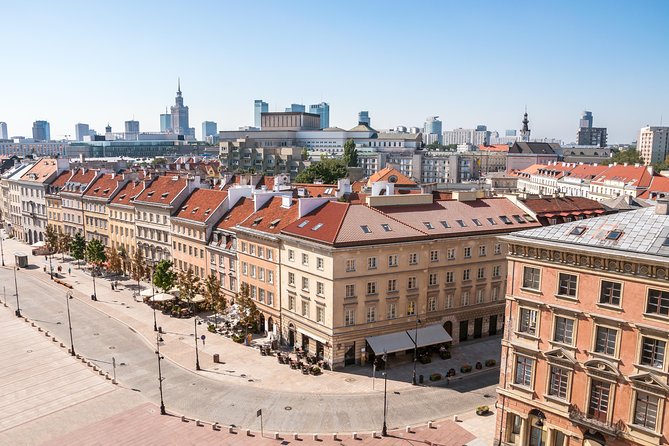
Another quick but meaningful stop is Archikatedra Sw. Jana Chrzciciela, the Archcathedral Basilica of St. John the Baptist. The building is described as Masovian Gothic style. The important wartime detail is that it was completely demolished during the Warsaw Uprising by Nazis, then rebuilt again in 1960.
The tour treats the church as both architecture and evidence—proof that Warsaw didn’t just rebuild buildings, it rebuilt identity. Even in a short time window, the guide’s explanation helps you notice the church’s place in the city’s story rather than seeing it as just another church stop.
Comfort, Sound, and the Practical Tips That Can Make or Break It
This is where the reviews become useful because small-group tours depend on logistics. A few themes show up in real life:
Hearing can be an issue. Some people said they struggled to hear the guide on walks. If you’re hard of hearing, or if you simply prefer clarity outdoors, bring your own earbuds and consider requesting or using any method the guide offers for audio clarity. Since the tour is partly walking, wind and distance can affect what you hear.
Walking is real. Even though it’s a bus tour, you’re outside for short segments at multiple locations: parks, Old Town Square, Barbican, and memorial areas. The tour description looks compact, but the route adds up. If your feet get tired fast, treat this as a morning walking plan.
Refreshments timing may vary. Water and Coca Cola are included, and Polish chocolate candies are listed too. Still, a complaint noted they weren’t served until the end and another said the candy didn’t match what was advertised. Don’t count on a mid-tour snack boost. Bring a small bar just in case.
Weather matters. The experience is described as requiring good weather. If the day turns rainy and the tour is canceled, you’re offered a different date or a full refund. For planning, keep an easier day scheduled for Warsaw sightseeing so you have flexibility.
The WWII Story: Serious Topics, Respectful Pace
This tour doesn’t sugarcoat. It moves from Royal Park and landmarks into ghetto remembrance, Umschlagplatz, and then the Warsaw Uprising sites. That structure is effective because it gives you a transition instead of dumping everything at once.
You should expect the guide to connect present-day streets and buildings to what happened during the German occupation and uprising period. The stops are short, but the guide is doing the real work: explaining why each location matters and how it shaped the city that stands today.
If you’re visiting Warsaw for the first time, this is also a useful way to decide what to do next. After this morning, you’ll know whether you want to spend more time at POLIN, return to the castle area, or explore Old Town more slowly.
Who This Tour Fits Best (and Who Might Prefer Something Different)
This tour is a strong match if:
- you want a fast overview of Warsaw’s main sights in a small group
- you appreciate context, especially around World War II and rebuilding
- you like short walks but don’t want a long walking marathon
- you’re staying in or near Warsaw city center and want pickup handled
It may feel less ideal if:
- you want a long panoramic viewpoint experience as the title suggests, and you expect a dedicated observatory stop
- you’re very sensitive to loud sound outdoors and the guide’s audio support may not be enough for you
- you need guaranteed food at set times, since lunch isn’t included and refreshment timing can feel late
Should You Book This Guided Morning Circuit?
Yes—if you want a practical first-day plan that ties Warsaw’s beauty to its past without wasting time. The free pickup, the 15-person max, and the route that hits Łazienki, ghetto memorials, and Old Town in one morning make it a smart value for a city where transit between areas can chew up your schedule.
I’d book it especially if you’re balancing multiple tours and you want one guided thread to anchor your days. After this, you can pick what you want to go deeper on—POLIN in particular is built into the flow.
If you’re the type who hates any walking at all, or if you’re expecting a major panoramic viewpoint stop, message the operator before booking so you know how the day will handle views and audio on outdoor segments. Then you’ll be set up for a morning that’s both moving and useful.
FAQ
How long is the Warsaw morning city tour?
It runs for about 3 hours.
What time do I need to be ready for pickup?
Pickup is offered around 9:45 am, and the tour starts at 10:00 am.
Is hotel pickup and drop-off included?
Yes. The tour includes free pickup and drop-off from places in Warsaw city center, and you’ll be met with a guide/driver holding a small yellow board with red signs.
What language is the tour guide?
The tour is offered with an English-speaking guide.
How many people are in the group?
The maximum group size is 15 travelers.
Is lunch included?
No, lunch is not included. The tour includes still water, Coca Cola, and Polish traditional chocolate candies.
More Tours in Warsaw
- Warsaw: Old Town Highlights Walking Tour in English
★ 4.7 · 1,516 reviews - Warsaw: City Sightseeing Hop-On Hop-Off Bus Tour
★ 3.6 · 1,415 reviews - Warsaw: Polish Vodka Museum Tour with Tasting
★ 4.6 · 788 reviews - 3-Hour Guided Cycling Tour of Warsaw
★ 4.9 · 624 reviews
More Tour Reviews in Warsaw
- Warsaw: Chopin Concert in the Old Town
★ 4.8 · 2,287 reviews - Warsaw: Traditional Galar Cruise on The Vistula River
★ 4.6 · 1,640 reviews - Warsaw: Old Town Highlights Walking Tour in English
★ 4.7 · 1,516 reviews - Warsaw Concert: Chopin – Painted by Candlelights with Wine
★ 4.8 · 1,442 reviews
See More of Warsaw at a Glance
- Warsaw: Old Town Highlights Walking Tour in English
★ 4.7 · 1,516 reviews - Warsaw: City Sightseeing Hop-On Hop-Off Bus Tour
★ 3.6 · 1,415 reviews - Private Tour: Warsaw City Sightseeing by Retro Fiat
★ 5.0 · 562 reviews - Warsaw: Afternoon Public City Tour with Pickup and Drop-off
★ 4.4 · 421 reviews
Fresh on the site: newer Warsaw reviews
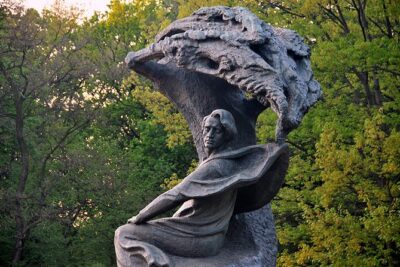

Best of Warsaw City Tours: the other contenders.
 ★ 4.7Old Town Highlights Walking Tour in EnglishFrom $261,516 reviews
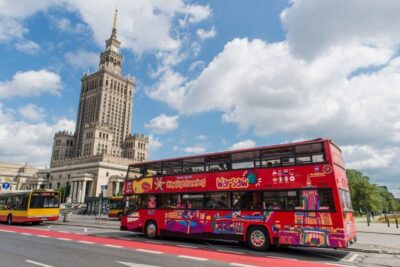 ★ 3.6City Sightseeing Hop-On Hop-Off Bus TourFrom $411,415 reviews
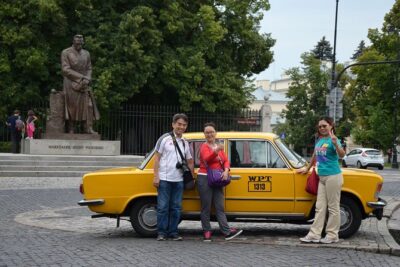 ★ 5.0Private Tour: Warsaw City Sightseeing by Retro FiatFrom $108562 reviews
 ★ 4.4Afternoon Public City Tour with Pickup and Drop-offFrom $51421 reviews
 ★ 5.0Warsaw Behind the Scenes – small group tour with hotel pickupFrom $133228 reviews
 ★ 5.0Warsaw City Sightseeing in a Retro BusFrom $42196 reviews
 ★ 4.53-Hour Panoramic City Bus Tour with PickupFrom $58169 reviews
 ★ 4.9Warsaw Must-Sees: 4-Hour Private Tour by Retro FiatFrom $105123 reviews
Browse the lists this tour appears in