
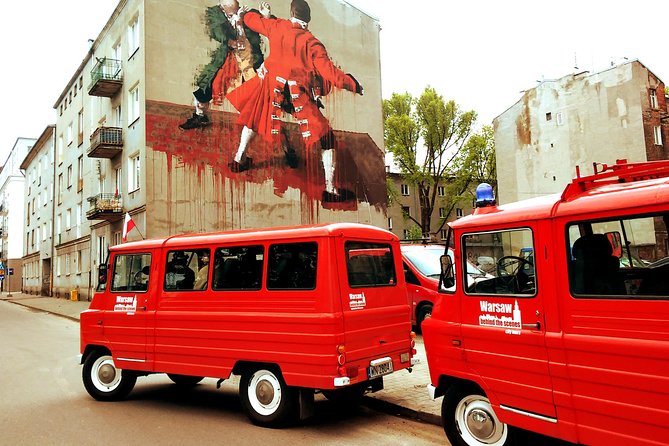
Reviewed · BEST OF WARSAW CITY TOURS
Warsaw Behind the Scenes – small group tour with hotel pickup
Warsaw tells two stories at once. This small-group tour uses hotel pickup and a quirky Zuk minibus to connect WWII scars with the city’s later comeback.
I really like how the stops stay short and focused, with just enough walking to see details up close without turning the day into a slog. I also like the way guides such as Tom and Marcin explain what you’re looking at, often with historical visuals that make the present-day streets feel less confusing.
One consideration: this is not light sightseeing. You’ll spend time around Holocaust and wartime sites, including the Warsaw Ghetto, so if you want only breezy “postcard Warsaw,” this route may feel heavy.
In This Review
- Key highlights
- A First-Day Orientation That Doesn’t Skip the Hard Parts
- Price and Logistics: What You’re Really Paying For
- Getting Picked Up and Riding in a Zuk Minibus
- Stop-by-Stop: A Warsaw Timeline You Can Feel
- Stop 1: Warsaw orientation with quick historical context
- Stop 2: Muranów and the ground-level reality of the ghetto
- Stop 3: Chłodna Street and the wooden ghetto bridge site
- Stop 4: Nowolipki and the Warsaw Ghetto Uprising of 1943
- Stop 5: Bielańska and the wider WWII endgame
- Stop 6: Praga Polnoc and the prewar feel across the Vistula
- Stop 7: Śródmieście and post-1945 communist rebuilding pressures
- Stop 8: 1989—Solidarity and the end of communist rule
- Emotional Weight: How to Go Without Checking Out
- Who This Tour Fits Best
- Should You Book This Behind-the-Scenes Warsaw Tour?
- FAQ
- How long is the Warsaw Behind the Scenes tour?
- What language is the tour offered in?
- Is hotel pickup included?
- How large is the group?
- What kind of transportation is used?
- Do the stops require paid admission tickets?
- Are there seat belts on the vehicles?
- Are children allowed?
- What is the cancellation policy?
Key highlights
- Hotel pickup and drop-off for participating hotels, so you start on easy mode.
- Zuk minibuses (historic vehicles) with heating in winter, often no air-conditioning.
- WWII locations you may miss alone, including the Muranów area and the wooden ghetto bridge site from The Pianist.
- Clear timeline from 1940 to 1989, ending with Solidarity and Pope John Paul II’s role in communism’s fall.
- Tiny vehicles and a cap on group size, max 39 overall, with minibuses holding up to 8.
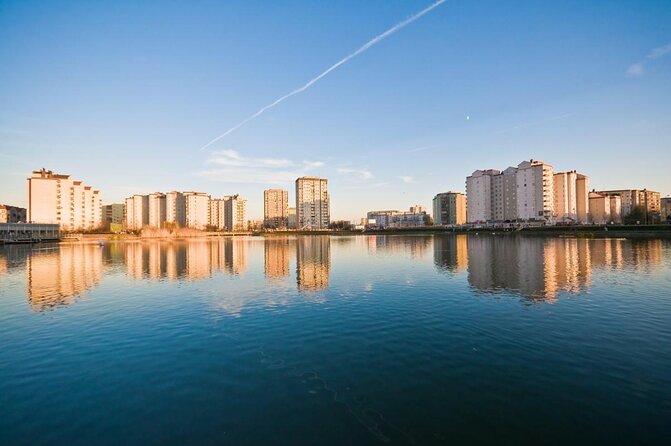
- Praga district contrast, crossing the Vistula to see parts of the city that largely avoided the worst damage.
A First-Day Orientation That Doesn’t Skip the Hard Parts
If you’re figuring out Warsaw for the first time, this tour is built for that job. It moves fast enough to get you oriented, but not so fast that you just “check boxes.” You’ll see how neighborhoods grew, how war reshaped them, and how the city keeps rewriting itself.
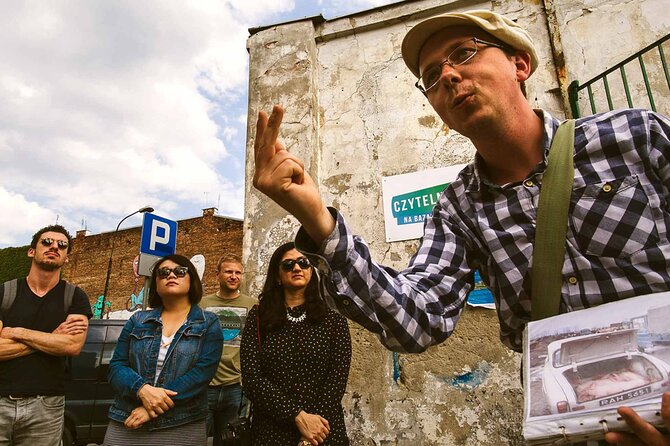
The strongest part for me is the balance between street-level views and real context. The guide doesn’t just point out buildings. They explain what those places meant during the Nazi occupation and then what happened in the decades that followed. Guides like Tom and Marcin are singled out in the reviews for storytelling that stays human, and for answering questions in a way that makes the city feel less like a textbook.
And yes, there’s a hip, up-and-coming side too. Praga Polnoc gives you that contrast: you cross the Vistula, you get riverbank views, and you’re in a district that still carries prewar atmosphere rather than looking like a museum set.
Warsaw in a morning: more city overviews
- Warsaw: Old Town Highlights Walking Tour in English★ 4.7 · 1,516 reviews
- Warsaw: City Sightseeing Hop-On Hop-Off Bus Tour★ 3.6 · 1,415 reviews
- Private Tour: Warsaw City Sightseeing by Retro Fiat★ 5.0 · 562 reviews
Price and Logistics: What You’re Really Paying For
At $133.08 per person for about 3 hours, you’re paying for three things: access, time saved, and a guided narrative that strings Warsaw’s layers together.
Access is the big one. Hotel pickup means you don’t have to locate a meeting point with map anxiety. Then the vehicles handle the jumpy distances between districts, while you still walk enough at each stop to read the city with your own eyes.
Time is also part of the value. Instead of spending half a day piecing together transport and “best guess” routes, you get a tight itinerary. Even the stops that feel like “just a look” include a focused story so you understand what you’re seeing before moving on.
Logistics are worth knowing up front:
- The minibuses are vintage and may not have air-conditioning.
- Some vehicles do not have seat belts (historic vehicles are allowed to operate this way).
- They do have heating for winter.
So, you’ll want comfortable clothes and sturdy shoes. If you’re sensitive to cold, dress for it—especially if you’re touring early in the morning.
Getting Picked Up and Riding in a Zuk Minibus
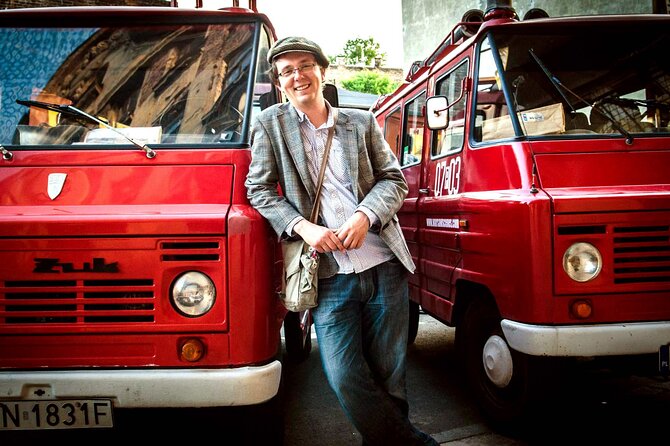
Starting at 10:00 am, you meet up after the operator confirms your exact pickup time via the message system after booking. Pickup and drop-off are available only for hotels listed by the operator, and if yours isn’t listed, you’ll need to contact them to find the most comfortable nearby pickup point.
The ride itself is part of the experience. Multiple guides in reviews mention the Zuk vehicle in a warm way, and the vehicle’s whole vibe matches the tour theme: Warsaw’s past isn’t polished behind glass. It’s right there in the streets—and even in the way you travel.
Group size is set up to keep things personal. The maximum is 39 people, and each minibus holds up to 8. That smaller size matters on a WWII-focused tour because you can actually ask questions, and the guide can adjust pace if you want more context or less.
Also, it’s English-language guided. You’ll use a mobile ticket, so bring your phone (and make sure it’s charged enough for a morning pickup).
Stop-by-Stop: A Warsaw Timeline You Can Feel
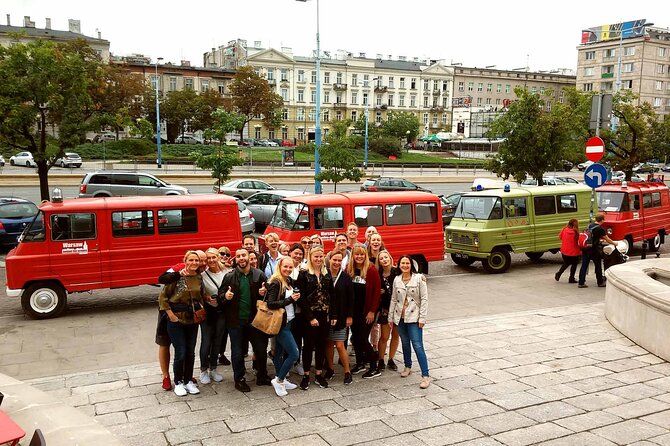
This tour is essentially a guided line across time. You’ll start with quick orientation, then move into WWII sites tied to the Jewish Ghetto and the Warsaw Uprisings, then jump to postwar rebuilding, and finish at the turning point in 1989.
Stop 1: Warsaw orientation with quick historical context
After hotel pickup, you meet your guide and get a short intro to Warsaw and Poland. You’re not being asked to memorize dates. This is the kind of primer that makes later stops click—especially when the city’s modern look can hide what happened underneath it.
This is a smart start. Without it, some WWII locations can feel like disconnected points on a map. With it, you start to see patterns: occupation, isolation, resistance, destruction, rebuilding, and political change.


Stop 2: Muranów and the ground-level reality of the ghetto
Muranów is the first major district stop. On the surface, it can look like ordinary postwar housing, but the story underneath is far more dramatic. This is tied to the Jewish Ghetto established by Nazi Germany in 1940.
What makes this stop powerful is that it reframes the everyday. You’re not only learning about what people did during the occupation. You’re also noticing how a city can rebuild over trauma, leaving only traces—sometimes subtle—that require a guide to point them out.
This stop is brief on paper (about 20 minutes), so the “getting it” depends on the guide’s pacing and clarity. If you want more background before a tour like this, that’s when a museum later—like Polin—can help connect more dots. You can still enjoy this tour on its own; just know it’s more “street interpretation” than “lecture.”
Stop 3: Chłodna Street and the wooden ghetto bridge site
At the corner of Chłodna and Żelazna Streets, you’ll see the location connected to the iconic wooden ghetto bridge. Many people know this from The Pianist, where the bridge connects parts of the sealed ghetto and lets traffic move underneath.
Even if you’ve heard of it, this stop tends to land differently when you stand near the place. The guide uses historical photos to help you visualize how it functioned—what it connected, what it separated, and why bridges mattered in a space designed to confine.
This is one of those moments where you’ll likely feel the disconnect between film memory and real geography. A good guide turns that into understanding, not just recognition.
Stop 4: Nowolipki and the Warsaw Ghetto Uprising of 1943
Next up is Nowolipki, tied to the Warsaw Ghetto Uprising in 1943. This is when Jewish resistance fighters made their final stand against deportation. After weeks of fighting, the ghetto was razed.
The value here is that you’re not only hearing about a tragedy. You’re hearing about agency—about people resisting even when odds were impossible. The guide also explains how events are commemorated today, and how historical layers show up in the modern cityscape.
This stop can be emotionally intense, so if you feel yourself getting overwhelmed, it’s okay to slow your brain down and just take in what’s around you: the street angle, the building lines, the way the city carries memory.
Stop 5: Bielańska and the wider WWII endgame
At Bielańska, the tour widens from the ghetto story to the broader WWII and Poland political future. The guide covers how agreements between Western Allies and Stalin placed Poland under Soviet influence, then connects that to the Warsaw Uprising of 1944.
You’ll hear about the collapse of that uprising, followed by Nazi forces destroying around 85% of Warsaw. Then you’ll also get the next turning point: the Red Army entering the ruins in January 1945.
This stop matters because it explains why Warsaw’s story didn’t end with liberation. It kept going—through shifting power and the rebuilding that followed. Many guides are praised for being candid about the war and antisemitism, which helps keep the narrative accurate and grounded instead of sanitized.
Stop 6: Praga Polnoc and the prewar feel across the Vistula
Now comes a major change of pace. You cross the Vistula River to Praga Polnoc, a district that largely survived the war relatively intact.
This is where you get river views and a different Warsaw mood. Praga preserves a sense of prewar Warsaw, with Belle Époque-era buildings, traditional courtyards, and a strong local identity. It also remains less mass-touristy, which helps the tour feel like you’re seeing a real neighborhood, not just a highlight reel.
In reviews, this contrast is often praised because it gives your brain a place to rest after heavy WWII stops. It’s not a distraction from history; it’s history’s opposite side: survival, continuity, and daily life.
Stop 7: Śródmieście and post-1945 communist rebuilding pressures
Back in central Warsaw, the tour stops near the former Polish Communist Party headquarters. Here the story shifts from wartime destruction to post-1945 rebuilding.
Architects wanted a modern city. But their plans had to fit Soviet-inspired ideological demands. As you explore the area, you’ll see the results of those compromises in the urban fabric.
This is a useful stop for anyone who wonders why Warsaw looks the way it does in central districts. It’s not random. It’s a record of power—who controlled what, and what that meant in bricks and streets.
Stop 8: 1989—Solidarity and the end of communist rule
The final stop brings you to events of 1989, when the Solidarity movement and Pope John Paul II played key roles in ending communist rule in Poland.
This is the “then what?” chapter. Warsaw transforms again as democracy and capitalism arrive. The point of ending here is smart: it shows you that the story doesn’t stop at WWII. Warsaw keeps changing, and modern Warsaw is the result of multiple eras of pressure and choice.
By the end, you should feel like you can read the city a bit better—how different time periods left their fingerprints.
Emotional Weight: How to Go Without Checking Out
This tour deals with WWII and the Holocaust. That’s not optional, and the itinerary doesn’t try to soften it with light detours.
So I recommend you choose your mental gear before you go:
- Bring patience for the fact that some topics move quickly because the route is time-based.
- Prepare for empathy, not just information. When the guide uses photos of Warsaw before and after the war, it can hit harder than you expect.
- If you’re the type who wants to talk through details, the small group size helps—guides take questions seriously.
If it rains, you’ll still be able to get close to the sights by vehicle plus walking segments. One review notes the guide managed the day even when the weather wasn’t friendly, which is a good sign for real-world comfort.
Who This Tour Fits Best
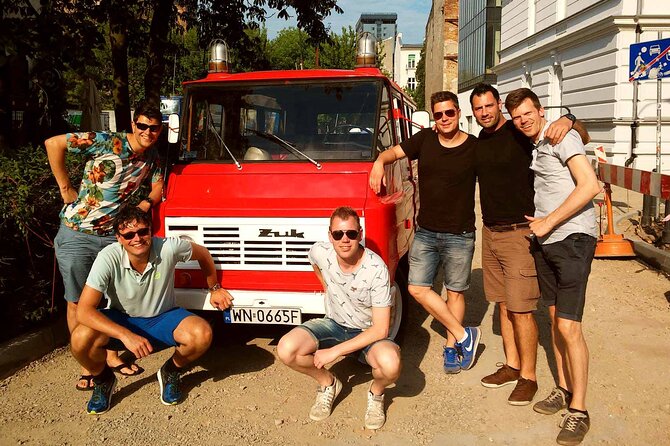
This tour is a strong match if:
- You want a first-day orientation that includes the real story, not just the pretty parts.
- You like walking just enough to see street-level cues, with transport handling the gaps.
- You prefer small groups, so you can ask questions and get direct answers.
- You’re curious about how Warsaw evolved across German occupation, Soviet control, and the 1989 political shift.
It may not be ideal if:
- You want a purely leisurely, low-emotion sightseeing day.
- You hate short walks and you have mobility limits. The tour relies on walking segments at each stop, even though vehicles connect them.
Should You Book This Behind-the-Scenes Warsaw Tour?
Yes—if you want Warsaw explained like a story you can walk through.
The price makes more sense when you consider what’s included: hotel pickup (where offered), a tight 3-hour route, small groups, and guides who use context to make WWII sites understandable rather than overwhelming. Reviews are consistent about guides like Tom, Marcin, Karol, and Mark bringing energy, clarity, and empathy, and about the Zuk minibus adding a memorable, period-matched feel.
My practical advice before you book: do it early in your trip. The timeline helps you interpret everything else you’ll see later—especially the city’s architecture and the way memorials sit inside modern life.
If you like your tours structured, and you’re willing to face the heavier chapters of history with care, this one is worth your half day in Warsaw.
FAQ
How long is the Warsaw Behind the Scenes tour?
It runs for about 3 hours.
What language is the tour offered in?
The tour is offered in English.
Is hotel pickup included?
Pickup and drop-off are available only for hotels listed above. If your hotel is not listed, you need to contact the operator to set the most comfortable pickup point.
How large is the group?
The tour has a maximum of 39 travelers. Each minibus accommodates up to 8 passengers.
What kind of transportation is used?
You ride in minibuses used mainly for transfers between locations, with walking segments at each stop. The vehicles are vintage and may not have air conditioning, though heating is available.
Do the stops require paid admission tickets?
No admission tickets are listed for the stops, and each stop shows admission ticket free.
Are there seat belts on the vehicles?
Some minibuses may not have seat belts, which is permitted for historic vehicles.
Are children allowed?
The tour is available for adults and children over 150 cm (4 ft 9 in). For children under 150 cm, seat boosters are mandatory and required under Polish law, so you must contact the operator in advance to check availability.
What is the cancellation policy?
You can cancel for a full refund if you cancel up to 24 hours in advance of the experience’s start time.
More Tours in Warsaw
- Warsaw: Old Town Highlights Walking Tour in English
★ 4.7 · 1,516 reviews - Warsaw: City Sightseeing Hop-On Hop-Off Bus Tour
★ 3.6 · 1,415 reviews - Warsaw: Polish Vodka Museum Tour with Tasting
★ 4.6 · 788 reviews - 3-Hour Guided Cycling Tour of Warsaw
★ 4.9 · 624 reviews
More Tour Reviews in Warsaw
- Warsaw: Chopin Concert in the Old Town
★ 4.8 · 2,287 reviews - Warsaw: Traditional Galar Cruise on The Vistula River
★ 4.6 · 1,640 reviews - Warsaw: Old Town Highlights Walking Tour in English
★ 4.7 · 1,516 reviews - Warsaw Concert: Chopin – Painted by Candlelights with Wine
★ 4.8 · 1,442 reviews
See More of Warsaw at a Glance
- Warsaw: Old Town Highlights Walking Tour in English
★ 4.7 · 1,516 reviews - Warsaw: City Sightseeing Hop-On Hop-Off Bus Tour
★ 3.6 · 1,415 reviews - Private Tour: Warsaw City Sightseeing by Retro Fiat
★ 5.0 · 562 reviews - Warsaw: Afternoon Public City Tour with Pickup and Drop-off
★ 4.4 · 421 reviews
Fresh on the site: newer Warsaw reviews
Best of Warsaw City Tours: the other contenders.
 ★ 4.7Old Town Highlights Walking Tour in EnglishFrom $261,516 reviews
 ★ 3.6City Sightseeing Hop-On Hop-Off Bus TourFrom $411,415 reviews
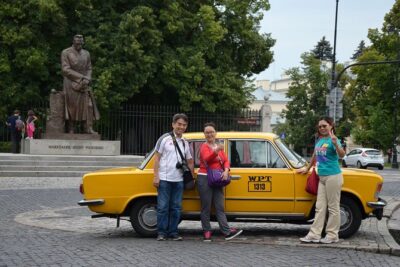 ★ 5.0Private Tour: Warsaw City Sightseeing by Retro FiatFrom $108562 reviews
 ★ 4.4Afternoon Public City Tour with Pickup and Drop-offFrom $51421 reviews
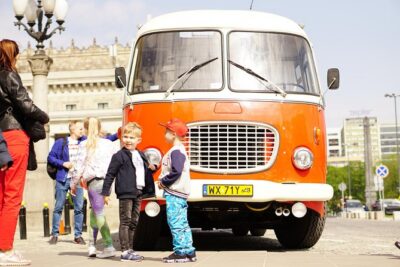 ★ 5.0Warsaw City Sightseeing in a Retro BusFrom $42196 reviews
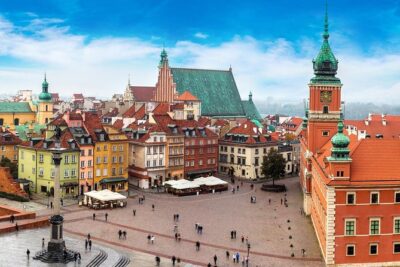 ★ 4.5Warsaw Morning, Guided, Panoramic View, public city tour with hotel pick upFrom $60172 reviews
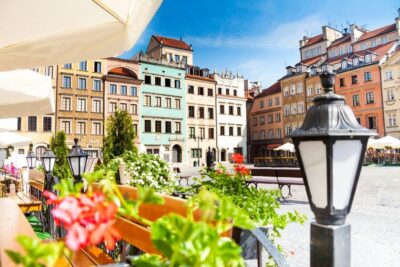 ★ 4.53-Hour Panoramic City Bus Tour with PickupFrom $58169 reviews
 ★ 4.9Warsaw Must-Sees: 4-Hour Private Tour by Retro FiatFrom $105123 reviews
Browse the lists this tour appears in