
Reviewed · BEYOND WARSAW DAY TRIPS
From Warsaw: Tour to Malbork Castle and Gdansk or Sopot
Medieval giants meet Baltic towns on one packed day. You’ll spend real time inside Malbork Castle and then switch gears to either Gdansk’s Hanseatic streets or Sopot’s seaside promenade. I especially like the hands-on feel of the castle visit plus the clear English guidance that helps big walls make sense, not just look impressive. One thing to plan for: this is a long day with lots of driving, so it suits travelers who don’t mind being on the move.
I also appreciate that lunch is included at a local sit-down restaurant, not a random stop where you’re rushed through. If you want a relaxed pace or you hate being scheduled, you may feel the time pressure. Still, the structure keeps you from wasting hours figuring out transport and ticket lines.
In This Review
- Key Highlights You’ll Actually Feel
- Why Malbork Castle Is the Main Event from Warsaw
- Inside the Castle: Courtyards, Cloisters, and the Grand Masters
- Lunch Break That Doesn’t Feel Like a Detour
- Gdansk Old Town Walk: Hanseatic Power in Real Places
- Sopot Option: Seaside Promenade and a Wooden-Pier Stroll
- Getting There Without the Headache: Small Group and Real-Time Guidance
- Price and Value: What You’re Paying For at $477
- What the 17-Hour Day Feels Like (and How to Prepare)
- Who This Tour Is Best For
- Should You Book Malbork Castle and Gdansk or Sopot from Warsaw?
- FAQ
- How long is the tour?
- Where is the pickup location in Warsaw?
- Does this tour visit Malbork Castle first?
- Is there a choice between Gdansk and Sopot?
- How long is the guided time in Gdansk?
- How long is the guided time at Malbork Castle?
- Is lunch included, and what does it include?
- What language is used during the tour?
- Is Malbork admission included, and do you skip the ticket line?
- What’s the group size and are there any minimum requirements?
Key Highlights You’ll Actually Feel
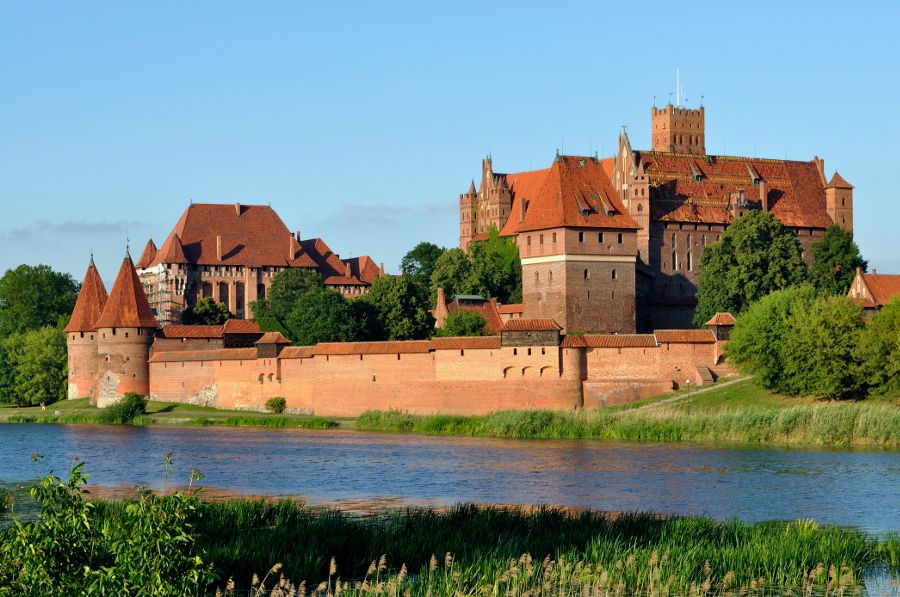
- Malbork Castle, the Teutonic Knights’ power base: the largest castle complex in Europe by land area
- Guided time that targets what to notice: High Castle courtyards and cloisters, plus the Grand Masters’ Palace
- Old Town walking in Gdansk: Golden Gate, Long Market, Artus Court, and Neptune’s Fountain
- Sopot alternative with classic seaside icons: Bohaterów Monte Cassino promenade, Crooked House, and the long wooden pier
- Small group size (up to 8): easier questions, less waiting, more personal pace
Why Malbork Castle Is the Main Event from Warsaw
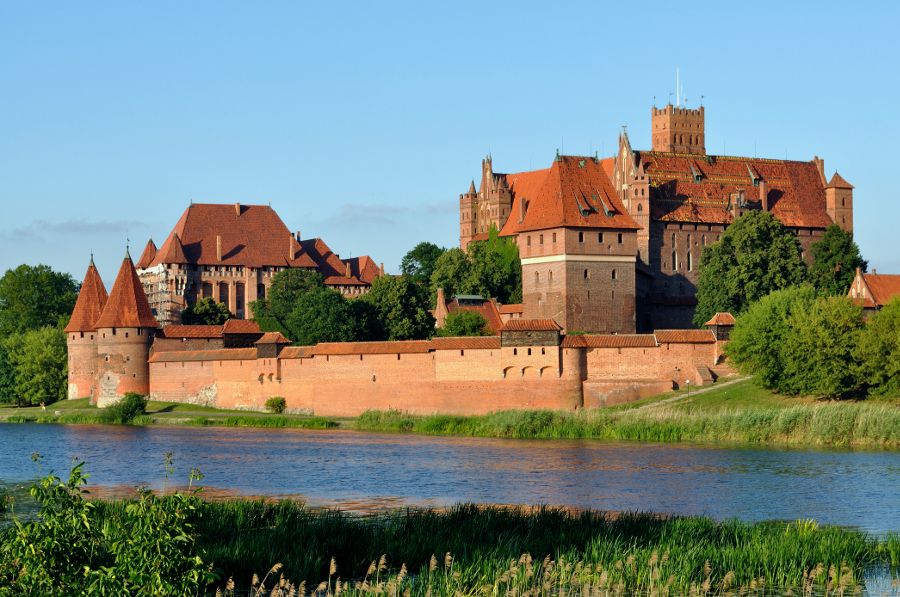
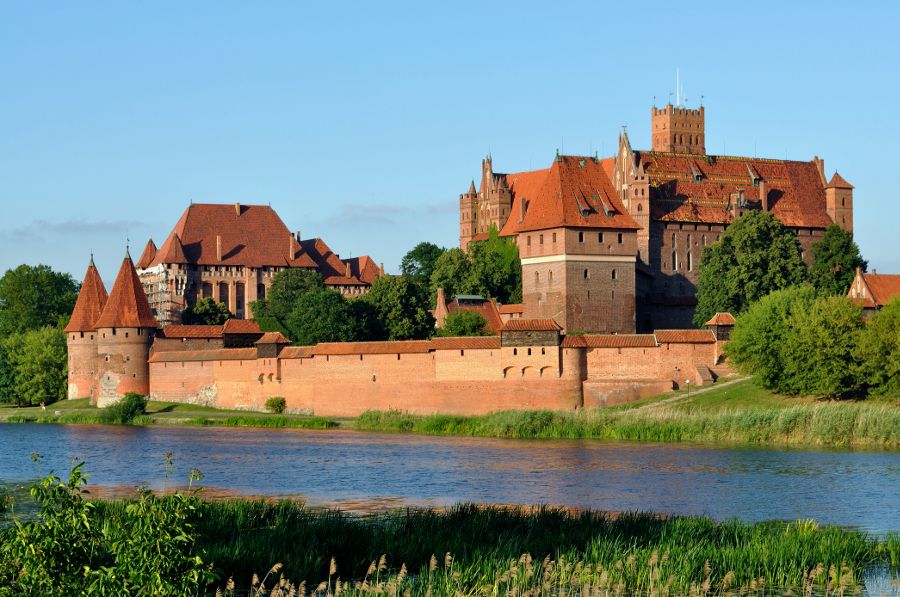
Malbork Castle isn’t just one stop; it’s the whole theme of the day. Built by the Knights of the Teutonic Order, the complex sits in the Vistula River delta area and is known for sheer size—Europe’s biggest castle complex by land area. When you arrive, the place immediately feels like a city you could get lost in, but the tour structure helps you move through it with purpose.
I love that this isn’t a quick photo dash. You get guided time—about 3.5 hours—which is long enough to notice the different sections and understand how the castle worked as a political and ceremonial machine. The experience is best if you enjoy architecture and human-scale details, like courtyards and cloisters that tell you how people actually moved through the space.
Further afield: more days out of Warsaw
- Bialowieza National Park Small Group Tour from Warsaw with Lunch included★ 5.0 · 18 reviews
- Warsaw: Bialowieza National Park and European Bison Tour★ 4.9 · 13 reviews
- 12 Day Private Tour of Poland with Hotels★ 5.0 · 11 reviews
Inside the Castle: Courtyards, Cloisters, and the Grand Masters
Your guided walk focuses on the areas that make Malbork readable. You’ll see the courtyard and cloisters of the High Castle, which is where the complex starts to feel like daily life, not just a monument. You also get a chance to picture the castle’s social side—your visit includes where feasts were held in the Summer Refectory.
Then the tour shifts toward the Middle Castle, where the Grand Masters’ Palace brings the Gothic architecture into sharper focus. Even if you’re not a building-history nerd, you’ll likely feel the difference between military function and ruling-class display. That’s the value of having a guide and an English audio layer: you spend time looking at the right things instead of guessing what you’re seeing.
One practical plus: entry is included, and you’re set up to skip the ticket line. In a place this big, saving even a small chunk of time matters. It keeps your day moving and helps you use the guided hours fully.
Lunch Break That Doesn’t Feel Like a Detour
After the castle, you’ll sit down for lunch at a local restaurant. You’re given a straightforward set meal: soup, a main course, and water, and it’s scheduled for about an hour. It’s not a long gastronomic stop, but it’s a real break, which is the point on a 17-hour day.
I like that this lunch is included and handled for you. It reduces decision fatigue when you’re already facing a long drive and a tight sightseeing window. If you have dietary needs, you’ll want to double-check what’s possible, since the meal structure is set, but the plan itself is clear and you won’t be hunting for something quickly at the worst possible moment.
Gdansk Old Town Walk: Hanseatic Power in Real Places
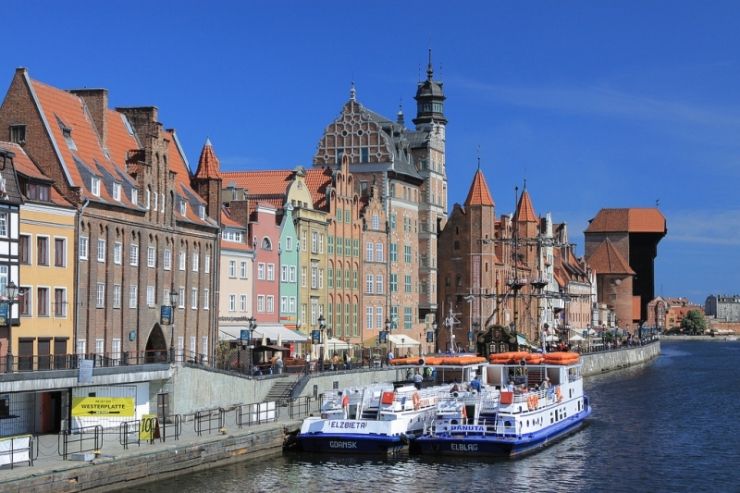
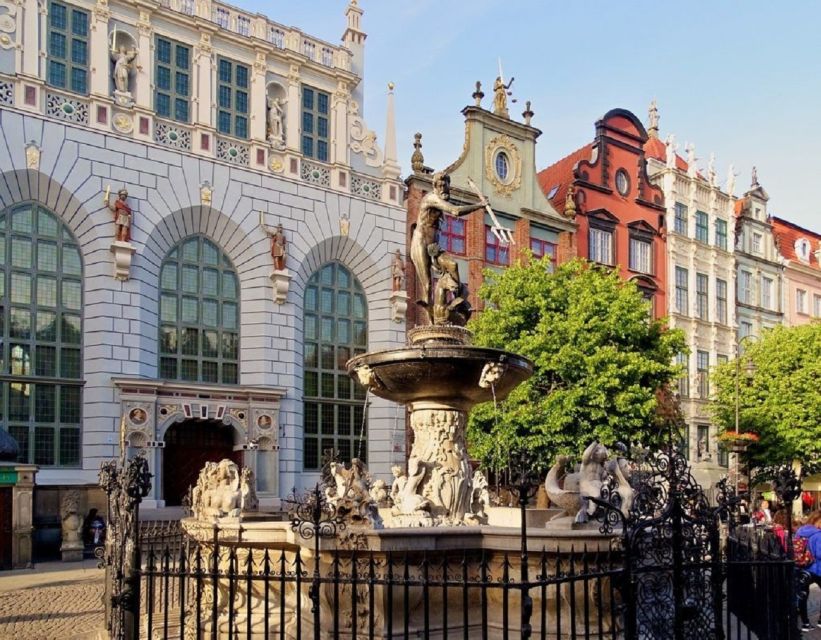
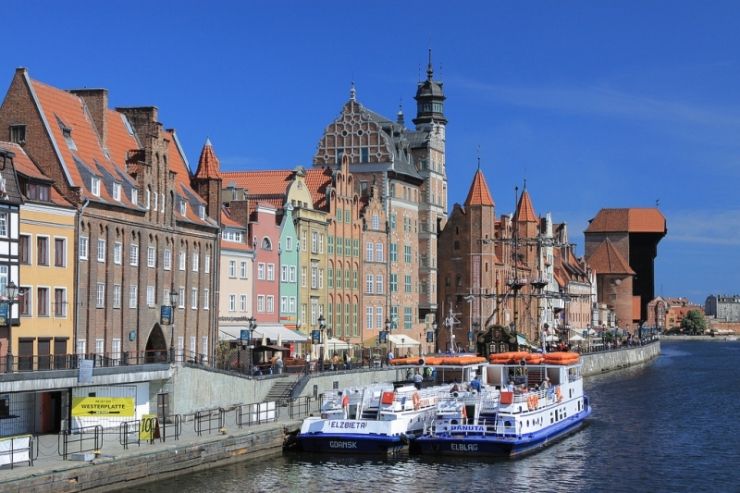
Gdansk is where the day broadens from castle walls to a trading city full of symbols. You’ll have a guided Old Town walk for about 2 hours, which works well because you get a focused route rather than wandering in a circle. The vibe here is classic: brick, gates, markets, and merchant-gathering spots that still look designed for people who mattered.
You’ll start by passing the Coal Market (Targ Węglowy), known as the annual Christmas Market venue. Even if you’re not in winter, it gives you an easy mental anchor: this was a place where crowds, commerce, and community met.
From there, the tour highlights some of Gdansk’s signature stops:
- Amber Museum, housed in the former Prison Tower. It’s a neat contrast: a building associated with confinement turned into a place that celebrates amber craft and trade.
- The Golden Gate, a richly decorated entrance into the Long Market, which leads toward the Green Gate. These aren’t just pretty backdrops; they’re a quick way to understand how a city staged status at entrances.
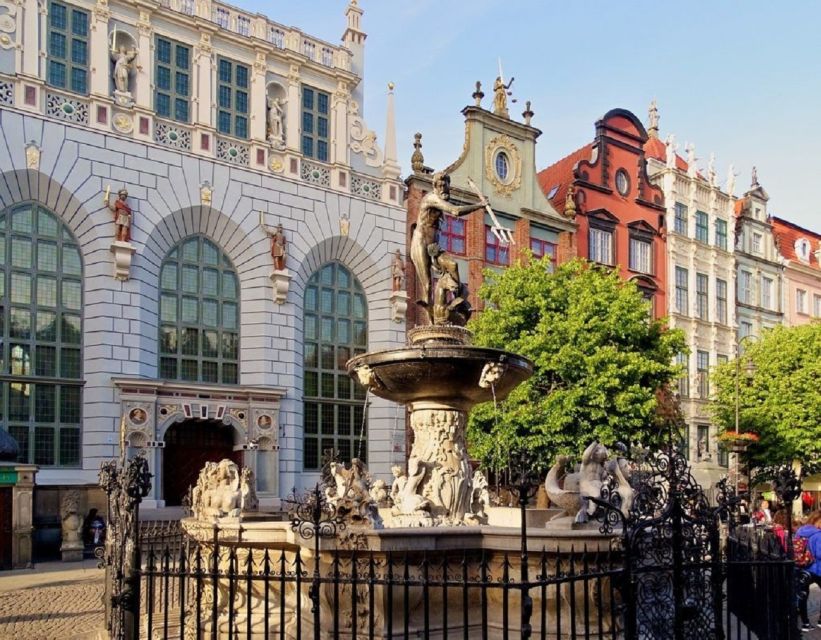
Then you’ll spend time at Artus Court, where wealthy merchants used to gather in the evenings. It’s a reminder that “Hanseatic” wasn’t only ships and ledgers—it was social life too. Near there, look for the Dutch House (Dom Holenderski) and take a breather at Neptune’s Fountain at the entrance to Artus Court.
Finally, you’ll get to the Basilica of the Assumption of the Blessed Virgin Mary, described as the largest brick church in the world. Even if you only see it from key angles, the scale lands quickly. This is the kind of stop that can convert casual sightseeing into real wow—mostly because brick churches usually feel less abstract once you’re standing in front of them.
Sopot Option: Seaside Promenade and a Wooden-Pier Stroll
If you prefer a lighter shift after Malbork, the tour offers the option of Sopot instead of Gdansk. This is the same overall day structure, but with a different second half mood: less medieval governance, more Baltic beach energy.
Sopot’s walk centers on the pedestrian promenade of Bohaterów Monte Cassino Street. It’s built for slow strolling—good for cameras, people-watching, and just letting your legs recover after the castle. Along the way, you’ll spot the famous Crooked House, a quirky landmark that breaks up the day’s seriousness in a fun way.
You’ll also head to Sopot’s standout waterfront feature: the longest wooden pier in Europe. A long pier walk does two things for you: it stretches time in a good way, and it gives you an easy rhythm after earlier indoor sights.
The route includes views around the Sopot Lighthouse, built between 1903 and 1904 as part of the Balneological Institute. Then you can go up to a lookout tower for city and sea views. That last viewpoint is where Sopot clicks. It turns the seaside promenade from “nice walk” into “place you can picture from above.”



Getting There Without the Headache: Small Group and Real-Time Guidance
This is a small-group tour, limited to 8 participants, which is a big deal for day trips. Fewer people means fewer delays and more room for questions, especially when the guide is trying to connect architectural details to history you can actually visualize.
Transportation is by car or minibus, and you’ll have pickup from Warsaw city center. The stated meeting point is Marszałkowska 98-100, so in practice you’re close enough to central Warsaw that you don’t burn half the day commuting across town.
The schedule also includes an English-speaking driver and an English-speaking guide in Gdansk or Sopot. One review highlight points out that the driver can keep things engaging with conversation about politics and history during the drive—exactly the kind of talk that makes a long ride feel shorter. If you like learning in motion, this matters.
And because entry fees for Malbork are included plus skip-the-line access, you don’t waste your momentum at the start. Those minutes add up.
Price and Value: What You’re Paying For at $477
At $477 per person for a 17-hour day, this isn’t a budget hop. But the price starts to make sense when you look at what’s bundled.
You’re paying for:
- Round-trip transportation from Warsaw with central pickup
- A structured, time-limited visit to Malbork Castle (including entry fees) plus guided interpretation
- English support throughout, including an English audio guide inside the castle
- A guided walking experience in Gdansk or Sopot with an English-speaking guide
- Lunch with soup, main, and water
The real value is the time protection. Malbork isn’t just “a place to visit”; it’s a complex that’s hard to read without guidance. With a tour, you don’t spend your effort on planning, queueing, and figuring out what matters first. You use that energy on seeing the right sections—High Castle, cloisters, the Summer Refectory, the Grand Masters’ Palace—and then you move into Gdansk’s gates and merchant spaces or Sopot’s waterfront icons.
If you’re already the type who loves researching on your own, you could plan this trip independently. But if you’d rather trade research time for real touring time with a guide holding the thread, this package is priced like convenience and interpretation, not like raw ticket costs.
What the 17-Hour Day Feels Like (and How to Prepare)
This tour runs for about 17 hours, so you should treat it like a whole-day commitment. The payoff is that you get both a major Teutonic-era site and a Baltic city slice in one go. The drawback is that you’ll have less freedom to linger wherever you fall in love.
If you choose Gdansk, you’ll likely feel you get a lot of meaningful highlights in those 2 hours—Golden Gate, Long Market, Artus Court, Neptune’s Fountain, and the basilica. Still, if you’re the type who likes to wander, you might want to save deeper museum time for a future trip.
If you choose Sopot, you trade city depth for seaside scenery. It’s ideal if you want a break from indoor touring and enjoy a long pier walk and views.
Either way, plan for comfortable shoes. Malbork’s spaces and Gdansk’s and Sopot’s walking streets add up. Bring a light layer too; Poland’s river-to-coast weather swings can surprise you.
Who This Tour Is Best For
This tour fits best if you want a guided day that covers the big names without the planning stress.
You’ll likely love it if you:
- Want the biggest castle complex experience without guessing your way through it
- Enjoy English commentary that connects buildings to how people lived, ruled, and celebrated
- Prefer a small group over big buses
- Like blending a city walk with a specific theme (Hanseatic Gdansk or seaside Sopot)
You might skip it if you:
- Hate long driving days
- Need large blocks of free time to wander without structure
- Are looking for a slow travel pace with minimal logistics
Should You Book Malbork Castle and Gdansk or Sopot from Warsaw?
I’d book this if you’re on a first or second visit to Warsaw and you want an organized, meaningful way to reach Malbork plus a Baltic stop. The combination of Malbork’s guided interior focus, English audio support, and the second-city walk is where the tour delivers real value. At $477, you’re not just paying for transport; you’re paying for someone to help you see the castle and the cities the right way, in the time you have.
Choose Gdansk if you want markets, gates, merchant history, and that massive brick basilica. Choose Sopot if you want a lighter, seaside shift with the pier and lookout views. Either choice keeps the day interesting, even when the driving makes it feel like a marathon.
FAQ
How long is the tour?
The tour duration is 17 hours.
Where is the pickup location in Warsaw?
The pickup location is Marszałkowska 98-100, and pickup is included from Warsaw city center.
Does this tour visit Malbork Castle first?
Yes. You depart Warsaw and visit Malbork Castle, with a guided tour lasting about 3.5 hours.
Is there a choice between Gdansk and Sopot?
Yes. After Malbork, you either visit Gdansk for a guided Old Town walk or visit Sopot for seaside highlights.
How long is the guided time in Gdansk?
The guided tour in Gdansk lasts about 2 hours.
How long is the guided time at Malbork Castle?
The guided tour at Malbork Castle is about 3.5 hours.
Is lunch included, and what does it include?
Lunch is included at a local restaurant. It includes soup, a main course, and water.
What language is used during the tour?
The tour is in English, including an English-speaking driver and an English-speaking guide in Gdansk or Sopot. An English audio guide is included for the castle.
Is Malbork admission included, and do you skip the ticket line?
Entry to Malbork Castle is included, and you can skip the ticket line.
What’s the group size and are there any minimum requirements?
The group is small, limited to 8 participants, and the activity requires a minimum of two reservations for the same date.
More Tours in Warsaw
- Warsaw: Old Town Highlights Walking Tour in English
★ 4.7 · 1,516 reviews - Warsaw: City Sightseeing Hop-On Hop-Off Bus Tour
★ 3.6 · 1,415 reviews - Warsaw: Polish Vodka Museum Tour with Tasting
★ 4.6 · 788 reviews - 3-Hour Guided Cycling Tour of Warsaw
★ 4.9 · 624 reviews
More Tour Reviews in Warsaw
- Warsaw: Chopin Concert in the Old Town
★ 4.8 · 2,287 reviews - Warsaw: Traditional Galar Cruise on The Vistula River
★ 4.6 · 1,640 reviews - Warsaw: Old Town Highlights Walking Tour in English
★ 4.7 · 1,516 reviews - Warsaw Concert: Chopin – Painted by Candlelights with Wine
★ 4.8 · 1,442 reviews
Further Out: Days from Warsaw
- Gdansk and Malbork Castle Small Group Tour from Warsaw with Lunch
★ 4.5 · 20 reviews - Bialowieza National Park Small Group Tour from Warsaw with Lunch included
★ 5.0 · 18 reviews - Warsaw: Bialowieza National Park and European Bison Tour
★ 4.9 · 13 reviews - 12 Day Private Tour of Poland with Hotels
★ 5.0 · 11 reviews
Fresh on the site: newer Warsaw reviews


Beyond Warsaw Day Trips: the other contenders.
 ★ 4.5Gdansk and Malbork Castle Small Group Tour from Warsaw with LunchFrom $41420 reviews
 ★ 5.0Bialowieza National Park Small Group Tour from Warsaw with Lunch includedFrom $38618 reviews
 ★ 4.9Bialowieza National Park and European Bison TourFrom $24513 reviews
 ★ 5.012 Day Private Tour of Poland with HotelsFrom $5,99011 reviews
 ★ 5.0Private Day Trip From Warsaw: Łowicz Mazovian CountrysideFrom $30011 reviews
 ★ 5.0Private Tour From Warsaw: Łowicz Mazovian CountrysideFrom $29410 reviews
 ★ 5.013-Day Highlights of Poland Tour – private for 2-10 personsFrom $5,3508 reviews
 ★ 5.06 Day Private Tour in Poland with HotelsFrom $4,7008 reviews
Browse the lists this tour appears in