
Reviewed · VINTAGE CAR & RETRO FIAT TOURS
Discover the Dark Side of Warsaw in Praga District by Retro Bus
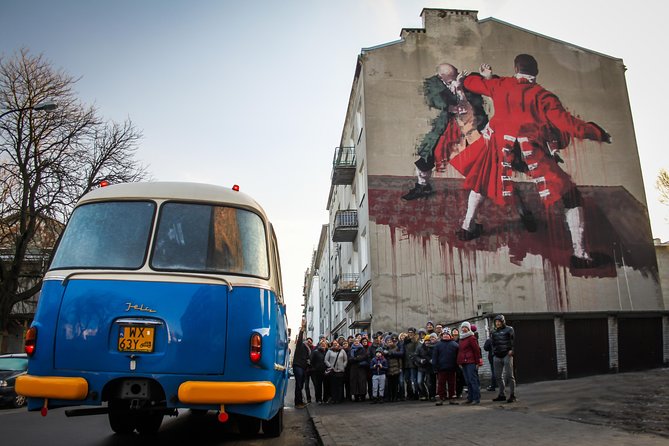
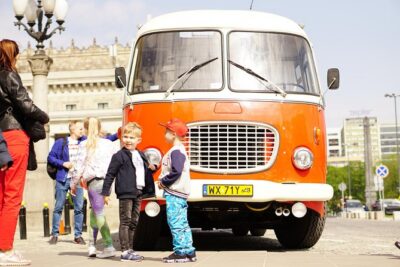
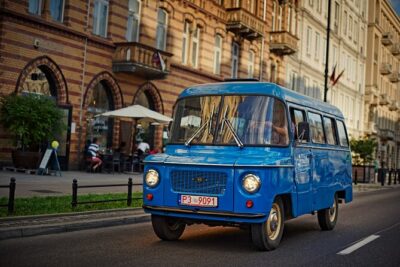
Praga looks different from street level. This retro-bus ride turns Warsaw’s Praga District into a story you can see, not just read, with a seat on a 1980s-style coach and live English guiding. I like the vibe of being “in motion” while you learn how this neighborhood was shaped, but one thing to watch is that some departures can run with big groups, which can mean more noise and faster stop times.
My favorite part is the stop at the E.Wedel chocolate factory, where you get a cup of hot chocolate and hear how a 19th-century factory became part of local life. I also love the way the guides connect WWII and the Communist era to what you still see today, with humor that keeps the facts moving (some guides like Marcin, Konrad, Conrad, and Paweł are known for making the stories land).
If you want the more human, less polished side of Warsaw, this is a smart pick. It’s alternative sightseeing, done with clear pacing and a strong dose of local texture, not a checklist tour.
In This Review
- Key points to know before you go
- Meeting at Pałac Kultury i Nauki: The Retro-Bus Start Point
- The Early Warsaw Stories: Date Palm, WWII Basements, and Euro 2012
- E.Wedel Hot Chocolate: 19th-Century Factory and Real Local Flavor
- Basilica of the Sacred Heart: A Beautiful Stop With Wartime Relevance
- Koneser Vodka Factory: When Industry Becomes a District Story
- Praga Północ: The Main “Dark Side of Warsaw” Portion
- The Longest Marketplace, The Pianist Movie Street, and Nowa Praga Courtyards
- Warsaw Zoo, The Vistula River, and the Royal Castle Panorama on the Way Back
- Price and Value: What You’re Really Paying for at $42.34
- Group Size, Noise, and Other Real-World Comfort Issues
- Who Should Book This Tour (and Who Might Want Something Else)
- Should You Book the Retro Bus Dark Side Tour?
- FAQ
- FAQ
- What is the duration of the Retro Bus Praga tour?
- How much does the tour cost?
- Where do I meet the guide?
- What time does the tour start?
- Is the tour offered in English?
- What’s included in the ticket price?
- Is food or drinks included beyond the hot chocolate?
- Does the tour run in bad weather?
- How big is the group?
- Is there free cancellation?
Key points to know before you go
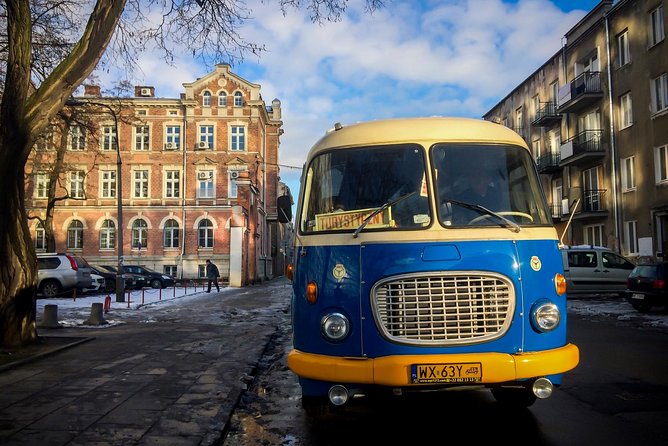
- Retro coach experience: a 1980s-style ride that makes the tour feel like Warsaw history, not a modern bus loop
- E.Wedel hot chocolate: a free cup from a 19th-century factory, plus real stories behind it
- Praga Północ focus: this is the core “dark side” area, with time to walk and look at what survived and what changed
- Street art on Brzeska and Stalowa: murals tied to Poland’s history and political climate
- Praga Bermuda Triangle: courtyards and pre-war architecture you won’t get from most central tours
- Max 40 travelers: small enough for a guided feel, and you may even get a smaller bus
Meeting at Pałac Kultury i Nauki: The Retro-Bus Start Point
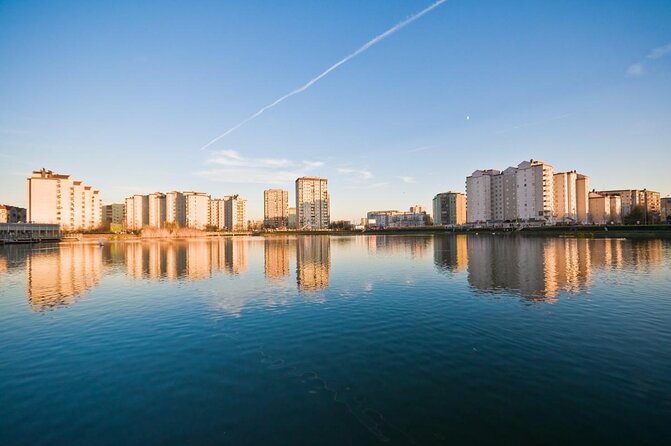
The tour begins right by the Palace of Culture and Science area, at Warsaw Tourist Information (pl. Defilad 1). This building is a Warsaw landmark with heavy 20th-century baggage, so it’s a fitting place to start when your goal is to understand the city beyond postcards.
You’ll board a retro-style coach with live commentary in English, and you’ll get a mobile ticket. There are no hotel pickups, so plan to meet at the stated spot on your own using nearby public transport.
One practical note: the start time shown can be either 10:30am (tour summary) or 11:00am (start time). Treat it like an 11am plan on the calendar, but show up a bit early so you’re not rushing.
Deeper into Praga, over on the far bank
- Warsaw Praga Guided Historical Walking Tour★ 4.5 · 21 reviews
- Warsaw: 2-Hour Praga Walking Tour★ 4.5 · 18 reviews
- Warsaw Praga — where modern, traditional, and bohemian meet★ 4.5 · 14 reviews
The Early Warsaw Stories: Date Palm, WWII Basements, and Euro 2012
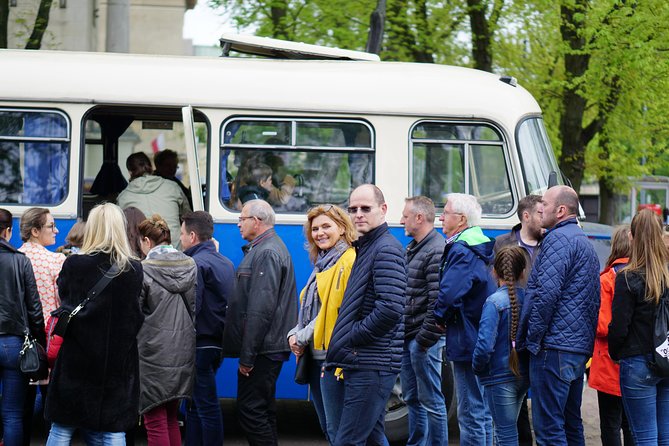
Before you even fully hit Praga, the tour uses a string of quick Warsaw clues to set the context. You’ll hear a few local stories that are easy to miss when you’re walking around alone, like the tale behind the Date Palm Tree in the city center.
Another stop is meant to connect the city’s wartime trauma to something very specific: what was hidden in the basement of the National Museum during WWII. You’ll also pass by the football stadium built for UEFA Euro Championship 2012, which gives you a modern Warsaw marker while the guide keeps the story anchored in the older layers.
These early segments aren’t “random sightseeing.” They’re there to answer a big question the tour keeps asking: why does Warsaw look the way it does after destruction, reconstruction, and political control?
E.Wedel Hot Chocolate: 19th-Century Factory and Real Local Flavor
Then comes the first proper “sit down and smell the past” moment: E.Wedel. You get a free cup of hot chocolate, and you’ll spend about 20 minutes at the factory.
What makes this stop work for me is that it isn’t just a food break. The guide uses it to talk about industry, daily life, and how certain institutions stayed relevant through political change. Even if you’re not a big museum person, the chocolate-and-story combo gives you a fast way to understand why factories and brands matter in a city’s identity.
Tip: if it’s warm, bring a little water with you anyway. The tour provides the hot chocolate, but you may still want a sip break during the long walk-and-look parts later.
Basilica of the Sacred Heart: A Beautiful Stop With Wartime Relevance
Next you’ll see the Basilica of the Sacred Heart of Jesus, another free admission stop with about 20 minutes. This church is a strong visual pause in a tour that otherwise focuses on survival, rebuilding, and political history.
Why I think it’s worth it: architecture is one of the fastest ways to read a city’s self-image. In Praga-focused tours, it’s easy to get stuck in one tone. This keeps the experience balanced—beauty and hardship share the same timeline in Warsaw.
Koneser Vodka Factory: When Industry Becomes a District Story
The tour then shifts from chocolate to spirits with Koneser Warsaw Vodka Factory, again with about 20 minutes and free entry.
This part matters because Praga’s story isn’t only about war or politics. It’s also about work—what the neighborhood produced and how that shaped the streets and buildings people used every day. The guide ties the vodka factory to the district’s change over time, so you’re not just looking at a preserved structure. You’re learning what kind of economic engine kept the area running.
If you like history you can point at—bricks, courtyards, old factory walls—this stop is one of the most satisfying.
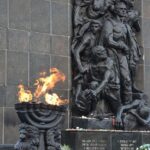
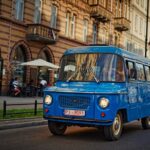
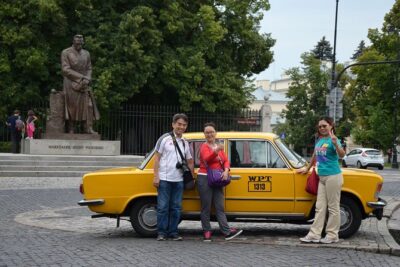
More of the city from the seat of a Retro Fiat

Praga Północ: The Main “Dark Side of Warsaw” Portion
After the industrial and architectural pauses, you hit the core: Praga Północ. This is where the tour earns the dark-side label, with about 1 hour focused on why this side of Warsaw has that reputation.
You’ll also hear the story of places tied to the chaos of WWII and the reality of Communist-era control—plus you’ll see streets where history is written in the walls. Two big visual beats show up here:
- Murals on Brzeska and Stalowa, including art that reflects Poland’s history and political mood
- A look at the former black market of Różycki’s Bazaar, connected to forged documents and underground trade
The tour also references a former vodka factory area again in this segment, keeping the theme of how old industry and old control systems overlap in the same geography.
One more fascinating thread the guide brings up: the Praga Bermuda Triangle. You’ll learn why that name is used and then you’ll get to see the mix of pre-war architecture and courtyards that make the area feel like a whole other Warsaw tucked inside the city.
If you’re the kind of traveler who likes to slow down and look up, this is where you’ll enjoy the most.
The Longest Marketplace, The Pianist Movie Street, and Nowa Praga Courtyards
As you move toward the later stops, you’ll get a mix of everyday Warsaw and cinematic Warsaw.
You’ll check out the longest operating marketplace in Warsaw, where you can see what people buy now. It’s a simple moment, but it’s important. A neighborhood isn’t only its history; it’s its routine.
Then you’ll visit a picturesque street that became a film set for The Pianist by Roman Polański. This is one of those stops where your brain starts connecting what you’ve seen on screen to what’s still here. Even if you’re not a film buff, it makes the wartime context feel physical.
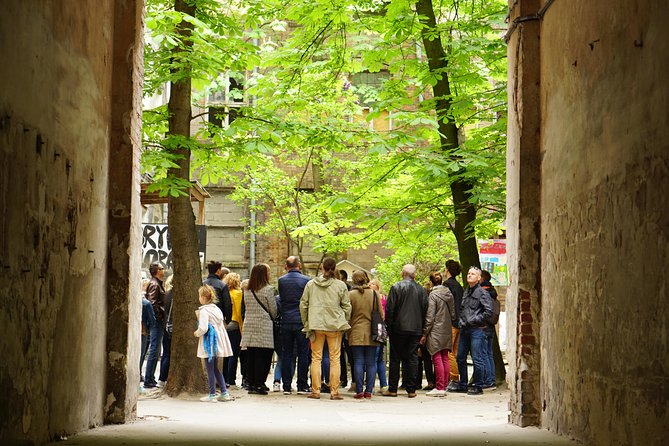
Right after that, you’ll reach New Praga, where the guide shares the story of the founder of the Nowa Praga district. You’ll also get a chance to see an inner courtyard of a prewar residential house. For me, courtyard time is never wasted time in Praga-style tours. It’s where you see how people actually lived, not just how they posed for postcards.
Warsaw Zoo, The Vistula River, and the Royal Castle Panorama on the Way Back
The tour keeps one foot in everyday life and one foot on big-city landmarks.
There’s a stop tied to movie memory: you’ll hear about the movie The Zookeeper’s Wife and why that connects to Warsaw’s Zoo. It’s brief, but it gives your day a pop-culture thread without turning the tour into trivia.
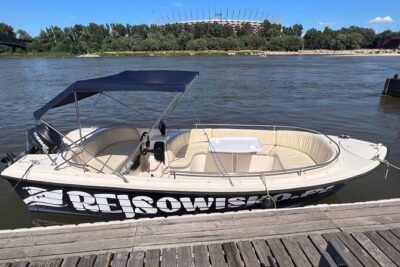
Then you’ll cross the Vistula River. The guide calls it the mother of Polish rivers, and you’ll get the change-of-scene effect of seeing Warsaw from another angle.
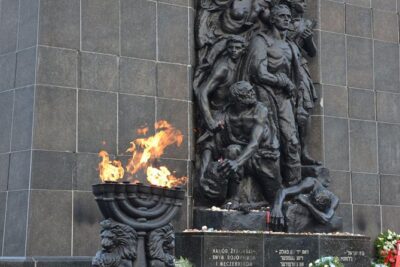
Finally, you’ll catch a panorama of the Royal Castle and see a WWII memorial called the Warsaw Nike, which commemorates those who died in Warsaw during WWII. You’ll also pass by a major city artery that was enlarged after WWII, another reminder that rebuilding wasn’t only about restoration. It also meant reshaping the city.
This return stretch helps you land the big theme: Praga’s “dark side” isn’t just a mood. It’s a timeline you’re carrying back toward the center.
Price and Value: What You’re Really Paying for at $42.34
At $42.34 per person, this tour isn’t cheap by budget standards, but it also isn’t inflated for what you get. Here’s where the value comes from:
- You’re buying 2.5 hours of live English guiding plus transport on a 1980s coach
- You get one free cup of hot chocolate at a specific 19th-century factory (E.Wedel)
- You’re seeing multiple stops with free admission, including the chocolate factory, basilica, and vodka factory complex
- Most importantly, you’re paying for a guide who connects the “why” behind Praga’s reputation to the “what” you can see: murals, courtyards, film locations, and memorials
If you normally pay for a central-Warsaw walking tour, this is a different category. It’s more transport-heavy and more story-heavy, which is exactly what you want for a district like Praga.
If you’re price-sensitive, do this with a clear goal: you’re here for Praga’s wartime and Communist-era imprint, not for five Instagram photo spots.
Group Size, Noise, and Other Real-World Comfort Issues
This is a max of 40 travelers, which is a good size for a guided bus tour. Still, one review-based reality check: some departures can include a large group with loud behavior and drinking on the bus, and that can affect pacing. When people are late or disruptive, guides often have to rush.
You can’t fully control other travelers, but you can protect your experience:
- Go in expecting shorter stop windows in busy departures
- Bring patience, especially if you’re near the back of the group or boarding takes time
- If you’re sensitive to noise, choose a calmer mindset for the ride and focus on the story at the stops
Also, the coach is described as an older vehicle, and on some days things like heating or power can act a bit unusual. The tour still runs, but you’ll be happier if you dress for comfort and bring layers.
Who Should Book This Tour (and Who Might Want Something Else)
This works best if you:
- Want an alternative Warsaw itinerary, not just Old Town highlights
- Like history that shows up in everyday streets, not only in museums
- Enjoy guides who use humor to keep WWII and Communism understandable
- Appreciate food stops with a story behind them (hot chocolate at E.Wedel is the star here)
Consider skipping or pairing with something else if you:
- Want a super-structured, strictly quiet experience
- Expect major “wow” monuments at every stop (this tour is more about neighborhood texture and context)
- Need lots of time to linger in each location; some stops are brief by design
Should You Book the Retro Bus Dark Side Tour?
I think you should book this if Praga is on your Warsaw list and you want a guided route that helps you read the district correctly. The hot chocolate at E.Wedel, the factory stops, the film connections to The Pianist, and the Praga Północ walk through courtyards are a strong mix of sensory and historical learning.
Skip it only if your idea of a great tour is long, slow exploring with total quiet. Otherwise, it’s a solid value way to see the side of Warsaw that feels more real.
FAQ
FAQ
What is the duration of the Retro Bus Praga tour?
It’s listed at about 2 hours 30 minutes.
How much does the tour cost?
The price is $42.34 per person.
Where do I meet the guide?
You meet at Warsaw Tourist Information at Pałac Kultury i Nauki, pl. Defilad 1, 00-901 Warszawa, Poland.
What time does the tour start?
The information provided shows 10:30am for the start outside the Palace of Culture and Science, and 11:00am as the start time. Plan to arrive early.
Is the tour offered in English?
Yes, it’s offered in English.
What’s included in the ticket price?
Included are a professional guide, live commentary on board, transport by a 1980s coach, and a cup of hot chocolate.
Is food or drinks included beyond the hot chocolate?
No. Food and other drinks are not included unless specifically mentioned.
Does the tour run in bad weather?
Yes, it operates in all weather conditions, so dress appropriately.
How big is the group?
The tour has a maximum of 40 travelers.
Is there free cancellation?
Yes. You can cancel up to 24 hours in advance for a full refund.
If you want, tell me your travel dates and what else you’re planning in Warsaw, and I’ll suggest a good day layout around this Praga tour.
More Tour Reviews in Warsaw
- Warsaw: Chopin Concert in the Old Town
★ 4.8 · 2,287 reviews - Warsaw: Traditional Galar Cruise on The Vistula River
★ 4.6 · 1,640 reviews - Warsaw: Old Town Highlights Walking Tour in English
★ 4.7 · 1,516 reviews - Warsaw Concert: Chopin – Painted by Candlelights with Wine
★ 4.8 · 1,442 reviews
More Days in a Retro Fiat
- Private Tour: Warsaw City Sightseeing by Retro Fiat
★ 5.0 · 562 reviews - Private Tour: Warsaw’s Jewish Heritage by Retro Fiat
★ 5.0 · 208 reviews - Warsaw City Sightseeing in a Retro Bus
★ 5.0 · 196 reviews - Private Historical Tour of Warsaw by a Retro Fiat with Pickup
★ 5.0 · 190 reviews
More of Praga, Across the River
- Warsaw Praga Guided Historical Walking Tour
★ 4.5 · 21 reviews - Warsaw: 2-Hour Praga Walking Tour
★ 4.5 · 18 reviews - Warsaw Praga — where modern, traditional, and bohemian meet
★ 4.5 · 14 reviews - Offbeat Warsaw: Explore the Edgy & Artsy Praga District
★ 5.0 · 11 reviews
Fresh on the site: newer Warsaw reviews

Vintage Car & Retro Fiat Tours: the other contenders.
 ★ 5.0Private Tour: Warsaw City Sightseeing by Retro FiatFrom $108562 reviews
 ★ 5.0Private Tour: Warsaw’s Jewish Heritage by Retro FiatFrom $108208 reviews
 ★ 5.0Warsaw City Sightseeing in a Retro BusFrom $42196 reviews
 ★ 5.0Private Historical Tour of Warsaw by a Retro Fiat with PickupFrom $108190 reviews
 ★ 4.9Warsaw Must-Sees: 4-Hour Private Tour by Retro FiatFrom $105123 reviews
 ★ 5.0Private Tour: Warsaw’s Communist History by Retro FiatFrom $108115 reviews
 ★ 5.0Best of Warsaw – private tour by retro minibus with hotel pickupFrom $135111 reviews
 ★ 5.0Retro Fiat Self-Drive Tour in WarsawFrom $5987 reviews
Browse the lists this tour appears in