
Reviewed · PRAGA DISTRICT TOURS
Offbeat Warsaw: Explore the Edgy & Artsy Praga District
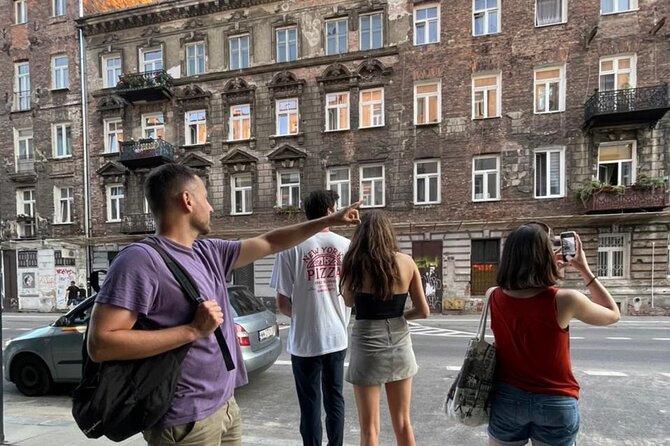
Praga feels like Warsaw’s secret sketchbook. This 2-hour walking tour is designed for people who want edgy street life and real local landmarks, not just postcard views. You’ll cover Jewish history sites, film locations tied to The Pianist, and the kind of backstreet details that usually slip past typical routes.
I especially like the small group size (max 10) because it keeps the pace friendly and makes it easy to ask questions as you go. I also like that the tour is built around recognizable themes—Jewish Warsaw, communist-era architecture, and Praga street culture—so the neighborhood clicks together fast.
One thing to keep in mind: Praga is less polished than Old Town. That’s part of the point, but it means you’ll want to stay aware, stick with the group, and plan for daylight if you’re sensitive about atmosphere and street safety.
In This Review
- Key things I’d plan around
- Why Praga is the smartest contrast to Old Town
- Price and time: what your $42.14 buys
- Getting there and leaving Praga: the end-point makes it easy
- Stop-by-stop: the Praga route that tells a story
- St. Florian’s area and plac Weteranów 1863 Roku
- Monument to Praskiej Kapeli Podworkowej
- Teatr Baj: the former Jewish Orphanage
- Nożyk Synagogue site (from the 1830s)
- A 19th-century park
- Chapel of Our Lady of Loreto: 17th-century Praga landmark
- Jagiellońska 44: early communist-era housing estate
- Mała: The Pianist filming location
- Stalowa street: cafes, galleries, and street art
- Pałacyk Ksawerego Konopackiego
- Fabryka Schichta Bohema: finish at the factory turned hub
- What makes this tour worth your afternoon
- Who should book this (and who might not love it)
- Should you book Offbeat Warsaw: Praga with Łukasz?
- FAQ
- What’s the duration of the walking tour?
- How much does the tour cost per person?
- What language is the tour offered in?
- How big is the group?
- Where do I meet the guide?
- Where does the tour end?
- Are there any paid entry fees at the stops?
- When is the tour scheduled to start?
Key things I’d plan around
- Max 10 people means you get real interaction instead of being rushed through stops
- English guide Łukasz with short stories you can actually follow while walking
- Jewish sites + The Pianist gives the neighborhood context in two powerful ways
- Street art and lived-in blocks on Stalowa and nearby streets make great photo moments
- Finish at Fabryka Schichta Bohema, a former factory complex now easy to continue exploring
- Free entry at the listed stops, so you’re not nickel-and-dimed mid-walk
Why Praga is the smartest contrast to Old Town
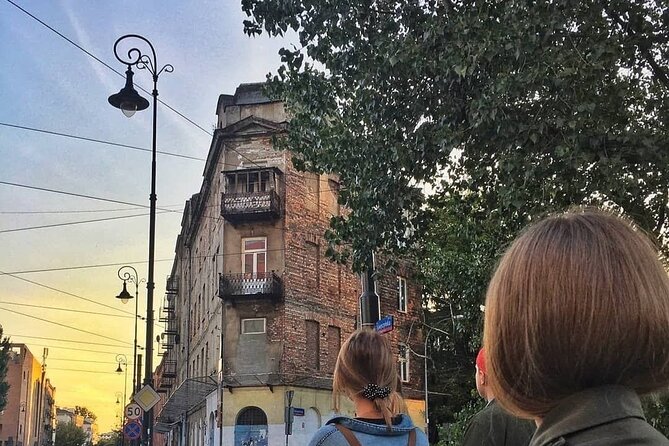
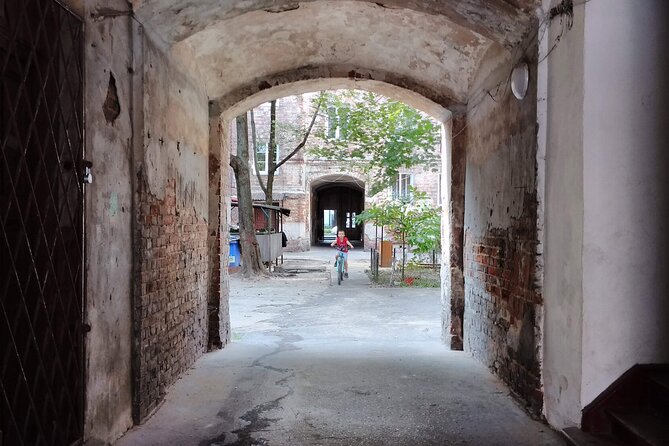
Warsaw’s best contrast isn’t just museums versus monuments. It’s neighborhoods versus narratives. Praga (the east-bank district) gives you daily life, murals, courtyards, and architecture that looks like it went through real chapters rather than a curated script.
This tour leans into that. You’re not just “seeing sights.” You’re learning how Praga developed its identity—through music traditions, community buildings, postwar housing, and the creative energy that now shows up in street art and repurposed spaces. Even the route hints at the idea that history doesn’t stay behind glass.
And because the group is capped at 10, you’re more likely to get the little connections—why a building was where it was, what a name means locally, or how one corner ties to a wider story of Warsaw.
Deeper into Praga, over on the far bank
- Warsaw Praga Guided Historical Walking Tour★ 4.5 · 21 reviews
- Warsaw: 2-Hour Praga Walking Tour★ 4.5 · 18 reviews
- Warsaw Praga — where modern, traditional, and bohemian meet★ 4.5 · 14 reviews
Price and time: what your $42.14 buys
At $42.14 per person for about 2 hours, you’re paying for a focused walk with an English-speaking guide and a tight set of themed stops. The value here is the combination: small group + multiple topic “threads” (Jewish sites, communist-era architecture, and film locations).
Also, many of the stops list admission ticket free. That matters because it keeps the walk flowing. You’re not wasting time figuring out ticket lines or paying extra just to stand in front of something quickly.
The tour is timed to start at 1:00 pm, which is usually a sweet spot for comfortable walking light and easy connections back toward the center afterward.
Getting there and leaving Praga: the end-point makes it easy
You meet at plac Weteranów 1863 Roku in front of St. Florian’s. That’s a practical starting point because it anchors the walk in a recognizable landmark area.
The tour finishes at Fabryka Schichta Bohema (Szwedzka 20, 03-420 Warszawa). This is not an awkward finish in the middle of nowhere. It’s a former 19th-century cosmetics factory complex turned multi-functional hub. From here, you have an easy commute option:
- the Szwedzka metro station nearby for getting back toward the city center
- the 23 tram stop about 400 meters away to reach Castle Square in Old Town
If you’re planning your day, this end-point is what makes the whole thing feel low-stress. You can finish the tour, then keep going—eat nearby, browse the area, or head back without hunting for directions.
Stop-by-stop: the Praga route that tells a story
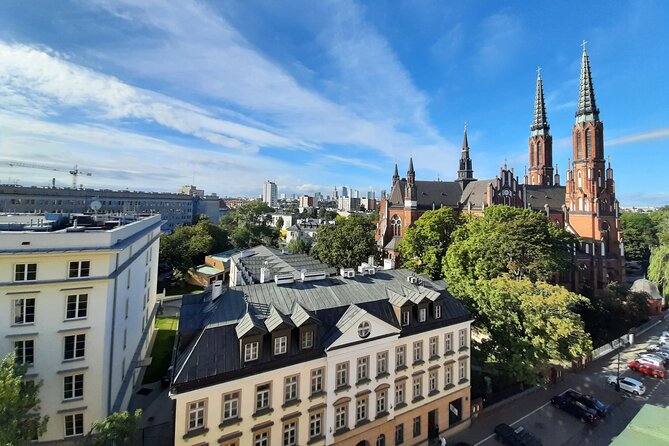
This walk works because each stop adds a different layer. Some are obvious landmarks. Others are small, specific sites that feel easy to miss on your own.
St. Florian’s area and plac Weteranów 1863 Roku
You begin at plac Weteranów 1863 Roku, starting in front of St. Florian’s. Expect the guide to set the tone early—why Praga looks the way it does, and what you should watch for on the streets ahead.
This opening section is also useful for “getting your bearings fast.” Praga can feel different from Warsaw’s more tour-focused core. Having context before you move helps you notice details instead of just reacting to the vibe.

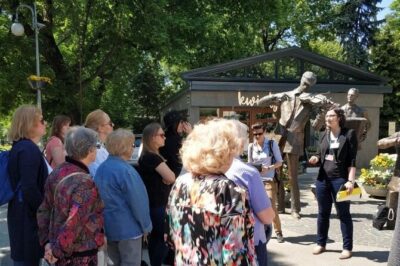
Monument to Praskiej Kapeli Podworkowej
Next is the Monument to Praskiej Kapeli Podworkowej. This one is short in time but big in meaning. It points to a local tradition: Praga music culture linked to small neighborhood roots—especially the idea of music that grows from community spaces rather than big stages.
Even if you’re not a music-history person, a monument like this gives you a way to interpret the neighborhood beyond buildings. It’s a reminder that Praga’s identity isn’t only architecture. People shaped it too.
Teatr Baj: the former Jewish Orphanage
A few minutes later you reach Teatr Baj, once a Jewish orphanage. This stop is quietly powerful. It’s the kind of location where the present-day use (a theater) doesn’t erase what was there before. Instead, it creates a layered feeling: life continues, but the past still matters.
If you care about human stories, this is one of the stops that earns its time. It’s also a reminder that Jewish Warsaw is not one single monument. It’s a network of places tied to everyday life.
Nożyk Synagogue site (from the 1830s)
You’ll also see the former Nożyk Synagogue site, dating to the 1830s. Even from the street, you get the sense that this area has been repeatedly reshaped by history.
This stop is worth paying attention to slowly. The guide’s framing helps you understand why the exact location matters—how a community footprint lingers even when buildings change.
A 19th-century park
After the synagogue area, there’s time in a 19th-century park. Parks can feel like a break, but here they also work as a contrast: you shift from specific community buildings into shared public space.
It’s a good moment to pause, reset your legs, and let the tour rhythm settle. Plus, green space often helps with photography—especially for wider street-and-building shots.
Chapel of Our Lady of Loreto: 17th-century Praga landmark
Then comes the Chapel of Our Lady of Loreto, a 17th-century Loretto Chapel described as the oldest historical monument in Praga. This stop anchors the tour in older Warsaw layers, and it helps you appreciate Praga’s timeline as more than just “postwar.”
If you’re the type who likes your walking tours to include a clear “before-and-after,” this chapel gives you that. It’s not only old. It’s specific, and it makes the rest of the walk feel more connected.
Jagiellońska 44: early communist-era housing estate
At Jagiellońska 44, you’ll look at one of the earliest communist-era housing estates in Warsaw. The building design is credited to prominent Polish avant-garde architects, which is a key detail. It’s not all drab stereotype here. There’s a design story behind the housing.
This is the kind of stop that turns architecture into a conversation about social life: who lived where, how the city planned housing, and what “modern” meant in that period. Even if you don’t normally care about building styles, the context helps.
Mała: The Pianist filming location
Praga has a direct connection to film, and the tour taps into that at Mała, tied to the movie The Pianist.
If you’ve seen the film, this is a memorable moment because you can connect cinematic scenes to real street geometry. The neighborhood suddenly feels less like a place you visited and more like a place you recognize.
Stalowa street: cafes, galleries, and street art
Then you move through Stalowa, an important Praga street known for a mix of cafes, bars, galleries, and street art. This is where the tour becomes especially photo-friendly.
Expect murals and street art to be a real focus. You’ll also get the vibe of an active neighborhood corridor—more “lived-in” than “preserved.” If you like walking tours that help you understand what people do after sightseeing, this is your stretch.
Pałacyk Ksawerego Konopackiego
You’ll also pass Pałacyk Ksawerego Konopackiego, described as the former residence of the founder of the neighborhood. It’s a short stop, but it helps explain why certain corners of Praga developed the way they did.
This is the kind of detail that makes a neighborhood feel less random. Suddenly you can see how the founder’s presence ties into how space evolved.
Fabryka Schichta Bohema: finish at the factory turned hub
Finally you end at Fabryka Schichta Bohema, a former 19th-century post-industrial cosmetics factory complex now transformed into a multi-functional hub that includes contemporary buildings.
This is a smart finishing point for practical reasons. You’ve got transit nearby (metro and tram), and you’re in a place where you can continue exploring without feeling stuck waiting around.
The guide also signals that you can ask for cool hip cafes and restaurants in the area, which is helpful if you want to keep the day moving with local guidance.
What makes this tour worth your afternoon
If you’re deciding whether to book, focus on what you’ll feel after 2 hours. This tour is designed to leave you with a neighborhood “map in your head,” not just photos.
Here are the strongest reasons it works:
- The themes connect: Jewish Warsaw sites, architectural shifts, and modern street culture aren’t thrown together randomly.
- The pace supports questions: with a max of 10, it’s realistic to get answers while you’re still standing at the exact place.
- It gives you photo moments without turning into a photo shoot: street art and street scenes are in the route, and they’re explained.
- Film location payoff: The Pianist connection is a fun hook that helps many people remember the streets later.
- You finish somewhere useful: Fabryka Schichta Bohema makes it easy to head back or continue exploring.
I also like the fact that the tour includes both “fixed” historical sites and more everyday street textures. That balance is what makes Praga feel like a place, not a theme park.
Who should book this (and who might not love it)
This tour is a great match if you:
- want Praga as a real contrast to more standard Warsaw routes
- like street art, creative spaces, and neighborhoods with a strong identity
- enjoy walking tours where a guide connects the dots
- have watched The Pianist and want the location context
- appreciate Jewish history shown through specific local sites rather than general descriptions
It might feel less ideal if you:
- want only big, famous monuments with minimal walking
- are uncomfortable with neighborhoods that feel less “tour styled”
- prefer a ride-and-stop format rather than a continuous walk
And as a practical note: bring comfortable shoes. Even with short stop times, it’s still a walking tour of a full district.
Should you book Offbeat Warsaw: Praga with Łukasz?
Yes, if your idea of a great Warsaw day is a focused walk that explains the neighborhood through real streets and real places. The combination of Jewish sites, the 17th-century Loreto chapel, communist-era housing context, and the The Pianist filming stop is a strong mix for $42.14.
Book it especially if you like small-group tours. The max of 10 people is where the quality shows up: you can ask questions, linger, and actually understand what you’re looking at.
Just keep your expectations aligned with the district. Praga isn’t aiming for polished perfection. It’s aiming for understanding, texture, and story—and that’s exactly why it works.
FAQ
What’s the duration of the walking tour?
It’s listed as about 2 hours.
How much does the tour cost per person?
The price is $42.14 per person.
What language is the tour offered in?
The tour is offered in English.
How big is the group?
The tour is capped at a maximum of 10 people.
Where do I meet the guide?
You meet at plac Weteranów 1863 Roku, in front of St. Florian’s.
Where does the tour end?
The tour ends at Fabryka Schichta Bohema, Szwedzka 20, 03-420 Warszawa.
Are there any paid entry fees at the stops?
The listed stops show admission ticket free.
When is the tour scheduled to start?
The start time is 1:00 pm.
More Tour Reviews in Warsaw
- Warsaw: Chopin Concert in the Old Town
★ 4.8 · 2,287 reviews - Warsaw: Traditional Galar Cruise on The Vistula River
★ 4.6 · 1,640 reviews - Warsaw: Old Town Highlights Walking Tour in English
★ 4.7 · 1,516 reviews - Warsaw Concert: Chopin – Painted by Candlelights with Wine
★ 4.8 · 1,442 reviews
More of Praga, Across the River
- Discover the Dark Side of Warsaw in Praga District by Retro Bus
★ 5.0 · 327 reviews - Warsaw Praga Guided Historical Walking Tour
★ 4.5 · 21 reviews - Warsaw: 2-Hour Praga Walking Tour
★ 4.5 · 18 reviews - Warsaw Praga — where modern, traditional, and bohemian meet
★ 4.5 · 14 reviews
Fresh on the site: newer Warsaw reviews

Praga District Tours: the other contenders.
 ★ 5.0Discover the Dark Side of Warsaw in Praga District by Retro BusFrom $42327 reviews
 ★ 4.5Warsaw Praga Guided Historical Walking TourFrom $2821 reviews
 ★ 4.52-Hour Praga Walking TourFrom $6918 reviews
 ★ 4.5Warsaw Praga — where modern, traditional, and bohemian meetFrom $3214 reviews
 ★ 5.0Segway Tour Warsaw: Praga Tour – 2-Hours of Magic!From $8010 reviews
 ★ 5.0Praga District Tour with Vodka Museum and TastingFrom $815 reviews
Browse the lists this tour appears in