
Reviewed · VINTAGE CAR & RETRO FIAT TOURS
Private Tour: Warsaw’s Jewish Heritage by Retro Fiat
A vintage Fiat drives serious history. On a private retro Fiat 125p tour, you trace Warsaw’s Jewish heritage from ghetto-wall fragments to places still tied to worship today. It’s a tight, well-paced route that links buildings, memorials, and modern streets into one story.
I like the ease of hotel pickup and drop-off built in, so you don’t waste your limited time figuring out logistics. I also love the level of driver-guide attention on a private outing, with guides able to follow your interests, including film locations from The Pianist. Many guides also bring extra context with photos and clear explanations, which helps when the sights don’t look like what you expected.
One possible drawback: the Nożyk Synagogue and the Jewish Cemetery are closed from Friday evening through Saturday, so you may miss inside visits depending on your day.
In This Review
- Key Things to Know Before You Go
- A retro Fiat makes Warsaw history easier to hold onto
- Ghetto Wall fragments and Chlodna Street: the story starts close to the ground
- Muranów’s Large Ghetto: seeing street art on top of wartime streets
- Ghetto Heroes Monument and the uprising memorial trail
- Nożyk Synagogue: the prewar survivor that still holds worship hours
- Jewish Cemetery: scale you can’t fully grasp, names you try to honor
- POLIN Museum: an optional modern stop if you have extra curiosity
- Price and timing: value is in the private pacing, not the tickets
- Should you book this Jewish heritage Fiat tour?
- FAQ
- What’s included in the tour price?
- Is the POLIN Museum entry included?
- Are tickets included for the synagogue and cemetery?
- What are the visiting hours issues I should know?
- Do I need to bring anything for the Jewish sites?
- Where does the tour start, and is pickup available?
Key Things to Know Before You Go
- Retro Fiat 125p transport turns a history lesson into a moving, memorable ride.
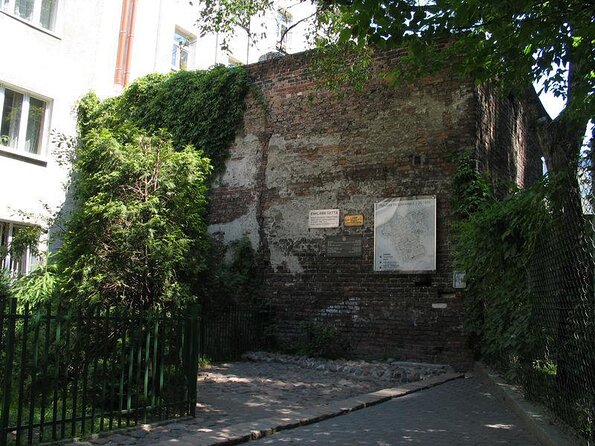
- Ghetto Wall fragments with commemorative plaques give you an immediate visual anchor.
- Chlodna Street stops include the Footbridge of Memory and the home tied to Adam Czerniakow.
- Nożyk Synagogue is the only surviving prewar synagogue in Warsaw and still an active place of worship.
- Jewish Cemetery includes remnants of graves of more than 200,000 people, so plan for an emotional stop.
- POLIN Museum is optional, and your guide can drop you there if you want to go in after the tour route.
A retro Fiat makes Warsaw history easier to hold onto
Warsaw’s Jewish heritage sites are spread out, and some of them don’t scream their past at first glance. This tour solves that problem by using a small private car format and a guide who connects what you’re seeing with what it meant.
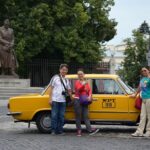
The ride matters more than it sounds. The vintage Fiat 125p keeps things human-scaled, so you can ask questions as you go and actually hear the answers over the street noise. It’s also a smart way to cover stops efficiently in about four hours without feeling like you’re speed-running grief.
In practice, you’ll get a driver-guide who explains the storyline from prewar life to Nazi occupation, then into commemoration and today. You’re not just passing monuments; you’re learning why those exact locations matter, even when the surroundings have changed.
If you’re traveling with a group of 4 or more, expect a slightly different vehicle setup: you’ll be driven in a vintage minivan instead of the Fiat 125p. Same idea, easier for bigger groups.
Further into Jewish Warsaw, the Ghetto and POLIN
- Warsaw: POLIN Museum of the History of Polish Jews Ticket★ 4.7 · 1,142 reviews
- Private Tour: Warsaw’s Jewish Heritage by Retro Fiat★ 5.0 · 208 reviews
- Warsaw: Ghetto, Jewish Cemetery & POLIN Museum Private Tour★ 4.8 · 132 reviews
Ghetto Wall fragments and Chlodna Street: the story starts close to the ground
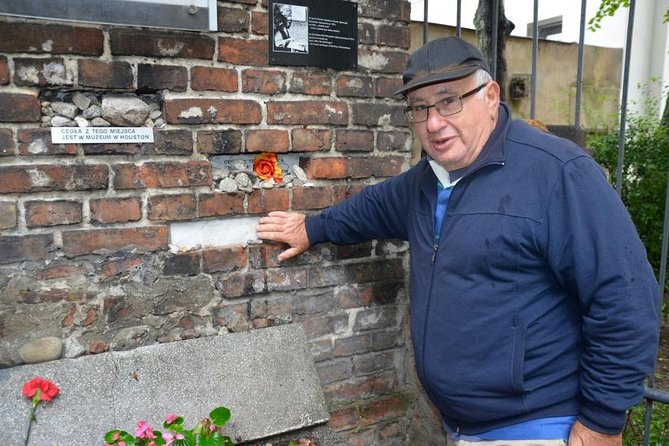
You begin with remains of the ghetto wall—visible fragments with commemorative plaques. This is one of those moments where your brain clicks: the ghetto wasn’t a vague concept; it was a physical boundary built in 1940 that imprisoned over 400,000 Jews.
From there, you head to Chlodna Street, where you’ll see the Footbridge of Memory and a building connected to Adam Czerniakow, the president of the Jewish Community (the Judenrat). This stop works well because it gives you a human name tied to a political structure forced into impossibly cruel choices. It also helps you understand how Jewish communal leadership was trapped inside the Nazi system.
Timing is tight here, but the approach is practical. You spend a short chunk of time at each key exterior location, enough to look closely, take in plaques and memorial details, and absorb what the guide explains without rushing through everything at once.
One small tip: wear shoes that handle uneven sidewalk areas if needed, and keep your phone charged. Between photo stops and memorial plaques, you’ll likely want more than a quick snap.
Muranów’s Large Ghetto: seeing street art on top of wartime streets
Next comes the former Large Ghetto area in Muranów. Today it’s a living neighborhood, with modern buildings and street art, which can feel almost jarring until your guide frames what you’re standing on.
This stop is valuable because it shows how Warsaw rebuilds and repurposes space. The same streets that once held forced confinement now hold daily movement—so your understanding of “history” becomes more than dates. You start reading the city as layered: the past is still there, just covered.
Your route also includes an easy walking pause through the Jewish Cemetery area later, but for Muranów you’re mostly in look-and-learn mode. It’s a good rhythm shift: after wall fragments and a symbolic street stop, this is where you get the broader geography.
If you’re the kind of person who likes movie details, ask your guide about places connected to The Pianist. Many guides can point out film-relevant spots while still keeping the focus on the real wartime locations.
Ghetto Heroes Monument and the uprising memorial trail
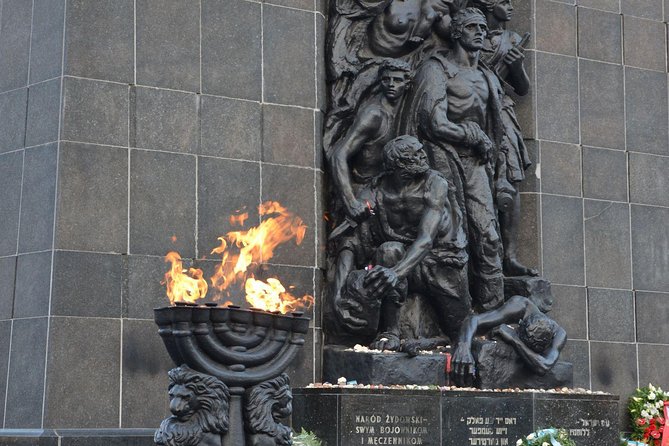
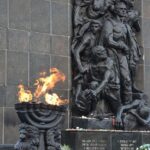
The Pomnik Bohaterów Getta (Ghetto Heroes Monument) is next, honoring the Warsaw Ghetto Uprising of 1943. This is where the tone changes from occupation to resistance, and the guide’s job is to keep both sides understandable: what was organized, what was fought for, and what it cost.
From there, you’ll encounter additional memorial points tied to the uprising and its aftermath. The tour includes sites connected with the departure point linked to Treblinka extermination camp with gas chambers, plus a memorial connected to those who committed group suicide during the uprising. These stops are not “quick photos and move on” places, and you’ll feel that in the pace.
The route also includes a site described as a street that survived from both sides in the ghetto area. That kind of detail helps you visualize what “survived” actually means on a map of a city.
This section is heavy, so give yourself permission to slow down. If you’re the type who gets overwhelmed, tell your guide. A private tour is built for adjusting how long you stand at certain points, and when you’re ready to move on.
Nożyk Synagogue: the prewar survivor that still holds worship hours
One of the biggest highlights here is Nożyk Synagogue. It’s described as the only surviving prewar Jewish house of prayer in Warsaw, and it’s still an active place of worship. That means you’re not just touring a historic shell; you’re visiting a living institution.
The key practical detail: the synagogue is closed from Friday evening through Saturday due to Sabbath. If your tour happens to land in that window, you may have viewing limits. So plan your days with the calendar in mind.
Even when you can’t go far inside, the guide can still explain what survived, what was lost, and why this particular synagogue matters in the Warsaw story. Seeing a site like this with context changes how it lands emotionally.
Also note the tour requires you to cover your head at some Jewish sites. That’s one of those “small” requirements that can turn into a last-minute scramble—so bring something easy (a hat or scarf you’re comfortable wearing).
More of the city from the seat of a Retro Fiat


Jewish Cemetery: scale you can’t fully grasp, names you try to honor
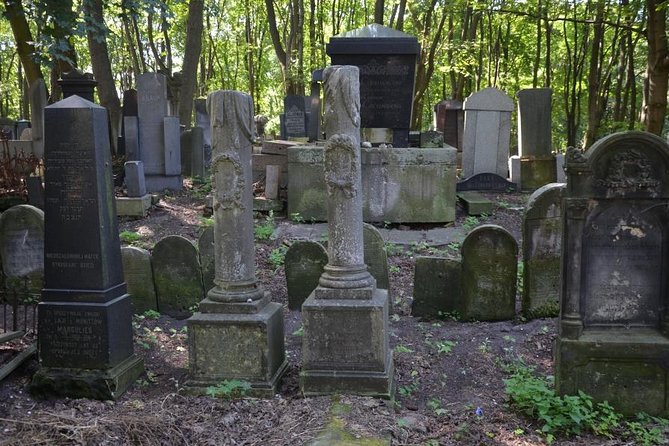
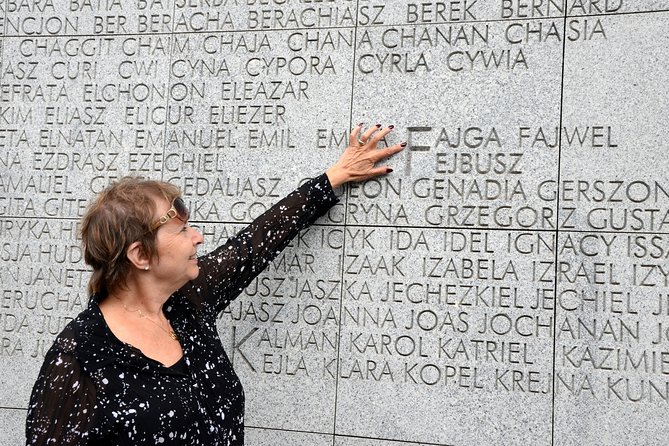
The next stop is the Jewish Cemetery (Cmentarz Zydowski). You’ll see remnants of graves of over 200,000 people, including spiritual and political leaders, creators of Jewish culture, and thousands of nameless victims of the ghetto.
This is where the tour earns its seriousness. Cemetery sites like this can be hard for your brain to absorb because the number is so large, but your guide helps you understand what kinds of people are represented. You’re looking at more than stones; you’re looking at generations of Warsaw Jewish life and loss.
Again, the practical Sabbath note applies: the cemetery is closed from Friday evening through Saturday. If you want time for a slower visit, choose a day where you’ll have access.
The head-covering rule may apply here as well. Bring the covering you already planned for the synagogue stop so you’re not scrambling at the curb.
If you’re visiting with kids or teens, this stop can still work, but you’ll want to ask your guide how they handle explanations in a way that’s age-appropriate without turning the moment into a lesson that feels too abstract.
POLIN Museum: an optional modern stop if you have extra curiosity
The route includes a view of POLIN Museum of the History of Polish Jews from the outside. If you want to go in, the museum admission is not included, and your guide can leave you there after the tour.
This is a good option if you like when a walking route turns into a longer, indoor storytelling format. The museum is described as a modernist space that chronicles over 1,000 years of Polish Jewish history, so it broadens what a four-hour street-and-monument route can cover.
If you’re sensitive to long museum time, you can also treat it as a pick-your-moment add-on. The outside viewing keeps you oriented, then the optional visit lets you choose how deep you go.
I’d suggest this for anyone who wants both kinds of learning: the physical geography of Warsaw outside, and the structured timeline inside.
Price and timing: value is in the private pacing, not the tickets
At about $108.28 per person for roughly four hours, the value comes from what’s included. You get hotel pickup and drop-off, a professional driver-guide, and transport in the private retro Fiat 125p (or vintage minivan for groups of 4+). That combination matters in Warsaw, where travel time between sites can eat your day.
Admission is not universally included. Some stops are set up so tickets aren’t needed for the viewing points, while Nożyk Synagogue and the Jewish Cemetery have admission not included. POLIN Museum is optional and also not included. So yes, the base price covers the route and guiding, but you’ll still want to budget for any entry you choose to add.
Timing is the other big lever. The tour is offered in English, and it’s booked on average about 38 days in advance, which tells me this isn’t a last-minute-only kind of outing. If you have a narrow window, book sooner rather than later.
If you want the best shot at inside visits, avoid the Friday evening through Saturday closure window. If you’re there on another day, you can plan around having the synagogue and cemetery access you’re hoping for.
This tour fits you if you want a focused Jewish heritage walk-through of Warsaw that’s built for context, not just checkboxes. It’s also a strong match if you like WWII history but want it anchored to today’s streets and surviving places.
Should you book this Jewish heritage Fiat tour?
If your goal is to understand Warsaw’s Jewish story through locations you can actually stand at, this is a very practical choice. The private format keeps things flexible, the transport makes the route manageable, and the key stops connect well: ghetto wall remains, memorials of the uprising, Nożyk Synagogue, and the Jewish Cemetery.
Skip it only if your travel dates land in the Friday evening to Saturday window and inside access is a must for you. Otherwise, this is one of the best ways to see these sites without turning the day into a map-and-museum scramble.
FAQ
What’s included in the tour price?
The tour includes hotel pickup and drop-off, a professional driver-guide, and private transport in a retro Fiat 125p (or a vintage minivan for groups of 4+).
Is the POLIN Museum entry included?
No. You’ll see the museum from the outside, and if you want to visit inside, admission is not included. The guide can leave you there after the tour if you decide to go in.
Are tickets included for the synagogue and cemetery?
No. Admission for Nożyk Synagogue and the Jewish Cemetery is listed as not included.
What are the visiting hours issues I should know?
Nożyk Synagogue and the Jewish Cemetery are both closed from Friday evening through Saturday due to Sabbath.
Do I need to bring anything for the Jewish sites?
You’ll be required to cover your head when visiting some Jewish sites.
Where does the tour start, and is pickup available?
The meeting point is at the Palace of Culture and Sciencepl. Defilad 1. Pickup is offered from city-center hotel lobbies, and if your hotel is outside the pickup area, you’re asked to contact the provider for the best solution. The tour ends back at the meeting point.
More Tour Reviews in Warsaw
- Warsaw: Chopin Concert in the Old Town
★ 4.8 · 2,287 reviews - Warsaw: Traditional Galar Cruise on The Vistula River
★ 4.6 · 1,640 reviews - Warsaw: Old Town Highlights Walking Tour in English
★ 4.7 · 1,516 reviews - Warsaw Concert: Chopin – Painted by Candlelights with Wine
★ 4.8 · 1,442 reviews
More Days in a Retro Fiat
- Private Tour: Warsaw City Sightseeing by Retro Fiat
★ 5.0 · 562 reviews - Discover the Dark Side of Warsaw in Praga District by Retro Bus
★ 5.0 · 327 reviews - Warsaw City Sightseeing in a Retro Bus
★ 5.0 · 196 reviews - Private Historical Tour of Warsaw by a Retro Fiat with Pickup
★ 5.0 · 190 reviews
More of Jewish Warsaw and POLIN
- Warsaw: POLIN Museum of the History of Polish Jews Ticket
★ 4.7 · 1,142 reviews - Warsaw: Jewish History Guided Walking Tour in English
★ 4.7 · 324 reviews - Warsaw: Ghetto, Jewish Cemetery & POLIN Museum Private Tour
★ 4.8 · 132 reviews - Warsaw: Jewish Heritage & Holocaust Walking Tour
★ 4.7 · 119 reviews
Fresh on the site: newer Warsaw reviews

Vintage Car & Retro Fiat Tours: the other contenders.
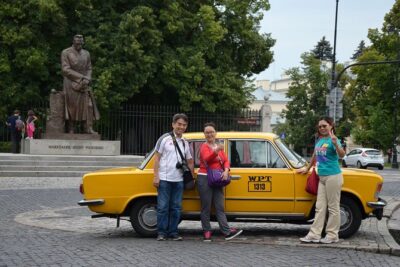 ★ 5.0Private Tour: Warsaw City Sightseeing by Retro FiatFrom $108562 reviews
 ★ 5.0Discover the Dark Side of Warsaw in Praga District by Retro BusFrom $42327 reviews
 ★ 5.0Warsaw City Sightseeing in a Retro BusFrom $42196 reviews
 ★ 5.0Private Historical Tour of Warsaw by a Retro Fiat with PickupFrom $108190 reviews
 ★ 4.9Warsaw Must-Sees: 4-Hour Private Tour by Retro FiatFrom $105123 reviews
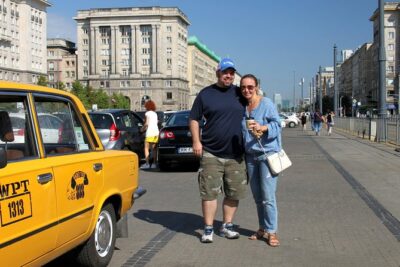 ★ 5.0Private Tour: Warsaw’s Communist History by Retro FiatFrom $108115 reviews
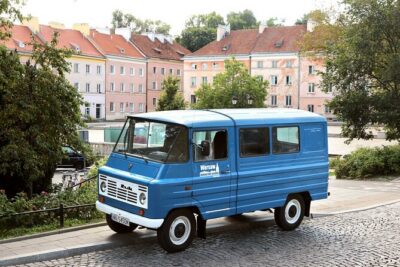 ★ 5.0Best of Warsaw – private tour by retro minibus with hotel pickupFrom $135111 reviews
 ★ 5.0Retro Fiat Self-Drive Tour in WarsawFrom $5987 reviews
Browse the lists this tour appears in