
Reviewed · COMMUNIST-ERA WARSAW TOURS
Life Behind the Iron Curtain Warsaw Walking Tour
The Iron Curtain is still visible in Warsaw. This 2.5-hour walk turns major Communist-era locations into a clear storyline, starting at Constitution Square and ending near the Palace of Culture and Science.
I love the human, story-based guiding (including real-life family context from guides such as Olivia and Agnieszka) and the value: most stops are free to enter and you get an info pack with visual aids.
One thing to consider: it is a proper walking tour (not recommended for long-distance walking limits), and the Palace of Culture terrace costs extra, 28 PLN.
In This Review
- Key things to know before you go
- Starting at Constitution Square: the planned capital vibe
- Marszałkowska Street to the Ministry of Agriculture: power you can measure
- Mysia 3 and Nowy Świat 6/12: censorship to Communist Party HQ
- Cedet and everyday life: why shopping could feel impossible
- Warsaw’s train stations: travel, schedules, and state control
- Palace of Culture and Science finish: symbol, controversy, and a choice
- Price and practical value: what $28.57 buys you
- The guides make the difference (Olivia, Agnieszka, and more)
- Who should book this Iron Curtain walk in Warsaw
- Should you book Life Behind the Iron Curtain Warsaw Walking Tour?
- FAQ
- How long is the Life Behind the Iron Curtain Warsaw Walking Tour?
- What is the price per person?
- Is the tour offered in English?
- How big is the group?
- Do I need to pay entry fees for the tour stops?
- Is the Palace of Culture and Science viewing terrace included?
- Where do I meet the guide?
- Where does the tour end?
- Is the meeting point near public transportation?
- Can I cancel for a full refund?
- Is the tour suitable for people who have trouble walking long distances?
Key things to know before you go
- Small group size (max 10): easier questions, tighter pacing, and you’ll actually notice the details the guide points out.
- English mobile ticket: simpler check-in, less fuss on a busy city day.
- Mostly free entry stops: you’re paying for context and interpretation, not museum ticket stacking.
- Censorship and party power in one route: you’ll connect the street signs and buildings to how control worked.
- Optional Palace terrace: the big finale is worth seeing from the ground, and the view costs extra.
Starting at Constitution Square: the planned capital vibe
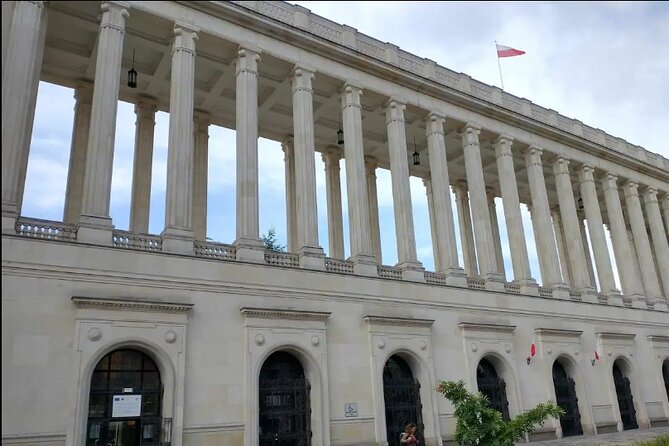
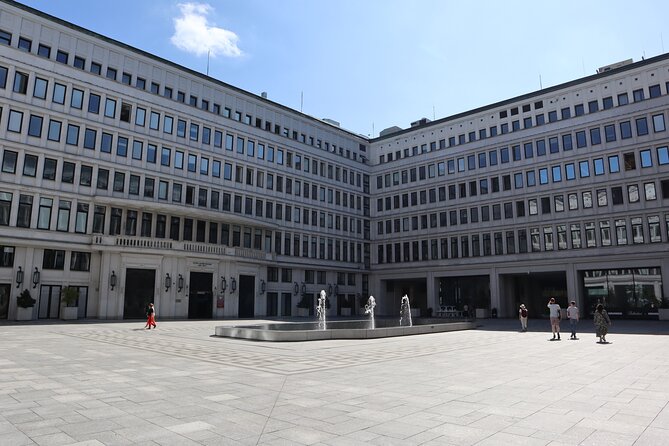
Your tour begins at Plac Konstytucji / Constitution Square, a place designed to feel like a new city center for the Polish People’s Republic. Stand here long enough and you start to see how the government tried to steer attention: where people gathered, where official space was supposed to feel permanent, and how grand planning became political messaging.
From the start, this tour doesn’t treat architecture like background. You’ll get a way of looking: notice how buildings and road widths communicate power, and how those choices still shape your walk today. It’s a fast way to understand why Warsaw can feel both modern and very political, sometimes in the same block.
Tip: if you like to take photos, do a quick sweep first, then listen. The story lands better when you’re already oriented.
The PRL years: more of communist-era Warsaw
- Warsaw: Communism Tour in an Original Socialist Van★ 4.9 · 75 reviews
- Warsaw: Cold War Museum Entry Ticket★ 4.6 · 55 reviews
- Warsaw: Communist History Self-Driving Tour★ 4.8 · 52 reviews
Marszałkowska Street to the Ministry of Agriculture: power you can measure
Next comes Marszałkowska Street, a wide boulevard used for parades and marches. This kind of street width isn’t an accident. In the Communist era, it helped the state stage mass events and make movement look organized, inevitable, and national.
You’ll then focus on a major example of socialist realism at the Ministry of Agriculture and Rural Development. The guide will explain what makes this style tick—how it aims for certainty and official grandeur—and why buildings were designed to communicate ideology, not just function. You’ll likely recognize the look later in Warsaw, once you know what to watch for.
Why this stop is useful: it gives you a toolkit. After this, you won’t just see “old buildings.” You’ll see how design choices were meant to affect how people felt in public.
Mysia 3 and Nowy Świat 6/12: censorship to Communist Party HQ
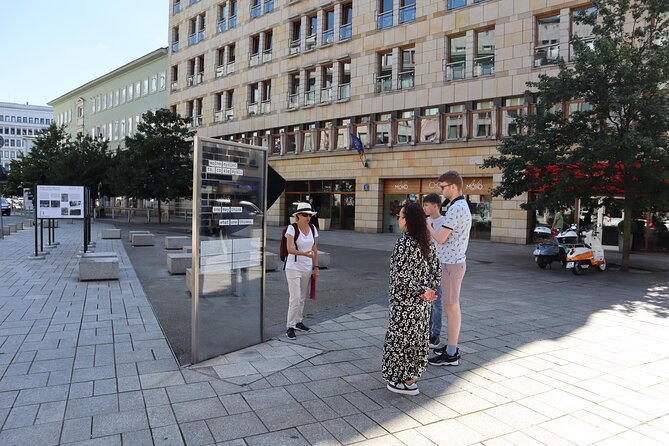
At Mysia 3, the conversation turns to censorship and espionage, with the Free Speech Memorial as the focal point. This isn’t abstract history. The guide helps you connect the idea of surveillance to the real-life fear and control that people lived with. Expect talk about how information was managed, and why being “careful” wasn’t just a personal habit—it was a system.
Then the tour moves to Nowy Świat 6/12, today connected with the Banking and Finance Center. During the Polish People’s Republic, this was where the country was managed, including the Communist Party HQ. The point here is not just where power sat. It’s how close (or far) the public was from decisions that shaped daily life.
What I like about ending this stretch with party headquarters: it links the earlier theme of censorship to the machinery behind it. You start to understand the route as more than a list of sites. It’s a map of how control worked—from information to decisions.
Practical note: these are urban stops with lots of street views. If you want the full effect, keep your eyes up. The guide often points out details people typically miss when they’re only watching the scenery.
Cedet and everyday life: why shopping could feel impossible
One of the most memorable parts of this tour is the stop at Central Department Store Cedet. Everyday shopping—something that sounds boring on paper—becomes a window into the pressure of life under the Polish People’s Republic.
Here’s the idea the guide helps you understand: when a system controls supply, people feel it in small daily moments. Long waits, hard-to-find goods, and frustrations you can’t solve by being “resourceful” are part of what shaped routines and mood.
This stop is valuable because it grounds politics in the real world. You leave with a better sense of what people meant when they talked about normal life being constrained—because you saw where shopping tensions played out in space.
If you’re planning to do food stops in the Old Town later, you’ll likely compare how easy it feels now. Cedet sets that contrast up fast.
Warsaw’s train stations: travel, schedules, and state control
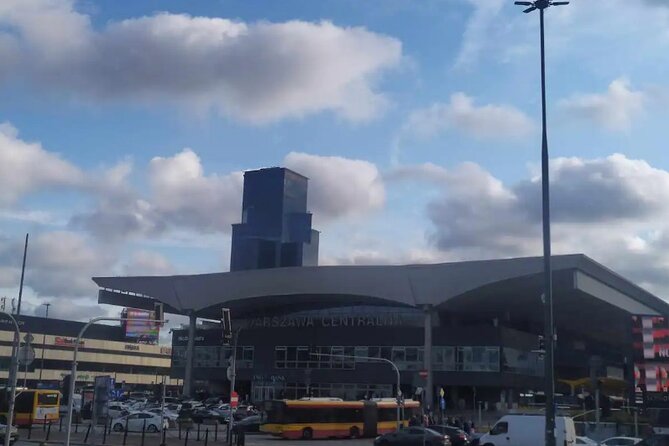
Next you’ll look at Warsaw Central Railway Station and the Downtown Railway Station, with a focus on travel during the Communist era—local, regional, and international. Trains seem neutral, right? But the guide will help you see how mobility can reflect policy. Who can travel, what routes matter, and how schedules connect to the state’s priorities.
This portion works especially well if you like practical history. Instead of treating communism like a museum topic, you’re connecting it to logistics: movement of people, movement of goods, and the friction between everyday plans and official reality.
Also, trains are one of those topics that make the era feel closer to modern life. Even if you don’t have a romantic view of rail travel, you’ll understand why station life mattered so much when options felt limited.
On foot through Warsaw: more guided walks

Palace of Culture and Science finish: symbol, controversy, and a choice
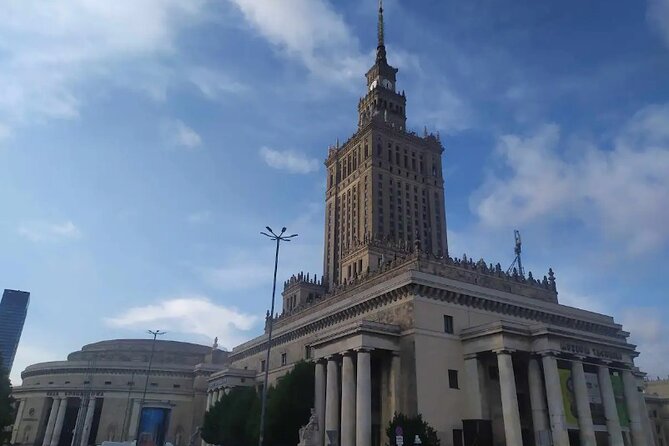
The tour ends near the Palace of Culture and Science, a building that is both symbolic and controversial. You’ll get the storyline: why it became a powerful emblem, and why the meaning didn’t stay fixed after the political system changed.
You’ll also hear how this site functions in Warsaw now—because it’s one of those landmarks that holds layers. From the ground, it’s instantly recognizable. With the right context, it’s also instantly readable.
There’s an optional viewing terrace, but it’s not included. The terrace fee is 28 PLN, so if you want the view, plan for that add-on. Even without it, the ending hits well because you’ve walked from planning and power to information control and daily-life pressure, and then you land at one of the era’s loudest symbols.
Walking finish tip: if you like a last photo, take it after you’ve heard the explanation. The meaning will click, and your photos will feel like more than a skyline snapshot.
Price and practical value: what $28.57 buys you
At $28.57 per person for roughly 2 hours 30 minutes, this tour is strong value because you’re paying for interpretation and a human guide, not for a stack of paid attractions. Most stops have free admission, and the route is built around key locations that are useful even if you’ve never studied Communist-era Warsaw.
You also get a full info pack before the tour, plus visual aids and recommendations for what to see and where to eat or drink afterward. That helps a lot on a short trip, when you don’t want to spend your best energy hunting for practical next steps.
Group size matters here. With a maximum of 10 travelers, the guide can keep the pace conversational. That likely explains why the experience earns a 5/5 rating and a high recommendation rate.
What about the main trade-offs? It’s not designed as a slow, seated museum experience. It’s a walking story, and it’s not recommended if you have trouble with longer walking distances. If that’s you, you’ll probably feel rushed or tired before the final stretch.
The guides make the difference (Olivia, Agnieszka, and more)
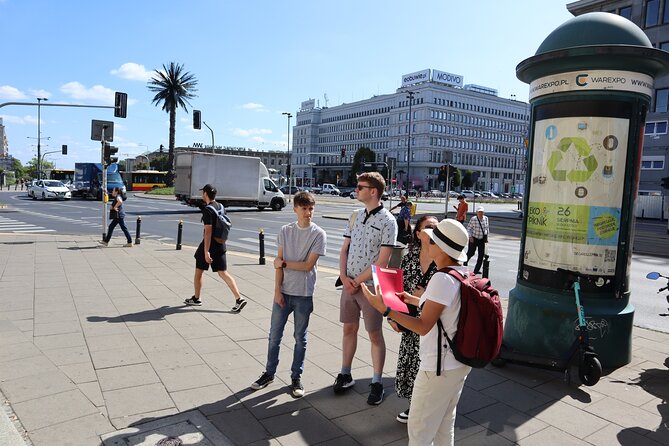
A standout theme in the guides’ approach is how much they turn the era into something you can picture. Guides like Olivia and Agnieszka are praised for making buildings and street details matter, not just look impressive.
One especially memorable style you’ll benefit from is how they use real-life accounts. In the guides’ telling, the Iron Curtain isn’t only about slogans. It becomes family stories, everyday adjustments, and the way people think about the present because the past was so recent.
I also like the way the best guides on this route build comparisons. If you’ve seen similar tours in other European capitals, you’ll appreciate the angle: the mechanics of communism varied, and Warsaw’s version still leaves visible traces.
And yes, the tours can feel fun without losing seriousness. You don’t have to force yourself to care about architecture once the guide connects it to why it was built and how it affected people.
Who should book this Iron Curtain walk in Warsaw
Book this tour if you want a high-impact, first-contact experience with Communist-era Warsaw. It’s ideal for travelers who like history that explains daily life, not just dates and names.
It’s also a good match if you:
- want to understand why certain landmarks feel controversial
- enjoy walking while learning what to notice
- like small-group settings where questions are welcome
Skip it (or plan an alternative) if you know long walks are uncomfortable. The tour is designed for most travelers, but it clearly isn’t aimed at those who struggle with longer distances.
Should you book Life Behind the Iron Curtain Warsaw Walking Tour?
Yes, if your goal is to understand Warsaw beyond old photos. This route connects the big symbolic places—like the Palace of Culture and Science—to the lived reality of censorship, party power, and everyday limits. For the money, you get a structured story, free entry at most stops, and a guide who helps you see what you’d otherwise miss.
If you’re trying to fit Warsaw into a tight schedule, this is a smart use of time. And if you want your history to feel personal and practical, this one delivers.
Just remember the two watch-outs: it’s a walking tour, and the terrace is a paid add-on if you want that final view.
FAQ
How long is the Life Behind the Iron Curtain Warsaw Walking Tour?
It lasts about 2 hours 30 minutes.
What is the price per person?
The price is $28.57 per person.
Is the tour offered in English?
Yes, the tour is offered in English.
How big is the group?
The tour has a maximum of 10 travelers.
Do I need to pay entry fees for the tour stops?
Most stops have free admission. The only stop with an admission fee mentioned is the Palace of Culture and Science terrace.
Is the Palace of Culture and Science viewing terrace included?
No. The terrace entry fee is 28 PLN and is not included.
Where do I meet the guide?
Meet at Constitution Square, Plac Konstytucji, 00-647 Warszawa, Poland.
Where does the tour end?
The tour ends near the Palace of Culture and Science, at Emilii Plater 54, 00-901 Warszawa, Poland.
Is the meeting point near public transportation?
Yes, it is near public transportation.
Can I cancel for a full refund?
Yes. You can cancel up to 24 hours in advance for a full refund.
Is the tour suitable for people who have trouble walking long distances?
It is not recommended for travelers who have problems with walking long distances, though most travelers can participate. Service animals are allowed.
More Tours in Warsaw
- Warsaw: Old Town Highlights Walking Tour in English
★ 4.7 · 1,516 reviews - Warsaw: City Sightseeing Hop-On Hop-Off Bus Tour
★ 3.6 · 1,415 reviews - Warsaw: Polish Vodka Museum Tour with Tasting
★ 4.6 · 788 reviews - 3-Hour Guided Cycling Tour of Warsaw
★ 4.9 · 624 reviews
More Tour Reviews in Warsaw
- Warsaw: Chopin Concert in the Old Town
★ 4.8 · 2,287 reviews - Warsaw: Traditional Galar Cruise on The Vistula River
★ 4.6 · 1,640 reviews - Warsaw: Old Town Highlights Walking Tour in English
★ 4.7 · 1,516 reviews - Warsaw Concert: Chopin – Painted by Candlelights with Wine
★ 4.8 · 1,442 reviews
Communist Warsaw, More Tours
- Private Tour: Warsaw’s Communist History by Retro Fiat
★ 5.0 · 115 reviews - Warsaw: Communism Tour in an Original Socialist Van
★ 4.9 · 75 reviews - Warsaw: Cold War Museum Entry Ticket
★ 4.6 · 55 reviews - Warsaw: Communist History Self-Driving Tour
★ 4.8 · 52 reviews
Fresh on the site: newer Warsaw reviews

Communist-Era Warsaw Tours: the other contenders.
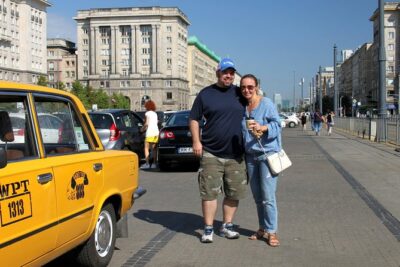 ★ 5.0Private Tour: Warsaw’s Communist History by Retro FiatFrom $108115 reviews
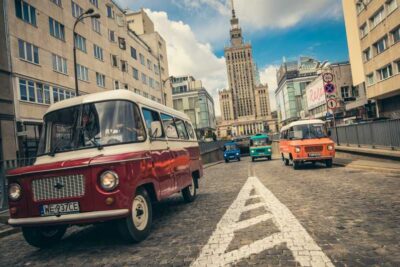 ★ 4.9Communism Tour in an Original Socialist VanFrom $7875 reviews
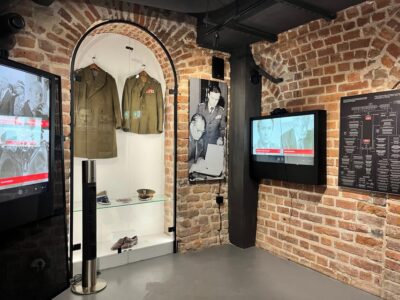 ★ 4.6Cold War Museum Entry TicketFrom $1255 reviews
 ★ 4.8Communist History Self-Driving TourFrom $6952 reviews
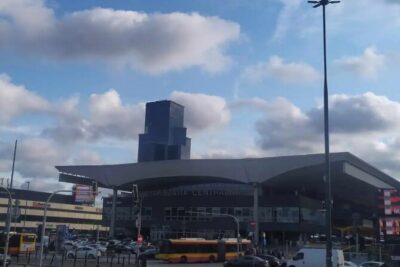 ★ 5.0Life Behind the Iron Curtain Warsaw Walking TourFrom $3247 reviews
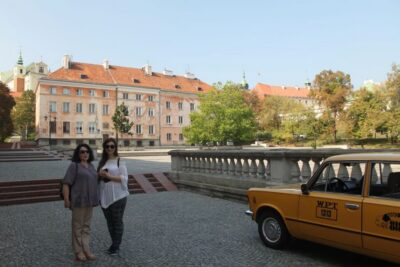 ★ 5.0Warsaw Communism Private Tour in a Retro FiatFrom $10525 reviews
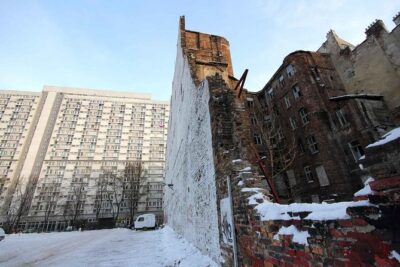 ★ 5.0Communist Warsaw: private tour by retro minibus with hotel pickupFrom $13422 reviews
 ★ 4.6ROYAL & COMMUNIST WARSAW walking tour in EnglishFrom $58 reviews
Browse the lists this tour appears in