
Reviewed · COMMUNIST-ERA WARSAW TOURS
Warsaw: Cold War Museum Entry Ticket
Cold War history hits fast in Warsaw. The Cold War Museum turns a heavy subject into hands-on stops: original gear and maps, multimedia screens, and VR missions that make the rivalry feel personal without turning it into cheap drama. I especially like that the museum frames everything from a Polish perspective, not a single American or Soviet script.
Two things I really liked. First, you get to see original Cold War-era items—think devices, uniforms, and period maps—so you’re not just reading dates. Second, the mix of a multimedia quiz, cinema, and VR games means you learn in more than one way, and you can keep your attention even if you’re not a museum person.
One drawback to consider: this museum isn’t suitable for wheelchair users, so plan around that if mobility is part of your needs.
In This Review
- Key Things to Know Before You Go
- Cold War Museum in Warsaw: a Polish Story in a Real Political Location
- What the Ticket Gets You (and Why It Feels Like Value)
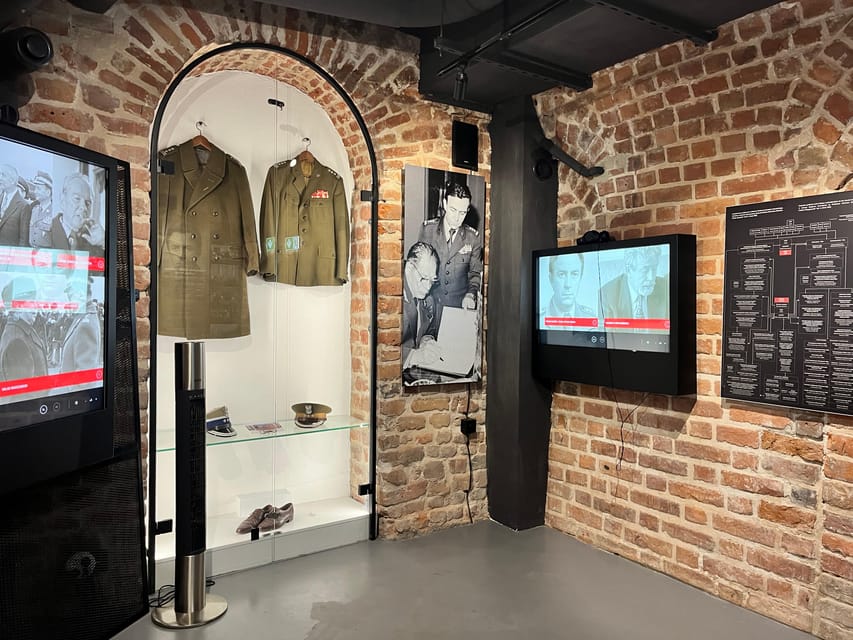
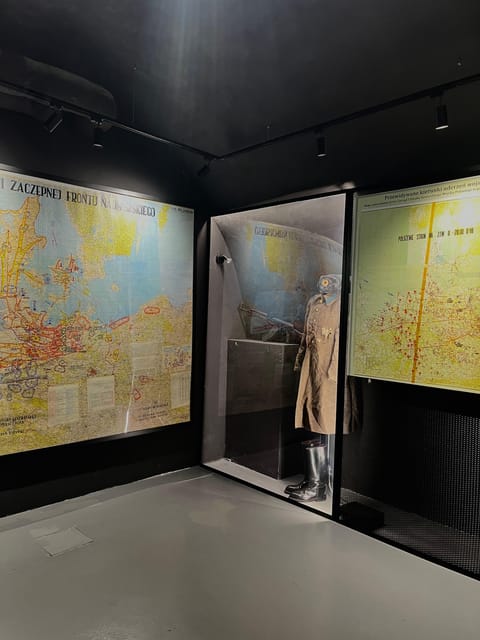
- Step Into the Exhibition Flow: Artifacts, Maps, and Uniforms
- The People Who Shape the Narrative: Reagan, John Paul II, and Ryszard Kukliński
- Over 50 Multimedia Touch Points: Screens, Tables, and Interactive Learning
- Quiz Mode: Testing the Cold War in Real Time
- Space Flights and a Hologram Space Station: The Future Side of the Standoff
- VR Secret-Agent Games: Playing the Cold War (Three Times)
- The Autonomous Robot Guide: Helpful, Not Just a Gimmick
- Cinema and the Wrap-Up: When the Tech Stops, the Message Sticks
- Practical Tips for a Smoother Visit
- Who Should Book This Ticket?
- Should You Book the Warsaw Cold War Museum Ticket?
- FAQ
- What is included with the Warsaw Cold War Museum ticket?
- Is a guide included?
- Where do I enter the museum?
- How much does it cost?
- How long is the ticket valid?
- What languages are available?
- Is the museum wheelchair accessible?
- Are VR experiences included?
- Are food and drinks allowed inside?
- Are dogs allowed?
- Can I cancel after booking?
Key Things to Know Before You Go
- Poland’s Cold War viewpoint: the museum covers the whole period from a Polish angle, including many countries involved in the standoff
- Original artifacts and documents: you’ll encounter Cold War-era devices, uniforms, and maps, not only explanations
- Touch-screen multimedia: more than 50 multimedia elements let you test what you’re learning through interactive content
- VR games in character: three VR experiences put you in the role of a secret agent working to undermine Soviet plans
- Robot autonomous guide: an actual robot helps guide you through the museum experience
- Space history on display: you’ll see the history of space flights and a hologram of a space station
Cold War Museum in Warsaw: a Polish Story in a Real Political Location
Start your visit by getting your bearings—this museum sits about 40 meters from Old Market Square, so it’s easy to slot into a walking day in central Warsaw. Then pause, because the place itself adds weight. The address once housed a communist militia station during the Polish People’s Republic, and it’s tied to a tragic story: high school graduate Grzegorz Przemyk was beaten to death there during martial law.
That matters because the museum doesn’t treat the Cold War as distant geopolitics. It shows consequences—victims, aggressors, and survivors—within the setting where intimidation and state power played out on Polish streets. In other words, you’re not just learning about the “Evil Empire” era in the abstract; you’re watching how the conflict shaped real lives.
If you want a Cold War museum that feels modern in presentation but grounded in specific Polish history, this is one of the better options in Warsaw. The museum’s central idea is that the rivalry between the two blocs can be understood through what Poland experienced and contributed.
The PRL years: more of communist-era Warsaw
- Warsaw: Communism Tour in an Original Socialist Van★ 4.9 · 75 reviews
- Warsaw: Cold War Museum Entry Ticket★ 4.6 · 55 reviews
- Warsaw: Communist History Self-Driving Tour★ 4.8 · 52 reviews
What the Ticket Gets You (and Why It Feels Like Value)
This is a skip-the-line style admission ticket, with entry through the Cold War Museum entrance where you show your ticket. The price is listed at about $12 per person, which is strong for a museum that packs in original objects plus lots of interactive tech.
The ticket includes admission to the exhibitions and access to all attractions inside the museum, plus the autonomous robot guide. A guide isn’t included, so what you’re buying is the museum’s own built-in wayfinding and learning tools—robot, screens, VR, and cinema.
One detail that makes planning easier: your ticket is valid for 3 months. That’s helpful if you’re juggling Warsaw weather, changing daily plans, or trying to avoid a tight schedule.
Step Into the Exhibition Flow: Artifacts, Maps, and Uniforms
The heart of the experience is a full-period Cold War exhibition, covering the entire Cold War timeframe. You’ll see original pieces—devices, uniforms, and period maps—and the museum uses a strong mix of media to explain what you’re looking at.
I like this approach because it avoids the all-text trap. You get visuals you can recognize at a glance, then the museum staff through the exhibits helps you translate what the items meant: why a uniform mattered, what a map implied, how certain devices fit into surveillance, propaganda, or counterintelligence.
The museum is also positioned as one of the only institutions in Poland that depicts the two-bloc rivalry from a Polish perspective during the Cold War era. That’s not just a slogan—it shapes what gets emphasized and which voices become central in the story.
The People Who Shape the Narrative: Reagan, John Paul II, and Ryszard Kukliński
One of the museum’s most important choices is how it structures big events through specific figures. A significant portion of the content leans on the messages, commitments, and actions of three major names from the last two decades of the Cold War: President Ronald Reagan, Pope John Paul II, and General Ryszard Kukliński.
You don’t have to be an expert on Cold War history to appreciate why this works. These individuals connect policy to moral pressure to real-world risk. In practical terms, it helps you follow the timeline because the museum can tie history to personalities, and then to what changed on the ground.
This angle also reinforces the museum’s overall stance: it’s built to show a Polish reading of the Cold War, including the idea that multiple countries outside the two superpowers shaped the outcome.
Over 50 Multimedia Touch Points: Screens, Tables, and Interactive Learning
The museum leans hard into modern interactivity. It uses more than 50 multimedia elements, including touch screens and multimedia tables, plus VR goggles and cinema. There’s also a multimedia knowledge quiz that you can take as you move through the spaces.
I find this kind of design especially useful if you’re traveling with someone who doesn’t want a slow-paced lecture. You can choose the order you engage with the tech. Some spots are quick hits; others give you time to work through the story.
The touch-screen format also lets the museum explain complex topics without writing a wall of text. You can often get the gist fast and then go deeper if something grabs you—like a specific decade, event, or political shift.
If you like museums that respect your time, this one is friendly. You’re not stuck waiting for someone to finish a guided talk, because a lot of the learning is self-paced.
A few more Warsaw outings worth a look before you book



Quiz Mode: Testing the Cold War in Real Time
The multimedia knowledge quiz is one of those features that turns passive viewing into active learning. Instead of just walking through displays, you get prompts designed to help you connect details and timeline.
You’ll probably do this in short bursts between artifacts and VR. That rhythm helps. The museum doesn’t rely on one single “big moment”; it builds momentum by switching modes—read, watch, tap, answer, then VR.
It’s also a good way to confirm whether you’re picking up what the museum wants you to notice, especially if you haven’t studied the Cold War before.
Space Flights and a Hologram Space Station: The Future Side of the Standoff
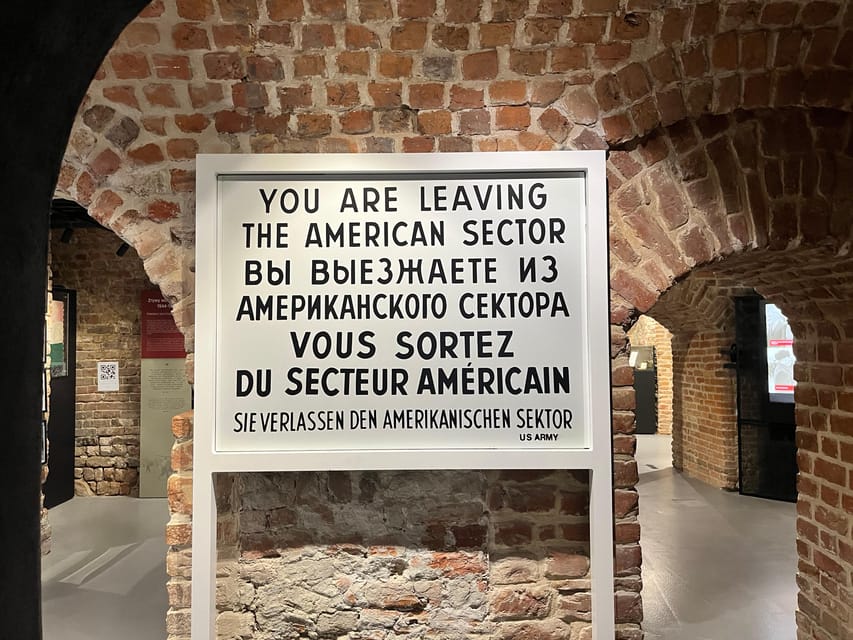
Cold War history isn’t only tanks and treaties. Here, the museum also covers the history of space flights and includes a hologram of a space station.
This section works because it shows how the rivalry played out in technology and perception. Space exploration wasn’t just science; it was power projection and national messaging. Seeing a hologram helps translate that idea quickly without requiring advanced background.
If you’re the type who enjoys science history as part of world events, don’t skip this part just because it feels slightly different. It’s still Cold War logic—competition, demonstration, and influence.
VR Secret-Agent Games: Playing the Cold War (Three Times)
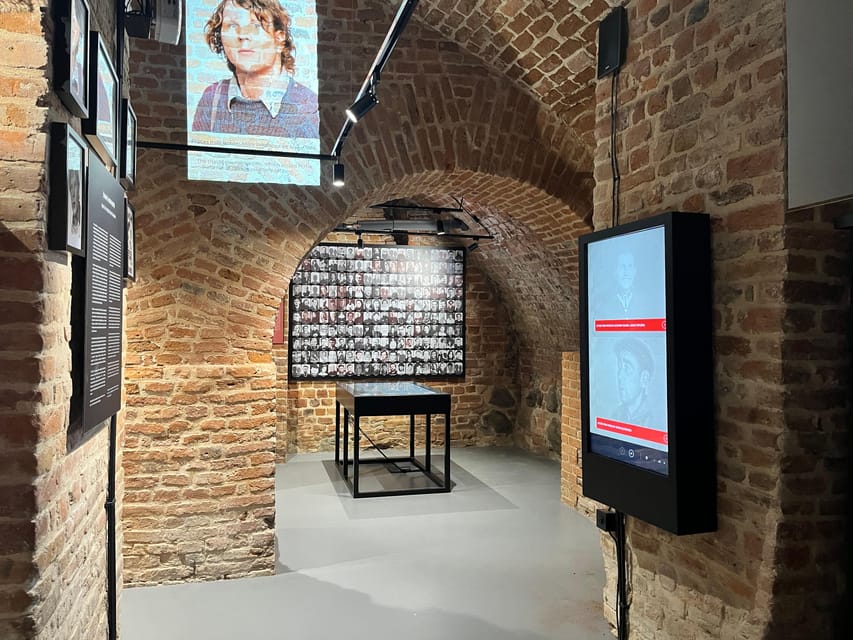
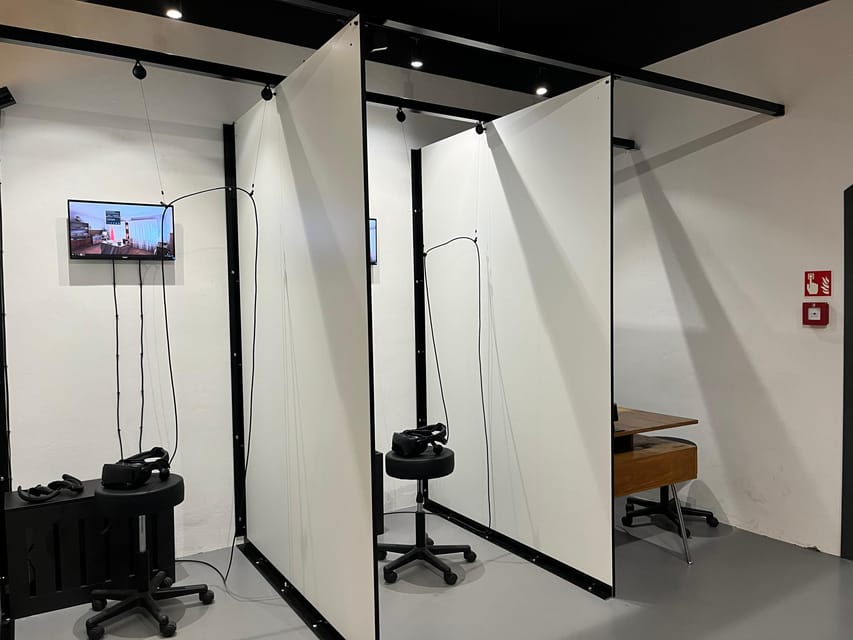
The museum’s VR component is a major reason people leave feeling they actually lived inside the story. You’ll get the chance to play three VR games, with an agent role that focuses on compromising Soviet invasion plans.
Even if you’re not into gaming, VR can be a smart learning tool here because it forces you to make choices and pay attention to details in a way that resembles decision-making, not just reading.
One practical thought: VR experiences can feel intense for people who get motion discomfort. If that’s you, take your time and consider whether you want to do all three right away or save the VR for when you feel freshest.
This is the museum’s most attention-grabbing feature, and it pairs well with the quieter artifact sections. You’re not just watching the Cold War; you’re experiencing how it feels in the museum’s interpretation.
The Autonomous Robot Guide: Helpful, Not Just a Gimmick
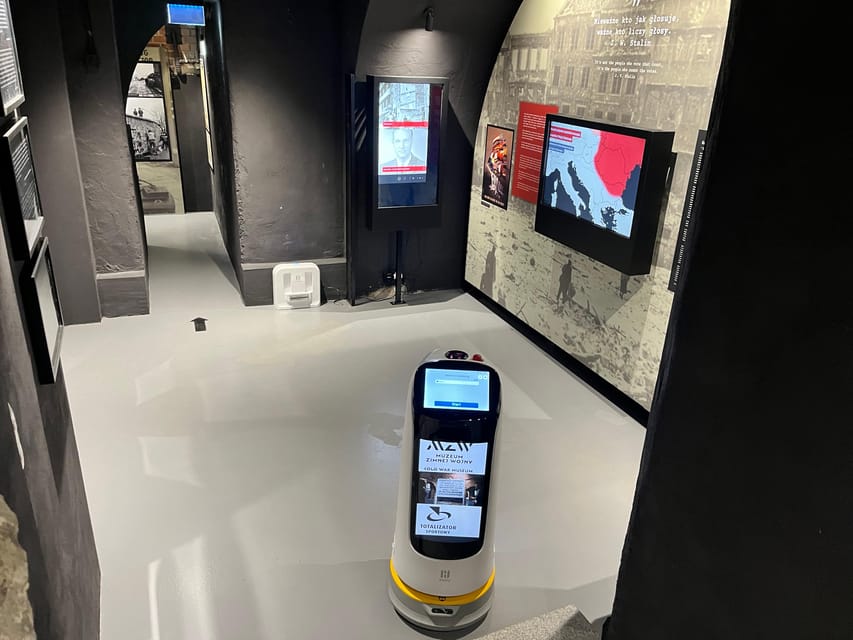
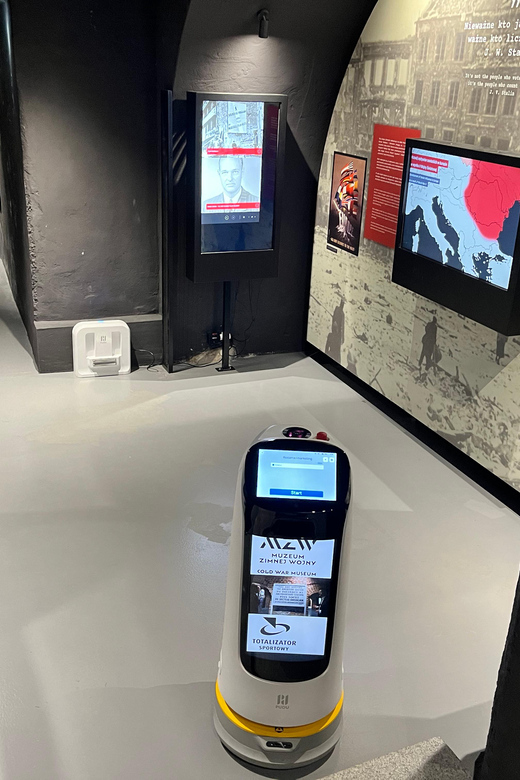
The museum is the first and only one in Poland to have a robot that serves as an autonomous guide. That’s a rare feature, and it changes the tone of the visit.
Instead of relying entirely on signage or a human guide, you can use the robot for wayfinding and guidance while you’re moving through the exhibits. That matters because it keeps the flow moving—especially in a museum packed with tech and multimedia.
It also helps you get the most out of the interactive areas. When you’re not sure where to look next, a built-in guide reduces guesswork and keeps you from missing sections.
Cinema and the Wrap-Up: When the Tech Stops, the Message Sticks
There’s also a cinema component as part of the exhibition setup. I like museum cinemas when they do one job well: slow things down, tie themes together, and leave you with a clearer picture.
Here, the cinema fits the museum’s broader narrative: consequences, victims, aggressors, and survivors, with the Cold War presented as a period that touched daily life, not just diplomatic meetings.
So after the VR and touch screens, the cinema gives you a calmer landing—and a chance to process what you just experienced.
Practical Tips for a Smoother Visit
A few small things make a big difference at this museum:
- Plan around your attention span: with VR, touch screens, quizzes, and artifacts, you’ll want time that isn’t squeezed.
- Bring patience for tech-heavy areas: interactive stations can take a moment to load or be ready.
- The museum has clear rules: no smoking, no food or drinks, and no vaping. Alcohol and drugs aren’t allowed either.
- If you travel with a pet, good news: this museum is one of the few in Warsaw where four-legged visitors are welcome.
Also note the languages listed are English and Polish, so if you’re hoping for another language, you might need to rely on whatever is available on-site.
Who Should Book This Ticket?
I’d book this museum if you fit any of these:
You love history that mixes real artifacts with modern presentation. You enjoy hands-on learning more than reading alone. You’re curious about the Cold War from a Polish perspective, including the role of figures like Reagan, John Paul II, and Ryszard Kukliński. And you want something more active than a standard museum visit, especially with VR and an autonomous robot guide.
It’s less ideal if you’re dependent on wheelchair access, because the museum isn’t suitable for wheelchair users. And if you strongly prefer quiet, low-tech museums, you might find the interactive focus a bit busy.
Should You Book the Warsaw Cold War Museum Ticket?
Yes, I think it’s a smart buy for most visitors. At about $12, you get a lot: original-looking Cold War materials, a story that explains the era through a Polish lens, interactive quiz content, VR agent games, and even a robot guide. That’s unusually packed value for the price.
Book it if you want a museum that teaches with multiple formats—screens, VR, cinema, and real artifacts—and you like your history grounded in specific places and names. Skip it only if accessibility is a dealbreaker or you know you prefer low-interaction, calm galleries.
If you’re in Warsaw for a few days, this is one stop that will stick with you because it doesn’t just explain the Cold War—it makes you feel how the rivalry shaped decisions, fears, and life.
FAQ
What is included with the Warsaw Cold War Museum ticket?
Your ticket includes admission to the exhibitions, access to all attractions within the museum, and the autonomous robot guide.
Is a guide included?
No. A guide is not included. The robot guide is included as part of the experience.
Where do I enter the museum?
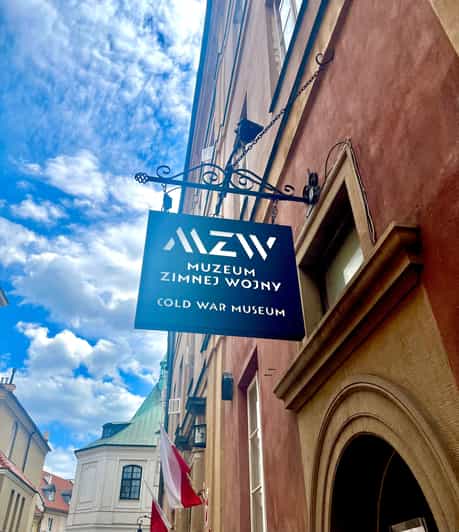
You show your ticket at the entrance of the Cold War Museum (Muzeum Zimnej Wojny), located about 40 meters from Old Market Square.
How much does it cost?
The price is listed as $12 per person.
How long is the ticket valid?
The ticket is valid for 3 months.
What languages are available?
Languages listed for the experience are English and Polish.
Is the museum wheelchair accessible?
No, it is not suitable for wheelchair users.
Are VR experiences included?
Yes. The museum includes three VR games as part of the attractions within the exhibition.
Are food and drinks allowed inside?
No. Food and drinks are not allowed. Smoking, vaping, and alcohol or drugs are also not allowed.
Are dogs allowed?
Yes. The museum notes that four-legged visitors are also welcome.
Can I cancel after booking?
Yes. Free cancellation is available up to 24 hours in advance for a full refund.
More Tickets in Warsaw
- Warsaw: POLIN Museum of the History of Polish Jews Ticket
★ 4.7 · 1,142 reviews - Warsaw: Chopin Concert Ticket With Glass of Champagne
★ 4.7 · 59 reviews - World of Illusion Museum Skip-the-Line Ticket
★ 4.0 · 55 reviews - Best of Warsaw Full-Day Private Tour with Transport & Ticket
★ 4.5 · 12 reviews
More Tour Reviews in Warsaw
- Warsaw: Chopin Concert in the Old Town
★ 4.8 · 2,287 reviews - Warsaw: Traditional Galar Cruise on The Vistula River
★ 4.6 · 1,640 reviews - Warsaw: Old Town Highlights Walking Tour in English
★ 4.7 · 1,516 reviews - Warsaw Concert: Chopin – Painted by Candlelights with Wine
★ 4.8 · 1,442 reviews
Communist Warsaw, More Tours
- Private Tour: Warsaw’s Communist History by Retro Fiat
★ 5.0 · 115 reviews - Warsaw: Communism Tour in an Original Socialist Van
★ 4.9 · 75 reviews - Warsaw: Communist History Self-Driving Tour
★ 4.8 · 52 reviews - Life Behind the Iron Curtain Warsaw Walking Tour
★ 5.0 · 47 reviews
Fresh on the site: newer Warsaw reviews

Communist-Era Warsaw Tours: the other contenders.
 ★ 5.0Private Tour: Warsaw’s Communist History by Retro FiatFrom $108115 reviews
 ★ 4.9Communism Tour in an Original Socialist VanFrom $7875 reviews
 ★ 4.8Communist History Self-Driving TourFrom $6952 reviews
 ★ 5.0Life Behind the Iron Curtain Warsaw Walking TourFrom $3247 reviews
★ 5.0Life Behind the Iron Curtain Warsaw Walking TourFrom $2833 reviews
★ 5.0Life Behind the Iron Curtain Warsaw Walking TourFrom $3247 reviews
★ 5.0Life Behind the Iron Curtain Warsaw Walking TourFrom $2833 reviews
 ★ 5.0Warsaw Communism Private Tour in a Retro FiatFrom $10525 reviews
 ★ 5.0Communist Warsaw: private tour by retro minibus with hotel pickupFrom $13422 reviews
 ★ 4.6ROYAL & COMMUNIST WARSAW walking tour in EnglishFrom $58 reviews
Browse the lists this tour appears in