
Reviewed · COMMUNIST-ERA WARSAW TOURS
ROYAL & COMMUNIST WARSAW walking tour in English
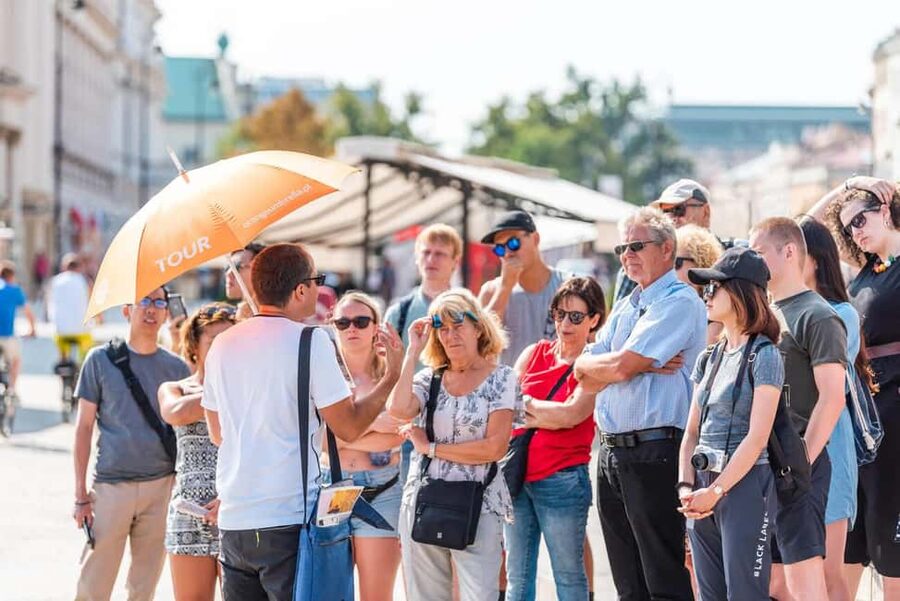
Warsaw can feel like two cities at once, and this walk proves it fast. You’ll move from the elegant Royal Route world of nobles, churches, Chopin, and Curie to the 20th-century center shaped by communist architects and planners.
What I like most is the guide team: native Warsaw guides who truly know the neighborhoods, and names like Arek, Margaret, and Gawel show up in the stories and practical teaching style. I also love the 2-in-1 format because you don’t waste time picking a “best district” when you have limited hours.
One thing to keep in mind: Warsaw spreads things out, so this is not a sit-and-listen tour. You’ll be on your feet for the full 2.5 hours, and the pace works best when you’re ready to walk steadily and pay attention at each stop.
In This Review
- Key things you’ll enjoy on this Royal and Communist Warsaw tour
- From Castle Square to the Royal Route: how the tour gets you oriented
- Royal Warsaw half (17th–19th century): nobles, churches, learning, and prestige
- Communist Warsaw half (20th century): power made symbolic, then challenged
- Pacing, guide style, and what to do with the information
- Price, value, and who should book this walking tour
- Should you book the Royal and Communist Warsaw tour?
- FAQ
- FAQ
- What’s the duration of the tour?
- How much does it cost?
- What language is the tour in?
- Where does the tour start and end?
- Is anything included in the price?
- Is this tour wheelchair accessible?
Key things you’ll enjoy on this Royal and Communist Warsaw tour
- A native, English-speaking perspective: guides are Varsovians, born and raised in Warsaw, not outsiders reading scripts
- Royal Route first, Communist center second: you get both eras in one continuous story
- Tight timing: the tour runs about 2.5 hours with guided stops that keep you moving
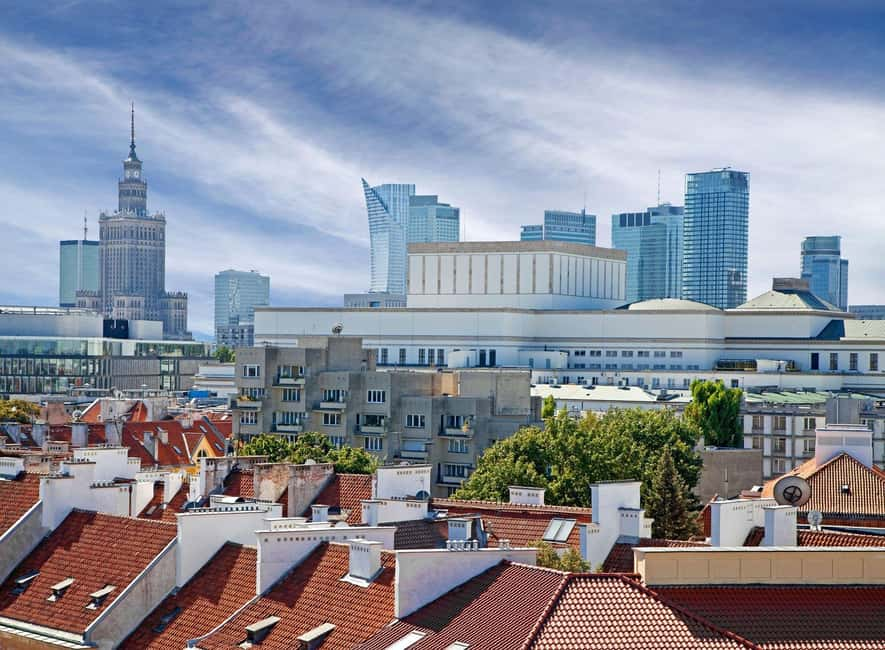
- Landmarks that explain the city, not just the skyline: churches, monuments, and the Palace of Culture with context
- Great orientation for first-timers: especially if you’ve found other tours leave you confused or under-informed
From Castle Square to the Royal Route: how the tour gets you oriented

You start in Castle Square (Old Town) right by Kolumna Zygmunta III Wazy. This is a strong opening because it’s a landmark you can anchor yourself to. From there, the tour naturally builds the “Warsaw identity” idea: who held power, what was built to represent authority, and how the city later tried to reset that image.
The first guided stop is centered on Sigismund’s Column (about 20 minutes). The time matters here. You’re not just looking at a monument; you’re getting the reasoning behind why it stands where it does and what it signals about the era that produced it. It’s the kind of start that makes later stops easier, because you learn what to notice.
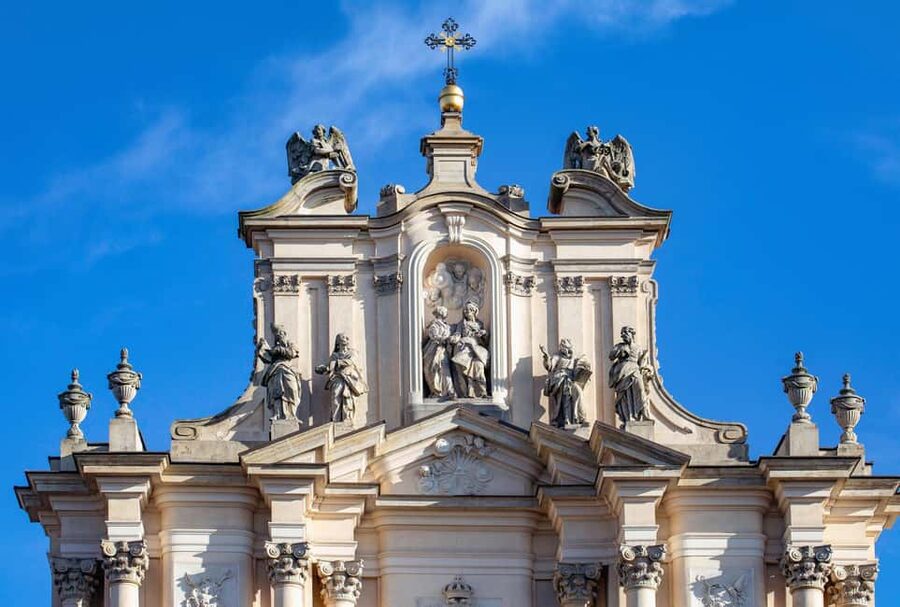
Next comes St. Anne’s Church, Warsaw (about 20 minutes). Churches along the Royal Route aren’t only religious buildings. They’re also visual statements—baroque power, faith, and wealth all in stone and detail. This is a good stop for photos, but it’s also a good stop for learning what those styles were trying to communicate.
If you’re the type who likes to understand what you’re seeing (and not just tick boxes), this first half does that work for you. You’ll leave with a mental map that’s more useful than a paper brochure.
The PRL years: more of communist-era Warsaw
- Warsaw: Communism Tour in an Original Socialist Van★ 4.9 · 75 reviews
- Warsaw: Cold War Museum Entry Ticket★ 4.6 · 55 reviews
- Warsaw: Communist History Self-Driving Tour★ 4.8 · 52 reviews
Royal Warsaw half (17th–19th century): nobles, churches, learning, and prestige
After St. Anne’s, the walking story shifts toward institutions and national figures. You’ll spend about 10 minutes at the University of Warsaw, which is a short stop by design. The aim is to connect the Royal Route’s 19th-century themes—education, research, and cultural life—without turning the whole walk into a lecture.
Then it’s 10 minutes at the Presidential Palace. Even if you don’t go inside, you get the point: this is governance made visible. In a city that has been through regime shifts, that detail hits harder than it would elsewhere. The buildings and the placement help explain why politics often shows up in architecture.
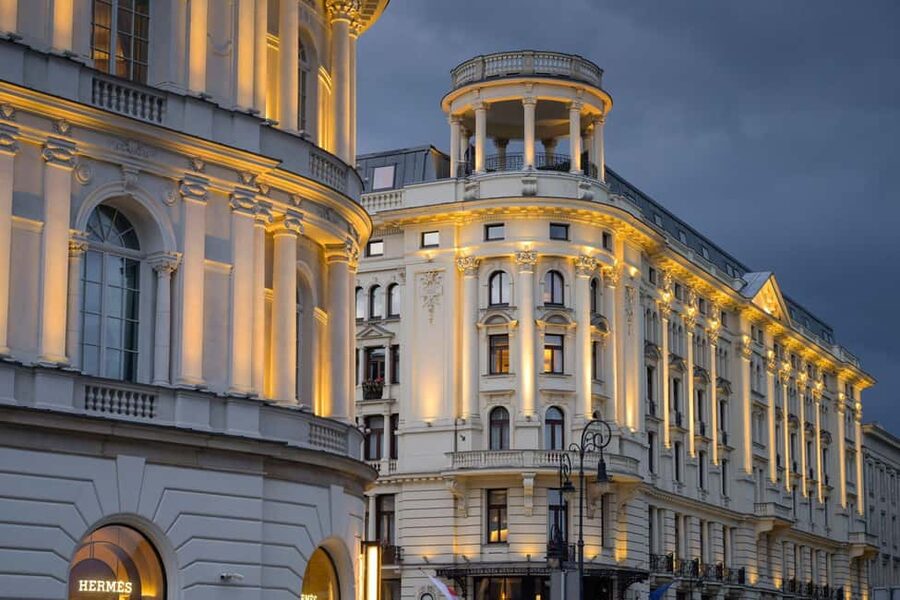
One of the smarter choices on this tour is the repeated stop at the Hotel Warszawa in the Prudential Building (about 15 minutes each time). You pass it once earlier, then you revisit it later during the city-center sweep. That repetition isn’t random. It helps you compare perspectives as the tour moves from the royal, older storyline to the 20th-century one. You start to see how the city layers eras instead of cleanly separating them.
The Royal Route segment also nods to big 19th-century cultural names—Chopin and Marie Curie—without forcing you to guess where their stories “fit.” The lesson you’ll take away is simple: Warsaw wasn’t only buildings. It was also people doing the work of music and science while the city’s social class system and patronage shaped what got built.
If you’re worried the Royal half will feel too polished or too narrow, don’t be. You get the elegant street view, then you get the contrast building blocks that make the communist half hit harder later on.
Communist Warsaw half (20th century): power made symbolic, then challenged
Once you cross into the 20th-century city center themes, you’ll feel the tone change right away. This is where Warsaw starts telling you the harder part of its story: how new rulers tried to stamp their identity on the city.
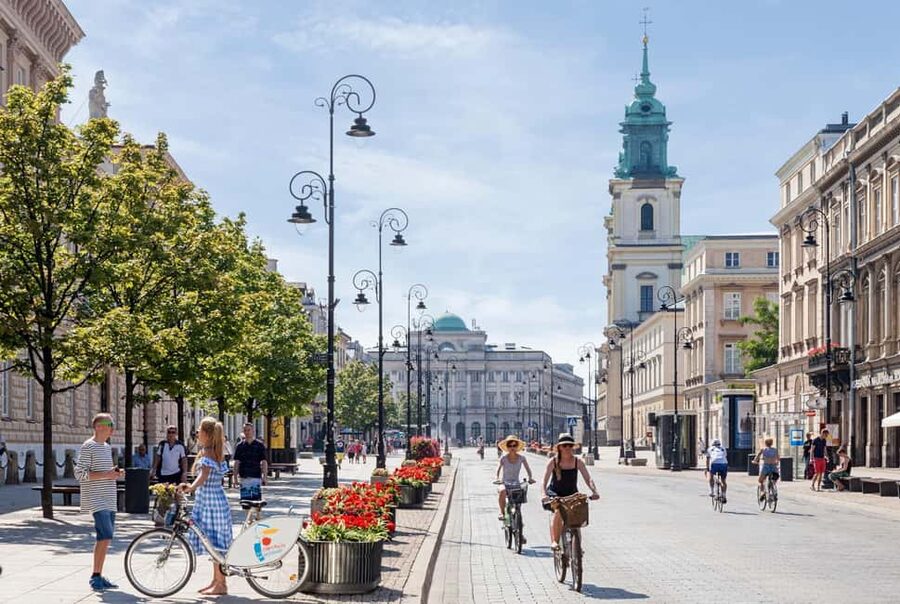
You’ll head to Holy Cross Church, Warsaw for about 15 minutes. On the surface, it’s another important religious stop. But placed in the communist-era section, it also reads differently. In cities where regimes tried to control public life, faith spaces often became symbols of endurance and continuity.
Then you’ll move to Monument of Adam Mickiewicz (about 15 minutes). A monument like this matters because it’s public memory. Even if you know the name already, the guided time is what helps you see why the city chooses certain figures for public space—and what that says about identity after major historical turns.
Next is a fun human-scale stop: Kubusia Puchatka (about 15 minutes). This one gives your brain a reset. After heavy political symbolism, a character monument feels like Warsaw reminding you that daily culture and everyday joy still exist alongside official narratives. It’s also a great breather if your feet start to complain.
Back to Hotel Warszawa in the Prudential Building again for another 15 minutes. This second pass ties the whole “two eras” concept together. You’re no longer just collecting sights; you’re watching the city interpret itself through different architectural eras as you walk.
The headline moment arrives at Palace of Culture and Science (about 15 minutes of guided time). You’ll hear it described as the most iconic communist-era Warsaw building—the gift from Stalin to the People’s Republic of Poland. Even if you feel mixed about the building (many people do), the value of this stop is the explanation of why it was built and what the planners wanted Warsaw to become.
The final stretch includes Kazimierza Brokla for about 15 minutes, then you finish at Pałac Kultury i Nauki. That last set of minutes matters because it helps you land the big idea: Warsaw wasn’t only reshaped by communist architects—it also kept its own stories going in the spaces between eras.
Pacing, guide style, and what to do with the information
This is a walking tour built for orientation. There’s no long transfer time and no maze of transportation decisions. Each stop has its own guided window (ranging from about 10 to 20 minutes, with a couple 15-minute anchors), so you’re never waiting around for “the next big thing.”
You’ll also notice something about the group feel. The tour leans practical and conversational. Guides named Arek, Margaret, and Gawel come through in the way the walk is described: clear explanations, a mix of solid facts with anecdotes, and a sense of pacing that keeps people engaged. One detail that’s especially useful is that guides pay attention to real weather. On drizzly days, Margaret is praised for helping the group stay dry—exactly the kind of small skill that can make the difference between enjoying Warsaw and counting puddles.
If you’re a first-time visitor, I’d treat this tour like your “map with meaning.” Warsaw can be hard to sort out because key sights don’t all sit in one compact circle like some other European capitals. A walk like this helps you understand how the city flows, where the important anchors are, and which landmarks belong to which era. That makes it easier to plan the rest of your days.
Practical tip: wear shoes you trust. Even with a friendly pace, the tour covers a lot of ground, and you want to be able to stand around for photo moments at places like Sigismund’s Column and the Palace of Culture without feeling wrecked.
Price, value, and who should book this walking tour
At $5 per person, this tour is unusually good value for a guided, English-language walk with a professional Warsaw guide and a city map included. You’re not paying for a ride or a big vehicle. You’re paying for someone to connect the dots between older Warsaw’s royal identity and the communist-era reimagining of the city.
Two features make the price make sense:
- All-in-one timing: if you only have about two hours, this is built to give you the main story arc without forcing you to pick between neighborhoods
- Native guide insight: Varsovian guides tend to explain the city in a way that feels rooted, not textbook-only
This is a great fit if:
- You want a quick first introduction to Warsaw’s major “before and after” themes
- You like walking tours where each stop has a purpose
- You prefer a guided story over wandering through landmarks with no context
It may be less ideal if:
- You hate walking in the city and want minimal movement
- You already know Warsaw’s full history and feel you want deeper, slower specialist content (this walk is fast and broad by design)
On foot through Warsaw: more guided walks

Should you book the Royal and Communist Warsaw tour?
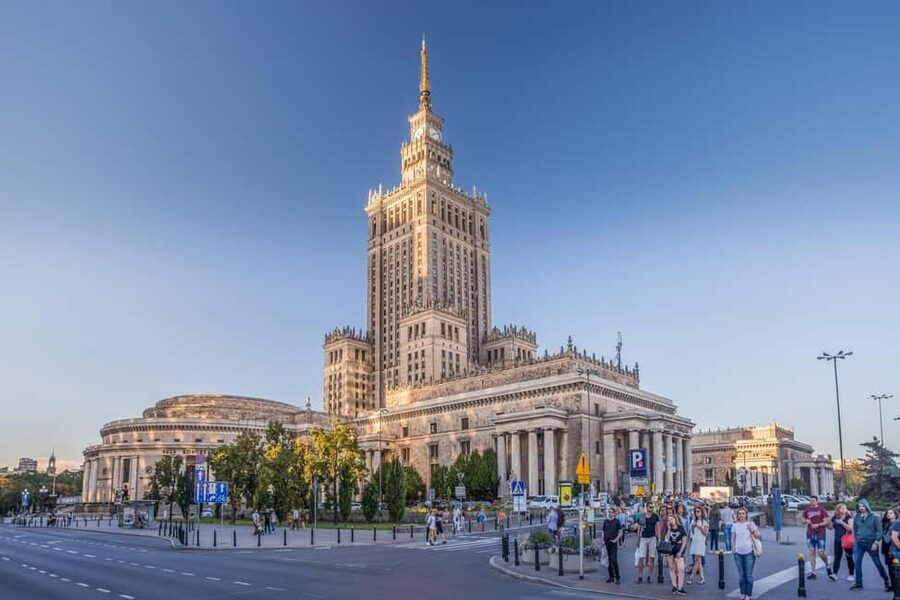
Yes, if you want context fast. This is one of those rare tours that’s structured like a story: royal-era Warsaw in the first half, communist-era Warsaw in the second, and the Palace of Culture as the key emotional and architectural turning point.
If your goal is to get oriented, understand why Warsaw looks the way it does, and leave with a map and a mental framework for the rest of your trip, you’ll get that here.
FAQ

FAQ
What’s the duration of the tour?
The tour lasts about 2.5 hours.
How much does it cost?
The price is $5 per person.
What language is the tour in?
The tour is in English, led by a live professional guide.
Where does the tour start and end?
It starts with the guide waiting by Sigismund’s Column in Castle Square (Warsaw Old Town). It ends back at the same meeting point.
Is anything included in the price?
You get a professional English-speaking Warsaw guide and a city map.
Is this tour wheelchair accessible?
Yes, the tour is wheelchair accessible.
More Tours in Warsaw
- Warsaw: Old Town Highlights Walking Tour in English
★ 4.7 · 1,516 reviews - Warsaw: City Sightseeing Hop-On Hop-Off Bus Tour
★ 3.6 · 1,415 reviews - Warsaw: Polish Vodka Museum Tour with Tasting
★ 4.6 · 788 reviews - 3-Hour Guided Cycling Tour of Warsaw
★ 4.9 · 624 reviews
More Tour Reviews in Warsaw
- Warsaw: Chopin Concert in the Old Town
★ 4.8 · 2,287 reviews - Warsaw: Traditional Galar Cruise on The Vistula River
★ 4.6 · 1,640 reviews - Warsaw: Old Town Highlights Walking Tour in English
★ 4.7 · 1,516 reviews - Warsaw Concert: Chopin – Painted by Candlelights with Wine
★ 4.8 · 1,442 reviews
Communist Warsaw, More Tours
- Private Tour: Warsaw’s Communist History by Retro Fiat
★ 5.0 · 115 reviews - Warsaw: Communism Tour in an Original Socialist Van
★ 4.9 · 75 reviews - Warsaw: Cold War Museum Entry Ticket
★ 4.6 · 55 reviews - Warsaw: Communist History Self-Driving Tour
★ 4.8 · 52 reviews
Fresh on the site: newer Warsaw reviews


Communist-Era Warsaw Tours: the other contenders.
 ★ 5.0Private Tour: Warsaw’s Communist History by Retro FiatFrom $108115 reviews
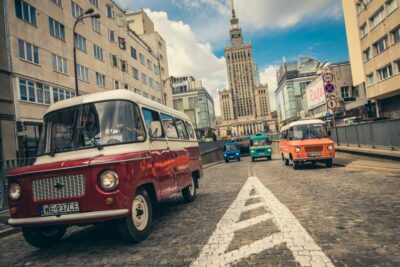 ★ 4.9Communism Tour in an Original Socialist VanFrom $7875 reviews
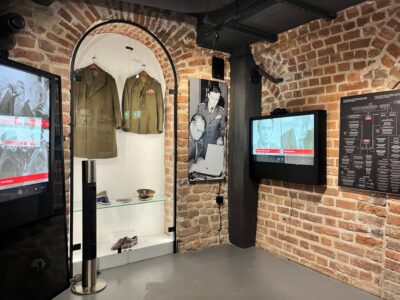 ★ 4.6Cold War Museum Entry TicketFrom $1255 reviews
 ★ 4.8Communist History Self-Driving TourFrom $6952 reviews
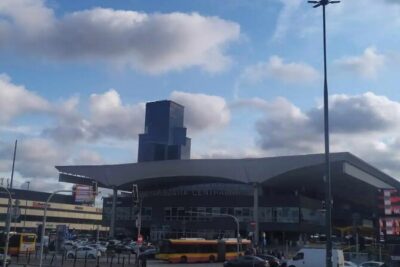 ★ 5.0Life Behind the Iron Curtain Warsaw Walking TourFrom $3247 reviews
★ 5.0Life Behind the Iron Curtain Warsaw Walking TourFrom $2833 reviews
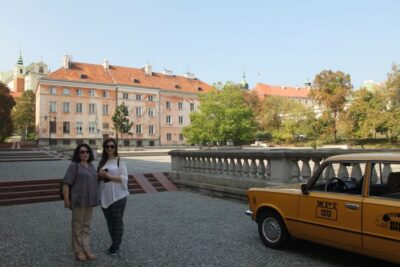 ★ 5.0Warsaw Communism Private Tour in a Retro FiatFrom $10525 reviews
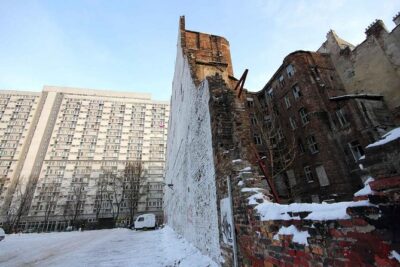 ★ 5.0Communist Warsaw: private tour by retro minibus with hotel pickupFrom $13422 reviews
Browse the lists this tour appears in