
Reviewed · COMMUNIST-ERA WARSAW TOURS
Life Behind the Iron Curtain Warsaw Walking Tour
Communism was stranger than the posters. This Warsaw walking tour uses Constitution Square and the key streets beyond it to explain how Cold War ideas became daily pressure, with stops like the Memoriał Wolnego Słowa. It’s practical history you can follow on foot, not a lecture you half-forget.
I love the way the guides, including Olivia and Agnieszka, bring the story alive with sharp humor and personal framing. I also like how the route forces you to notice socialist realism in real buildings and symbols, then interpret what it was trying to do to everyday life.
One drawback to plan for: it’s about 3 km of walking over roughly 150 minutes, so if long distances are hard for you, this may not be the right format.
In This Review
- Key highlights at a glance
- From Constitution Square: Starting Where the State Wanted the Center
- Marszałkowska Street: The Parade Route and the Pageant of Power
- The Free Speech Memorial: Where Censorship Gets Specific
- Socialist Realism You Can Argue About in Real Time
- Centrum Bankowo Finansowe and Cedet: When Commerce Was Part of the Show
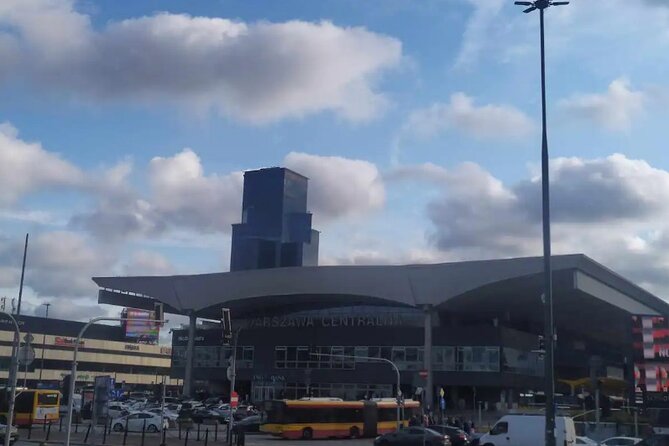
- Dworzec Centralny Warszawa: Movement That Wasn’t Fully Yours
- The Communist Party HQ Location: Architecture as a Power Signal
- Palace of Culture and Science: The Controversy in One Landmark
- How Olivia (and Agnieszka) Make It Stick Without Turning It Into a Lecture
- Price and Logistics: Is $32 Worth 150 Minutes in Warsaw?
- Who This Tour Suits Best (and Who Might Skip It)
- Should You Book Life Behind the Iron Curtain Warsaw Walking Tour?
- FAQ
- Where does the tour start?
- How long is the walking tour?
- How far do we walk?
- What is included in the price?
- What is not included?
- Is the tour accessible?
- Can I get a refund or change plans?
Key highlights at a glance
- Constitution Square as a “planned center” you can still trace on foot
- Marszałkowska Street, built for parades and marches
- Free Speech Memorial, where censorship and espionage get human
- Socialist realism in full sight, with debate built into what you see
- The location of Communist Party HQ, explained in the context of control
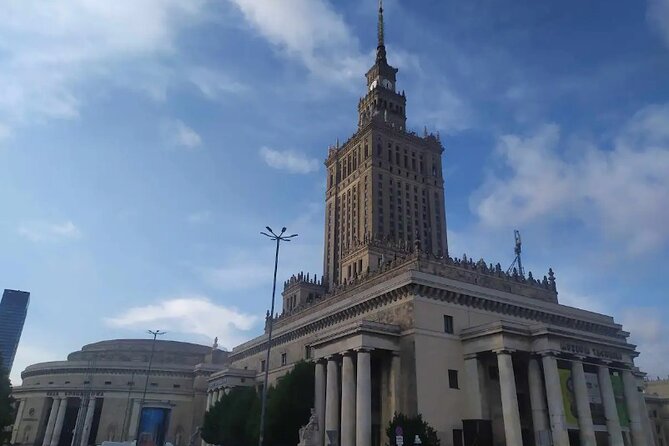
- Palace of Culture and Science, the city’s most controversial landmark on the route
From Constitution Square: Starting Where the State Wanted the Center
You begin at Constitution Square, the kind of place that makes you immediately understand how power likes to choreograph space. The tour uses it to talk about a square that was meant to become Warsaw’s new city center, an idea that came with major political baggage.
What I like here is the tone. You’re not just told “communism happened.” You’re shown how planning decisions, street geometry, and monumental public buildings were part of the system. Standing in the space, it starts to feel less abstract and more like a set of rules you had to live inside.
Your guide also sets up one of the tour’s main themes: the absurdity. Even though it was officially about ideology, day-to-day life for regular people often turned into a chain of ridiculous workarounds. That tone matters, because it keeps the tour from becoming pure gloom.
The PRL years: more of communist-era Warsaw
- Warsaw: Communism Tour in an Original Socialist Van★ 4.9 · 75 reviews
- Warsaw: Cold War Museum Entry Ticket★ 4.6 · 55 reviews
- Warsaw: Communist History Self-Driving Tour★ 4.8 · 52 reviews
Marszałkowska Street: The Parade Route and the Pageant of Power
Next you head onto Marszałkowska Street, one of those wide thoroughfares designed for show. It was used for parades and marches, so you’re basically walking the stage where public power tried to look unstoppable.
This stop is more than a photo opportunity. Your guide connects the “big movement” use of the street to the smaller, everyday limits the state imposed on people. You start to see how propaganda doesn’t only live in posters—it lives in how cities are laid out to direct crowds, attention, and behavior.
One practical benefit here: if you’re the type who likes to understand a place fast, this is a good early anchor. By the time you’re halfway through, you can start mapping the bigger story yourself as the route unfolds.
The Free Speech Memorial: Where Censorship Gets Specific
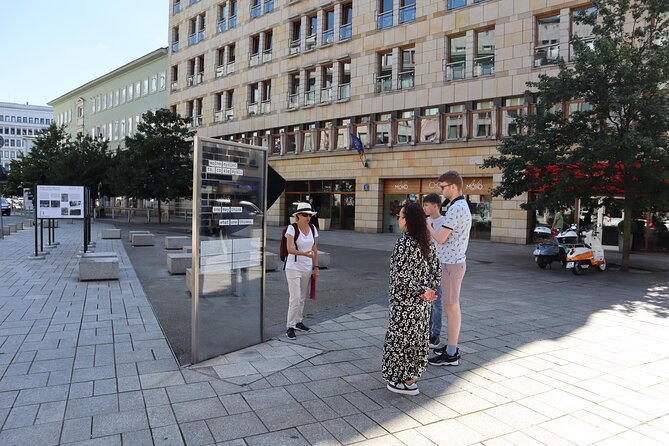
The Memoriał Wolnego Słowa is a turning point stop. The tour links the site to censorship and espionage, and that shift from architecture to human risk is where the subject becomes real. The conversation moves from symbols to what those symbols cost.
You’ll talk about how people were monitored and constrained, and how information could be dangerous even when it looked harmless. The guide’s job is to make the mechanism understandable without making it numb, and the route gives them space to do that.
I also appreciate the pacing here. The stop is guided for about 15 minutes, long enough for context but not so long that your brain goes on autopilot. If you’re asking questions, this is a good place to do it, because the theme is clear and the answers usually connect back to what you’ve just walked past.
Socialist Realism You Can Argue About in Real Time
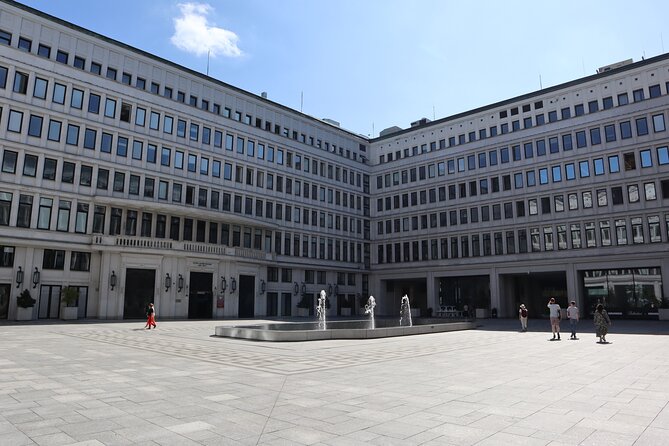
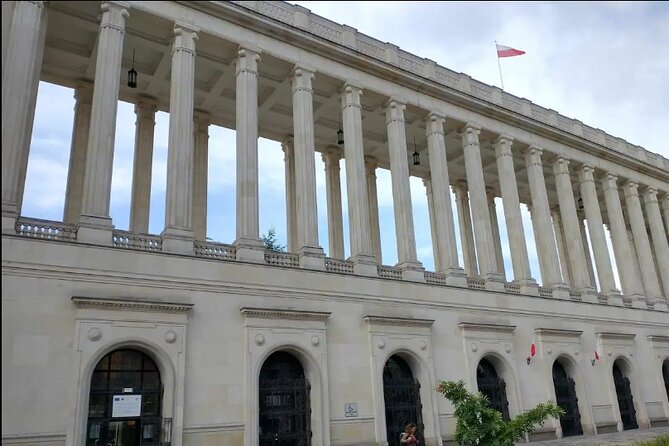
One of the tour’s promises is that you’ll see examples of socialist realism, and you’ll hear why people argued about how it looked. The building style is often presented as “art from the state,” but on this walk you get the tension behind it: it can look clean and even charming at first glance, while still being tied to control.
This is a smart approach for visitors who want more than a label. Instead of only identifying features, the guide pushes you to think about the message. Why did the state prefer certain forms? What did it want citizens to feel? What did it try to hide?
You’ll also notice how the tour keeps returning to everyday survival. Socialist realism isn’t only about what the state wanted to show—it’s also about what people had to endure when the promises didn’t match reality.
Centrum Bankowo Finansowe and Cedet: When Commerce Was Part of the Show
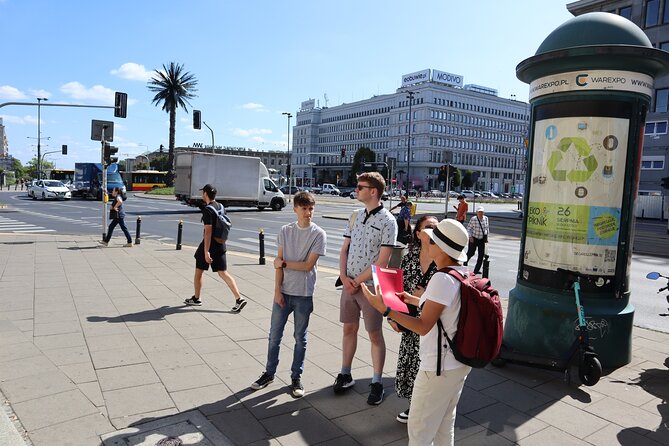
As you pass by Centrum Bankowo Finansowe and then Central Department Store Cedet, the tour zooms in on a tough, almost funny contradiction: systems that claimed abundance, while many shelves stayed empty. The guide uses these points to connect the city’s function—banking, shopping, public commerce—to the limits imposed on ordinary life.
This is where the tour’s humor is useful. It talks about how people dealt with shortages, and how even simple phrases and customer interactions could turn into jokes. One of the recurring ideas is that the state’s script was everywhere, and you could see the gaps between the script and reality in places like department stores.
You might not know what to look for at first, but that’s exactly why the guided format helps. Your guide gives you a way to read what you see: not as isolated buildings, but as stage props in a system built to manage behavior.
On foot through Warsaw: more guided walks

Dworzec Centralny Warszawa: Movement That Wasn’t Fully Yours
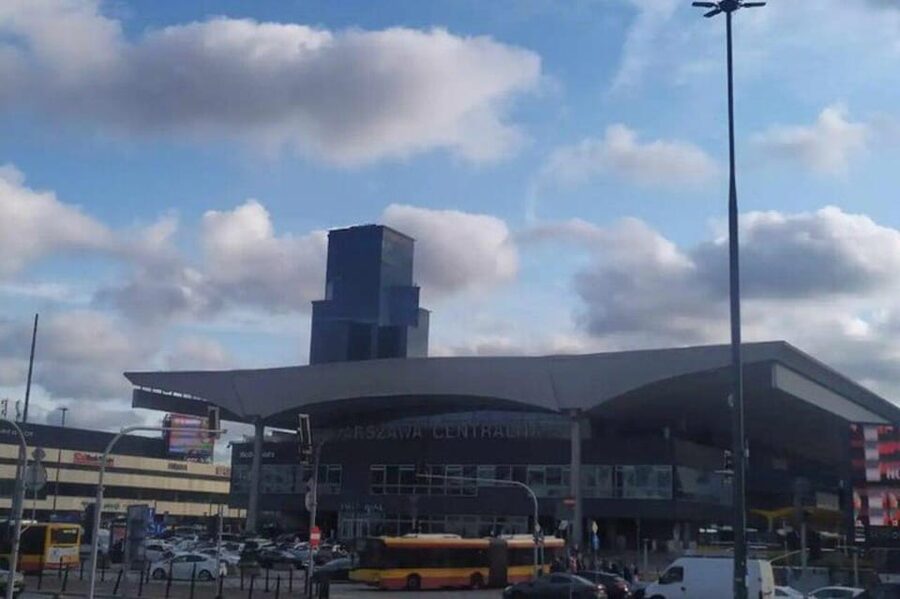
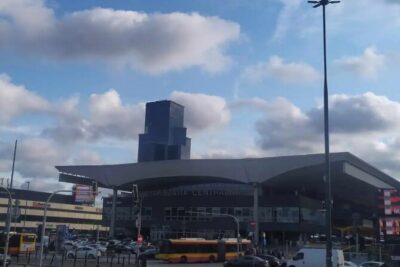
You also stop near Dworzec Centralny Warszawa. Even without going inside for a deep transport history, the point is clear: the state shaped travel, and Poles didn’t have the same freedom to move around as in many other European places.
The tour includes the idea that the state made sure people didn’t travel too far, and it uses the station area as a natural cue for that topic. It’s one of those “walk and think” moments: you can look at the flow of modern travel now and then remember what it meant when movement was restricted.
This section is useful if you’re trying to understand communism as a system, not just a time period. Travel limits affect jobs, family life, friendships, access to goods—everything becomes more fragile. The tour treats those limits as part of the same story as censorship.
The Communist Party HQ Location: Architecture as a Power Signal
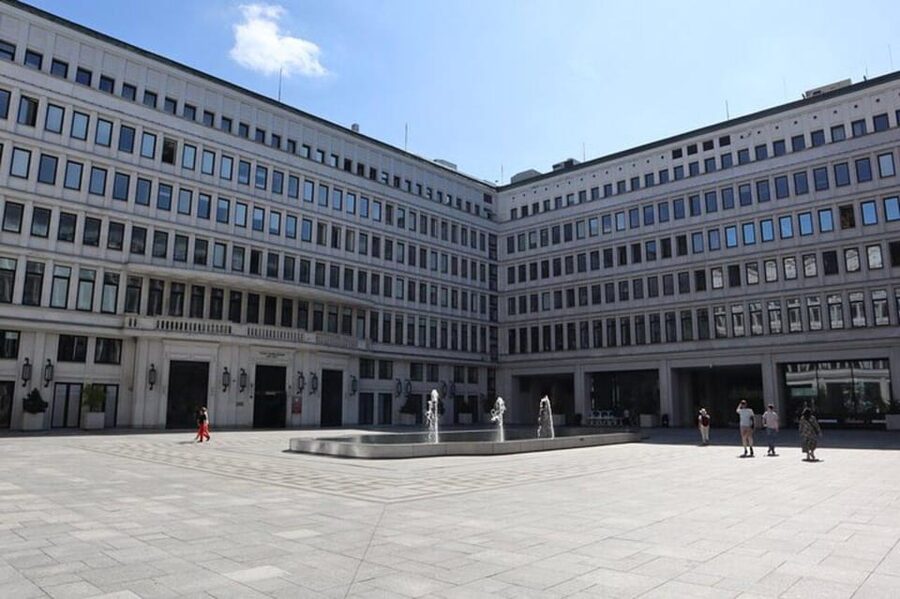
One of the tour highlights is that you’ll see where the Communist Party HQ was located. Your guide uses that moment to explain how political power didn’t just govern through laws—it also signaled dominance through proximity and visibility.
Even if you don’t already know the exact building’s history, the guide’s framing helps you read the location. Power wants to be physically present. It wants people to understand that the system is watching, directing, and deciding.
This is also where the tour’s balance shows. It doesn’t only say the system was bad. It explains how it worked: how control operated, how people learned the rules, and how survival often meant noticing what was unsaid.
Palace of Culture and Science: The Controversy in One Landmark
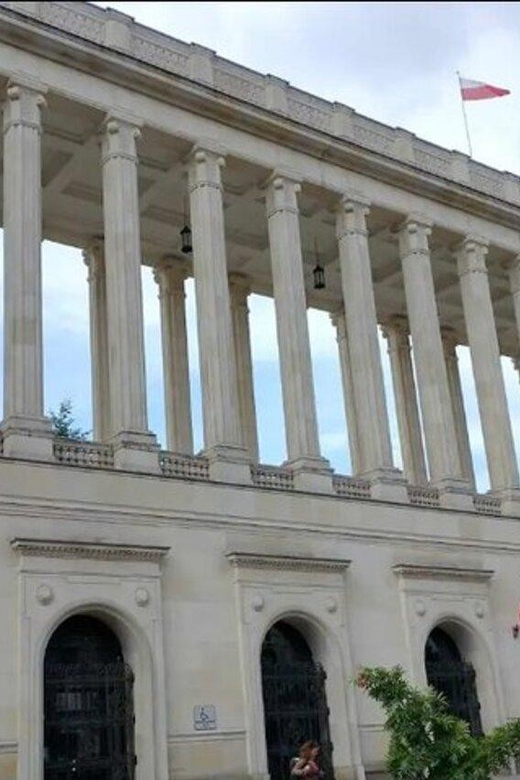
You finish at the Palace of Culture and Science, another guided stop about 15 minutes. This is described as the most controversial building in the city, and the tour hints that the controversy has more than one reason, which is exactly how it should be treated: as a symbol with layers.
The guide’s job is to connect the palace to the broader themes you’ve already covered—propaganda, power, and the mismatch between what the state claimed and what people lived. Because you’ve already walked through squares, parade streets, and ideological art, the palace lands with context instead of feeling like a random big monument.
There’s also an optional angle: there’s an entry fee for the viewing terrace, and that fee is not included in the tour price. If you want skyline views, factor that extra cost into your planning.
How Olivia (and Agnieszka) Make It Stick Without Turning It Into a Lecture
A big reason this tour has a 5-star rating is the guide delivery. Several reviews point to Olivia’s witty, informative storytelling, and Agnieszka’s dedication and patience with questions. That matters, because the subject is heavy, and humor is being used as a tool to keep it human instead of academic.
I also like that the guides bring personal framing without losing structure. The tour is built around clear stops, but the guides use real-life stories to connect those stops to lived experience. That’s how you remember details later, not only the big themes.
Pacing comes up too. One review notes the guide was mindful on a warm day and kept pauses in mind. Another mentions an engaging Q-and-A style, which is a smart match for this topic because it’s easy for questions to pop up as you see symbols and city planning choices.
Price and Logistics: Is $32 Worth 150 Minutes in Warsaw?
At $32 per person for about 150 minutes (roughly 2.5 hours) over about 3 km, you’re paying for interpretation and navigation. This isn’t just a route—it’s a guided way to connect buildings and street design to censorship, shortages, espionage fears, and state control.
What makes the value feel real is what’s included. You get an info pack with a FAQ and useful links, plus visual aids and extra recommendations for where to eat and drink after. That kind of add-on matters when you’re trying to make smart use of a short stay.
Logistics are also straightforward. You meet at Constitution Square, and you should look for the guide with a white and green umbrella. The tour runs in English and offers private or small groups, which tends to help with questions and with hearing details clearly.
The walking piece is the main consideration. It’s wheelchair accessible, but the tour notes it’s not recommended for travelers who have problems with walking long distances. If your mobility is limited, it’s worth assessing whether 3 km on uneven urban paths will be doable for you.
Who This Tour Suits Best (and Who Might Skip It)
This is a great fit if you want Warsaw beyond postcards and monuments. If you like history that links directly to daily life—how people survived, joked, adapted, and navigated control—this walk is built for you.
It’s also ideal for families and mixed-age groups when you want a guide who can balance seriousness with humor. The reviews mention it works well for families, and the small-group feel helps the experience stay lively instead of rushed.
You might consider skipping if walking long distances is difficult for you, or if you only want a quick overview of landmarks. This route asks you to think while you walk, and that works best when you have the stamina and curiosity to stay engaged for the full stretch.
Should You Book Life Behind the Iron Curtain Warsaw Walking Tour?
If you’re already curious about Warsaw’s communist-era reality, I’d book it. The price-to-time ratio is fair, and the route is designed around specific places where propaganda, control, and everyday absurdity become visible.
The deciding question is simple: can you do about 2.5 hours of walking? If yes, you’ll likely get more than facts—you’ll get a usable mental map of how the system shaped public space and private life.
FAQ
Where does the tour start?
The tour starts at Constitution Square. At the meeting point, look for the guide with a white and green umbrella.
How long is the walking tour?
The duration is about 150 minutes (about 2.5 hours).
How far do we walk?
The route is approximately 3 km.
What is included in the price?
The tour includes a full info pack (FAQ, useful links, and more), visual aids, and recommendations about additional places to visit and where to eat or drink.
What is not included?
Entry fee to the viewing terrace in the Palace of Culture and Science is not included.
Is the tour accessible?
The tour is wheelchair accessible, but it is not recommended for travelers who have problems with walking long distances.
Can I get a refund or change plans?
There is free cancellation up to 24 hours in advance for a full refund, and you can use reserve now & pay later to keep your plans flexible.
More Tours in Warsaw
- Warsaw: Old Town Highlights Walking Tour in English
★ 4.7 · 1,516 reviews - Warsaw: City Sightseeing Hop-On Hop-Off Bus Tour
★ 3.6 · 1,415 reviews - Warsaw: Polish Vodka Museum Tour with Tasting
★ 4.6 · 788 reviews - 3-Hour Guided Cycling Tour of Warsaw
★ 4.9 · 624 reviews
More Tour Reviews in Warsaw
- Warsaw: Chopin Concert in the Old Town
★ 4.8 · 2,287 reviews - Warsaw: Traditional Galar Cruise on The Vistula River
★ 4.6 · 1,640 reviews - Warsaw: Old Town Highlights Walking Tour in English
★ 4.7 · 1,516 reviews - Warsaw Concert: Chopin – Painted by Candlelights with Wine
★ 4.8 · 1,442 reviews
Communist Warsaw, More Tours
- Private Tour: Warsaw’s Communist History by Retro Fiat
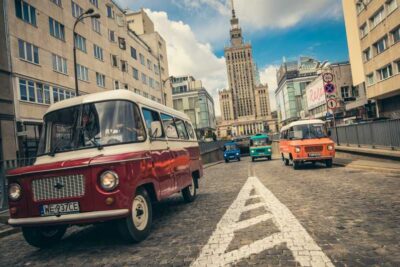
★ 5.0 · 115 reviews - Warsaw: Communism Tour in an Original Socialist Van
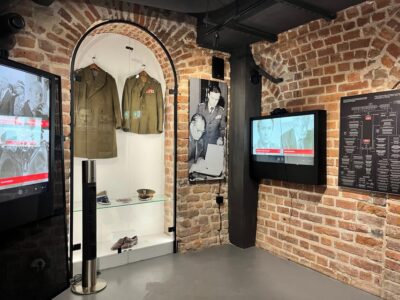
★ 4.9 · 75 reviews - Warsaw: Cold War Museum Entry Ticket
★ 4.6 · 55 reviews - Warsaw: Communist History Self-Driving Tour
★ 4.8 · 52 reviews
Fresh on the site: newer Warsaw reviews

Communist-Era Warsaw Tours: the other contenders.
 ★ 5.0Private Tour: Warsaw’s Communist History by Retro FiatFrom $108115 reviews
 ★ 4.9Communism Tour in an Original Socialist VanFrom $7875 reviews
 ★ 4.6Cold War Museum Entry TicketFrom $1255 reviews
 ★ 4.8Communist History Self-Driving TourFrom $6952 reviews
 ★ 5.0Life Behind the Iron Curtain Warsaw Walking TourFrom $2833 reviews
 ★ 5.0Warsaw Communism Private Tour in a Retro FiatFrom $10525 reviews
 ★ 5.0Communist Warsaw: private tour by retro minibus with hotel pickupFrom $13422 reviews
 ★ 4.6ROYAL & COMMUNIST WARSAW walking tour in EnglishFrom $58 reviews
Browse the lists this tour appears in