
Reviewed · WARSAW OLD TOWN & ROYAL ROUTE WALKS
Private 4h Tour in Warsaw Old Town
Warsaw has a way of getting personal, and this private 4-hour Old Town walk gives you clear context at every stop and smart photo-to-now comparisons so the city’s layers click fast. I also like how the route connects major symbols without feeling like a checklist.
The only real drawback: the loop is quick. You’ll be on your feet a lot, with short stops that cover the essentials but won’t replace time for deeper museum visits.
In This Review
- Key highlights to look for
- Why this 4-hour Warsaw Old Town route feels efficient
- King Sigismund’s Column and the city axis that keeps shifting
- Old Town UNESCO streets: trade roots, repeated fires, and rebuilding after 1944
- Royal Castle Gardens: royal residence, wartime loss, and faithful reconstruction
- St. John the Baptist Archcathedral: where national moments and organ music share space
- Rynek Starego Miasta and the Warsaw Mermaid in the marketplace square
- Barbakan Warszawski: defensive walls, plus May-to-October inside-view context
- Uprising memory at the monument, then a Baroque palace pause
- Ulica Miodowa: a tight street packed with firsts, churches, and a famous heart
- Plac Teatralny, the Grand Theatre area, and the Tomb of the Unknown Soldier
- Finishing on the Royal Route near Krakowskie Przedmieście
- Price and what you actually get for $111.75 per person
- Who this private Warsaw Old Town tour fits best
- Should you book this tour?
- FAQ
- How long is the Private 4h Tour in Warsaw Old Town?
- How much does the tour cost?
- What language is the tour offered in?
- Is the tour private?
- Where does the tour start and end?
- Is a mobile ticket provided?
- What is the cancellation policy?
Key highlights to look for
- King Sigismund’s Column tells a story of displacement, reconstruction, and what the city chose to rebuild
- UNESCO Old Town is explained as a trade-and-rebuilding story, not just pretty streets
- Royal Castle Gardens connect the 16th-century rise of the Polish Crown to WWII and the later reconstruction effort
- Barbakan Warszawski turns defensive architecture into a “look at the past” walking experience, especially May to October
- A finish on the Royal Route puts you in position to keep exploring on foot afterward
Why this 4-hour Warsaw Old Town route feels efficient
This tour is built for people who want meaning, not just location names. In about four hours, you cover one of Warsaw’s most famous loops and get the through-line: the city’s power came from trade, got reshaped by wars, and then was rebuilt with intention.
I like the pace because it’s “walking-and-understanding,” not “run between landmarks.” Expect a lot of short interpretations, then time for you to look around and absorb the look of Warsaw for yourself.
More of the Old Town and the Royal Route, on foot
- Warsaw: Chopin Concert in the Old Town★ 4.8 · 2,287 reviews
- Warsaw: Old Town Highlights Walking Tour in English★ 4.7 · 1,516 reviews
- Warsaw: Old Town Guided Walking Tour★ 4.9 · 599 reviews
King Sigismund’s Column and the city axis that keeps shifting
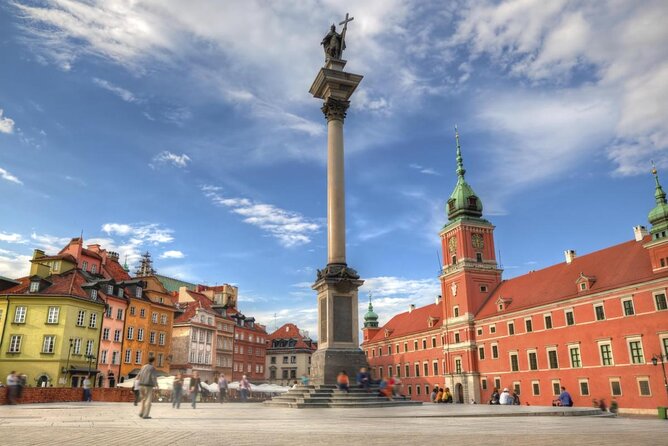
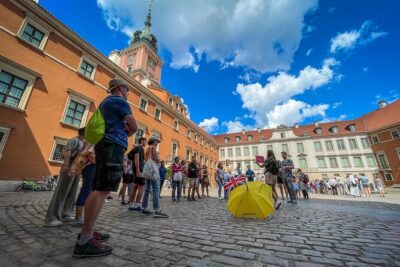
You start at King Sigismund’s Column (Kolumna Zygmunta), and it’s not where you’d expect. This column is Warsaw’s oldest public memorial, but it’s been moved more than once as the city reworked the alignment of Krakowskie Przedmieście Street in the 19th century, and later again after World War II.
Here’s the wartime anchor: on September 2, 1944, German troops brought the column down. The reconstruction of both statue and column was finished in 1949. Nearby, you can also spot earlier columns displayed along the walls of the King’s Castle when you view them from the WZ route—another small reminder that history in Warsaw often comes with fragments, not originals.
Practical tip: even if you don’t fully clock all the movement stories at first, just take a minute to notice the column as a city symbol. Then it will make more sense when your guide ties it to the broader theme: what Warsaw rebuilds tells you what it values.
Old Town UNESCO streets: trade roots, repeated fires, and rebuilding after 1944
From the column, you move into Warsaw Old Town, the UNESCO-listed area where the city’s story is written into the street shape. Warsaw was founded in a spot where the river connected routes that supported trade between the Baltic Sea and the Black Sea. As wealthy tradesmen and craftsmen settled here, the town grew quickly.
Over time, the built environment kept changing. Wooden structures that burned were replaced by masonry tenement houses, and earth ramparts gave way to stone walls. A town hall was built in 1429 (it no longer exists), and the parish church still in use today is the Cathedral of St. John.
Then comes the hard part that defines modern Old Town: in 1944, roughly 90% of the Old Town area was razed. The reconstruction took years and ultimately earned UNESCO status—because Warsaw didn’t just rebuild buildings, it restored the historic urban fabric.
What you should watch for as you walk: look at the way streets funnel views and how the square areas open up. Even if the buildings are reconstructed, the city layout helps you understand how Warsaw functioned before the war.
Royal Castle Gardens: royal residence, wartime loss, and faithful reconstruction
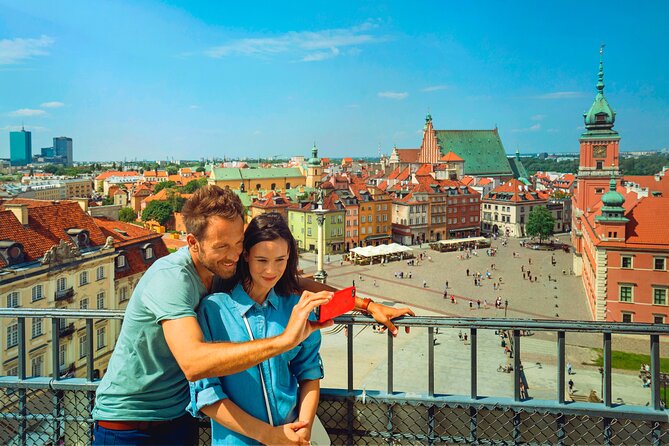
Next up is Warsaw Royal Castle Gardens, where “gardens” can sound peaceful—but the story here is dramatic. The Royal Castle became a royal-residence in the 16th century when Masovia joined the Crown. Before WWII, it had been destroyed multiple times, including during the Deluge and later during the annexation of Poland, and rebuilt repeatedly.
In the first days of WWII, the castle was bombed and then nearly destroyed by fire. Some priceless art works had been removed from the building in time, then hidden. Still, remaining works were plundered, and in 1944 the castle was blown up in retaliation for the Warsaw Uprising.
Reconstruction only began much later, with the decision in 1971, and much of the funding came from community support. The site opened to visitors in 1984, and it later became part of UNESCO as an example of faithful historic reconstruction.
How to enjoy this stop: take a slow minute in the garden space. Then connect what you’re seeing to the idea that the modern castle shape is a deliberate act of memory, not just restoration for tourism.
St. John the Baptist Archcathedral: where national moments and organ music share space
You’ll visit the Archcathedral Basilica of St. John the Baptist, one of Warsaw’s oldest churches. This is one of those stops where the guide’s timing can matter, because the church hosts concerts linked to the International Organ Music Festival. Specifically, there are concerts every Sunday at 4 PM from July to September.
This place also holds major political memory. It’s connected to the oath of the Constitution of May 3, described as the first of its kind in Europe. Beneath the church, the crypt includes tombs of historical figures, including the Chapel-Mausoleum of the Primate of the Millennium.
If you’re the type who likes a site that can do both art and history, this is a strong pivot point in the day. If you’re not, it still works because your guide can pull out a few “this matters” moments without turning it into a lecture.
Just your group: more private Warsaw tours

Rynek Starego Miasta and the Warsaw Mermaid in the marketplace square
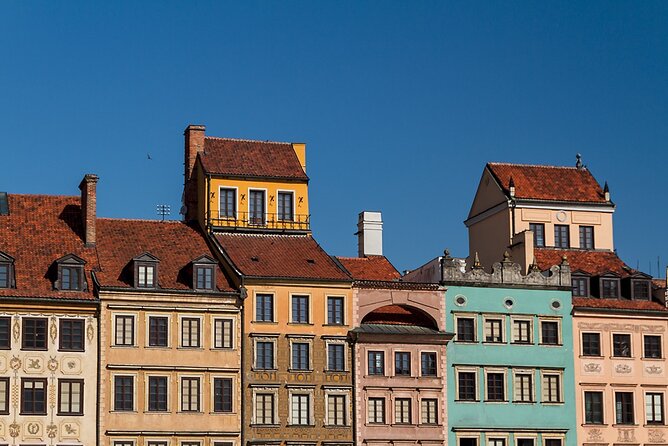
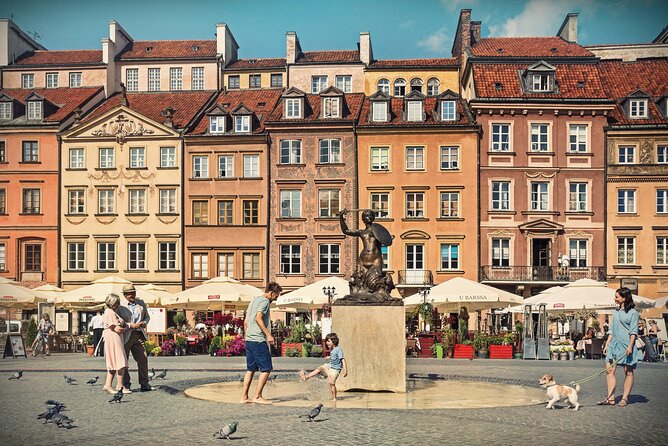
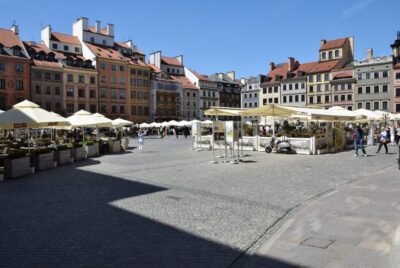
From the cathedral area, you reach Rynek Starego Miasta, Old Town’s marketplace square. This is where the architecture turns practical: tenement buildings around the square hold restaurants, cafes, clubs, galleries, and museums, so you can keep moving—or pause longer with a drink.
The Warsaw Mermaid statue sits at the heart of the square as one of the city’s newest visual focal points. The marketplace itself was divided into four sections linked to Warsaw’s enlightenment activists: Kołłątaj, Dekert, Barss, and Zakrzewski.
Short stops can feel like a tease here, because the square is exactly the kind of place you’d want to linger after the tour. If you can, use this as your moment to decide where you’ll grab a snack after you finish the walk.
Barbakan Warszawski: defensive walls, plus May-to-October inside-view context
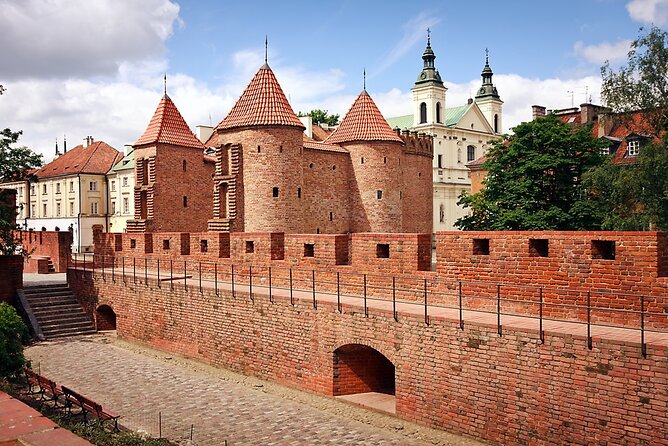
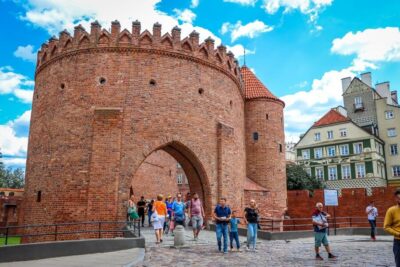
Next is Warsaw Barbican (Barbakan Warszawski). This structure was once part of the city’s defensive walls, built in 1548 as part of a much larger defensive system—about 4,000 feet of ramparts.
Today, it’s not just stone and history. It’s also a working visual space: you may see painters exhibiting work and musicians playing as you walk around. Inside the Barbican area, there’s an exhibition from May to October with historical photos and models of defensive lines and towers that no longer exist.
This stop really works because it invites your brain to compare eras. When you look at current Old Town form against older plans and photos, the question becomes: what did the city feel like when defense mattered every day?
Practical tip: for photos, watch your angles at the Barbican. It’s easy to capture it like a single wall, but it’s more interesting when you frame it against the Old Town streets behind you.
Uprising memory at the monument, then a Baroque palace pause
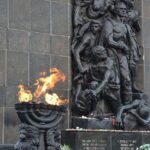
You’ll reach the Warsaw Uprising Monument, a memorial that depicts groups of insurgents during battle. The Warsaw Uprising ended in defeat, and it cost around 200,000 Polish lives—a painful marker in modern Polish history.
After the monument, your walk continues toward Krasiński Palace (Palace of the Republic), now associated with special collections at the National Library. It’s described as one of Warsaw’s enchanting Baroque structures, with reliefs inspired by antique works. The park behind the palace is a nice pocket for a reset and a quieter look at how public space works in the center of the city.
This area also includes modern civic architecture nearby, including a recently-built seat for the Supreme Court. The contrast is part of Warsaw’s point: history stays visible, but the city keeps building.
Ulica Miodowa: a tight street packed with firsts, churches, and a famous heart
Now you get the kind of narrow-street atmosphere you can’t fake with maps: Ulica Miodowa. It’s a lively corridor lined with historic residences, and your guide points out specific addresses with big stories attached.
Key stops you’ll notice along the street include:
- No. 24, tied to the Collegium Nobilium, described as the first school for the young of the ruling elite (today the Academy of Theatre).
- No. 17, the residence of the Primate of Poland, the Palace of Warsaw’s Archbishops from the 18th century.
- No. 16, Warsaw’s only Eastern Catholic Church.
- A nearby building associated with the Ministry of Health, Pac Palace.
You’ll also get a special-feeling moment at the Church of the Capuchins, where the altar includes the heart of Jan III Sobieski, described as the church founder. Further along, you can see the Monument of Warsaw’s Heroes, commonly called the Monument of Nike.
How to enjoy this segment: slow down. Miodowa is narrow, and the details are the point. If you rush, you miss the “this small street contains five different Warsaw worlds” effect.
Plac Teatralny, the Grand Theatre area, and the Tomb of the Unknown Soldier
Next comes Plac Teatralny (Theatre Square), bordered on its right by the Late Baroque Blank Palace. Behind it sits Jabłonowski Palace, which once served as city hall before WWII. During the war it was razed, and later rebuilt in the 1990s—but only the façade and clock tower remain from the original design. You can walk through the gate under the tower to see foundations laid in the 19th century, which adds a literal layer to the rebuilding story.
The square also anchors the huge Grand Theatre, a Classicist building that seats the National Opera and National Theatre. The opera stage is described as one of the largest in Europe, and the interiors are known for cut glass chandeliers, a spacious foyer with columns, and impressive floor tiling if you attend a performance.
Then it’s a shift in tone to the Tomb of the Unknown Soldier. This symbolic tomb remembers the millions of soldiers who sacrificed their lives for Poland’s freedom. The tomb includes ashes of a defender of Lvov and an urn with soil from World War I battlefields, and it contains urns from every battlefield where Polish troops fell in the last century. An eternal flame burns next to the tomb, and a military honor guard watches it, with a change daily at noon.
Even with a short stop, this is the kind of place where your attention tightens. If your timing happens to land near noon, you may catch the ceremonial change; if not, just look at the way the guard and eternal flame structure the space.
Finishing on the Royal Route near Krakowskie Przedmieście
You end on the Royal Route, stretching from Zamkowy Square to Trzech Krzyży Square. The idea is that you’ve just walked a concentrated slice of Warsaw’s story, and now you can keep going at your own pace along one of the city’s grandest pedestrian corridors.
Your guide finishes at the Nicolas Copernicus Monument on Krakowskie Przedmieście, which is a smart handoff point: you can continue along Nowy Świat and the surrounding streets quickly using your own timing.
What makes the Royal Route worth continuing includes specific landmarks your guide flags, like St. Anne’s Church (including the view from its tower), Polonia House connected to Maria Skłodowska-Curie, the Radziwiłł Palace (current residence of the President of Poland), and the Warsaw University campus tied to Kazimierzowski Palace. You’ll also hear about Czapski Palace and how it’s linked with the Academy of Fine Arts.
If you still have energy after the tour, this finish is the perfect way to turn four hours of explanation into your own little independent walk.
Price and what you actually get for $111.75 per person
At $111.75 per person for about four hours, this isn’t “pay for attractions.” Most of your time centers on exterior landmarks and a few key interiors, with free admission listed for major stops on the route.
So you’re mainly paying for something harder to DIY: a professional local guide who can connect dates, damaged buildings, and rebuilt forms into a narrative you can follow while you’re standing in the exact spot where the story unfolded.
If you’re the kind of person who likes history but hates getting lost in too many names, the value lands well. If you want long museum time or you prefer quiet, self-paced wandering with almost no talking, you might find the short-stop format a bit limiting.
Who this private Warsaw Old Town tour fits best
This is a strong match for you if:
- you want a tight loop of Old Town highlights with context, not just photos
- you like walking routes that explain why certain places matter
- you enjoy history that includes both pride and trauma, because the day includes the Uprising and the Unknown Soldier
It’s also good for small groups that can’t easily join large tours. The experience is private, so it’s only your group.
Should you book this tour?
If you want Warsaw’s Old Town and its big wartime turning points in one well-paced morning or afternoon, I think it’s an easy yes. The route does a good job of moving beyond postcard Warsaw and into the why behind the reconstruction, the symbols, and the memorials.
Book it if you like guided explanations you can immediately test with your eyes on the street. Skip it only if you know you want lots of museum time or you prefer very quiet, slow wandering with minimal interpretation.
FAQ
How long is the Private 4h Tour in Warsaw Old Town?
The tour is about 4 hours long.
How much does the tour cost?
It costs $111.75 per person.
What language is the tour offered in?
The tour is offered in English.
Is the tour private?
Yes. It’s a private tour/activity, so only your group will participate.
Where does the tour start and end?
It starts at Sigismund’s Column, plac Zamkowy, 00-001 Warszawa. It ends on the Royal Route at Krakowskie Przedmieście, with the guide leaving you at the Nicolas Copernicus Monument.
Is a mobile ticket provided?
Yes, the tour includes a mobile ticket.
What is the cancellation policy?
You can cancel for free up to 24 hours in advance for a full refund.
More Tours in Warsaw
- Warsaw: Old Town Highlights Walking Tour in English
★ 4.7 · 1,516 reviews - Warsaw: City Sightseeing Hop-On Hop-Off Bus Tour
★ 3.6 · 1,415 reviews - Warsaw: Polish Vodka Museum Tour with Tasting
★ 4.6 · 788 reviews - 3-Hour Guided Cycling Tour of Warsaw
★ 4.9 · 624 reviews
More Tour Reviews in Warsaw
- Warsaw: Chopin Concert in the Old Town
★ 4.8 · 2,287 reviews - Warsaw: Traditional Galar Cruise on The Vistula River
★ 4.6 · 1,640 reviews - Warsaw: Old Town Highlights Walking Tour in English
★ 4.7 · 1,516 reviews - Warsaw Concert: Chopin – Painted by Candlelights with Wine
★ 4.8 · 1,442 reviews
The Old Town and Royal Route, More Walks
- Warsaw: Chopin Concert in the Old Town
★ 4.8 · 2,287 reviews - Warsaw: Old Town Highlights Walking Tour in English
★ 4.7 · 1,516 reviews - Warsaw: Old Town Guided Walking Tour
★ 4.9 · 599 reviews - Old Town Warsaw Walking Tour
★ 4.5 · 333 reviews
Fresh on the site: newer Warsaw reviews


Warsaw Old Town & Royal Route Walks: the other contenders.
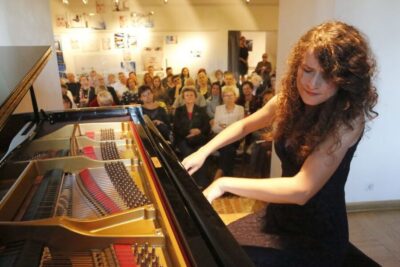 ★ 4.8Chopin Concert in the Old TownFrom $262,287 reviews
 ★ 4.7Old Town Highlights Walking Tour in EnglishFrom $261,516 reviews
 ★ 4.9Old Town Guided Walking TourFrom $13599 reviews
 ★ 4.5Old Town Warsaw Walking TourFrom $26333 reviews
 ★ 4.9Warsaw Old Town 1.5-Hour or Full 3-Hour Segway TourFrom $69209 reviews
 ★ 5.0Everyday concerts of Chopin’s music at the Old Town in WarsawFrom $26192 reviews
 ★ 4.8Old and New Town Private Walking TourFrom $16116 reviews
 ★ 5.0Segway Tour Warsaw: Old Town Tour – 1,5-Hour of Magic!From $72112 reviews
Browse the lists this tour appears in