
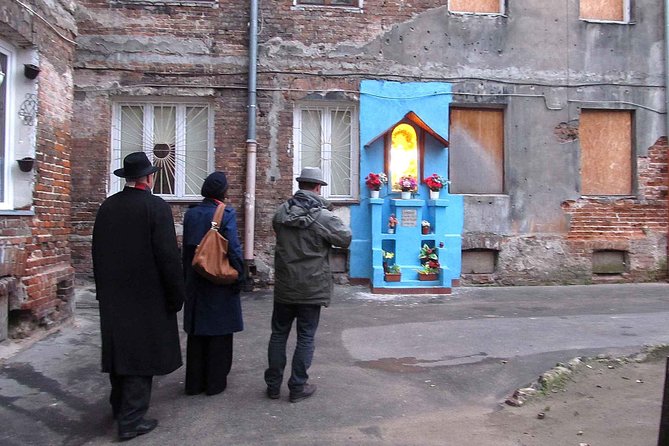
Reviewed · WARSAW UPRISING & WWII HISTORY
Warsaw for WWII Buffs – private tour with hotel pickup
Warsaw never tells this story softly. In three hours, you ride in a retro Żuk and get hotel pickup while a guide maps the WWII timeline in plain English, though the ride can feel warm and tight since these vintage vehicles often lack A/C.
I like the way the stops stay focused on real places you can still read like evidence, not just names on a plaque. If you have mobility issues, plan for short walks at each stop and bring comfortable shoes.
This tour is intense, but it’s not rushed. You get the bigger picture fast—1939 invasions, the Warsaw Ghetto’s physical barriers, and then the trauma of the 1944 uprising and the Soviet takeover that followed.
In This Review
- Quick hits
- Why this 3-hour private tour works for WWII buffs
- The retro Żuk ride: comfort, seating, and what to expect
- Getting the 1939 timeline right in central Warsaw
- Waliców Street: ghetto wall fragments you can see between buildings
- Chłodna Street’s division: the bridge built for movement under occupation
- Muranów and the memorial zone near POLIN and the Ghetto Heroes
- Remembering the Soviet invasion, Gulags, Katyń, and Eastern Poland
- The Warsaw Uprising Monument: 1944 defeat and a new political era
- Price and value: $169.38 for a private, pickup-included WWII narrative
- How to get the most from your guide (and ask the right questions)
- Should you book this Warsaw WWII tour?
- FAQ
- How long is the Warsaw for WWII Buffs tour with hotel pickup?
- Is this tour private, or do I join other people?
- Do they pick up from hotels and apartments?
- Is the tour offered in English?
- Are there height or child requirements?
- Can I cancel for a full refund?
Quick hits
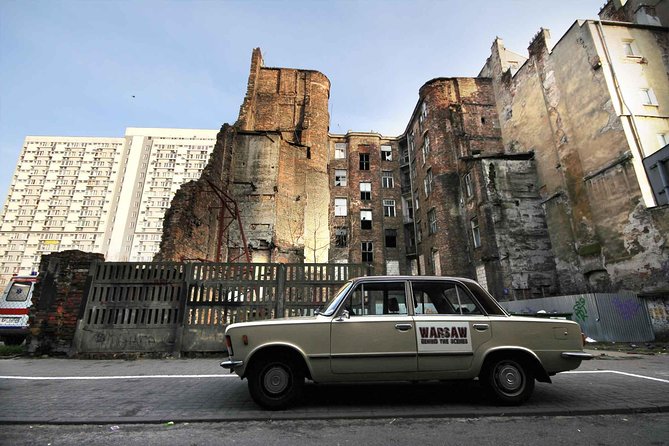
- Retro Żuk transport makes the transfer time feel part of the experience, not dead time
- Hotel pickup within 3 km helps you keep the tour in your schedule
- WWII timeline on the move connects German invasion, Soviet occupation, ghetto creation, and uprising
- Ghetto wall fragments on Waliców give you a concrete sense of where boundaries were
- Chłodna Street bridge history explains how movement worked under occupation
- POLIN area and the Ghetto Heroes memorials add context and remembrance where the uprising began
Why this 3-hour private tour works for WWII buffs
If you love history but hate wasting time, this is a good match. It’s designed as a tight circuit through central Warsaw so you can pack the most important WWII story beats into one afternoon or morning.
You’re not dropped onto a checklist of museums. Instead, your guide uses the streets and surviving sites to build a narrative: the late 1930s political pressure, the 1939 invasion, the creation of the ghetto, and then the armed resistance and aftermath. The private format matters here because you can ask your own questions and steer the emphasis—more on daily life, more on resistance, or more on the shifting power between Nazi and Soviet control.
One more practical note: the tour time includes hotel transfer time. That means your pickup spot can affect how much walking you get, so I treat pickup like a strategy choice, not just a convenience.
More of Warsaw in 1944 and the war years
- World War 2 in Warsaw walking tour in English★ 4.7 · 237 reviews
- Warsaw: Warsaw Historical Group Tour with Pickup & Drop-Off★ 4.6 · 233 reviews
- Warsaw for WWII Buffs – private tour with hotel pickup★ 5.0 · 166 reviews
The retro Żuk ride: comfort, seating, and what to expect
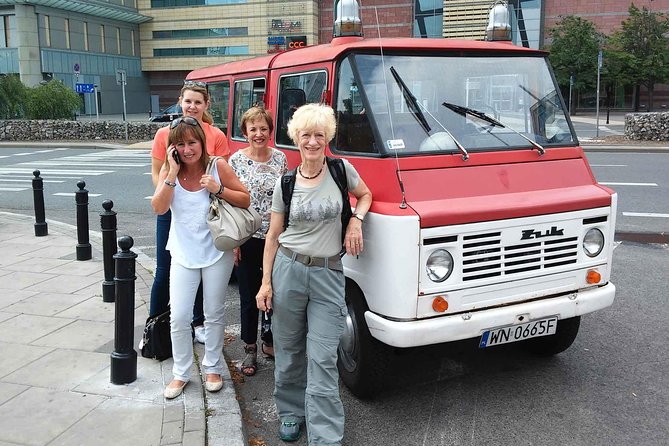
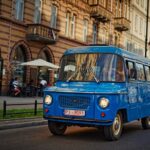
The vehicle is part of the charm. You’ll travel in a classic retro communist-style Żuk minibus, and it really helps the tour feel local and grounded.
But vintage also means practical limits. There’s often no air conditioning, and some vehicles may not have seat belts (historic-vehicle rules allow that). Heating is available in winter, yet in summer you’ll want breathable layers. Also, the tour is usually set up with short walking segments at each stop, so you’ll be getting in and out of the vehicle multiple times.
There’s one specific consideration worth taking seriously: a few people noted that the vehicle didn’t match what they expected from the description and that older seating can be uncomfortable for smaller or less mobile passengers. If comfort is a priority for you, ask ahead which vehicle you’ll use and how easy it will be to step in and out.
Getting the 1939 timeline right in central Warsaw
The tour starts in central Warsaw, where the cityscape still carries WWII scars. From there, your guide sets the historical stage using the drive as a moving classroom.
You’ll cover the political climate in the late 1930s, then the German invasion of Poland in 1939. The guide also includes the Soviet occupation of eastern Poland happening at the same time. I like this framing because it prevents the story from becoming one-sided or “only Germany” in your head. It also helps you understand why Warsaw’s fate unfolded as it did.
Your time here is short on purpose—about the setup phase—so you leave ready to see the ghetto with context, not just shock.
Waliców Street: ghetto wall fragments you can see between buildings
One of the most powerful parts of this tour is how it uses surviving traces. At Waliców, you’ll learn how the Warsaw Ghetto was established in 1940 and forcibly confined nearly half a million people.
What makes this stop special is that the ghetto wall didn’t vanish completely. Some fragments remain, hidden between buildings and aligned with pre-war property lines. Your guide will show you a preserved section so you can visually map the boundary that once divided neighborhoods and lives.
You’ll also visit the area associated with the Waliców tenement house, often described as a kind of last “ghost” of the ghetto because it remains a ruin. Alongside that, there’s another preserved fragment of the wall. This combination is effective: you get both the boundary line and the sense of incomplete destruction—what was broken is still physically present.
Chłodna Street’s division: the bridge built for movement under occupation
If you only think about the ghetto as a wall, you might miss the next layer: how everyday transit got redesigned.
At Chłodna Street, the story gets very concrete. You’ll learn how the ghetto was divided into two parts by the street and how the Germans used it for East-West transfer traffic. Then comes a detail that sticks in your mind: a wooden bridge built near the intersection of Chłodna and Żelazna streets linking the two ghetto parts.
The bridge mattered because it let “Aryan” trams, German military transport, and cars pass underneath while people on either side were still kept separated. It’s the kind of explanation that helps you read old photos and street plans later, because you finally know what the city layout was forcing on people.
This stop includes a short walk, so keep an eye on footing. Some streetscapes can be uneven, and you’ll want your eyes on the intersections more than on your phone.
Just your group: more private Warsaw tours
Muranów and the memorial zone near POLIN and the Ghetto Heroes
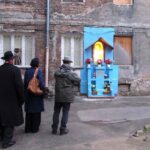
After the ghetto boundary stops, the tour shifts into remembrance and wider context in the Muranów district. At first glance, it can look like ordinary blocks and apartments, which is exactly why this part works. Your guide points out what’s still there from the past and helps you connect the present streets to what happened during the occupation.
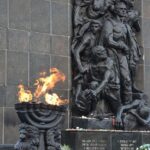
Then you’ll visit the area around the Monument to the Ghetto Heroes and the POLIN Museum of the History of Polish Jews. These sites sit near the location where the first armed clashes of the 1943 Ghetto Uprising occurred.
I like that this segment isn’t just facts. It ties the narrative to later meaning: remembrance and dialogue among Polish, Jewish, and German communities. You walk away understanding that history doesn’t end in 1943 or 1944—it keeps shaping public space and identity.
For WWII buffs, this is also a good checkpoint. If you want to study the uprising in more depth later, this tour gives you the “where” and the “why” so your next museum visit lands better.
Remembering the Soviet invasion, Gulags, Katyń, and Eastern Poland
Not all wartime suffering in Poland was purely tied to the German side of the conflict. The tour balances that with a stop at the Monument to the Fallen and Murdered in the East.
Here, you’ll cover the Soviet attack on Poland on September 17, 1939—two weeks after WWII began in Europe. The guide connects what happened afterward to deportations, Gulags in Siberia, executions, and the victims of the Katyń massacre.
This stop changes the emotional temperature of the tour. I recommend slowing down during the walk and letting the guide’s explanation land before you move on. The point isn’t to collect more names. It’s to understand how Poland was pulled into a double occupation—and how the consequences outlived the war.
The Warsaw Uprising Monument: 1944 defeat and a new political era
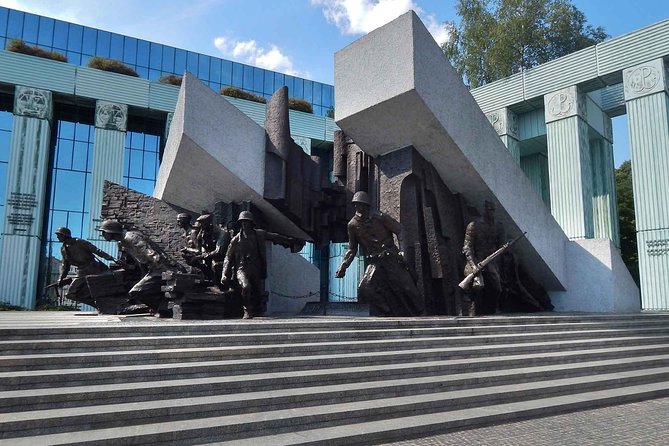
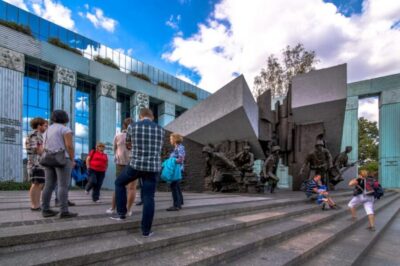
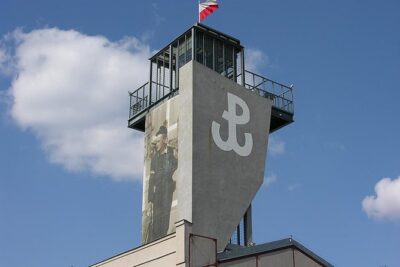
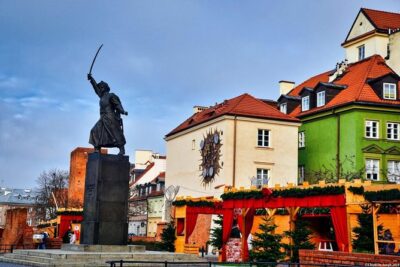
The final segment focuses on the Warsaw Uprising of 1944, the city’s attempt to regain independence before the arrival of the Red Army.
Your guide explains that after the uprising was defeated, Nazi forces systematically destroyed most of Warsaw. Then you move to the next transition: the Soviet army entering the empty ruins in January 1945, which began a new communist rule.
This ending matters because it doesn’t leave you with a single “WWII” image. You finish with the sense of continuity—how the war’s end didn’t mean safety, and how power shifts kept rewriting daily life.
The stop is brief, but the payoff is high. You’ll understand why people talk about Warsaw not just as a WWII battlefield, but as a turning point in Poland’s modern history.
Price and value: $169.38 for a private, pickup-included WWII narrative
At $169.38 per person, this isn’t the cheapest Warsaw history add-on—but it is priced like a real private experience.
Here’s what you’re buying for the money:
- A professional English-speaking local guide who can connect the dots
- Private-only participation, so you’re not squeezed into a larger group rhythm
- Hotel/apartment pickup and drop-off within 3 km of the city center, which can save you the hassle of coordinating transit
- A retro Żuk ride that turns the transfers into part of the story
In plain terms: if you’re serious about WWII and you want context, this often feels like better value than piecing together several smaller, unconnected walks on your own. The private format also helps you tailor your attention, whether you’re more interested in ghetto boundaries, resistance history, or the Soviet occupation angle.
One more small value tip: because pickup time counts toward the tour duration, meeting in the city center can help you keep more time for seeing and walking, especially if your lodging is close to the 3 km cutoff.
How to get the most from your guide (and ask the right questions)
This tour tends to work best when you treat it like a conversation. Multiple guides have been praised for making the history feel personal and for being flexible about what you want to focus on.
You may get a guide such as Konrad or Tom, who were noted for excellent English and for turning the tour into something more than a lecture. Others named in strong write-ups include Marcin, Karol, Lukas/Lucas, and Martin, with compliments for storytelling, tailoring, and answering questions in a way that keeps teenagers and adults engaged.
So here’s what I’d do:
- Bring 2 or 3 questions you want answered before you start (for example, how the ghetto boundary changed daily life, or how the uprisings fit together)
- Ask your guide to point out what you should look for if you return later to POLIN or memorial sites on your own
- Wear footwear that handles short walks and curb transitions without stress—because you will get out of the vehicle repeatedly
Also, plan on the emotional weight. The tour covers persecution, murder, resistance, and destruction, so give yourself the mental room to take it in.
Should you book this Warsaw WWII tour?
I’d book it if you want a focused WWII-and-its-aftermath story in one go, with hotel pickup and a guide who can explain the bigger political shifts and the ghetto’s physical reality. The 3-hour format is a real advantage if your Warsaw days are packed.
I’d be cautious if you’re very sensitive to vehicle comfort or stepping in and out of older transport. If that’s you, ask which Żuk you’ll use and how it handles seating and access before you confirm.
If your goal is to understand Warsaw during WWII beyond the headline monuments, this is one of the better bets in town.
FAQ
How long is the Warsaw for WWII Buffs tour with hotel pickup?
It runs about 3 hours.
Is this tour private, or do I join other people?
It’s a private tour/activity. Only your group participates.
Do they pick up from hotels and apartments?
Yes. Pickup and drop-off are available within a 3 km radius of the city center. If your place is farther or hard to access by car, they’ll suggest the closest comfortable meeting point.
Is the tour offered in English?
Yes. The tour is offered in English with a professional English-speaking local guide.
Are there height or child requirements?
Yes. Adults and children over 150 cm (4 ft 9 in) can participate. If a child is under 150 cm, you need to contact the operator in advance to check availability of seat boosters, which are mandatory under Polish law.
Can I cancel for a full refund?
Yes, with free cancellation. You must cancel at least 24 hours in advance for a full refund.
More Tours in Warsaw
- Warsaw: Old Town Highlights Walking Tour in English
★ 4.7 · 1,516 reviews - Warsaw: City Sightseeing Hop-On Hop-Off Bus Tour
★ 3.6 · 1,415 reviews - Warsaw: Polish Vodka Museum Tour with Tasting
★ 4.6 · 788 reviews - 3-Hour Guided Cycling Tour of Warsaw
★ 4.9 · 624 reviews
More Tour Reviews in Warsaw
- Warsaw: Chopin Concert in the Old Town
★ 4.8 · 2,287 reviews - Warsaw: Traditional Galar Cruise on The Vistula River
★ 4.6 · 1,640 reviews - Warsaw: Old Town Highlights Walking Tour in English
★ 4.7 · 1,516 reviews - Warsaw Concert: Chopin – Painted by Candlelights with Wine
★ 4.8 · 1,442 reviews
Warsaw in Wartime: More Reviews
- Small-Group Historical Guided Tour of Warsaw with pick up/drop off. Public Tour.
★ 4.5 · 343 reviews - World War 2 in Warsaw walking tour in English
★ 4.7 · 237 reviews - Warsaw: Warsaw Historical Group Tour with Pickup & Drop-Off
★ 4.6 · 233 reviews - Warsaw Uprising Museum (1944) : PRIVATE SERVICE /inc. Pick-up/
★ 4.5 · 18 reviews
Fresh on the site: newer Warsaw reviews
Warsaw Uprising & WWII History: the other contenders.
 ★ 4.5Small-Group Historical Guided Tour of Warsaw with pick up/drop off. Public Tour.From $60343 reviews
 ★ 4.7World War 2 in Warsaw walking tour in EnglishFrom $20237 reviews
 ★ 4.6Warsaw Historical Group Tour with Pickup & Drop-OffFrom $58233 reviews
 ★ 4.5Warsaw Uprising Museum (1944) : PRIVATE SERVICE /inc. Pick-up/From $9518 reviews
 ★ 4.7Warsaw Uprising and WWII Old Town Walking Tour with MuseumFrom $11215 reviews
 ★ 4.5Warsaw Uprising Museum (1944) + POLIN Museum : SMALL GROUP /inc. Pick-up/From $11414 reviews
 ★ 5.0Warsaw History and Reality Walking TourFrom $1148 reviews
 ★ 4.5Warsaw at War 1939-1945: A Self-guided Audio TourFrom $97 reviews
Browse the lists this tour appears in