
Reviewed · VINTAGE CAR & RETRO FIAT TOURS
Retro Fiat Self-Drive Undisovered Tour in Warsaw
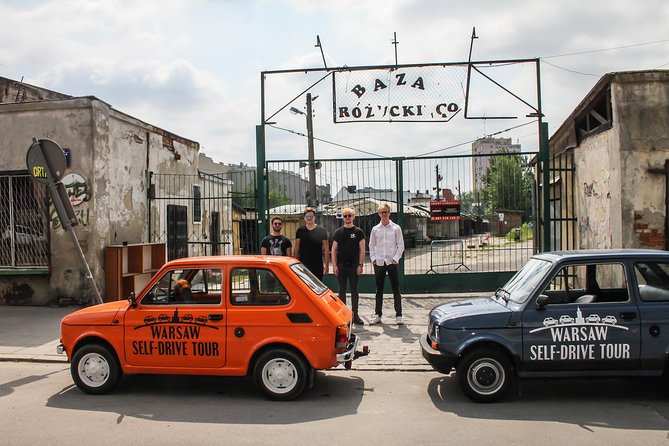
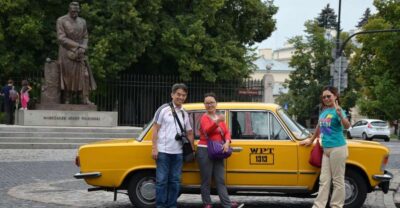
A Fiat drive beats wandering any day. This retro self-drive tour lets you cover real Warsaw at a brisk pace, while a guide keeps the story straight and you from getting turned around. I especially love the classic Polski Fiat driving experience, and I like how the route is structured so you see big places fast instead of guessing where to go.
One watch-out: you need a valid driver’s license, and there’s a 500 PLN security deposit that you get back after the tour. Also, you should be comfortable driving in city traffic, even though the stops are timed and managed.
I found the overall vibe great, thanks to live commentary and guides such as Hania, Martin, and Pavel (you may see different guides depending on the day). And yes, you finish with a small vodka shot plus souvenir photos emailed after.
In This Review
- Key things to know before you go
- Why a retro self-drive Fiat tour makes sense in Warsaw
- Price and value: what you’re really paying for
- Getting from the start: meeting point and what the beginning feels like
- The “see Warsaw fast” route: from Palace of Culture to Praga-North
- Stop 1: Palace of Culture and Science
- Stop 2: Brama Straceń (the Citadel area)
- Stop 3: Osiedle Przyjaźn (wooden housing linked to the palace)
- Stop 4: Stare Bielany (interwar neighborhood and gas lanterns)
- Stop 5: Praga-North (old prewar streets, street art, and a bazaar feel)
- Stop 6: Jazdów (wooden housing tucked inside a park)
- Stop 7: University of Warsaw Library rooftop garden and panorama
- What the guide actually adds (and why it matters)
- The vodka shot and the emailed photos: a nice finish
- Who this tour fits best (and who should skip it)
- Quick practical tips to get more out of the 2.5 hours
- Should you book the Retro Fiat Self-Drive Undiscovered Tour in Warsaw?
- FAQ
- How long is the Retro Fiat self-drive tour in Warsaw?
- What is the price per person?
- Do I need to speak Polish or another language to join?
- What do I need in order to drive the Fiat?
- Where does the tour start and end?
- Are there admission fees for the stops?
- What happens after the tour?
Key things to know before you go
- You drive the classic Fiat while the guide handles the navigation and the history
- No getting lost: the guide joins you to keep the route simple
- Fast, well-timed stops mean more neighborhoods in 2.5 hours
- Mix of Warsaw eras: communist mega-buildings, prisons/fortress remnants, and interwar housing
- Praga-North + street-level details give you a Warsaw that feels less staged
- Vodka shot + emailed photos make the end of the tour feel like a proper finish
Why a retro self-drive Fiat tour makes sense in Warsaw
Warsaw can be a lot at walking pace. The city is big, and some of the most interesting layers sit in different districts. What I like about this kind of tour is that it solves the two common problems at once: you get mobility, and you still get a real narrative.
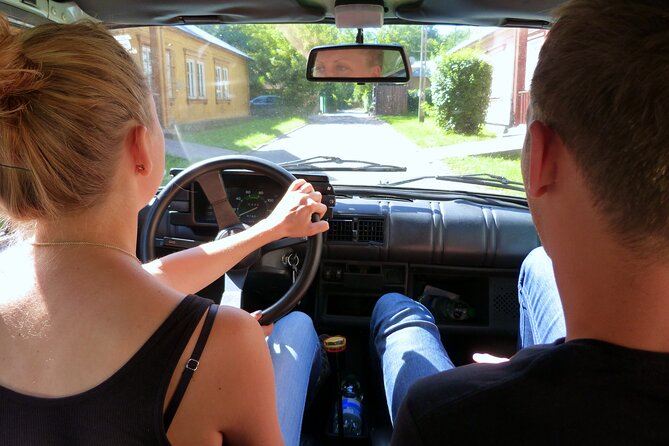
The setup is built around a self-drive format that still feels guided. You’re not left with a map and hope. A professional guide travels with you to help you navigate and keep the commentary flowing. That means you can focus on the experience—watch the architecture roll by, ask quick questions, and not spend your energy second-guessing turns.
Also, driving a Polski Fiat isn’t just a gimmick. It slows your brain down in the best way. You notice details because you’re actively controlling the ride, and you can’t help but feel connected to the old-world “how people moved back then” feeling. It’s a fun way to get oriented fast, especially if it’s your first day in Warsaw.
The tour also fits a short attention span in the best way. In about 2 hours 30 minutes, you hit seven stops with a plan. You’re moving frequently, but you’re not rushing blindly.
More of the city from the seat of a Retro Fiat
- Discover the Dark Side of Warsaw in Praga District by Retro Bus★ 5.0 · 327 reviews
- Private Tour: Warsaw’s Jewish Heritage by Retro Fiat★ 5.0 · 208 reviews
- Warsaw City Sightseeing in a Retro Bus★ 5.0 · 196 reviews
Price and value: what you’re really paying for
At $59.13 per person, this isn’t just a “sit on a bus and listen” experience. You’re paying for four things that matter in practice:
First: guided navigation. You get help staying on track. That’s valuable in Warsaw because certain sights are spread out and the interesting bits are not always near a single transit line.
Second: time efficiency. Each stop is brief, so you’ll see more than you would on a self-guided stroll. It’s ideal if you want a strong overview without committing a full day.
Third: the experience layer. Driving a classic Fiat changes the feel of the tour. It’s interactive, not passive.
Fourth: the little extras. You get souvenir photos emailed afterward, plus a shot of vodka after the tour. (If you don’t drink alcohol, you should still be prepared for that portion—your guide can usually tell you what to expect on arrival.)
If you compare this to a standard guided city tour, the cost starts to make sense. You’re paying for a guided ride that includes driving time, live commentary, and a curated route through several Warsaw neighborhoods.
Getting from the start: meeting point and what the beginning feels like
The tour starts back at Warsaw Tourist Information at Pałac Kultury i Nauki, plac Defilad 1, 00-901 Warszawa. It’s a good spot because it’s central and easy to anchor your day around. You’ll also be near public transportation, which helps if your hotel is somewhere else.
From the start, you’re basically going into two modes: driving and listening. You don’t have to be a hardcore car person. If you can drive confidently, you’ll be fine. The important thing is that you should be ready to follow the guide’s instructions so you keep the pace.
One more practical note: you’ll use a mobile ticket, and you’ll get confirmation at booking time. The group size is capped at 15 travelers, so it should stay manageable rather than turning into a chaotic parade of cars.
The “see Warsaw fast” route: from Palace of Culture to Praga-North
This tour’s strength is that it doesn’t only pick pretty landmarks. It shows you Warsaw’s shifts in power, housing, and identity.
You begin at the big, obvious anchor: the Palace of Culture and Science. Then you move into the city’s layers: a fortress site tied to uprisings, workers’ housing linked to the palace’s construction, interwar residential districts with distinctive street lighting, and finally the older, more artsy feel of Praga-North.
By the time you finish, you’ll have a clear sense of how Warsaw can look like it has multiple cities stacked inside one another.
The route is also shaped to reduce confusion. With the guide joining you and helping with navigation, you can focus on the meaning of each place rather than constantly checking your phone.
Stop 1: Palace of Culture and Science
This building is the clearest symbol you’ll get in Warsaw of the communist era—big, bold, and impossible to miss. You spend about 10 minutes here, and the key value is getting the context so you understand why locals talk about it with mixed feelings.
The palace is often described as a hulking reminder of an older government. Even if you know that in general terms, seeing it up close and hearing the story makes it click: it’s not just a landmark, it’s a political statement in concrete form.
Admission here is free, so you don’t have to budget extra time for tickets. In a short stop like this, the goal is to orient you—so the rest of the neighborhoods make sense once you move away from the center.



Stop 2: Brama Straceń (the Citadel area)
Next comes the fortress/monument area: Brama Straceń, part of Warsaw’s Citadel. The site connects to the aftermath of the 1830 November Uprising, when the Russians strengthened control of the city. Later, it served as a prison into the late 1930s.
This stop is about 20 minutes, and it matters because Warsaw’s story includes resistance and punishment, not only rebuilding and culture. The architecture of a fortress forces you to think about power—who built it, why it was built, and how people experienced it.
Admission is free, which keeps the pacing smooth. The guide’s job here is to make the place understandable without turning it into a history lecture that eats the rest of your day.
If you’re the type who likes your history grounded in physical places, this stop is worth paying attention to. If you prefer lighter sightseeing, take a breath here and then you’ll be back in “normal tour energy” soon.
Stop 3: Osiedle Przyjaźn (wooden housing linked to the palace)
This is where the tour gets more surprising. Osiedle Przyjaźn is a wooden housing district where constructors of the Palace of Culture and Science used to live.
Spending about 30 minutes here gives you something you might miss if you only look at monumental buildings. You see what the “behind the scenes” city looked like: the workers’ life, the housing reality, and the scale of construction effort.
It’s also a reminder that the “wow” of the palace didn’t happen in a vacuum. People needed places to live near their work, and those neighborhoods shaped the local urban fabric.
Admission is free, and the main drawback is simply time. A longer stay would be interesting if you really want to soak it in, but in this tour format the goal is breadth.
Stop 4: Stare Bielany (interwar neighborhood and gas lanterns)
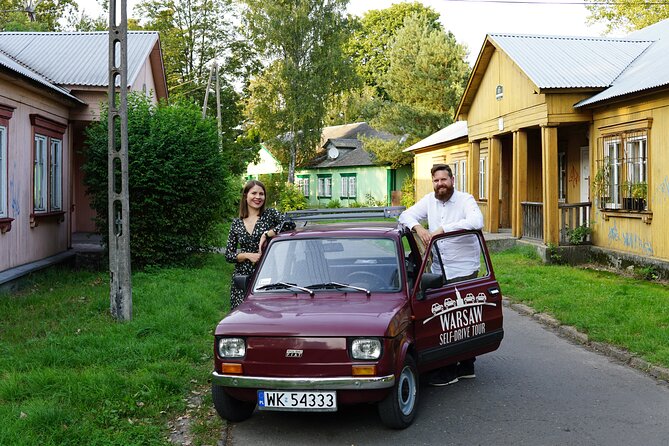
Then you move into Stare Bielany, an interwar-era housing district. The standout detail is the gas lanterns—described as the last ones in Warsaw—plus a mix of modernist architecture close by.
You’ll have about 30 minutes here. That’s enough time to walk around at a calm pace, take photos, and notice how streetscapes can feel different even within the same city.
This stop works well because it shifts the mood from heavy historical symbolism to daily life architecture. It also gives you visual variety: fewer mega-buildings, more human-scaled streets.
Admission is free. The only consideration is that the tour is “fast-moving by design,” so you should pick one or two things to focus on for each stop (a street detail, a building façade, a lighting feature) rather than trying to photograph everything.
Stop 5: Praga-North (old prewar streets, street art, and a bazaar feel)
Now you hit the part of Warsaw that many first-time visitors only glimpse from far away: Praga-North. This area is described as a place where you can still admire prewar architecture, see street art at Brzeska street, and visit Różycki’s Bazaar.
You spend about 20 minutes, which makes this stop more about impressions than deep exploration. It’s ideal if you want an atmosphere change—Praga-North often feels less polished and more artsy in a good way.
Admission is listed as free for this stop, so you’re mostly moving through and observing rather than paying to enter.
A small practical thought: street art can be better seen when you slow down. Here, you’ll be timed, so if you want to focus on one mural or one corner, plan to ask the guide where the most meaningful pieces are.
Stop 6: Jazdów (wooden housing tucked inside a park)
This stop is a classic “you’d miss it without the guide” type. Jazdów is described as a wooden housing area found inside a park. The point is that it’s not obvious, and without guidance you might walk right past it.
You get about 20 minutes. For me, these are the stops that turn the tour from generic to useful. A guided ride is good for major landmarks; guided navigation is even better for the hidden-in-plain-sight stuff.
Admission is free. The main consideration is simple: since it’s tucked away, it helps to stay close to the group and keep your eyes on the route instructions so you don’t lose time finding the entrance.
Stop 7: University of Warsaw Library rooftop garden and panorama
You end with a “last stop wow” moment. At the University of Warsaw Library, you’ll see a rooftop garden and—most importantly—a view over Warsaw.
This final stop lasts about 10 minutes. It’s short, but rooftop views tend to hit fast. You’ll get a sense of how the city’s different districts connect, and you’ll finally see the tour’s story from above.
Admission is listed as free here too. Since this is the finale, it’s a great time to absorb everything you learned earlier: the political buildings, the housing shifts, and the neighborhood textures.
If you like photos, this is usually where you’ll want your camera ready. The wind, the light, and the perspective can change quickly, so don’t wait until the last second.
What the guide actually adds (and why it matters)
The biggest quality boost here is that the guide isn’t only talking at you. They’re part of the ride, helping you navigate and keeping the commentary tied to what you’re seeing.
The review notes the guides as especially engaging and funny—names like Hania, Martin, and Pavel show up in the experience stories. That matters because on a short tour, the difference between a dry lecture and a lively guide is the difference between “I saw things” and “I understood things.”
You also get flexibility in real time. If there’s something you care about—like a neighborhood’s specific character or a detail about a building—your guide can usually steer you toward what makes sense within the time limits.
The vodka shot and the emailed photos: a nice finish
After the driving and sightseeing, you get a shot of vodka. It’s a small thing, but it’s part of how this tour marks the end. Think of it as a cultural handshake rather than a long party.
Then there are the souvenir photos emailed afterward. That’s helpful because on a self-drive format, it can be tricky to take good group photos when you’re focused on driving. Having photos sent to you later means you won’t have to rely only on your own shaky timing.
Who this tour fits best (and who should skip it)
This tour is a great fit if:
- You want an overview of Warsaw across multiple districts in one go
- You’re comfortable driving and have a valid driver’s license
- You like your history tied to real places, not only museum text
- You want something more active than a standard walking tour
It may be less ideal if:
- You don’t want any driving responsibilities
- City driving stresses you out, even if the guide manages navigation
- You’re looking for a slow, linger-at-every-stop style of sightseeing (this is timed and fast)
Also, the minimum age is 18, so it’s naturally geared toward adults.
Quick practical tips to get more out of the 2.5 hours
Bring your patience for a busy-but-organized pace. You’re moving often, and each stop is timed.
- Focus on one or two photo targets per stop so you’re not sprinting mentally
- Ask the guide one question early (history, architecture, or what to look for next) and your tour will feel more connected
- Stay attentive during the transitions—this is where you save the most time
- If you don’t drink alcohol, plan how you want to handle the vodka shot portion ahead of time
Finally, remember what this tour is best at: giving you a working map of Warsaw’s layers quickly. If you treat it as your “orientation and storytelling” day, it pays off.
Should you book the Retro Fiat Self-Drive Undiscovered Tour in Warsaw?
I’d book it if you want a fun, efficient way to see Warsaw with a guide who helps you navigate and explains what you’re actually looking at. The combination of driving a classic Fiat, hitting multiple eras (communist-era symbols, prison/freedom context, interwar neighborhoods, and Praga-North street life), and ending with a vodka shot + emailed photos makes it feel like more than a basic city tour.
I’d skip it if you can’t or don’t want to drive, or if you’d rather spend the day unpacking a single area slowly. In that case, a walking tour or a driver-free guided option will match your style better.
FAQ
How long is the Retro Fiat self-drive tour in Warsaw?
The tour lasts about 2 hours 30 minutes.
What is the price per person?
The price is $59.13 per person.
Do I need to speak Polish or another language to join?
The tour is offered in English.
What do I need in order to drive the Fiat?
You need a valid driver’s license, and a security deposit of 500 PLN is required and refunded after the tour.
Where does the tour start and end?
It starts at Warsaw Tourist Information at Pałac Kultury i Nauki, plac Defilad 1, 00-901 Warszawa, Poland, and it ends back at the same meeting point.
Are there admission fees for the stops?
Admission is listed as free for the stops included on the tour.
What happens after the tour?
You receive a shot of vodka after the tour and souvenir photos are emailed to you afterward.
More Tours in Warsaw
- Warsaw: Old Town Highlights Walking Tour in English
★ 4.7 · 1,516 reviews - Warsaw: City Sightseeing Hop-On Hop-Off Bus Tour
★ 3.6 · 1,415 reviews - Warsaw: Polish Vodka Museum Tour with Tasting
★ 4.6 · 788 reviews - 3-Hour Guided Cycling Tour of Warsaw
★ 4.9 · 624 reviews
More Tour Reviews in Warsaw
- Warsaw: Chopin Concert in the Old Town
★ 4.8 · 2,287 reviews - Warsaw: Traditional Galar Cruise on The Vistula River
★ 4.6 · 1,640 reviews - Warsaw: Old Town Highlights Walking Tour in English
★ 4.7 · 1,516 reviews - Warsaw Concert: Chopin – Painted by Candlelights with Wine
★ 4.8 · 1,442 reviews
More Days in a Retro Fiat
- Private Tour: Warsaw City Sightseeing by Retro Fiat
★ 5.0 · 562 reviews - Discover the Dark Side of Warsaw in Praga District by Retro Bus
★ 5.0 · 327 reviews - Private Tour: Warsaw’s Jewish Heritage by Retro Fiat
★ 5.0 · 208 reviews - Warsaw City Sightseeing in a Retro Bus
★ 5.0 · 196 reviews
Fresh on the site: newer Warsaw reviews

Vintage Car & Retro Fiat Tours: the other contenders.
 ★ 5.0Private Tour: Warsaw City Sightseeing by Retro FiatFrom $108562 reviews
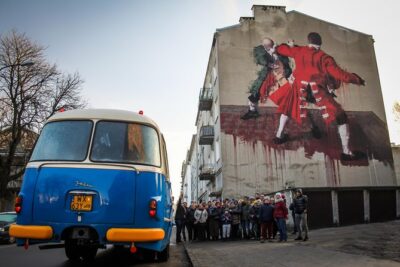 ★ 5.0Discover the Dark Side of Warsaw in Praga District by Retro BusFrom $42327 reviews
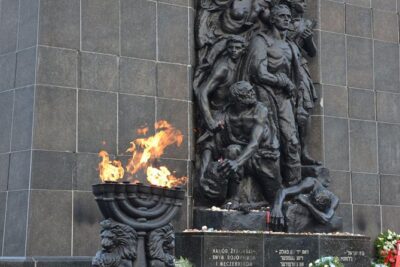 ★ 5.0Private Tour: Warsaw’s Jewish Heritage by Retro FiatFrom $108208 reviews
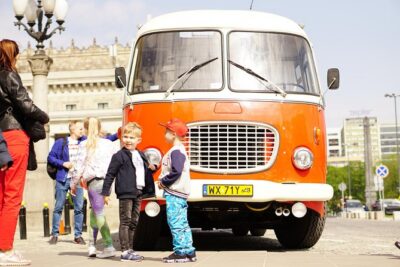 ★ 5.0Warsaw City Sightseeing in a Retro BusFrom $42196 reviews
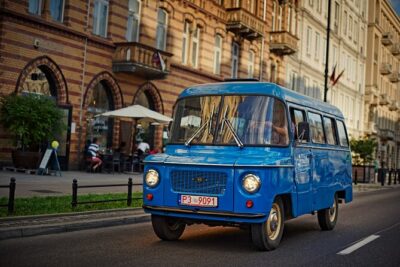 ★ 5.0Private Historical Tour of Warsaw by a Retro Fiat with PickupFrom $108190 reviews
 ★ 4.9Warsaw Must-Sees: 4-Hour Private Tour by Retro FiatFrom $105123 reviews
 ★ 5.0Private Tour: Warsaw’s Communist History by Retro FiatFrom $108115 reviews
 ★ 5.0Best of Warsaw – private tour by retro minibus with hotel pickupFrom $135111 reviews
Browse the lists this tour appears in