
Reviewed · BEST OF WARSAW CITY TOURS
Warsaw City Tour – PRIVATE (4h)
Warsaw hits different when you go with a plan. This private 4-hour loop links UNESCO Old Town with the calm of Łazienki Park, so you get both the big story and the slow moments. You’ll also travel with a professional local guide and pick-up service, which saves you from map math in the middle of a busy day.
The main thing to watch is the pacing: it’s a lot of iconic stops in one half-day, and car access can be limited in the most historic zones. If you get a guide who communicates clearly (names like Anya, Margarita, and Karolina come up often), the experience feels smooth; if not, you may spend more time simply moving than absorbing.
In This Review
- Key highlights to look for before you go
- Old Town to Łazienki: what this half-day really gets right
- Price and what’s actually included in the $195 private day
- Tight logistics: how the car, the walking, and the timing can feel
- King Sigismund’s Column: Warsaw’s oldest memorial, twice displaced
- UNESCO Old Town: rebuilt streets and the meaning behind 90% destruction
- Royal Castle and St. John’s Cathedral: power, faith, and May 3rd
- Rynek Starego Miasta, the Mermaid, and the Barbakan’s defensive pulse
- Warsaw Uprising Monument and Miodowa Street: memory plus street-level elegance
- Theatre Square and the Royal Route: opera, palaces, and the Curie link
- Tomb of the Unknown Soldier to Copernicus: modern Warsaw in one clean arc
- Łazienki Krolewskie: Rose Garden calm and Chopin weekends
- Palace of Culture and Science, National Stadium, and the Warsaw panorama payoff
- Should you book this private Warsaw City Tour?
- FAQ
- How long is the Warsaw City Tour (Private)?
- Does the tour include hotel pickup and drop-off?
- Is this tour private or shared?
- What transportation is included?
- Are admission tickets included?
- What language is the tour offered in?
Key highlights to look for before you go
- Old Town plus the rebuilt narrative: you’ll see how Warsaw returned after near-total destruction.
- Lazienki’s Rose Garden pace: a breather after the heavier history stops.
- Royal symbols in walking-distance clusters: columns, squares, churches, and defensive walls.
- Uprising memory at a respectful distance: monuments and street-level context, not just photos.
- Modern Warsaw stops that round out the day: science, sports, and a panoramic view.
Old Town to Łazienki: what this half-day really gets right
If you want Warsaw in one afternoon, this tour is built for exactly that. You’ll bounce from Poland’s capital’s oldest layers to its post-war rebuild, then end in places that feel like the city’s living room.
What I like most is the balance between drama and breathing space. You get the war-era context behind landmarks like Old Town and the Royal Castle, then you step into the park calm of Łazienki, where gardens and music culture are part of the daily rhythm.
The second big win is the guide-led flow. This is not a bus-and-audio-track situation. A good guide explains what you’re looking at and why it matters, from the moved-and-reconstructed details of Sigismund’s Column to the broader meaning of the Warsaw Uprising Monument.
Warsaw in a morning: more city overviews
- Warsaw: Old Town Highlights Walking Tour in English★ 4.7 · 1,516 reviews
- Warsaw: City Sightseeing Hop-On Hop-Off Bus Tour★ 3.6 · 1,415 reviews
- Private Tour: Warsaw City Sightseeing by Retro Fiat★ 5.0 · 562 reviews
Price and what’s actually included in the $195 private day
At $195.18 per person for 4 hours, you’re paying for a private setup: professional local guide, hotel pickup and drop-off, and private transportation with air-conditioning. That combination matters in Warsaw because the itinerary jumps across distinct neighborhoods fast, and you don’t want to waste your short day on public transport transfers.
Also note what’s not included: entry or admission fees are listed as optional, and the one spot explicitly marked as not included is the Copernicus Science Centre. Most other stops in the plan are free to view, so you’re not likely to get hit with constant ticket fees just to keep moving.
If you’re traveling with family, want flexibility, or simply hate standing in lines and waiting for the next group, the private format is usually the practical value here. If you’re on a shoestring and don’t care about guided interpretation, you could build a self-guided day cheaper. But for many people, the guide and smooth logistics are the real payoff.
Tight logistics: how the car, the walking, and the timing can feel
This tour is a mix of vehicle time and walking. Historic cores like Old Town are UNESCO World Heritage areas, and car access can be restricted in those zones, so expect a bit of on-foot movement around the most important sights.
That’s not a flaw, but it’s a planning reality. If it’s a hot day, or someone in your group has mobility limits, ask the guide early how much time is likely spent walking versus pausing in shade. One of the more frustrating experiences people report with similar Warsaw formats is learning at the last moment that the day will be more walking-heavy than they expected.
My advice: wear comfortable shoes and bring a light layer. Warsaw weather can turn quickly, and you’ll be moving between streets, squares, churches, and parks where there isn’t always a perfect escape route from sun or wind.
King Sigismund’s Column: Warsaw’s oldest memorial, twice displaced
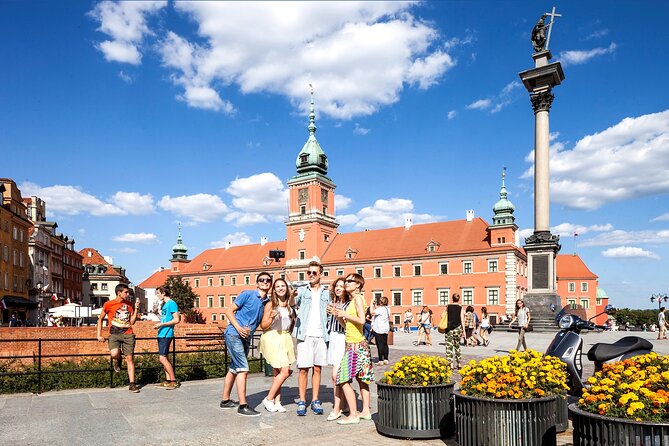
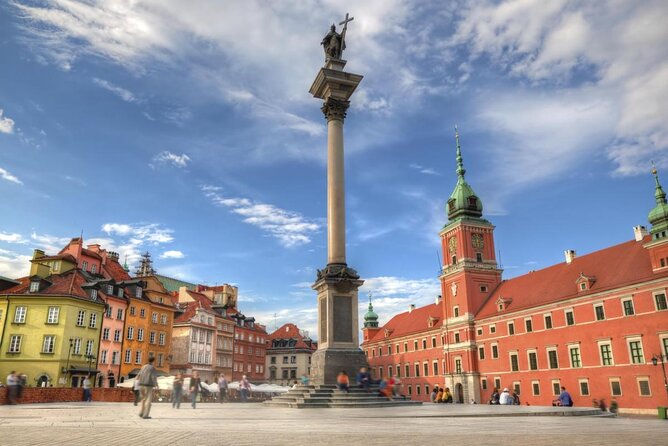
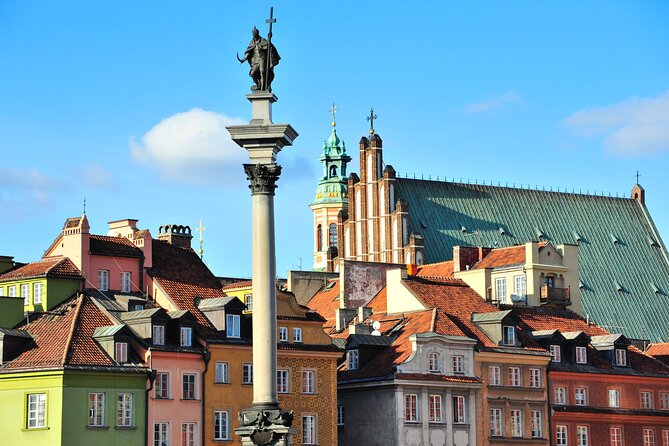
Your day often begins at King Sigismund’s Column (Kolumna Zygmunta). This is a small-stop that works big: it’s the kind of landmark that acts like a symbol-pin on a map, helping you understand where the city’s key stories are centered.
A fun detail here is that the column isn’t in its original placement. It was moved when the axis of Krakowskie Przedmieście Street changed in the 19th century, and it was moved again after World War II during the development of the WZ route. It also suffered a dramatic wartime moment—German troops brought it down on September 2, 1944—and reconstruction was completed in 1949.
Even if you mostly care about photos, the guide interpretation makes this stop worth it. It’s not just a monument; it’s a timeline you can stand beside.
UNESCO Old Town: rebuilt streets and the meaning behind 90% destruction
Old Town is the part of Warsaw people recognize fast, and for good reason. This area grew where the river supported trade on the route between the Baltic Sea and the Black Sea, so wealthy tradesmen and craftsmen built their lives here.
You’ll also get the “why this looks the way it does” story. The face of the city shifted through centuries: wooden structures replaced by masonry, and earlier ramparts replaced by stone walls. Key buildings like the town hall from 1429 no longer exist, and today’s parish church is the Cathedral of St. John.
Then comes the hard part: in 1944, about 90 percent of the Old Town area was destroyed. Reconstruction took many years and ended with Old Town earning its UNESCO World Heritage status. Standing in the rebuilt streets, you can actually feel how the city chose to return.
Practical note: this stop is usually a strong “stroll and listen” moment. If your guide is good, you’ll walk at a pace that keeps you understanding, not just sightseeing.
Just your group: more private Warsaw tours

Royal Castle and St. John’s Cathedral: power, faith, and May 3rd
Next up, you’ll connect Warsaw’s political identity to its religious and civic life.
The Royal Castle gained royal-residence status in the 16th century, and it went through cycles of rebuilding after major disasters: the Deluge, annexation pressures, and later the devastation of World War II. Some priceless artworks were moved out in time, but the remaining works were looted, and in 1944 the castle was blown up in retaliation connected to the Warsaw Uprising.
The rebuilding decision came later, in 1971, and the castle opened to visitors in 1984. It’s a UNESCO-listed example of a faithful reconstruction, which means the rebuilding wasn’t just cosmetic—it was meant to restore an historic structure as accurately as possible.
A short step away is the Archcathedral Basilica of St. John the Baptist, one of Warsaw’s oldest churches. It’s tied to major historic events, including the oath connected to Poland’s May 3rd Constitution—the first of its kind in Europe. The crypt holds tombs of historical figures, and the Chapel-Mausoleum of the Primate of the Millennium is singled out as especially interesting.
If you happen to visit in summer, there’s also a useful detail: Sunday concerts at 4 PM (July to September) as part of an International Organ Music Festival. Even if you’re not catching that show, the cathedral’s place in Warsaw’s musical and political story is worth the stop.
Rynek Starego Miasta, the Mermaid, and the Barbakan’s defensive pulse
At Rynek Starego Miasta (the Old Town Marketplace), you’re in the social center. Tenement buildings around the square hold restaurants, cafes, clubs, galleries, and museums, so it feels alive even when your head is full of history.
One very specific landmark here is the Warsaw Mermaid statue, used as a symbol of the city. The marketplace is also divided into four sections in recognition of Warsaw’s enlightenment activists: Kołłątaj, Dekert, Barss, and Zakrzewski. If you want a quick way to grasp how the city celebrates thinkers as well as kings, this is it.
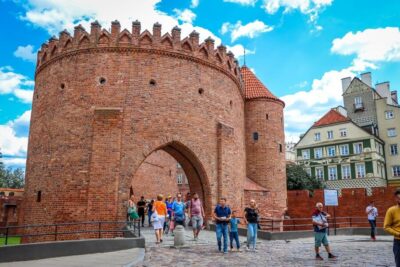
Then you’ll head to the Warsaw Barbican (Barbakan Warszawski). Built in 1548, it was part of the city’s defensive wall system (about 4,000 feet of fortifications total is referenced in the plan). Today it’s a different vibe—painters and musicians are part of the atmosphere, and from the structure you can picture how the Old Town was protected.
There’s also a seasonal layer: from May to October, you can find historical photo and model exhibitions inside the barbican. Even if you don’t go inside, comparing the current layout to old plans can help you imagine what the heart of Warsaw might have looked like without the war.
Warsaw Uprising Monument and Miodowa Street: memory plus street-level elegance
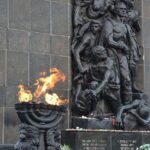
The Warsaw Uprising Monument is a moment that slows people down. It depicts insurgents during battle, and the plan frames the uprising as one of the most painful events in modern Polish history, ending in defeat and the death of 200,000 Poles.
Next to that broader memorial zone, you’ll also see the Krasiński Palace area (also associated with the Palace of the Republic). The palace began as a residence of Jan Krasiński, Prefect of Warsaw, and today it connects to collections at the National Library. It’s described as Warsaw’s most enchanting Baroque structure, and the park behind the palace gives you an easy walk-and-rest option.
Then you can drift to Miodowa Street, a narrow lane lined with older residences and institutions. It’s one of those streets where the details do the work:
- Number 24 links to the Collegium Nobilium, described as the first school for the young of the ruling elite, now connected with the Academy of Theatre.
- Number 17 connects to the Primate of Poland’s palace.
- Number 16 is described as Warsaw’s only Eastern Catholic Church.
As you walk here, you’re getting how Warsaw blends official power, faith, and education in small spaces.
Theatre Square and the Royal Route: opera, palaces, and the Curie link
From Miodowa Street, the day naturally moves toward Theatre Square, with major architecture around you. You’ll see the Late Baroque Blank Palace and the Jabłonowski Palace area, which functioned as a city hall before World War II. The building was razed and rebuilt in the 1990s, but only the façade and clock tower remain from the original design, so you can literally see what survived and what returned.
The big anchor here is the Grand Theatre, home to the National Opera and National Theatre. It’s described as having one of the largest opera stages in Europe, and if you attend a performance, the interiors—like cut glass chandeliers and a spacious foyer—can turn this from a quick stop into a highlight.
Then comes the Royal Route, stretching from Zamkowy Square to Trzech Krzyży Square. You’ll pass or look toward:
- St. Anne’s Church, including the view from its tower
- Polonia House, where Maria Skłodowska-Curie worked (when it was the Museum of Industry and Trade)
- Radziwiłł Palace, which is the current residence of the President of Poland
- Warsaw University campus with Kazimierzowski Palace
- Czapski Palace, tied to the Academy of Fine Arts
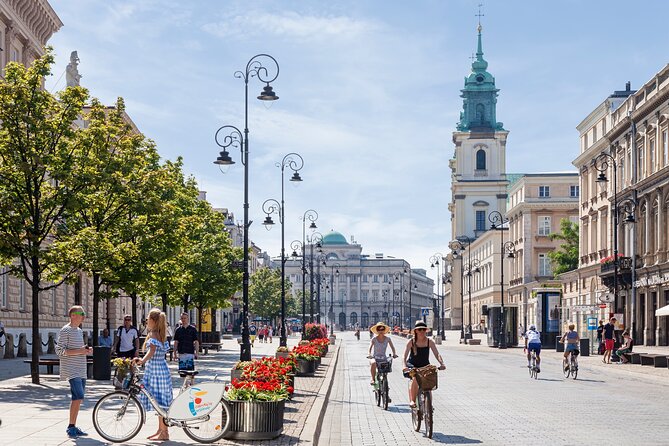
- Nowy Świat Street as an extension of Krakowskie Przedmieście Street
This is where the tour earns its “city map” value. You start understanding how Warsaw’s royal and intellectual life lines up in long visual corridors.
Tomb of the Unknown Soldier to Copernicus: modern Warsaw in one clean arc
Warsaw also knows how to honor the dead without turning it into a theme park.
The Tomb of the Unknown Soldier commemorates soldiers who sacrificed their lives for Polish freedom. The plan notes urns and soil from battlefields, including World War I sites, and that the eternal flame is maintained next to the tomb. There’s also a military honor guard, and the change is at noon (daily).
After that solemn reset, the tour shifts into a more modern, curious mood with the Copernicus Science Centre. It opened in November 2010 and is framed as one of the most modern science attractions of its kind in Europe, with hundreds of interactive exhibits. If you like hands-on learning, this is a practical stop for families, teens, or adults who just want a change of pace from monuments.
Important for budgeting: admission to the Copernicus Science Centre is not included. If you’d rather keep the day light, you can still use the area for a quick break, but the full experience depends on tickets.
Łazienki Krolewskie: Rose Garden calm and Chopin weekends
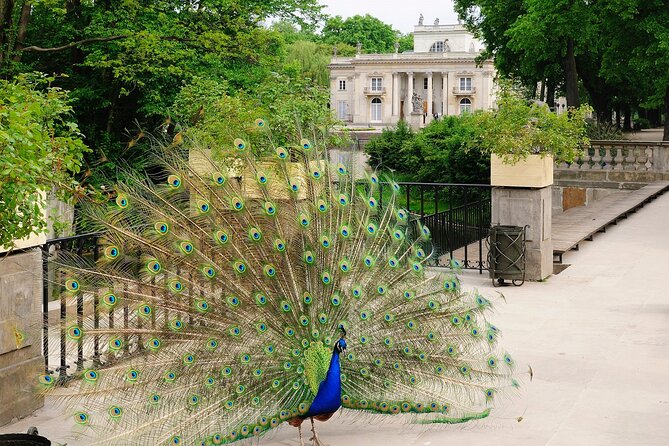
Then you get to one of the best-feeling parts of the day: Łazienki Krolewskie (Royal Łazienki Park). The tour describes it as one of the most beautiful palace and garden complexes in Europe, including historical monuments and a park in a former wild forest.
You’ll likely spend time around the Rose Garden area. This is the kind of stop that makes the whole day work, because it gives you a visual and emotional contrast to the dense historic core.
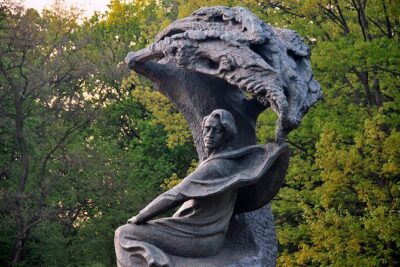
It also connects to living culture. The plan notes that for 50 years, free piano concerts have been held on summer weekends next to the monument of F. Chopin. Even if you’re not there for a concert, it helps you understand why people treat this place like a destination, not just a park.
Palace of Culture and Science, National Stadium, and the Warsaw panorama payoff
The day doesn’t end with the past. You also see some of Warsaw’s most recognizable modern markers.
The Palace of Culture and Science is described as a Soviet-era “gift” built between 1952 and 1955, and at 230.5 m it’s the tallest building in the country. The key experience highlighted here is the large observation deck on the 30th floor, designed for broad views of Warsaw. It’s also described as having a variety of facilities inside, from offices to museums and cultural spaces.
Then there’s the National Stadium, built for the European Football Championship in 2012. The plan points to the site’s earlier sports history, including the Tenth Anniversary Stadium hosted major events and even big propaganda rallies during the People’s Republic era.
Together, these stops give you a “then-and-now” sense of scale. Old Town makes Warsaw feel like memory. These places remind you Warsaw is also about modern identity and big public life.
Should you book this private Warsaw City Tour?
Book it if you want a guided half-day that ties the city’s most famous landmarks into one coherent story. The combination of Old Town, Royal Castle context, St. John’s Cathedral significance, and a real park break at Łazienki is exactly the sort of structure that makes a short trip feel satisfying.
Skip it or ask lots of questions if you hate walking or you’re expecting long car rides at all times. Because some of the most important areas are historic and restricted, the balance between vehicle time and walking can matter more than the written schedule.
My final take: for first-timers who want big Warsaw moments without hours of planning, this is a solid private option. If your priority is maximum time at just one neighborhood, you may prefer a smaller, slower tour—but if you want the full arc of Warsaw in one day, this one fits well.
FAQ
How long is the Warsaw City Tour (Private)?
The tour is about 4 hours.
Does the tour include hotel pickup and drop-off?
Yes. The guide picks you up at your hotel lobby and drops you off afterward.
Is this tour private or shared?
It’s private. Only your group participates.
What transportation is included?
The tour includes private transportation, an air-conditioned vehicle, and a professional local guide.
Are admission tickets included?
Entry or admission fees are not included (they’re optional). The Copernicus Science Centre admission is specifically listed as not included.
What language is the tour offered in?
The tour is offered in English.
More Tours in Warsaw
- Warsaw: Old Town Highlights Walking Tour in English
★ 4.7 · 1,516 reviews - Warsaw: City Sightseeing Hop-On Hop-Off Bus Tour
★ 3.6 · 1,415 reviews - Warsaw: Polish Vodka Museum Tour with Tasting
★ 4.6 · 788 reviews - 3-Hour Guided Cycling Tour of Warsaw
★ 4.9 · 624 reviews
More Tour Reviews in Warsaw
- Warsaw: Chopin Concert in the Old Town
★ 4.8 · 2,287 reviews - Warsaw: Traditional Galar Cruise on The Vistula River
★ 4.6 · 1,640 reviews - Warsaw: Old Town Highlights Walking Tour in English
★ 4.7 · 1,516 reviews - Warsaw Concert: Chopin – Painted by Candlelights with Wine
★ 4.8 · 1,442 reviews
See More of Warsaw at a Glance
- Warsaw: Old Town Highlights Walking Tour in English
★ 4.7 · 1,516 reviews - Warsaw: City Sightseeing Hop-On Hop-Off Bus Tour
★ 3.6 · 1,415 reviews - Private Tour: Warsaw City Sightseeing by Retro Fiat
★ 5.0 · 562 reviews - Warsaw: Afternoon Public City Tour with Pickup and Drop-off
★ 4.4 · 421 reviews
Fresh on the site: newer Warsaw reviews

Best of Warsaw City Tours: the other contenders.
 ★ 4.7Old Town Highlights Walking Tour in EnglishFrom $261,516 reviews
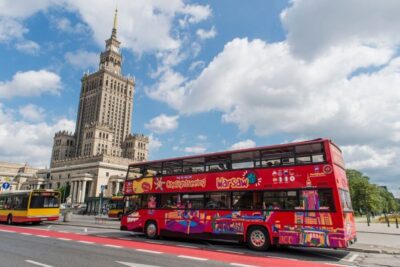 ★ 3.6City Sightseeing Hop-On Hop-Off Bus TourFrom $411,415 reviews
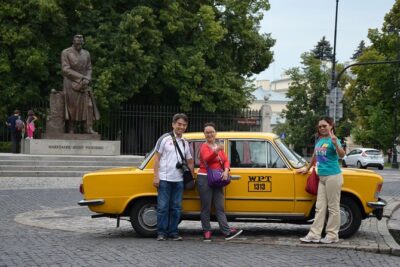 ★ 5.0Private Tour: Warsaw City Sightseeing by Retro FiatFrom $108562 reviews
 ★ 4.4Afternoon Public City Tour with Pickup and Drop-offFrom $51421 reviews
 ★ 5.0Warsaw Behind the Scenes – small group tour with hotel pickupFrom $133228 reviews
 ★ 5.0Warsaw City Sightseeing in a Retro BusFrom $42196 reviews
 ★ 4.5Warsaw Morning, Guided, Panoramic View, public city tour with hotel pick upFrom $60172 reviews
 ★ 4.53-Hour Panoramic City Bus Tour with PickupFrom $58169 reviews
Browse the lists this tour appears in