
Reviewed · BEST OF WARSAW CITY TOURS
Warsaw Must-See Local City Tour with Antek and Tomek
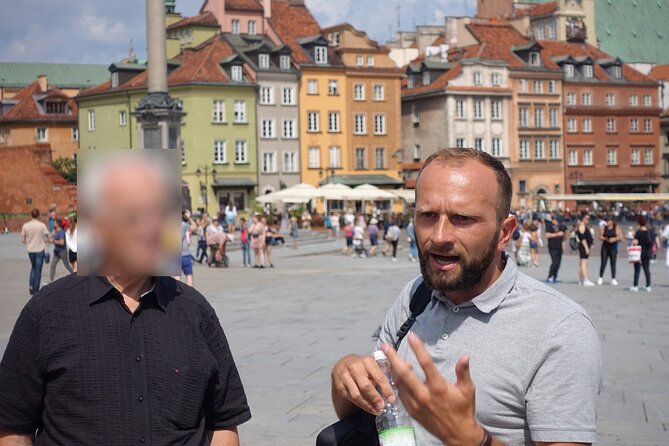
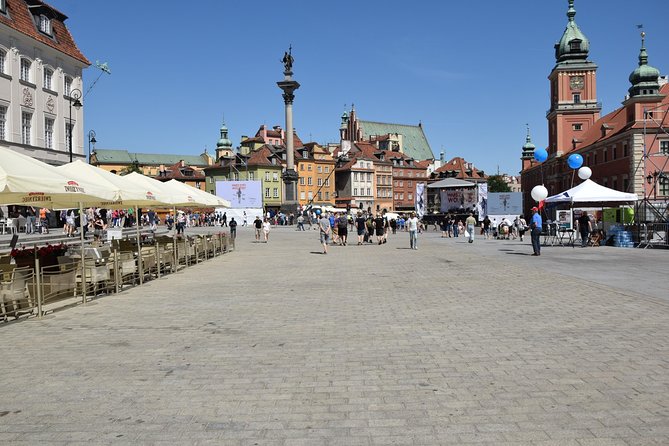
Warsaw turns into a story when you walk it. This 2-hour Old Town and World War II-focused tour connects postcard scenes with the places where Warsaw’s identity was tested. I especially liked the way guide Antek and Tomek keep the facts clear and understandable, with humor that keeps the pace human. I also really enjoyed how the route braids together Royal Castle scenery and major WWII memorial sites in one tight walk, so you get context instead of isolated sightseeing.
The itinerary flows from the dramatic charm of the Old Town to the heavier memory stops without losing your bearings. You’ll spend time at places like Castle Square, the Royal Castle area and gardens, and the Syrenka (Warsaw Mermaid), then move on to the Jewish Ghetto boundary markers and the Warsaw Uprising Monument. One drawback to consider: parts of this walk deal directly with WWII trauma and the uprising, so if you want a purely light, casual sightseeing mood, this might feel emotionally intense.
You should come with comfortable shoes and the mindset of learning by walking. For the price, you’re getting a licensed guide and a focused route that hits major Warsaw landmarks without making you figure it all out yourself. If you like history that actually helps you read a city, you’ll probably have one of those tours you carry with you afterward.
In This Review
- Key highlights (the stuff you’ll remember)
- A 2-hour route that links Old Town beauty to WWII memory
- Meeting at Sigismund’s Column and finishing at the Uprising Monument
- Stop 1: Warsaw Old Town highlights, from Castle Square to the Syrenka
- Stop 2: The Royal Castle courtyard and Royal Gardens façade views
- Stop 3: Jewish Ghetto boundary markers and Warsaw’s heritage in focus
- Stop 4: The Warsaw Uprising Monument and the 1944 story
- Price, group size, and why this feels like good value
- Guide style: humor, clear explanations, and connections you can reuse
- Who should book this tour, and who might skip it
- Should you book this Warsaw Must-See Local City Tour?
- FAQ
- How long is the Warsaw Old Town and WWII city tour?
- What language is the tour offered in?
- How much does the tour cost?
- Where do I meet for the tour?
- Where does the tour end?
- Is admission included for the stops?
- What’s included in the ticket price?
- Is there a mobile ticket?
- How big is the group?
- Is free cancellation available?
Key highlights (the stuff you’ll remember)
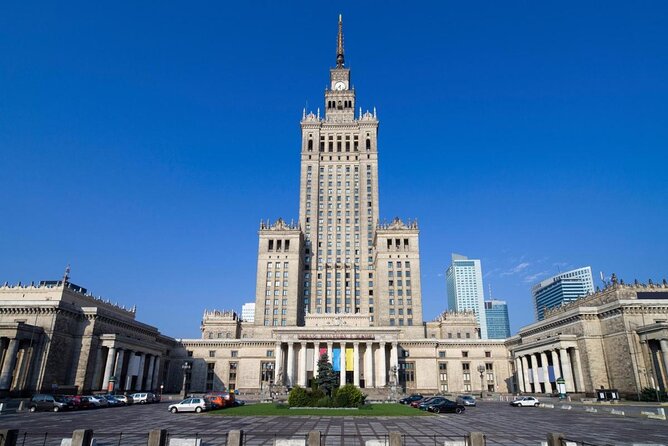
- Old Town photo-and-meaning stops: Castle Square, medieval Market Square, and the Syrenka along the way
- Royal Castle views from the right angles: you’ll walk to the courtyard and Royal Gardens for the façade perspective
- Jewish Ghetto boundary markers: a guided pass that puts Warsaw’s Jewish heritage in plain words
- Warsaw Uprising Monument: a focused explanation of 1944, from beginning to outcome
- Small group feel: up to 20 people, so questions actually get answered
- Ticket-free sights on the route: your guide route includes admission ticket-free stops
A 2-hour route that links Old Town beauty to WWII memory
This is the kind of city tour that gives you more than pictures. You’re not just seeing landmarks; you’re learning how Warsaw’s story is written into the stones. The balance matters here: you start with the Old Town’s classic sights and views, then shift to WWII-era boundaries and memorials so the city’s identity makes sense.
I like that the route is time-efficient. In about two hours, you get multiple “anchors” around Warsaw—Royal Castle area, ghetto boundary memory, and the uprising monument. That makes it easier for you to enjoy the rest of your trip without constantly asking where everything fits.
More of the city from the seat of a Retro Fiat
- Discover the Dark Side of Warsaw in Praga District by Retro Bus★ 5.0 · 327 reviews
- Private Tour: Warsaw’s Jewish Heritage by Retro Fiat★ 5.0 · 208 reviews
- Warsaw City Sightseeing in a Retro Bus★ 5.0 · 196 reviews
Meeting at Sigismund’s Column and finishing at the Uprising Monument
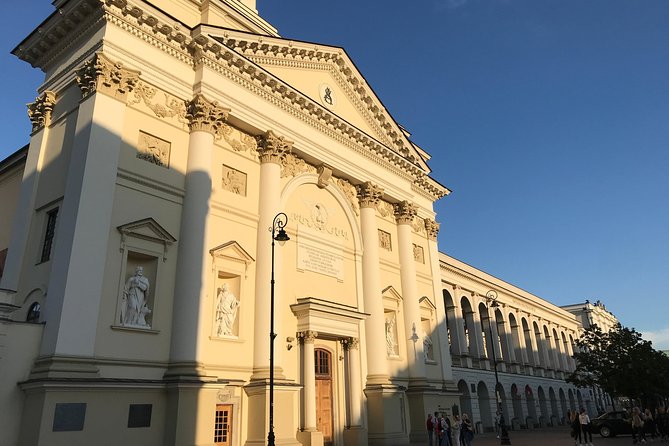
You meet at Sigismund’s Column (Plac Zamkowy) and finish at the Warsaw Uprising Monument (Plac Krasińskich). That end point isn’t random. It’s the kind of location that keeps the emotional arc of the tour steady: you walk out of the historic center and finish at one of Warsaw’s clearest WWII statements.
The start also helps you get oriented fast. If it’s your first day, you’ll leave with a mental map of how the Old Town area connects to the broader story of the city. The walking Poland team keeps this practical, and the tour is near public transportation, which makes it easier to plug into your day.
Stop 1: Warsaw Old Town highlights, from Castle Square to the Syrenka
Your first hour is the Old Town circuit, and it’s built around places you can picture even if you’re not a “museum person.”
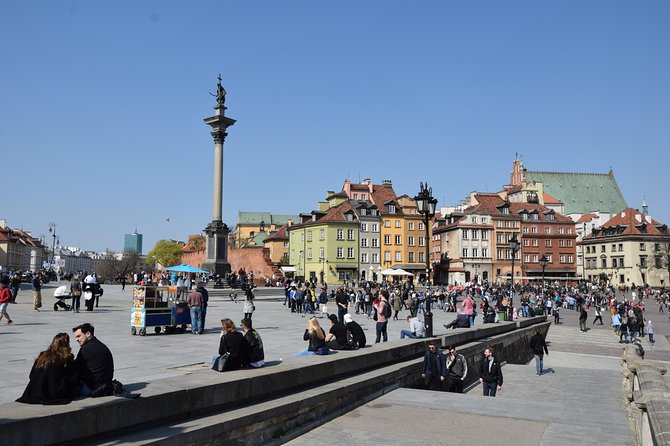
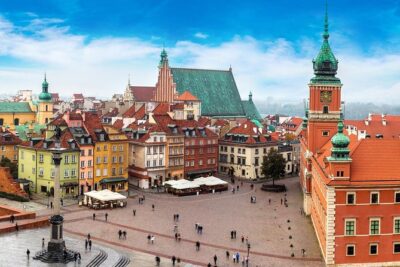
You’ll pass through Castle Square and the Royal Castle surroundings, then walk toward viewpoints like the Panorama Terrace. From there, you get a view toward the river and the right district of Praga. That matters because Warsaw isn’t a flat postcard. It’s a city where geography shaped movement, borders, and later rebuilding.
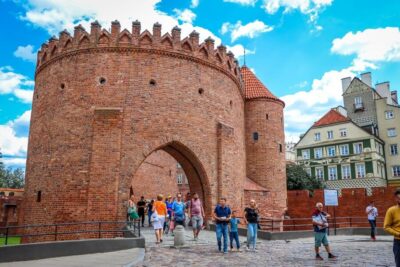
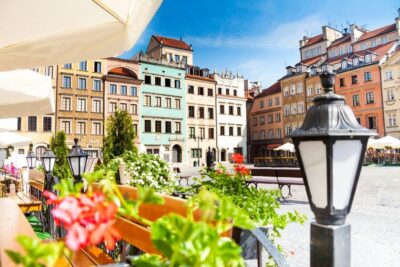
Next, the tour takes you through Medieval Market Square and the defensive layers of the Old Town with the city walls and the Barbican. The Barbican is one of those structures you recognize instantly once you’re there, but you only really understand its role after someone explains why it was built where it was. You’ll also stop for the Warsaw Mermaid (Syrenka). It’s a symbol you’ll see again and again in the city, so this is a good time to learn what it means before you wander off on your own.
Why this first stop works: it gives you a “normal Warsaw” baseline. After that, when you hear about WWII events, the contrast lands harder in a good way. You can’t separate what was lost from what was fought to protect.
Possible downside: the Old Town part involves steady walking through a popular area. If you’re sensitive to crowds, plan your day so you can arrive early and keep your pace calm.
Stop 2: The Royal Castle courtyard and Royal Gardens façade views
After the Old Town start, you move to the Royal Castle area. First you’re in the courtyard, then you walk to the Royal Gardens. This is one of the tour’s smartest choices because it gives you a visual angle on the Royal Castle that’s different from the street-level “look at the building” approach.
The Royal Gardens stretch the moment out. It’s not about sitting for a long time; it’s about slowing your eyes down and taking in the façade and surroundings from a more controlled perspective. You’ll see how the palace connects to the whole Old Town layout.
You also benefit from the “guided pacing.” Without that, it’s easy to wander around and miss the point of why the courtyard and gardens matter in Warsaw’s story. With a guide, you start noticing relationships between structures—how power showed itself in architecture, and how that architecture sits at the center of the city’s ongoing identity.
Admission here is ticket-free as part of the route, so you’re not juggling extra lines or extra costs just to keep moving.
Stop 3: Jewish Ghetto boundary markers and Warsaw’s heritage in focus
Then the tour turns serious. You’ll pass by Jewish Ghetto boundary markers—one of the key places where Warsaw’s Jewish history is marked in the urban space.
This is not a long stop, and it doesn’t try to turn trauma into a spectacle. The guide explains the context of Jewish heritage in Warsaw and also the tragic conditions during World War II. For me, the value of doing this on a walking tour is that it happens in the real city, not in a distant exhibit room. You’re learning while standing near the kind of everyday geography that shaped impossible choices.
A key detail I appreciate: you’re guided to understand the meaning of the markers, not just to recognize that they exist. When you know what you’re looking at, you can make sense of why memorials and boundary points are so important to how Warsaw remembers.
If you prefer a gentler emotional pace, you might want to mentally brace before this segment. Wear your listening mode here, not your sightseeing mode.
Warsaw in a morning: more city overviews




Stop 4: The Warsaw Uprising Monument and the 1944 story
The last major stop is the Warsaw Uprising Monument. This is the tour’s final emotional landing point, and the guide spends time walking you through the uprising of 1944—how it started and how it ended.
The uprising is central to Warsaw’s identity, and you’ll hear that theme explained directly. Even if you know the headline, the guided story helps you understand why the uprising is remembered the way it is. Memorials can feel like just sculptural drama if you don’t have the sequence of events in your head. This part puts the sequence there.
You also get a sense of why the monument is set where it is and what it communicates from that space. It’s the kind of ending that sticks, because you finish at the very monument itself, not a nearby viewpoint where you might miss the full effect.
Practical note: since you end here, plan for your next step right after the tour. It’s easy to head back into sightseeing, but it’s also normal if you want a few quiet minutes first.
Price, group size, and why this feels like good value
At $13.22 per person for about two hours, this is a pretty strong deal—mainly because you’re paying for a licensed guide and a route that hits big-name sites without adding separate ticket costs along the way. The stops are ticket-free as part of the experience, including the Royal Castle area and the memorial segments.
The group size cap of 20 also matters. It’s not a giant herd tour, so it’s more likely you’ll get answers to your questions instead of listening to explanations you can’t quite hear. You also tend to get better flow when you’re walking from Old Town to the WWII markers and then to the monument.
One small thing: coffee or tea isn’t included. This isn’t a “hang out forever” tour, so you probably won’t mind, but you might want water. If you’re the type who likes a warm drink to reset your brain after a heavy history segment, bring a plan for that.
Guide style: humor, clear explanations, and connections you can reuse
The best part of this kind of guided walk is not the landmarks. It’s the way the guide links them. In the feedback you can feel that: guides like Antek explain things in a way that’s easy to follow, and he adds humor that keeps the mood from turning stiff. That balance is especially useful when the subject matter turns difficult.
I also liked that the guide doesn’t keep everything inside one category. You can expect the walk to touch architecture and the feel of Polish famous people, and you’ll get practical context that helps you read what you see. Even if you’re not hunting for food tips, learning what connects people to places makes the city feel less like a list.
If you ask questions, this kind of guide tends to answer them in plain language. That’s where the value shows up: you leave with a better understanding, not just better photos.
Who should book this tour, and who might skip it
This is ideal for you if:
- You want a tight walk that covers Old Town highlights and major WWII memory sites.
- You like history explained in a way you can hold in your head, not just facts tossed at you.
- You’re visiting in a short window and want maximum “what matters most” coverage.
It might not be the best fit if:
- You want a casual, lightweight sightseeing outing only.
- You need frequent long breaks, since it’s a walking format built around timed stops.
- You’re very sensitive to topics involving WWII trauma.
If you’re planning your day around this, I’d pair it with an afternoon of self-guided wandering in the Old Town. You’ll notice details more once you’ve got the guided context first.
Should you book this Warsaw Must-See Local City Tour?
If you want one guide-led walk that gives you both the famous Warsaw visuals and the crucial WWII context, I’d say yes. The price is low enough that you’re not taking a financial risk, and the route is structured so you’re not guessing what to see next. Ending at the Warsaw Uprising Monument makes the experience feel complete, not scattered.
Book it especially if you’re the type who enjoys learning while moving through real streets. Come ready to listen, wear good shoes, and give yourself a minute at the end to let the last stop land. You’ll leave Warsaw with a stronger sense of why it looks the way it does—and why that story matters.
FAQ
How long is the Warsaw Old Town and WWII city tour?
It runs for about 2 hours.
What language is the tour offered in?
The tour is offered in English.
How much does the tour cost?
The price is $13.22 per person.
Where do I meet for the tour?
You meet at Sigismund’s Column, Plac Zamkowy, 00-001 Warszawa, Poland.
Where does the tour end?
The tour ends at the Warsaw Uprising Monument, Plac Krasińskich, 00-263 Warszawa, Poland.
Is admission included for the stops?
The stops on the route are listed as admission ticket free.
What’s included in the ticket price?
A licensed city guide is included.
Is there a mobile ticket?
Yes, you’ll receive a mobile ticket.
How big is the group?
The tour has a maximum of 20 travelers.
Is free cancellation available?
Yes, you can cancel up to 24 hours in advance for a full refund.
More Tour Reviews in Warsaw
- Warsaw: Chopin Concert in the Old Town
★ 4.8 · 2,287 reviews - Warsaw: Traditional Galar Cruise on The Vistula River
★ 4.6 · 1,640 reviews - Warsaw: Old Town Highlights Walking Tour in English
★ 4.7 · 1,516 reviews - Warsaw Concert: Chopin – Painted by Candlelights with Wine
★ 4.8 · 1,442 reviews
See More of Warsaw at a Glance
- Warsaw: Old Town Highlights Walking Tour in English
★ 4.7 · 1,516 reviews - Warsaw: City Sightseeing Hop-On Hop-Off Bus Tour
★ 3.6 · 1,415 reviews - Private Tour: Warsaw City Sightseeing by Retro Fiat
★ 5.0 · 562 reviews - Warsaw: Afternoon Public City Tour with Pickup and Drop-off
★ 4.4 · 421 reviews
More Days in a Retro Fiat
- Private Tour: Warsaw City Sightseeing by Retro Fiat
★ 5.0 · 562 reviews - Discover the Dark Side of Warsaw in Praga District by Retro Bus
★ 5.0 · 327 reviews - Private Tour: Warsaw’s Jewish Heritage by Retro Fiat
★ 5.0 · 208 reviews - Warsaw City Sightseeing in a Retro Bus
★ 5.0 · 196 reviews
Fresh on the site: newer Warsaw reviews


Best of Warsaw City Tours: the other contenders.
 ★ 4.7Old Town Highlights Walking Tour in EnglishFrom $261,516 reviews
 ★ 3.6City Sightseeing Hop-On Hop-Off Bus TourFrom $411,415 reviews
 ★ 5.0Private Tour: Warsaw City Sightseeing by Retro FiatFrom $108562 reviews
 ★ 4.4Afternoon Public City Tour with Pickup and Drop-offFrom $51421 reviews
 ★ 5.0Warsaw Behind the Scenes – small group tour with hotel pickupFrom $133228 reviews
 ★ 5.0Warsaw City Sightseeing in a Retro BusFrom $42196 reviews
 ★ 4.5Warsaw Morning, Guided, Panoramic View, public city tour with hotel pick upFrom $60172 reviews
 ★ 4.53-Hour Panoramic City Bus Tour with PickupFrom $58169 reviews
Browse the lists this tour appears in