
Reviewed · PRIVATE
Private Off the Beaten Path trip in Warsaw
Communism changes how a city thinks. This private Warsaw route takes you to communist-era landmarks and lesser-seen corners, then ties it together with a guide who explains what everyday life was like under shifting political systems. You also get a retro van ride and hotel pickup, which makes the whole thing feel smooth and personal, not like a rushed checklist.
What I really liked was the way the stops create a living timeline. From Grzybowski Square you move through pre-war echoes, socialist-style architecture, and the city’s later direction—without turning it into a dry lecture. Another strong point is the guidance: people have praised guides like Paweł for being expert and flexible, and Łukasz for being professional, attentive, and energetic, especially when describing how WWII events shaped what came next.
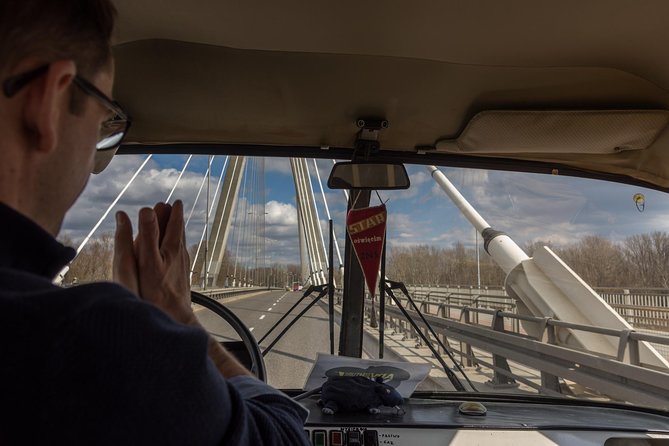
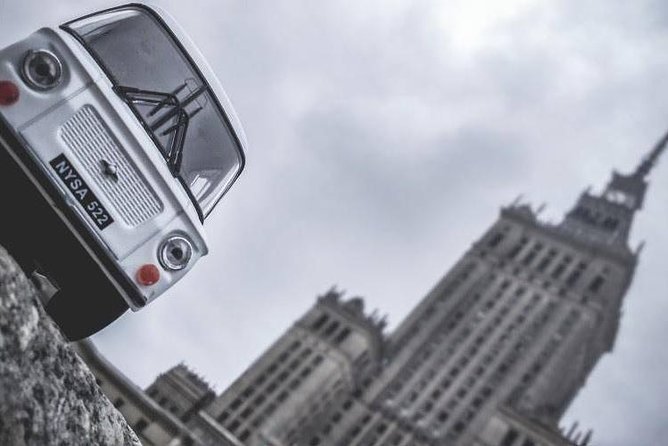
One thing to factor in: the retro van Nysa 522 has no air conditioning and there are short walks, so dress for the weather. In warm months, you’ll want light layers and water; in cold months, the van has heating.
In This Review
- Key things to know before you go
- A retro van, a tight route, and real Warsaw contrasts
- Price and logistics: what you’re really paying for
- Stop 1 at Grzybowski Square: the city’s timeline in one place
- What makes Grzybowski Square special here
- A potential drawback at this stop
- Warsaw University of Technology: more than just a campus detail
- The Vistula segment: reading the river like a clue
- Stop 2 in Praga-Północ: courtyards, gates, and everyday life
- Why Praga-Północ works so well for a communist-era tour
- A small consideration
- How the guide turns politics into something you can picture
- Comfort and timing: making the most of the three hours
- Where this tour delivers the most value
- Should you book this off-the-beaten-path Warsaw tour?
- FAQ
- How long is the Private Off the Beaten Path trip in Warsaw?
- What is the price and group size?
- Does the tour include hotel pickup and drop-off?
- Where does the tour start?
- Is the tour private?
- What language is the tour in?
- Is admission required for the stops?
- What transportation is used?
- Is there air conditioning on the van?
- Are snacks included?
Key things to know before you go
- Private tour means only your group goes with your guide—no crowd herding.
- Hotel pickup and drop-off are included, but only if you’re staying in Warsaw.
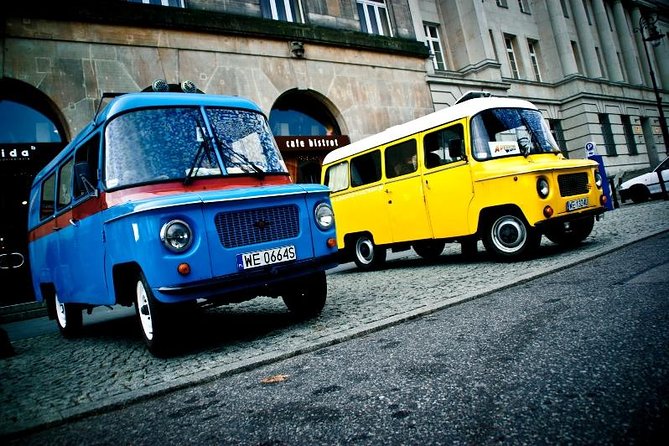
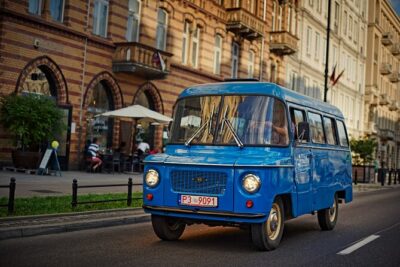
- Retro van (Nysa 522) transportation is part of the experience, with heating in winter but no air conditioning.
- You’ll spend focused time at Grzybowski Square and Praga-Północ, with stops centered on architecture, courtyards, and daily-life details.
- The tour uses mobile tickets, and the paid stops listed here are ticket free.
- Expect a story-forward pacing: short walks, then explanation, then sights.
A retro van, a tight route, and real Warsaw contrasts
This is the kind of Warsaw tour that helps you read the city. You start in a place where time layers on top of itself, then you shift to a district where local life feels close and slightly off-camera. The best part is that it doesn’t treat communist-era Warsaw as just a museum theme. Instead, it connects the architecture and the geography to what people actually did—where they gathered, how neighborhoods were shaped, and what changed as politics changed.
The duration is about three hours, which is long enough for good explanations and short enough that you won’t feel trapped. You’ll also get a guide who can adapt as your interests evolve. In fact, Paweł has been specifically praised for flexibility—so if you lean more toward architecture or more toward human stories, you’re not stuck with a single rigid script.
And because this is private, you can ask follow-up questions without thinking about everyone behind you.
Just your group: more private Warsaw tours
- Private Tour: Warsaw City Sightseeing by Retro Fiat★ 5.0 · 562 reviews
- Private Tour: Warsaw’s Jewish Heritage by Retro Fiat★ 5.0 · 208 reviews
- Private Historical Tour of Warsaw by a Retro Fiat with Pickup★ 5.0 · 190 reviews
Price and logistics: what you’re really paying for
At $479.36 per group (up to 7), this tour isn’t a cheap add-on—but it’s also not priced like a big-city limo fantasy. You’re paying for three practical things:
First, hotel pickup and drop-off. That matters in Warsaw, because it saves time and makes the tour feel effortless from the start.
Second, privacy and small group size. The operator notes a maximum of 6 people per booking, which is ideal for questions and photo pauses. (The pricing is described as up to 7, so treat the safest assumption as a very small group.)
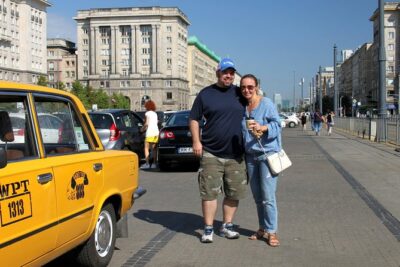
Third, transport by retro van. The ride is part of the concept: the Nysa 522 is a vintage choice, and that can change the mood of the tour. It feels like you’re traveling in-era, not just commuting.
A few logistics notes you should know upfront:
- The van has heating but no air conditioning.
- The vintage vans don’t have seatbelts (and it’s described as legal for these classic cars).
- You’ll want comfortable clothes, since there are short walks.
- The listed stops have free admission (so you’re not paying for entry fees during the guided segments).
Also, the tour includes a mobile ticket, and it runs in English. If you’re visiting and you want to understand Warsaw faster than a guidebook can manage, this setup is built for that.
Stop 1 at Grzybowski Square: the city’s timeline in one place
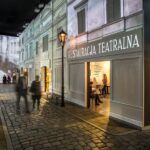
You begin at Złote Tarasy (address Złota 59, 00-120 Warszawa) and then head to Grzybowski Square, where the tour starts with contrasts. This is not a place that feels like one era. It’s a place that shows you how eras overlap—pre-war buildings, reminders of communism, and the direction toward modern development.
You’ll spend about 35 minutes here, and the guide uses that short window to do something useful: translate architectural signals into human meaning. Instead of only pointing out styles, the guide explains how the city’s look connects to the way power and daily life were organized.
There are a few story threads you can expect in this first stop:
- A short history of communist time, focused on how the period shaped the city.
- Notes about Warsaw University of Technology, which adds a layer to the city beyond monuments—education, institutions, and how people were organized around national priorities.
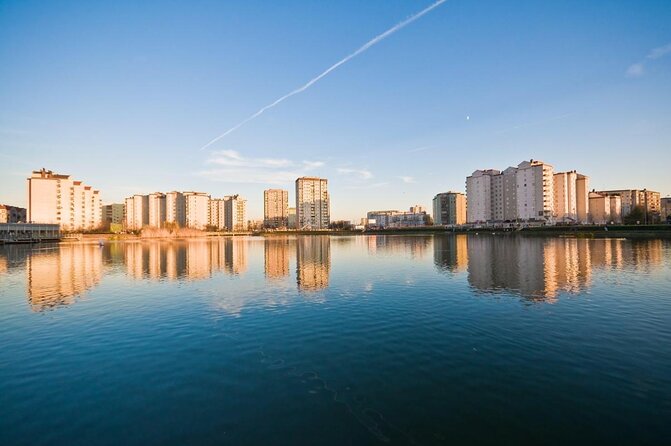
- A transition into the Vistula River, because the river is where Warsaw’s geography becomes a character in the story.
What makes Grzybowski Square special here
You’re getting a “before, during, after” lesson without moving nonstop. If you’ve ever felt lost in Warsaw because everything looks beautiful but time periods blur together, this start helps you separate the layers.
A potential drawback at this stop
Because the focus is on contrasts and explanations, this part can feel more conceptual than scenic. If you’re looking for long, view-heavy photo time, you may want to treat it like a guided history lesson on foot and then save your camera energy for the next district.

Warsaw University of Technology: more than just a campus detail
Right after the communist-time context, the tour briefly ties the story to Warsaw University of Technology. Even with a short mention, the value is that it shifts the conversation from pure politics to institutions.
Why this matters for you: communist-era planning wasn’t only about buildings and streets. It also involved how the state invested in training, technical skills, and the kinds of careers that were encouraged. A university, even when it’s not the star attraction in a guidebook, becomes a clue to how the system expected people to build their future.
You’ll likely come away with a better sense of the city as a set of systems—not just a set of sights.
The Vistula segment: reading the river like a clue
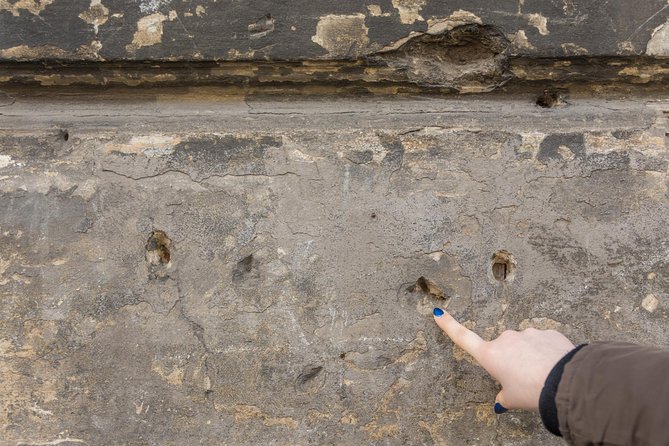
The tour then points you toward the Vistula River, described as the queen of Polish rivers. In tours that cover WWII or communist-era architecture, it’s easy to stay stuck in stone and forget the physical logic of where cities grow.
The Vistula helps anchor Warsaw:
- it shapes movement and trade,
- it influences where neighborhoods feel connected or divided,
- and it gives the city a natural framework that outlasts political regimes.
This part is brief, but it can be memorable because it changes how you look at the city after the tour ends. You start seeing the river as a timeline marker, not just a river.
Stop 2 in Praga-Północ: courtyards, gates, and everyday life
Next you move to Praga-Północ for about 50 minutes. This is a different tone from the first stop. Here the focus shifts from grand architectural signals to the textures of daily life: courtyards, gates, and the in-between spaces where people actually spend time.
You’ll discover the secrets of Warsaw courtyards and look at the gates that help create a sense of another city—one that’s slightly hidden from casual onlookers. The guide also points out where locals meet, and the description leans toward modern hangouts too: places that feel popular with hipsters and nature enthusiasts.
Why Praga-Północ works so well for a communist-era tour
You’re not just hearing about communism as a distant political era. You’re watching how city design affects movement and gathering. Courtyards and gated passages are where you can see how community life gets organized, protected, or separated.
And because this is a private tour, you can ask practical questions while you’re there, like how the district’s layout influences neighborhoods, or what to look for when you’re walking on your own later.
A small consideration
This stop is more “local texture” than “big monument.” If you prefer iconic landmarks with dramatic views, you may need to mentally switch gears and focus on the details: entrances, courtyard geometry, and street-to-hidden-space transitions.
How the guide turns politics into something you can picture
The best praise for this tour isn’t just about where you go. It’s about how the guide explains it.
People have highlighted that guides such as Łukasz can connect WWII outcomes to later change through several political systems, and do it in a detailed but understandable way. The result is that you don’t leave with a pile of dates. You leave with a clearer picture of how power reshapes the city—and how people adapt.
Also, energy matters. Łukasz has been praised for being energetic, and I get why. When you’re walking and listening for around three hours, a guide who keeps the pace alive makes the whole experience easier on your attention span.
If your goal is to understand Warsaw quickly—without spending days reading—this tour’s story approach is a strong fit.
Comfort and timing: making the most of the three hours
Because you’re out for about 3 hours, timing matters. This tour is structured with short focused segments: 35 minutes at Grzybowski Square, then 50 minutes in Praga-Północ, with travel time and narration between.
Two comfort points for you:
- The retro Nysa 522 has no air conditioning, so plan for temperature. Heating exists for wintertime, but summer days may feel warmer than you expect.
- There are short walks, so wear shoes you don’t mind using for a bit of uneven pavement.
If you’re the type who likes to arrive early and soak up the mood before a tour begins, you’ll like starting near Złote Tarasy, which is also described as near public transportation. It’s easy to get oriented before your pickup.
Where this tour delivers the most value
This experience tends to pay off if you fall into one of these groups:
- You want communist-era Warsaw with context, not just photos.
- You like the feel of a private conversation with a local guide.
- You enjoy architecture and urban planning, but you also want the human side: how institutions and daily life shifted.
- You’re short on time and want a route that creates a strong mental map.
If you’re expecting a museum-style stop where you sit indoors for long periods, this is probably not that. It’s an on-the-ground storytelling walk with architecture and neighborhood design as the main subjects.
Should you book this off-the-beaten-path Warsaw tour?
I think this is a solid booking if your priority is understanding Warsaw’s political layers through city spaces. The combination of private guidance, hotel pickup, and a route built around contrasts makes it a high-value way to learn fast. The standout strengths—like a guide’s flexibility (Paweł) and an energetic, detailed approach (Łukasz)—are exactly what you want on a short trip.
Skip it only if you’re strictly chasing famous monuments and long scenic viewpoints. This tour is more about learning how the city works than about ticking off postcard sites.
If you want a smarter first pass at Warsaw that helps everything else click afterward, this one is worth your morning.
FAQ
How long is the Private Off the Beaten Path trip in Warsaw?
It lasts about 3 hours (approx.).
What is the price and group size?
It costs $479.36 per group, and the group size is up to 7. The tour information also states a maximum of 6 people per booking.
Does the tour include hotel pickup and drop-off?
Yes. Pickup and drop-off are included, and it says pickup is possible only from accommodations in Warsaw.
Where does the tour start?
The meeting point is Złote Tarasy, Złota 59, 00-120 Warszawa, Poland.
Is the tour private?
Yes. It is a private tour, so only your group participates.
What language is the tour in?
The tour is offered in English.
Is admission required for the stops?
The listed stops show ticket free admission.
What transportation is used?
You travel by retro van, specifically the Nysa 522.
Is there air conditioning on the van?
No. The vans do not have air conditioning, and they have a heating system for wintertime.
Are snacks included?
No. Snacks such as pyza in a jar and a soft drink are not included, with an option listed at +30 PLN per person.
More Private Warsaw Tours
- Private Tour: Warsaw City Sightseeing by Retro Fiat
★ 5.0 · 562 reviews - Private Tour: Warsaw’s Jewish Heritage by Retro Fiat
★ 5.0 · 208 reviews - Private Historical Tour of Warsaw by a Retro Fiat with Pickup
★ 5.0 · 190 reviews - Warsaw for WWII Buffs – private tour with hotel pickup
★ 5.0 · 166 reviews
More Tour Reviews in Warsaw
- Warsaw: Chopin Concert in the Old Town
★ 4.8 · 2,287 reviews - Warsaw: Traditional Galar Cruise on The Vistula River
★ 4.6 · 1,640 reviews - Warsaw: Old Town Highlights Walking Tour in English
★ 4.7 · 1,516 reviews - Warsaw Concert: Chopin – Painted by Candlelights with Wine
★ 4.8 · 1,442 reviews
Fresh on the site: newer Warsaw reviews

Private: the other contenders.
 ★ 5.0Private Tour: Warsaw City Sightseeing by Retro FiatFrom $108562 reviews
 ★ 5.0Private Tour: Warsaw’s Jewish Heritage by Retro FiatFrom $108208 reviews
 ★ 5.0Private Historical Tour of Warsaw by a Retro Fiat with PickupFrom $108190 reviews
 ★ 5.0Warsaw for WWII Buffs – private tour with hotel pickupFrom $169166 reviews
 ★ 4.8Ghetto, Jewish Cemetery & POLIN Museum Private TourFrom $112132 reviews
 ★ 4.9Warsaw Must-Sees: 4-Hour Private Tour by Retro FiatFrom $105123 reviews
 ★ 4.8Old and New Town Private Walking TourFrom $16116 reviews
 ★ 5.0Private Tour: Warsaw’s Communist History by Retro FiatFrom $108115 reviews