
Reviewed · WARSAW UPRISING & WWII HISTORY
Warsaw at War 1939-1945: A Self-guided Audio Tour
Warsaw has a way of teaching fast. This self-guided audio tour turns the city into a WWII story, using crisp narration, sound effects, and a walk you can take at your own pace.
I like two things most: you get offline access to audio, maps, and geodata, and the route is built for an easy 90-minute stroll (about 3 km) with clear pacing.
The main catch is navigation: if you wander off the planned path, the off-route alarm can feel sensitive, even when you’re only across the street.
In This Review
- Key highlights to know before you go
- A self-guided WWII walk that fits real sightseeing
- Starting at Kościół Akademicki św. Anny and keeping your phone in your pocket
- The Old Town segment: pacing, photos, and the story thread
- Mały Powstaniec: meeting the memory of child insurgents
- The Tomb of the Unknown Soldier: why it hits differently in Warsaw
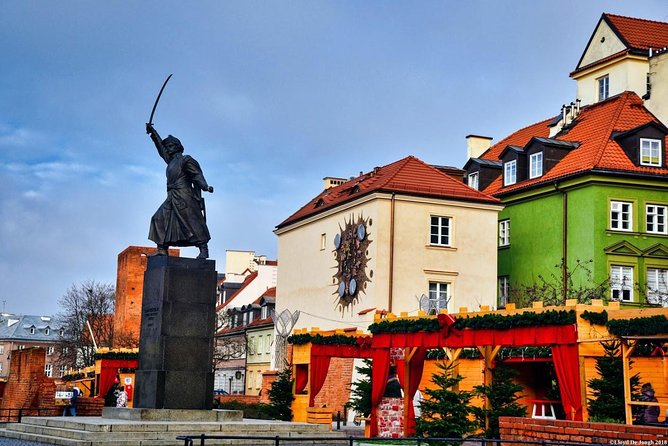
- Piłsudski at the finish: independence politics, not just a statue
- Audio design that makes a 3 km walk feel longer
- Price and value: $9.99 for lifetime access and offline maps
- Who this works for, and who might want a different style
- Should you book Warsaw at War 1939-1945?
- FAQ
- How much does the Warsaw at War 1939-1945 audio tour cost?
- How long is the tour, and how far do you walk?
- Where does the tour start and where does it end?
- Is the audio available offline?
- What language is the tour offered in?
- What do I need to listen to the tour audio?
- Can I pause the tour to explore on my own?
- What is the maximum group size?
- Is the tour refundable or changeable?
Key highlights to know before you go
- A tight 3 km, 90-minute route from the Old Town area to Piłsudski’s statue
- Offline audio + offline maps (handy in spots with weak signal)
- Sound design with music and effects, using earbuds/headphones or a small speaker
- Mały Powstaniec memorial for child soldiers of the 1944 Warsaw Uprising
- Tomb of the Unknown Soldier with a powerful backstory of ashes and soil from Polish battlefields
- Józef Piłsudski at the finish, including the 1920 conflict tied to Poland’s struggle for independence
A self-guided WWII walk that fits real sightseeing
This is the kind of tour I like in big history cities: you’re not stuck in a loud group schedule. You set your own rhythm as you move through Warsaw’s center, hearing the story through your phone while you walk. The whole experience is designed to feel like a guided walk, just without a guide walking beside you.
The theme is Warsaw in the middle of the 20th century—how it endured invasion, occupation, and political pressure, then rebuilt itself into the city you see today. The narration focuses on the clash between Nazi Germany and Communist Russia, and it frames Warsaw as a phoenix: a city that rose from the ashes of WWII to become known for art and culture again.
One practical bonus: the audio is built to work at multiple levels of attention. You can pause when you want to stop for photos, lunch, or a quick detour into a nearby attraction like the Vodka Museum or the Saxon Garden. You’ll still have the story ready when you’re back on track.
More of Warsaw in 1944 and the war years
- World War 2 in Warsaw walking tour in English★ 4.7 · 237 reviews
- Warsaw: Warsaw Historical Group Tour with Pickup & Drop-Off★ 4.6 · 233 reviews
- Warsaw for WWII Buffs – private tour with hotel pickup★ 5.0 · 166 reviews
Starting at Kościół Akademicki św. Anny and keeping your phone in your pocket
The tour begins at Kościół Akademicki św. Anny, Krakowskie Przedmieście 68, 00-322 Warszawa and ends at the Statue of Józef Piłsudski, Plac Marszałka Józefa Piłsudskiego, 00-073 Warszawa. The official running time is about 1 hour 30 minutes, with a total walk of around 3 km.
Here’s the style of how it’s meant to work: you start in the VoiceMap app, then the instructions encourage you to put your phone away so the walk feels natural. That helps in two ways. First, you’re free to look up at the buildings and street life. Second, it cuts down on the distracted, stop-start feeling that can happen with some audio tours.
The route is also designed with a small group in mind—there’s a maximum of 10 travelers. Even if you’re effectively moving on your own, that limit matters because it usually means the experience is planned to work smoothly for a small cluster rather than a huge wave of people.
One more detail you should plan around: a smartphone isn’t included. You’ll need your own device, and you’ll want it charged before you start.
The Old Town segment: pacing, photos, and the story thread
The first main stretch runs like a guided walk beginning just outside the famous Warsaw Old Town and ending at Piłsudski. Think of it as the backbone of the tour: short enough to feel doable, long enough to connect multiple emotional historical stops.
During this part, the audio pulls you along the streets with narration plus sound effects and music. This is a big reason the tour can feel engaging without being exhausting. You’re not just reading dates in your head. You’re hearing the story in a way that tracks with what you’re seeing.
Because the tour is built for freedom, you can pause anytime and wander further wherever you are. That means you can treat the Old Town area like a normal sightseeing window, not like a museum queue. If you want a quick meal stop, you can. If you want extra time for photos, you can. If you want to explore a garden or a nearby attraction, you can.
The one thing to watch is how strict the route guidance can feel. When the app thinks you’ve left the planned path, you’ll get an alarm. Based on the practical feedback people give about the experience, that alert can trigger even if you’re only on the other side of the street. So if you tend to drift left and right while photographing buildings, keep an eye on your location so you don’t get interrupted by false alarms.
Mały Powstaniec: meeting the memory of child insurgents
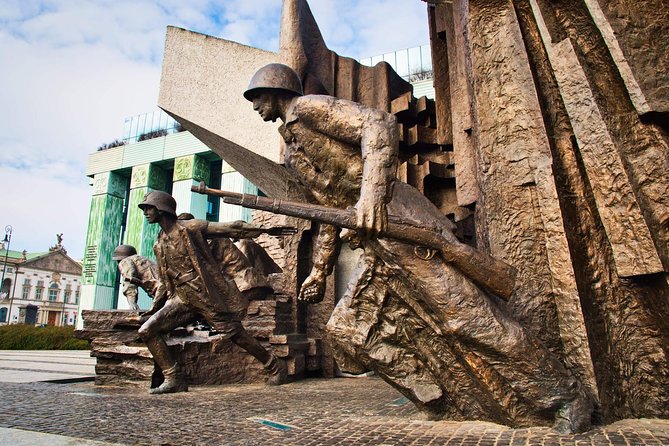
At one point, the audio turns you toward the memorial for Mały Powstaniec, the Little Insurgent. This stop is built around the tragic story of child soldiers who fought and died during the Warsaw Uprising of 1944.
What makes this stop effective is that it isn’t just a name drop. The tour is framed to help you understand the background of the memorial and why it matters in the larger wartime story. Child insurgents can be hard to process unless the context is clear, and the narration is doing that work for you while you stand in the location designed to hold that memory.
If you’re the kind of traveler who likes to connect a memorial to a specific moment in history, you’ll probably appreciate how the tour builds emotional weight here before moving into the next sacred stop. This is also a good moment to slow down—standing still helps you feel the scale of what happened, even if the site itself is small.
A practical note: since the tour includes emotional subjects, I’d treat this like a moment for quieter focus. Don’t rush through it just because you’re on a timer. Let the audio finish, then take a minute on your own.
The Tomb of the Unknown Soldier: why it hits differently in Warsaw
Another anchor stop is the Tomb of the Unknown Soldier. The tour takes a brief pause here for respect and reflection, and it explains the history of the monument in a way that connects the present to the sacrifices of the past.
One detail that stands out: the tomb today contains ashes and soil from every 20th-century battlefield where Polish soldiers lost their lives. That’s not just a poetic line. It’s a structural idea: the monument is designed to concentrate the nation’s losses into one place, so every generation has a focal point for remembrance.
The narration also helps you understand the sacred quality of the location. If you’ve visited similar memorial sites elsewhere, you’ll recognize the rhythm: the place asks for silence and attention, and the story makes that respectful atmosphere feel justified.
This stop also works well inside a walking audio tour because it changes the pace. The earlier segments move you forward through streets. Here, the experience slows you down so the history can land.
More of Warsaw with a guide alongside




Piłsudski at the finish: independence politics, not just a statue
The end of the tour lands at Józef Piłsudski’s statue, with the audio guiding you to a face-to-face meeting with him. It’s a strong way to close the story because it shifts from WWII tragedy to the long arc of Poland’s fight for independence.
The narration frames him as a political and military hero who fought relentlessly to free Poland from Russian control. It also brings in a specific turning point: his side defeating Lenin’s Red Army at the gates of Warsaw in 1920.
Why this matters for your understanding is simple: WWII in Poland did not come from nowhere. The tour uses Piłsudski to show how Poland’s independence struggles were already shaped by regional power conflicts years earlier. That helps the WWII segments feel less like disconnected tragedies and more like part of one long struggle for control of the country’s future.
When the tour ends, you’re not left with only heavy emotions. You’re left with a historical thread you can carry into your later day—whether that means reading more about Warsaw’s wars of independence, or just understanding why certain monuments and streets feel so politically charged.
Audio design that makes a 3 km walk feel longer
The VoiceMap format here is designed to keep attention through sound. The narration is described as crisply mastered by professional audio engineering staff, which matters more than it sounds.
Good audio clarity does two things while you’re walking:
1) it reduces the need to keep your eyes on your phone
2) it lets you stay with the story even when you’re looking around
The tour also mixes sound effects and music with the spoken content. That can make historical scenes feel more vivid, and it can also prevent the tour from becoming a flat stream of facts.
You have flexibility in how you listen. The experience notes that you can use earbuds or headphones, and if you’re with a small group, you can even carry a small speaker. That’s useful for families or friends who want shared listening without passing earbuds back and forth.
Price and value: $9.99 for lifetime access and offline maps
At $9.99 per person for an experience that lasts about 1 hour 30 minutes, the price looks low for how much it covers: multiple major memorials plus a storyline running through WWII and earlier independence conflicts. The key value is not only the length of the walk. It’s what you keep after the tour.
You get lifetime access to the tour, plus the VoiceMap application. Even better, the audio, maps, and geodata can be downloaded for offline use. That means you’re not gambling on signal strength while trying to line up with memorials that are easy to miss if you rely on data connections.
Also, you should know what’s not included: there are no museum tickets bundled into the tour. That’s fine, but it means you’ll treat any optional stops—like the Vodka Museum or lunch spots—as add-ons, not necessities.
If you’re trying to get real context while sightseeing with limited time, this is a good way to do it without paying for multiple entrances or joining a timed group tour.
Who this works for, and who might want a different style
This tour fits best when you want:
- a self-paced walking plan you can pause and restart
- a WWII-focused route that includes major memorial stops
- a format that’s easy enough for mixed-age groups, since it’s designed to work with audio at a comfortable pace
If you’re traveling solo, it can be especially satisfying because the tour is built for independent movement. If you’re a family group, the audio and sound design can keep kids from tuning out, and the small walking distance makes it feel manageable.
The bigger reason to reconsider is navigation sensitivity. If you don’t like strict location-based alerts, or you often cross streets without thinking, you may find the off-route alarm distracting. The tour still functions, but you’ll likely want to pay attention to where you are so you don’t get constant interruptions.
Should you book Warsaw at War 1939-1945?
I’d book it if you want a low-cost, high-context way to understand Warsaw’s WWII story on foot. The route hits several emotionally important sites—Mały Powstaniec, the Tomb of the Unknown Soldier, and Piłsudski—while giving you a simple walking framework around the Old Town area. The offline audio and maps are a big practical win.
I’d think twice if you strongly dislike location-based prompts or you plan to wander wildly off-route. If you like a free-form photo walk more than a structured trail, you might feel the guidance more than you’d like.
If your goal is to leave Warsaw with a clearer sense of what the city endured—and why the monuments are placed where they are—this is a smart pick.
FAQ
How much does the Warsaw at War 1939-1945 audio tour cost?
The tour costs $9.99 per person.
How long is the tour, and how far do you walk?
The tour is about 1 hour 30 minutes and covers roughly 3 km on foot.
Where does the tour start and where does it end?
It starts at Kościół Akademicki św. Anny, Krakowskie Przedmieście 68, 00-322 Warszawa, Poland, and ends at the Statue of Józef Piłsudski, Plac Marszałka Józefa Piłsudskiego, 00-073 Warszawa, Poland.
Is the audio available offline?
Yes. You get offline access to audio, maps, and geodata.
What language is the tour offered in?
The tour is offered in English.
What do I need to listen to the tour audio?
You need a smartphone (not included) to use the VoiceMap app. The audio can be listened to with ear buds or headphones, and a small group can use a small speaker.
Can I pause the tour to explore on my own?
Yes. You can pause anytime and explore further wherever you are.
What is the maximum group size?
This experience has a maximum of 10 travelers.
Is the tour refundable or changeable?
No. The experience is non-refundable and cannot be changed for any reason.
More Tours in Warsaw
- Warsaw: Old Town Highlights Walking Tour in English
★ 4.7 · 1,516 reviews - Warsaw: City Sightseeing Hop-On Hop-Off Bus Tour
★ 3.6 · 1,415 reviews - Warsaw: Polish Vodka Museum Tour with Tasting
★ 4.6 · 788 reviews - 3-Hour Guided Cycling Tour of Warsaw
★ 4.9 · 624 reviews
More Tour Reviews in Warsaw
- Warsaw: Chopin Concert in the Old Town
★ 4.8 · 2,287 reviews - Warsaw: Traditional Galar Cruise on The Vistula River
★ 4.6 · 1,640 reviews - Warsaw: Old Town Highlights Walking Tour in English
★ 4.7 · 1,516 reviews - Warsaw Concert: Chopin – Painted by Candlelights with Wine
★ 4.8 · 1,442 reviews
Warsaw in Wartime: More Reviews
- Small-Group Historical Guided Tour of Warsaw with pick up/drop off. Public Tour.
★ 4.5 · 343 reviews - World War 2 in Warsaw walking tour in English
★ 4.7 · 237 reviews - Warsaw: Warsaw Historical Group Tour with Pickup & Drop-Off
★ 4.6 · 233 reviews - Warsaw for WWII Buffs – private tour with hotel pickup
★ 5.0 · 166 reviews
Fresh on the site: newer Warsaw reviews


Warsaw Uprising & WWII History: the other contenders.
 ★ 4.5Small-Group Historical Guided Tour of Warsaw with pick up/drop off. Public Tour.From $60343 reviews
 ★ 4.7World War 2 in Warsaw walking tour in EnglishFrom $20237 reviews
 ★ 4.6Warsaw Historical Group Tour with Pickup & Drop-OffFrom $58233 reviews
 ★ 5.0Warsaw for WWII Buffs – private tour with hotel pickupFrom $169166 reviews
 ★ 4.5Warsaw Uprising Museum (1944) : PRIVATE SERVICE /inc. Pick-up/From $9518 reviews
 ★ 4.7Warsaw Uprising and WWII Old Town Walking Tour with MuseumFrom $11215 reviews
 ★ 4.5Warsaw Uprising Museum (1944) + POLIN Museum : SMALL GROUP /inc. Pick-up/From $11414 reviews
 ★ 5.0Warsaw History and Reality Walking TourFrom $1148 reviews
Browse the lists this tour appears in