
Reviewed · JEWISH WARSAW, GHETTO & POLIN
Warsaw Uprising Museum (1944) + POLIN Museum : SMALL GROUP /inc. Pick-up/
1944 feels close in this two-museum pairing. You get door-to-door van pickup and timed admission to the Warsaw Rising Museum and POLIN Museum, and I especially love the Warsaw Rising Museum as a sound-and-image time machine plus the POLIN Museum’s interactive media (virtual library and multimedia exhibits). One note: this is not a full “walk-around and explain every room” guided tour, so if you want heavy narration from a guide, you’ll rely mostly on the audio guides.
I like that it’s designed to run smoothly—about 4 hours total—with a small group limit (up to 15) and audio guides offered in English and many other languages. The transport is wheelchair accessible, and the coordinator helps you with tickets so you can spend your energy inside the exhibits instead of sorting logistics.
In This Review
- Key highlights at a glance
- A smart pairing: why these two Warsaw museums work together
- Door-to-door logistics that actually matter in Warsaw
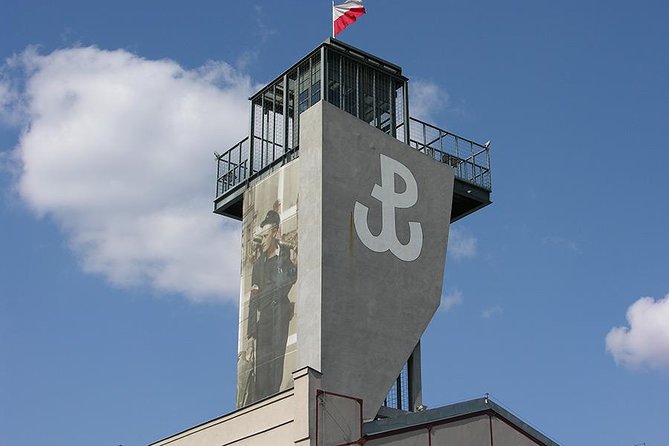
- Warsaw Rising Museum (1944): a time machine with sound, images, and scale
- What I think you’ll enjoy most
- A potential drawback: you may feel “on your own”
- POLIN Museum: Jewish life in Poland, told through spaces and media
- The virtual library is the standout way POLIN teaches
- Seeing how cultures met (and overlapped)
- What could slow you down
- Audio guides: how to use them without losing the thread
- My practical tip
- Timing and pacing: two museums in about four hours
- Price and value: what you’re really paying for
- When it might not be your best deal
- Who should book this tour (and who should skip it)
- Should you book Warsaw Rising Museum + POLIN Museum?
- FAQ
- What is included in the price?
- How long is the tour?
- Do you pick up travelers from hotels?
- Are the admission tickets included?
- Are mobile tickets used?
- Is the tour wheelchair accessible?
- What languages are audio guides available in?
- What is the group size limit?
- What are the cancellation terms?
- Is there a minimum number of people per booking?
Key highlights at a glance
- Door-to-door pickup by car/van (no buses) so you start close to your hotel.
- Admission tickets included for both the Warsaw Rising Museum and POLIN.
- Audio guides included with multiple language options (varies by museum).
- Small-group size (up to 15) for a less chaotic pace.
- Two very different stories: 1944 Warsaw through one museum, and centuries of Jewish life in Poland through the other.
- Time-saving ticket help from the coordinator on-site.
A smart pairing: why these two Warsaw museums work together
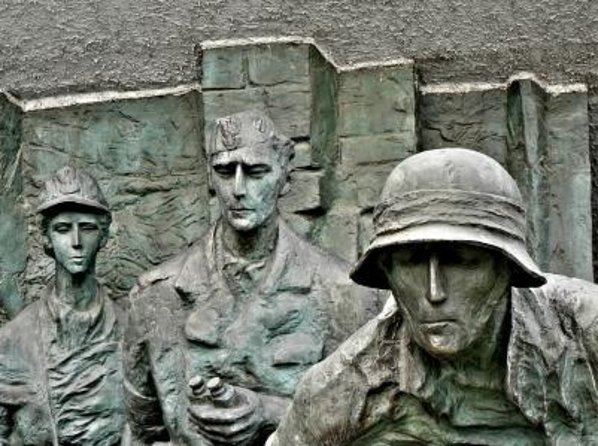
This tour works because it links two “Warsaw identities” that people often keep separate in their minds. The Warsaw Rising Museum brings you into the city during the uprising year, when daily life was smashed into choices, fear, and sudden noise. POLIN Museum, on the other hand, zooms out and shows how Jewish communities helped shape Polish culture across centuries—and how those stories played out alongside neighbors.
You’re not just visiting two buildings. You’re moving between two ways of understanding history: one that hits you through sensory storytelling, and one that uses spaces, media, and objects to explain how a community lived, created, argued, worshiped, and adapted. If you’re the kind of traveler who likes museums that answer the bigger question (how did people live?), this pairing will click.
Further into Jewish Warsaw, the Ghetto and POLIN
- Warsaw: POLIN Museum of the History of Polish Jews Ticket★ 4.7 · 1,142 reviews
- Private Tour: Warsaw’s Jewish Heritage by Retro Fiat★ 5.0 · 208 reviews
- Warsaw: Ghetto, Jewish Cemetery & POLIN Museum Private Tour★ 4.8 · 132 reviews
Door-to-door logistics that actually matter in Warsaw
I appreciate the no-drama transport style. You share pickup details when booking, then on the day you’re met before you even step inside your building, with a card showing your name. That means you aren’t wandering street corners trying to match a blurry group photo with a driver who may be looking in the wrong direction.
The transport is by car or van, and they specifically avoid bus-style transfers. That matters in a city like Warsaw where distances, traffic, and tight pickup spots can turn a “simple ride” into a half-hour scavenger hunt. Here, your first goal is the museum entrance, not the logistics puzzle.
It’s also wheelchair accessible. Even if you don’t need it, it usually signals smoother vehicle access and steadier planning. And the tour runs for about 4 hours, so you’re not committing your entire day to one block of museums.
Warsaw Rising Museum (1944): a time machine with sound, images, and scale
The Warsaw Rising Museum doesn’t behave like a typical museum. It’s more like a guided experience through a year that was brutal and chaotic. You move through phases leading up to the uprising, the rising itself, and the eventual failure—and the presentation leans hard on images and sounds, not just text panels.
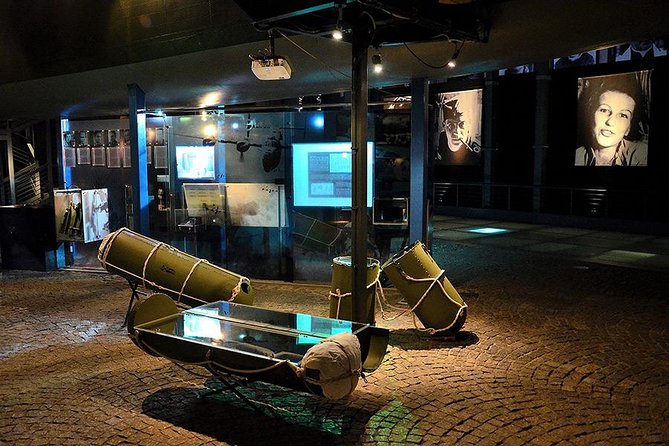
Here’s what makes the museum feel immersive in a practical way: it gives you scale and specificity. You can see over 1,000 authentic exhibits plus 1,500 photographs and films. The museum also includes a 5-minute 3D simulation that shows a flight over demolished and desolate Warsaw. Even though it’s short, that moment helps you grasp what “almost to the last building and the last brick” meant in real space.
What I think you’ll enjoy most
- The pacing of the story
It’s structured, but it doesn’t feel like you’re stuck reading. You’re given context, then your attention is pulled forward by effects and audio cues.
- The emotional clarity of the timeline
The museum frames 1944 as a terrifying year for Warsaw and asks the question that hangs over everything: what pushed people to rise, and was the cost too high? That’s not just “background.” It shapes how you interpret the exhibits around you.
A potential drawback: you may feel “on your own”
This experience works best when you let the audio guide carry the explanation. The setup is geared to get you through efficiently—one reason people sometimes describe it as less of a guided museum walkthrough and more of a coordinated trip with a helpful assistant.
If you want a guide to stop you every few minutes and explain what to notice, you might find the format more independent than expected. Still, the audio guide and the museum’s own storytelling are strong enough that you can absolutely get a lot from it without a constant live narration.
More of Warsaw in 1944 and the war years



POLIN Museum: Jewish life in Poland, told through spaces and media
POLIN Museum of the History of Polish Jews is not just a timeline of events. It’s a layout of rooms and interactive features that try to show daily life—what people read, how families lived, what neighbors shared, and how relationships changed over time.
The museum describes centuries-old history in Poland and does so with a clear focus on contributions to Polish culture, economy, and science. That helps you avoid the common mistake of seeing Jewish history as only tragedy or only politics. You get the broader picture: work, learning, writing, family life, and community.
The virtual library is the standout way POLIN teaches
One of the most striking parts is the virtual library, where you can explore Hebrew and Yiddish literature through multimedia presentations. The museum references works across religious, philosophical, and moral categories.
There’s also a hands-on element described in the exhibit: you can print a title page from a 16th-century book using the museum press. You don’t need to be a scholar to find that moment memorable, because it turns “old text” into something physical you can take away.
Seeing how cultures met (and overlapped)
POLIN also uses multimedia exhibitions to show how Poles and Jews lived together for hundreds of years and how the cultures blended. In more conventional spaces, you can explore family and neighborly relations and the Jewish-Christian relationship.
That last piece is particularly useful for travelers who want more than “facts.” It helps you understand how everyday interactions shape history. You’re not just studying communities as separated groups—you’re seeing relationship patterns.
What could slow you down
POLIN is media-heavy (in a good way), and that can create a real risk: you get stuck watching one thing longer than planned. With a 4-hour total tour, you’ll want to keep an eye on time so you don’t run out before you hit the sections you care about most.
Audio guides: how to use them without losing the thread
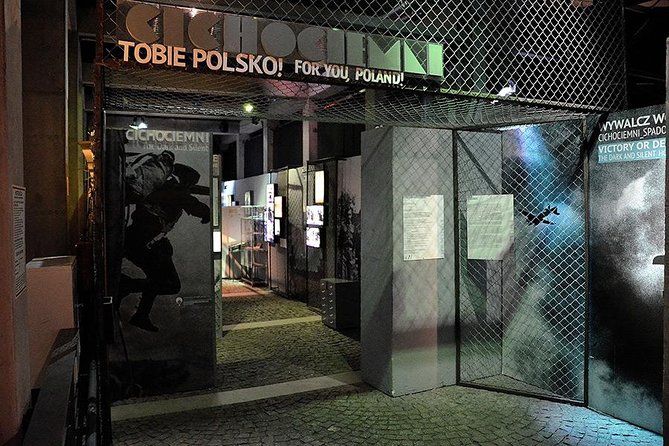
Audio guides are included, and that’s a big deal for museums like these. The Warsaw Rising Museum relies on sound and images to tell its story, and POLIN uses layered media and changing exhibit styles. Having audio helps you avoid wandering through rooms that are visually impressive but emotionally confusing.
One caution: the list of languages is broad, but the exact availability differs between the two sites. For the Warsaw Rising Museum, audio languages include English and many others. For POLIN, the listed options include English and additional languages such as Hebrew, Polish, Yiddish, and more.
My practical tip
Use the audio guide like a map, not like a replacement for your eyes. Listen when the exhibit is asking a question or introducing a new theme. Then take 30–60 seconds to look around and confirm what you think you’re seeing. That small habit makes both museums feel more coherent.
Timing and pacing: two museums in about four hours
This experience is designed to fit both museums into about 1 hour 15 minutes per stop. That’s realistic for travelers who want a strong overview without turning the day into a marathon.
At the Warsaw Rising Museum, you’ll likely move at a guided pace set by the exhibit design and your audio guide. The big sensory moments (like the 3D simulation) can become your “anchor,” helping you remember the timeline.
At POLIN, your pace depends on how much you want to interact with media features. If you’re focused and selective, you’ll cover the key areas without feeling rushed. If you’re the type who needs every audio clip and every screen, you might feel time pressure—so pick your priorities early.
Price and value: what you’re really paying for
The price is $114.28 per person, and the value comes from three main things being bundled:
- Admission tickets for both museums
- Audio guides
- Door-to-door transport by car/van, with assistance for ticket entry
If you’re traveling with limited time in Warsaw—or you just don’t want to coordinate entrances, tickets, and transport across two sites—this bundle can feel fair. You’re paying for “less friction,” not for luxury narration.
There’s also a philosophical value here: Warsaw Rising Museum and POLIN Museum are both high-impact museums, and the tour gives you a managed way to experience them back-to-back while the context is still fresh.
When it might not be your best deal
If you’re the independent type who enjoys handling tickets and transport yourself, you might prefer building your own route. One reason is that the experience is coordinated rather than deeply guided on the museum floor. In other words: you’re getting help with entry and transport more than you’re getting a running commentary for every exhibit detail.
That doesn’t mean it’s bad—it just means you should know what you’re buying. If your expectation is “expert guide explains everything,” adjust that expectation before you book.
Who should book this tour (and who should skip it)
You’ll likely love this if you:
- Want two major Warsaw museums with minimal planning stress
- Prefer a mix of sensory storytelling (Warsaw Rising Museum) and structured, media-based learning (POLIN)
- Like the idea of audio guides and don’t need constant live commentary
You might want to skip or choose something different if you:
- Expect a traditional guided tour that speaks constantly inside exhibits
- Need a very loose schedule where you can linger without any time pressure
Should you book Warsaw Rising Museum + POLIN Museum?
I’d book it if you want an efficient, well-organized way to experience two of Warsaw’s most meaningful museums in one outing. The combination is powerful: 1944’s destruction and POLIN’s long view of Jewish life in Poland help you understand the city from different angles, and the included audio guides make the experience easier to follow.
If your main goal is a live guide explaining every exhibit minute-by-minute, you may feel slightly under-served. But if you’re okay letting the museums and audio guides do the heavy lifting, this is a solid use of a half day—and it saves you the hassle of juggling tickets and transport on your own.
FAQ
What is included in the price?
The price includes admission tickets for both museums, door-to-door transport from your hotel/apartment by car or van, and audio guides. Audio guides are provided for both stops, and there is also a driver/coordinator to help with your group.
How long is the tour?
The tour is about 4 hours total (approx.), with around 1 hour 15 minutes at each museum.
Do you pick up travelers from hotels?
Yes. Pickup is offered from your hotel or apartment, and the coordinator/driver meets you with a card showing your name and waits before you enter the building.
Are the admission tickets included?
Yes. Admission tickets for the Warsaw Rising Museum and POLIN Museum are included.
Are mobile tickets used?
Yes, mobile tickets are offered.
Is the tour wheelchair accessible?
Yes, the transport is wheelchair accessible.
What languages are audio guides available in?
Audio guides are available in many languages, including English. The exact language options vary by the museum, and the tour lists additional languages for each site.
What is the group size limit?
This is a small group tour with a maximum of 15 travelers per booking.
What are the cancellation terms?
You can cancel for free up to 24 hours in advance for a full refund. If you cancel less than 24 hours before the start time, the amount paid is not refunded.
Is there a minimum number of people per booking?
Yes. A minimum of 2 people is required per booking.
More Tour Reviews in Warsaw
- Warsaw: Chopin Concert in the Old Town
★ 4.8 · 2,287 reviews - Warsaw: Traditional Galar Cruise on The Vistula River
★ 4.6 · 1,640 reviews - Warsaw: Old Town Highlights Walking Tour in English
★ 4.7 · 1,516 reviews - Warsaw Concert: Chopin – Painted by Candlelights with Wine
★ 4.8 · 1,442 reviews
Warsaw in Wartime: More Reviews
- Small-Group Historical Guided Tour of Warsaw with pick up/drop off. Public Tour.
★ 4.5 · 343 reviews - World War 2 in Warsaw walking tour in English
★ 4.7 · 237 reviews - Warsaw: Warsaw Historical Group Tour with Pickup & Drop-Off
★ 4.6 · 233 reviews - Warsaw for WWII Buffs – private tour with hotel pickup
★ 5.0 · 166 reviews
More of Jewish Warsaw and POLIN
- Warsaw: POLIN Museum of the History of Polish Jews Ticket
★ 4.7 · 1,142 reviews - Warsaw: Jewish History Guided Walking Tour in English
★ 4.7 · 324 reviews - Private Tour: Warsaw’s Jewish Heritage by Retro Fiat
★ 5.0 · 208 reviews - Warsaw: Ghetto, Jewish Cemetery & POLIN Museum Private Tour
★ 4.8 · 132 reviews
Fresh on the site: newer Warsaw reviews




Jewish Warsaw, Ghetto & POLIN: the other contenders.
 ★ 4.7POLIN Museum of the History of Polish Jews TicketFrom $121,142 reviews
 ★ 4.7Jewish History Guided Walking Tour in EnglishFrom $26324 reviews
 ★ 5.0Private Tour: Warsaw’s Jewish Heritage by Retro FiatFrom $108208 reviews
 ★ 4.8Ghetto, Jewish Cemetery & POLIN Museum Private TourFrom $112132 reviews
 ★ 4.7Jewish Heritage & Holocaust Walking TourFrom $20119 reviews
 ★ 5.0Tour of the Warsaw GhettoFrom $102119 reviews
 ★ 5.0Historical Walking Tour of Jewish WarsawFrom $2868 reviews
 ★ 4.9Jewish Heritage 4-Hour Private TourFrom $4226 reviews
Browse the lists this tour appears in