
Reviewed · WARSAW UPRISING & WWII HISTORY
Warsaw History and Reality Walking Tour
If you like history with street-level details, this walk fits. In about 2.5 hours, you get Warsaw’s WWII scars and rebuilding story threaded through real landmarks, not just textbook stops. I love how the route mixes famous sights (Old Town, Royal Route) with quieter context like the first post-war district built to house reconstruction workers. I also like that the pace stays manageable for a max group size of 10, so questions actually get answered. One possible drawback: it’s weather-dependent, so on cold rain days you may be waiting through the “good weather required” reality.
You also get a practical bonus: a viewing-terrace ticket tied to the University of Warsaw Library rooftop area, so you’re not just standing and listening. The stories go beyond facts too. The guide behind Mona_be_your_guide style is praised for patient, flexible explanations and for adapting to mixed ages and interests, and that kind of human touch can make a big difference on a short walking tour. Still, you should expect mostly outdoor time and cobbles—comfortable shoes matter.
In This Review
- Key moments that make this walk worth it
- Why this “history and reality” walk works so well
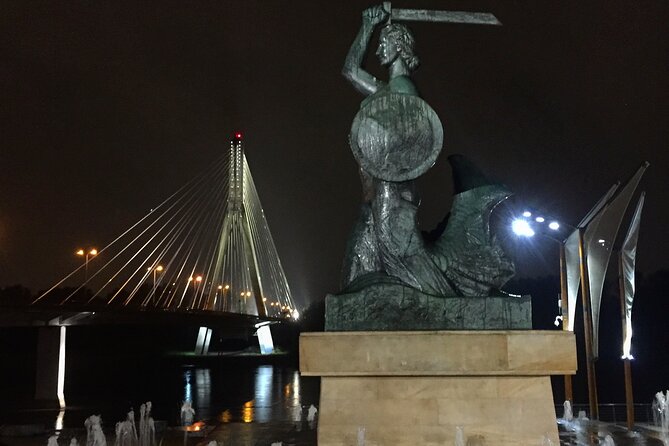
- The meeting point at the Mermaid: more than just a cute start
- University of Warsaw Library rooftop terrace: your first big viewpoint
- The first post-WWII rebuilt district: why Warsaw looks the way it does
- St. Anne’s Church and Royal Castle square: baroque drama with reconstruction clues
- Old Town cobblestones: the feel of a past that was carefully rebuilt
- Krakowskie Przedmiescie and the Presidential Palace lions
- Pilsudski Square: memorial weight, then a garden reset
- Price, time, and what you actually get for $114.39
- Who this tour is best for (and who should consider another option)
- A quick take on guides, pacing, and making it feel personal
- Should you book this Warsaw history-and-reality walking tour?
- FAQ
- FAQ
- How long is the Warsaw History and Reality Walking Tour?
- How much does the tour cost?
- What language is the tour offered in?
- How many people are in the group?
- What’s included in the ticket price?
- What should I bring or plan for since coffee isn’t included?
- Where do I meet the guide, and where does the tour end?
- What’s the weather situation if I’m booking soon?
- Can I cancel for a full refund?
Key moments that make this walk worth it
- Mermaid lore tied to WWII: the Warsaw coat of arms has a real backstory, and the guide connects it to darker events.
- University of Warsaw Library rooftop views: you get a green pause and a river-and-city perspective, plus the terrace entry is included.
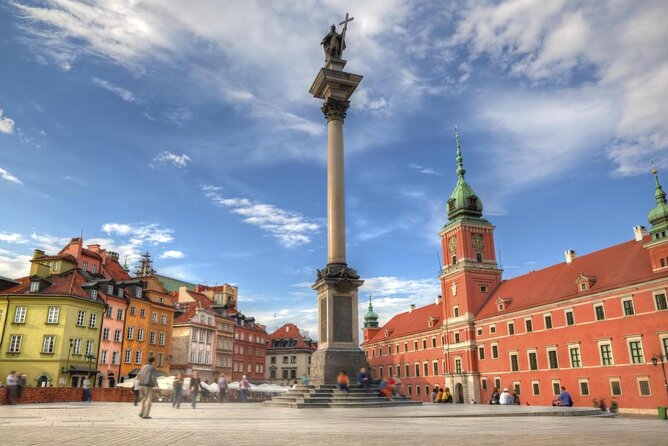
- Baroque St. Anne’s and the Royal Castle area: you’ll look closely at style and reconstruction, not just locations.
- Old Town streets that feel rebuilt on purpose: the facades and church clusters are part of how the city wanted to look again.
- Royal Route highlights along Krakowskie Przedmiescie: the Presidential Palace lions and Chopin detail give the architecture a human pulse.
- Pilsudski Square + Saxon Garden: memorial weight by day, then a calmer garden walk right behind it.
Why this “history and reality” walk works so well
Warsaw is a city you can’t fully understand from big monuments alone. You have to notice the choices: what got rebuilt, what got emphasized, and what stories were pressed into stone so people could move forward. That’s why this tour has a strong theme. It doesn’t treat history like a museum label. It treats it like a map of decisions still visible in everyday streets.
The second reason it’s a good use of your limited time: it’s built around short stops you can actually absorb. You spend about 10 minutes at the Mermaid statue, then move to a longer 40-minute segment at the University Library rooftop area. After that, the pace stays punchy: churches, squares, and Old Town lanes, then the Royal Route stretch toward the Presidential Palace, and finally Pilsudski Square. With 2 hours 30 minutes on the clock, you get coverage without feeling like a marathon.
Finally, you’ll appreciate the small-group limit. With a maximum of 10 travelers, the guide can adapt—people in past groups described asking for extra context and getting more details without shutting things down. If you like guided walking that feels more like a smart friend sharing a city than a scripted parade, this format fits.
More of Warsaw in 1944 and the war years
- World War 2 in Warsaw walking tour in English★ 4.7 · 237 reviews
- Warsaw: Warsaw Historical Group Tour with Pickup & Drop-Off★ 4.6 · 233 reviews
- Warsaw for WWII Buffs – private tour with hotel pickup★ 5.0 · 166 reviews
The meeting point at the Mermaid: more than just a cute start
The tour begins at Mermaid’s Statue (Generała George’a Smitha Pattona). Starting here is a smart move because it anchors the whole experience in Warsaw symbolism right away. The Mermaid isn’t only a decorative image. It connects to why the mermaid shows up in the city’s coat of arms, and the story doesn’t stay light and fairytale-ish.
You’ll also hear about who served as the model for the sculptor. That’s the kind of detail that makes a statue feel less distant. And then the guide ties it to an important WWII-related story—one of those “you’re standing here, but this place carried meaning before you arrived” moments.
Practical tip: this is a quick stop (about 10 minutes), so arrive a few minutes early. You want to be ready when the explanation starts, not catching up while the group is already moving.
University of Warsaw Library rooftop terrace: your first big viewpoint
Stop 2 is one of the most satisfying parts of the itinerary: the University of Warsaw Library and its rooftop area. You’re there for around 40 minutes, which is long enough to take photos, pause, and actually look out over the river and the city.
This rooftop concept is described as a modern library that also works like a green space. It’s designed to respect the shape of the Vistula embankment, which means the architecture isn’t just looking pretty—it’s responding to the geography around it. That matters because it turns a view into an idea: how the city builds for function while still creating a place to breathe.
The tour includes an entrance ticket for a viewing terrace, and that’s where the value shows. Many walking tours point you at a viewpoint. Here, you have an actual ticketed moment built into the route.
One note for planning: the rooftop garden is listed as open April–October. If you’re going outside that window, the terrace is still a distinct stop on the route, but your green-space experience may be different season to season. Either way, you’ll get that river-and-city perspective that makes Warsaw feel like a place with layers, not a flat postcard.
The first post-WWII rebuilt district: why Warsaw looks the way it does
After the library stop, you’ll pass through the area described as the first district in Warsaw rebuilt after WWII. The point of this stop is not the name of a building—it’s the purpose behind the rebuilding.
This district was meant to serve the workers who worked on the Old Town reconstruction. That single detail helps you read the city differently. When you see streets and blocks that look “reconstructed,” you’ll remember there was a human workforce behind the rebuild effort, and the city planned housing for that labor.
This is also where the tour earns its “reality” label. You’re not only looking at what survived or what was restored to look older. You’re looking at what had to be built to support the work of restoration itself.
If you tend to skip “in-between” streets on your own, don’t here. This stop is exactly the kind of context that makes the rest of the landmarks click.
St. Anne’s Church and Royal Castle square: baroque drama with reconstruction clues
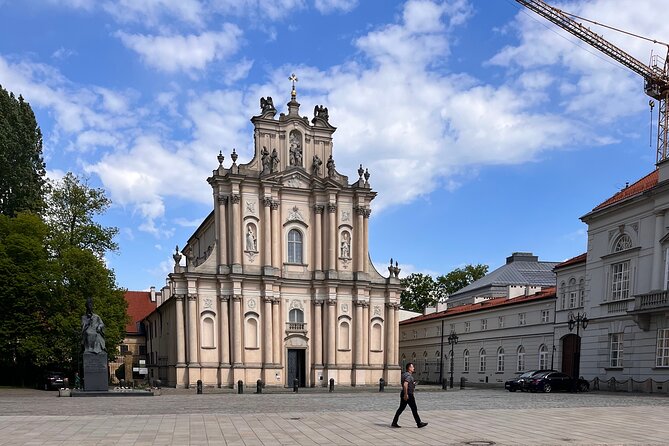
Next up is St. Anne’s Church (Kosciol Swietej Anny). You’ll spend about 15 minutes, but this isn’t a quick drive-by. The church is described as one of Warsaw’s most beautiful baroque churches, so you’ll get a sense of ornate style in a relatively short window.
A good tour should help you notice what your eyes might miss, and this one does that by linking St. Anne’s with nearby atmosphere: you’ll also see the Royal Castle square and beautifully reconstructed tenement houses of the Old Town.
This pairing is useful. Baroque church exteriors can be visually overwhelming if you don’t know what to look for. By also framing the reconstructed tenements, the guide helps you compare two kinds of “storytelling” in the built environment—religious art and civic rebuilding after the war.
Practical consideration: baroque details reward slow looking. If you rush or keep your phone glued to the camera, you’ll miss the point. In this stop, take a breath. Look at the facade elements long enough to let them register.
On foot through Warsaw: more guided walks
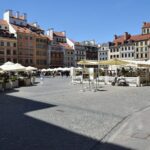


Old Town cobblestones: the feel of a past that was carefully rebuilt
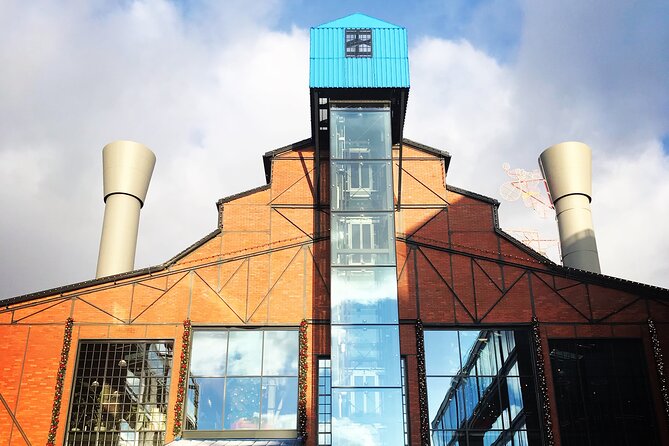
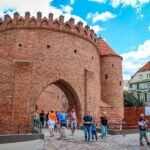
Then you hit the heart of the matter: the Old Town. Here the tour keeps the focus on what you can actually experience on foot—cobblestone Gothic streets and alleyways, churches, and the tiered burgher tenement houses. The key word in the description is masterfully reconstructed, and that’s not trivia. It’s the whole interpretive lens.
Old Town in Warsaw is not only about medieval forms. It’s about how a modern city chose to restore an older mood after destruction. So when you stroll through lanes and admire facade details, you’re also reading the intention behind the reconstruction.
You’ll also see a favorite place of lovers. The tour doesn’t specify the exact feature here, but the idea is clear: the Old Town isn’t just an architectural set. It’s a lived-in destination where people create modern memories in restored spaces.
How to get the most out of this segment: walk a little slower than you think you should. These streets are narrow and layered. If you rush, you’ll remember the photos, not the feeling.
Krakowskie Przedmiescie and the Presidential Palace lions
The next stretch is Krakowskie Przedmiescie, described as part of the 2.5-mile Royal Route. This is where the walk turns from compact Old Town lanes into a longer, more monumental corridor with major buildings and monuments.
A highlight is the Presidential Palace, described as neo-classic. Even if you’re not a history-architecture fanatic, you’ll get a “how do I visualize this?” moment thanks to two specific details:
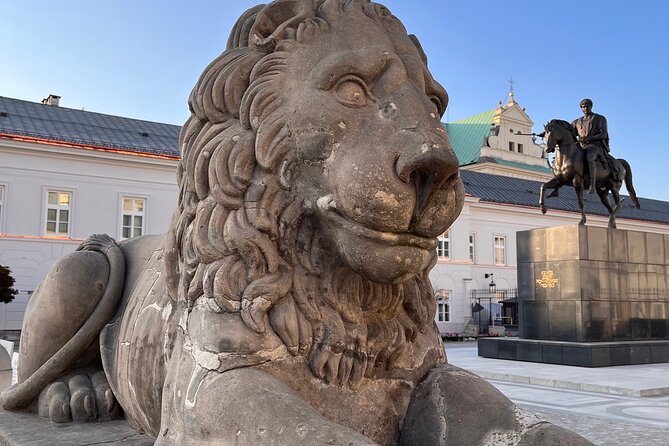
- It’s guarded by four lions sculpted by Camilio Laudini.
- The lions are described as more than 200 years old.
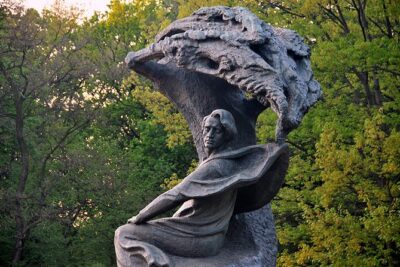
- And there’s a Chopin connection: it’s noted that 8-year-old Frederic Chopin played there for the first time publicly.
That combo—politics, sculpture, and music—makes the architecture feel inhabited. You start seeing the street as a stage for more than one era.
One practical tip: this portion can feel longer because it’s more open. If you like breaks, pace yourself. You’ll still want to keep moving, but don’t let the royal-route “straight line” trick you into walking on autopilot.
Pilsudski Square: memorial weight, then a garden reset
You finish at Plac Marszalka Jozefa Pilsudskiego, also known as Marshal Pilsudski square. The description calls it a parade square with a memorial of the Unknown Soldier, and it’s presented as important for locals: a meeting point for concerts and events.
This stop matters because it balances the tour’s earlier mood. After WWII stories and reconstructed Old Town atmosphere, the Unknown Soldier memorial is a reminder of personal loss and collective memory. It’s not just decorative; it’s designed to hold meaning.
Right behind the memorial is the Saxon Garden, which acts like a psychological reset. You get a chance to slow down, look around, and shift from “history mode” to “city mode.”
The tour ends at the Roman Catholic Church of the Visitants (Krakowskie Przedmieście 34), near the Cardinal Stefan Wyszyński Statue. That ending spot is useful because it drops you close to a busy area where you can keep exploring on your own after the structured walk.
Price, time, and what you actually get for $114.39
At $114.39 per person, this tour is not the cheapest way to walk Warsaw. But it also isn’t priced like a luxury-only experience. The best argument for the cost is the mix of things that are hard to replicate without a guide: short-stop storytelling (Mermaid + WWII), a ticketed terrace viewpoint, and a route that connects multiple eras into one coherent narrative.
You get:
- About 2 hours 30 minutes of guided walking.
- English instruction.
- A small group size (up to 10 travelers).
- A mobile ticket.
- A listed viewing-terrace entrance ticket included.
- Service animals allowed.
- A route that’s near public transportation.
What’s not included is simple: coffee and/or tea. That means if you want a caffeine break, you’ll need to buy it yourself.
Value check for real life: if you’re spending only a day or two in Warsaw, you’re paying for efficiency and interpretation. You’re not just seeing places; you’re learning how Warsaw’s story shows up in public symbols, rebuilding choices, and architecture. For many visitors, that’s worth more than adding one extra standalone attraction.
Who this tour is best for (and who should consider another option)
This is a strong fit if:
- You want a guided story that links WWII, rebuilding, and visible symbols.
- You like walking but still want structure and time limits.
- You appreciate detailed architecture moments (churches, tenements, neo-classic facades).
- You enjoy a small-group vibe where questions don’t feel like interruptions.
It may be less ideal if:
- You hate walking on cobblestones and prefer mostly indoor sightseeing.
- You’re going at a time when weather is unreliable and you don’t want to risk a reschedule (the experience requires good weather).
- You want a lot of long museum-style time, because this is paced like a street tour, not a building marathon.
A quick take on guides, pacing, and making it feel personal
This tour is guided by Mona_be_your_guide. Past feedback highlights a few things that you’ll likely feel during the walk:
- the guide answers questions with extra detail instead of waving them off
- the pace can adapt for different interests and group ages
- the storytelling is described as engaging and personal, not robotic
- the guide may offer practical recommendations after the walk, including where to eat and where to take photos
That matters because the “best” part of walking tours is often the ability to respond to what you notice. When your guide can shift emphasis—adding an extra stop when it’s useful—you end up with a Warsaw that feels tailored to your day, not a one-size script.
Should you book this Warsaw history-and-reality walking tour?
Yes, if you want a well-timed, story-driven walk that connects iconic landmarks to the rebuilding and memory behind them. The included rooftop terrace ticket and the thoughtful route—from Mermaid symbolism to Old Town reconstruction cues, then the Royal Route lions and Chopin detail—give you a lot of meaning per hour.
Book it especially if Warsaw is new to you and you want to avoid the common trap of seeing pretty buildings without understanding why they look the way they do. Just plan for shoes, weather, and a city-walking mindset.
If you’re the type who loves asking questions and getting straight, useful answers, this small-group format is a real advantage.
FAQ
FAQ
How long is the Warsaw History and Reality Walking Tour?
It runs for about 2 hours 30 minutes.
How much does the tour cost?
The price is $114.39 per person.
What language is the tour offered in?
The tour is offered in English.
How many people are in the group?
The tour has a maximum of 10 travelers.
What’s included in the ticket price?
Entrance ticket for a viewing terrace is included.
What should I bring or plan for since coffee isn’t included?
Coffee and/or tea are not included, so you’ll need to buy drinks separately if you want them.
Where do I meet the guide, and where does the tour end?
You start at Mermaid’s Statue (Generała George’a Smitha Pattona) and end at the Roman Catholic Church of the Visitants on Krakowskie Przedmieście 34, near the Cardinal Stefan Wyszyński Statue.
What’s the weather situation if I’m booking soon?
The tour requires good weather. If it’s canceled due to poor weather, you’ll be offered a different date or a full refund.
Can I cancel for a full refund?
Yes. Free cancellation is available, and you can cancel up to 24 hours in advance for a full refund.
More Tours in Warsaw
- Warsaw: Old Town Highlights Walking Tour in English
★ 4.7 · 1,516 reviews - Warsaw: City Sightseeing Hop-On Hop-Off Bus Tour
★ 3.6 · 1,415 reviews - Warsaw: Polish Vodka Museum Tour with Tasting
★ 4.6 · 788 reviews - 3-Hour Guided Cycling Tour of Warsaw
★ 4.9 · 624 reviews
More Tour Reviews in Warsaw
- Warsaw: Chopin Concert in the Old Town
★ 4.8 · 2,287 reviews - Warsaw: Traditional Galar Cruise on The Vistula River
★ 4.6 · 1,640 reviews - Warsaw: Old Town Highlights Walking Tour in English
★ 4.7 · 1,516 reviews - Warsaw Concert: Chopin – Painted by Candlelights with Wine
★ 4.8 · 1,442 reviews
Warsaw in Wartime: More Reviews
- Small-Group Historical Guided Tour of Warsaw with pick up/drop off. Public Tour.
★ 4.5 · 343 reviews - World War 2 in Warsaw walking tour in English
★ 4.7 · 237 reviews - Warsaw: Warsaw Historical Group Tour with Pickup & Drop-Off
★ 4.6 · 233 reviews - Warsaw for WWII Buffs – private tour with hotel pickup
★ 5.0 · 166 reviews
Fresh on the site: newer Warsaw reviews

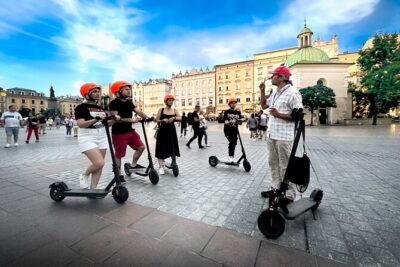
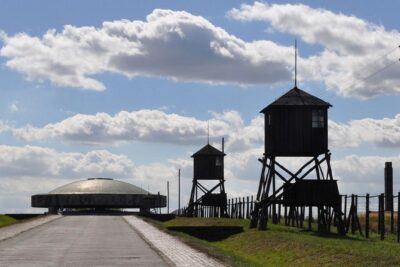
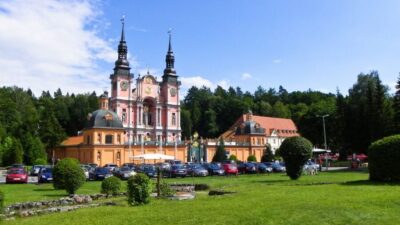

Warsaw Uprising & WWII History: the other contenders.
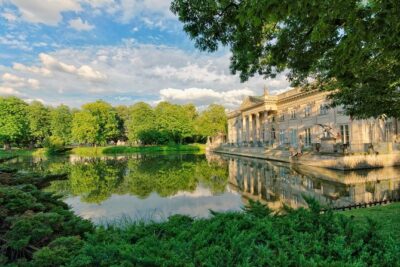 ★ 4.5Small-Group Historical Guided Tour of Warsaw with pick up/drop off. Public Tour.From $60343 reviews
 ★ 4.7World War 2 in Warsaw walking tour in EnglishFrom $20237 reviews
 ★ 4.6Warsaw Historical Group Tour with Pickup & Drop-OffFrom $58233 reviews
 ★ 5.0Warsaw for WWII Buffs – private tour with hotel pickupFrom $169166 reviews
 ★ 4.5Warsaw Uprising Museum (1944) : PRIVATE SERVICE /inc. Pick-up/From $9518 reviews
 ★ 4.7Warsaw Uprising and WWII Old Town Walking Tour with MuseumFrom $11215 reviews
 ★ 4.5Warsaw Uprising Museum (1944) + POLIN Museum : SMALL GROUP /inc. Pick-up/From $11414 reviews
 ★ 5.0WWII Private Tour by Retro Minibus with Hotel PickupFrom $1657 reviews
Browse the lists this tour appears in