
Reviewed · JEWISH WARSAW, GHETTO & POLIN
Warsaw: Jewish History Guided Walking Tour in English
History has weight on these streets. This walking tour threads together Jewish Warsaw before the war with the scars left by the Holocaust, while you physically move through places tied to the story. I really like how the route anchors the history at the Nożyk Synagogue, plus the way the guide ties street locations like Chłodna Street to what happened on the ground.
The one real drawback is practical: it’s outside for the full 150 minutes, and Warsaw weather can bite. Plan for cold hands, wind, and slow moments when you’re standing still to take in a place—so dress for winter.
In This Review
- Key things you’ll notice
- Starting at Grzybowski Square and What 150 Minutes Really Feels Like
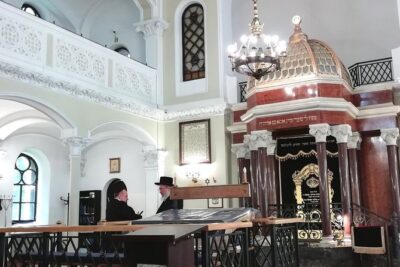
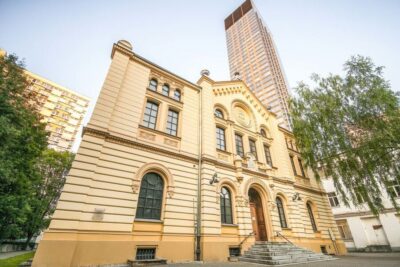
- Nożyk Synagogue: The Pre-War Reminder You Can Actually Visit
- Chłodna Street and the Bridge That Connected Ghetto Parts
- Waliców Street: Where Borders Were Real Lines and History Followed
- From 19th-Century Struggles to Interwar Culture: The Full Before-Story
- Guides Who Keep Questions Alive: Andrzej, Christopher, Jacek, and More
- Price and Value: $26 for 2½ Hours of Place-Based Storytelling
- Who Should Book This Warsaw Jewish History Walk
- Should You Book This Tour or Choose Another?
- FAQ
- How long is the Warsaw Jewish History guided walking tour?
- Where do I meet for the tour?
- Is the tour in English?
- What is included in the ticket price?
- What isn’t included?
- What major places will the tour cover?
- Is there free cancellation?
- Is there a pay-later option?
Key things you’ll notice
- Nożyk Synagogue: the only surviving pre-war Warsaw synagogue, so it lands as more than a stop on a map
- Chłodna Street’s bridge site: you connect the dots between ghetto sections and how space was controlled
- Waliców Street as a border: you learn what the border meant and how it fed into the Warsaw Uprising story
- Street-level storytelling: guides use photos and maps to make vanished buildings and eras easier to grasp
- English tours that flow: many guides have clear, confident English and encourage questions
- Strong value at $26: 2½ hours focused on key sites with a local guide, even without hotel pickup
Starting at Grzybowski Square and What 150 Minutes Really Feels Like
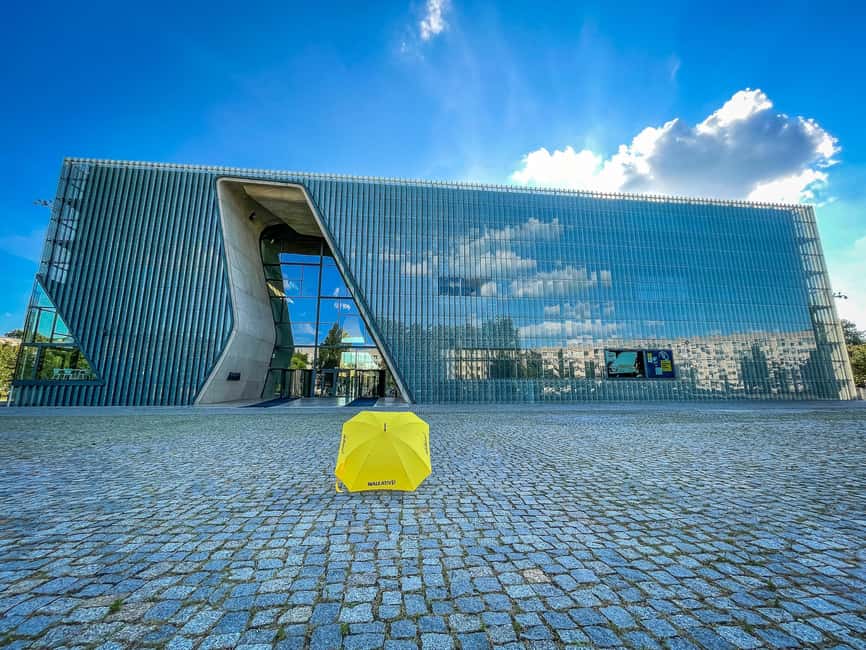
You meet by the All Saints Church at Grzybowski Square, and you should look for a yellow umbrella. That detail matters, because you’ll be in motion quickly, and you don’t want to waste time standing around trying to find your group.
The tour runs about 150 minutes, so it’s long enough to feel like a real historical walk, not a quick highlights loop. It’s also a working pace: you’re outside the whole time, and there isn’t any implied indoor reset. I’d treat it like an outdoor morning or afternoon walk first, and a history class second.
One helpful thing: this is a general walking tour. Your ticket is for the reservation and the guide’s part of the program, and you’ll be guided as a group rather than individually. If you’re looking for a quieter, smaller format, you’d need to ask the provider about arranging something more private.
Further into Jewish Warsaw, the Ghetto and POLIN
- Warsaw: POLIN Museum of the History of Polish Jews Ticket★ 4.7 · 1,142 reviews
- Private Tour: Warsaw’s Jewish Heritage by Retro Fiat★ 5.0 · 208 reviews
- Warsaw: Ghetto, Jewish Cemetery & POLIN Museum Private Tour★ 4.8 · 132 reviews
Nożyk Synagogue: The Pre-War Reminder You Can Actually Visit
The tour’s emotional center is the Nożyk Synagogue, described as the only surviving pre-war Warsaw synagogue. That single fact changes how you experience the stop. You aren’t just hearing about the past—you’re looking at a physical survivor, which makes the later destruction feel personal rather than abstract.
What I find powerful here is how the guide uses the synagogue to explain Jewish community life across time: not only persecution and loss, but also daily culture, faith, and community organization. The point isn’t to sugarcoat. It’s to show that Jewish Warsaw wasn’t a single story of tragedy—it was a real society with roots that went deep.
You’ll also be encouraged to see how places like this fit into a wider map of Jewish life. A surviving synagogue helps you understand that what was erased was not only buildings, but also institutions, routines, and generations of continuity.
Practical note: this is a history-focused stop, so you should expect standing, looking, and listening rather than a fast photo-op. Dress warmly, since many parts of the experience involve waiting your turn to view or absorb the context.
Chłodna Street and the Bridge That Connected Ghetto Parts
Walking through Chłodna Street is where the tour turns spatial. You’re not only learning dates—you’re learning how the city was divided and how movement was shaped, down to specific crossing points.
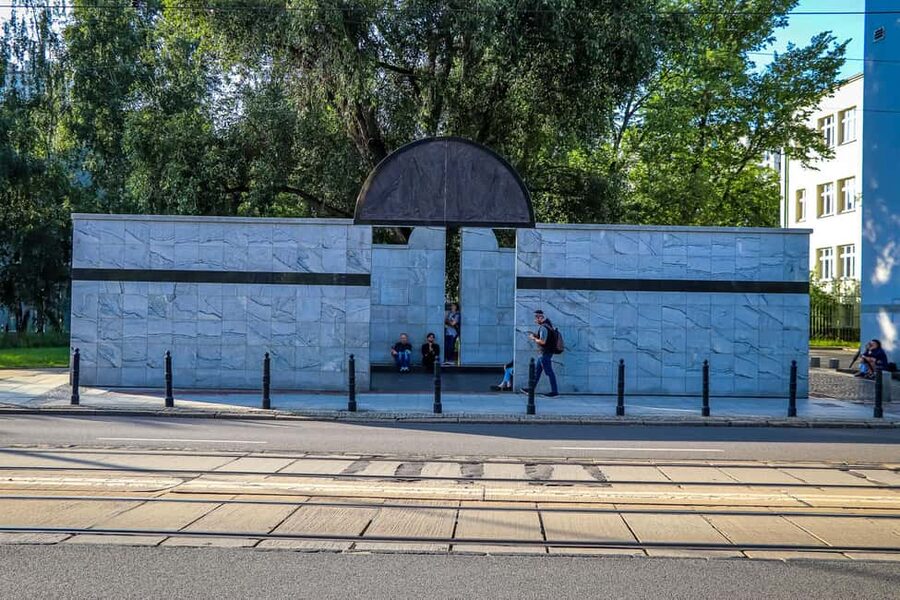
A key highlight is the site of a bridge on Chłodna Street that joined parts of the ghetto. That’s the kind of detail that makes the story click: barriers weren’t just invisible rules. They were physical structures, corridors, chokepoints, and routes that determined what was reachable and what wasn’t.
This is also where the tour’s tone matters. Guides are praised for handling a difficult subject thoughtfully, with honesty and restraint. You’ll hear the brutality of what happened, but you’ll also understand the mechanics: how forced confinement reshaped everyday life, and how control operated through the geography of Warsaw.
If you’re the type of person who likes to understand how people lived inside constraints, this segment is especially valuable. The street-level layout gives you a way to picture choices, desperation, and survival in a city that was literally being redesigned around terror.
Waliców Street: Where Borders Were Real Lines and History Followed

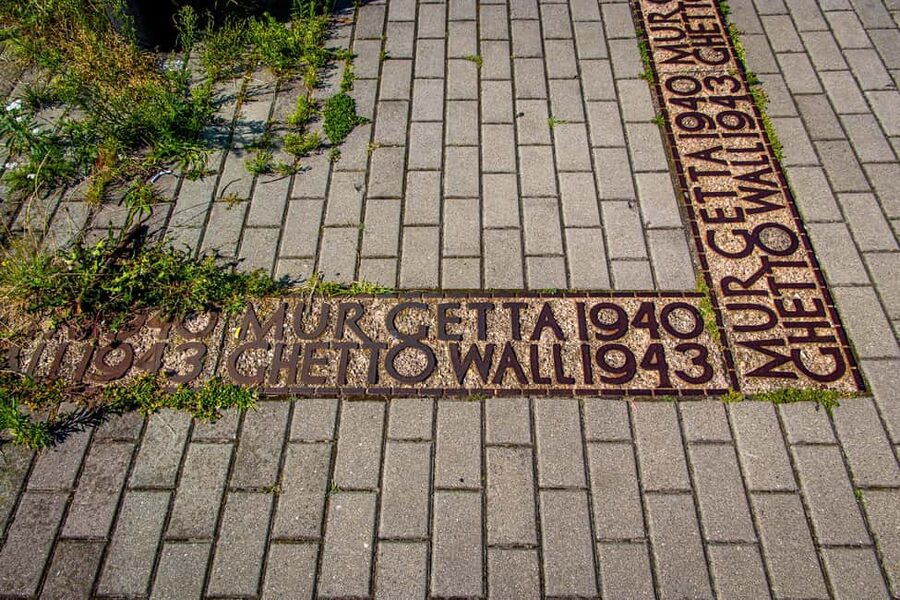
Then you shift to Waliców Street, once a ghetto border. Borders like this weren’t symbolic. They affected where you could go, what you could see, and what the city allowed you to attempt.
The guide uses Waliców Street to connect the ghetto story to the larger struggle of the Second World War, including the Warsaw Uprising. Even if you already know a few facts about the uprising, the border context gives you a more grounded view of why resistance took the shape it did and why survival carried such urgent stakes.
One thing I appreciate about this kind of walking tour: you’re constantly comparing two layers of Warsaw. One is the Warsaw you might recognize today. The other is the Warsaw that existed under occupation and confinement, when a street corner could carry a completely different meaning than it does now.
Because some buildings and marks of the past are gone, the guide’s tools matter. Many guides are praised for using photos and maps to show what once stood where you’re standing. That helps you keep your bearings, and it prevents the tour from turning into a vague recitation of tragedy without place.
From 19th-Century Struggles to Interwar Culture: The Full Before-Story
A standout part of the tour is that it doesn’t begin in 1939. You get context about Jewish life in Warsaw across centuries, including the 19th century, when Jews took part in struggles against occupying powers and were involved in Polish uprisings alongside other Warsaw residents.
That matters because it corrects a common mental shortcut: the idea that Jewish life in Warsaw only mattered in wartime. Instead, you learn that Jewish communities were active participants in the city’s civic life, for better and for worse, long before the Holocaust.
Then the tour points to the Interwar Period, when Jewish Warsaw flourished with hundreds of artists, actors, writers, and journalists. That detail isn’t just background trivia. It’s a way to measure what was lost. When a guide explains how cultural life could be incomparable at that time, it makes the later destruction feel like the wiping out of a living world.
And yes, the tour keeps the tone balanced. You’ll hear about persecution and death, but you’ll also hear resilience and bravery—because surviving history is also the story of people refusing to vanish quietly.
Finally, the tour brings you to the idea of Warsaw today: a young, diverse, energetic Jewish community that looks forward. That ending matters. Without it, the past can swallow the present.
On foot through Warsaw: more guided walks


Guides Who Keep Questions Alive: Andrzej, Christopher, Jacek, and More
The quality of this tour often comes down to the guide. In the feedback you’ll find repeated praise for guides who can handle a heavy subject while still keeping you engaged and ready to ask questions.
Names that come up include Andrzej, who is noted for engaging delivery even in freezing weather, and Christopher, praised for exceptional insight and for encouraging questions. You’ll also see Jacek mentioned for good pace and clear explanations, and Aga and Agneska for factual, objective teaching with strong engagement. Other guides named include Luke, Yatzic, Tomasz, Ana, and Olivia—and several comments highlight strong English and thoughtful pacing.
What you should look for, when you’re joining, is not just memorized dates. The best guides bring the story alive with structure: where you are, what changed here, and why it mattered. Many guides are described as using photos and maps, so you can understand places that no longer look the way they did.
Humor also shows up in comments—often described as light, respectful, and used to keep the mind from shutting down under the weight of the subject. That can be a big deal for visitors who want the tour to be humane, not performative.
Price and Value: $26 for 2½ Hours of Place-Based Storytelling
At $26 per person for about 150 minutes, this is one of the more cost-effective ways to get an in-depth Jewish history walk in Warsaw. You’re paying for a local guide and a structured walking experience, not an expensive museum ticket or private transport.
The value gets even better when you consider what you cover: Nożyk Synagogue, key ghetto-related street locations on Chłodna Street and Waliców Street, plus a sweep of context from the 19th century through the Interwar Period and into WWII. That’s a lot of narrative work for a short time window.
One tradeoff is logistics. There’s no hotel pickup or drop-off, so you should plan to arrive under your own steam near Grzybowski Square. If you’re staying far out, it’s worth budgeting extra travel time so the tour doesn’t start with stress.
Also keep in mind the tour’s format: it’s a general walking tour, so you won’t control every second. Still, the guide-led nature is a big advantage—this isn’t a self-guided route where you might miss the crucial “why” behind each street corner.
Who Should Book This Warsaw Jewish History Walk
This tour is a good fit if you want history tied to real, specific places. You’ll like it if you enjoy walking through cities and learning how neighborhoods and borders shaped people’s lives.
You should also consider it if you’re curious about the full timeline: Jewish life in Warsaw across centuries, the Interwar cultural boom, and the catastrophic destruction that followed. The tour is designed to strengthen your understanding of scale—how something vast existed before being shattered.
It may be less ideal if you need constant comfort breaks or you dislike standing and walking in cold weather. One practical expectation: even with great guides, you’re outdoors for the majority of the experience, and there’s no guarantee of a long warm-up stop built into the tour.
If your group is the type that asks questions, this can be especially rewarding. Many guides are praised for creating space for questions and reflection—important when the subject is painful and complex.
Should You Book This Tour or Choose Another?
If your time in Warsaw is limited and you want a focused, respectful English-led walk across the most meaningful sites—Nożyk Synagogue, plus the Chłodna and Waliców locations tied to the ghetto and the Warsaw Uprising—then this is an easy yes.
Book it if you value structure, place-based context, and guides who explain clearly while staying sensitive to the topic. It’s also good value for money at $26, especially since you’re getting a local guide for 2½ hours without having to arrange anything beyond getting to the meeting point.
If you’re prone to getting cold quickly, go prepared. Warm layers, gloves, and a scarf will make the tour feel more comfortable and let you focus on the story instead of your hands.
FAQ
How long is the Warsaw Jewish History guided walking tour?
The tour lasts about 150 minutes.
Where do I meet for the tour?
Meet next to the All Saints Church at Grzybowski Square, and look for a yellow umbrella.
Is the tour in English?
Yes, it’s a live guided walking tour in English.
What is included in the ticket price?
A local guide and the walking tour are included.
What isn’t included?
The tour does not include hotel pickup and drop-off.
What major places will the tour cover?
You’ll see the Nożyk Synagogue, locations along Chłodna Street tied to a ghetto bridge area, and Waliców Street, linked to the ghetto border and the Warsaw Uprising context.
Is there free cancellation?
Yes. You can cancel up to 24 hours in advance for a full refund.
Is there a pay-later option?
Yes. You can reserve your spot and pay nothing today.
More Tours in Warsaw
- Warsaw: Old Town Highlights Walking Tour in English
★ 4.7 · 1,516 reviews - Warsaw: City Sightseeing Hop-On Hop-Off Bus Tour
★ 3.6 · 1,415 reviews - Warsaw: Polish Vodka Museum Tour with Tasting
★ 4.6 · 788 reviews - 3-Hour Guided Cycling Tour of Warsaw
★ 4.9 · 624 reviews
More Tour Reviews in Warsaw
- Warsaw: Chopin Concert in the Old Town
★ 4.8 · 2,287 reviews - Warsaw: Traditional Galar Cruise on The Vistula River
★ 4.6 · 1,640 reviews - Warsaw: Old Town Highlights Walking Tour in English
★ 4.7 · 1,516 reviews - Warsaw Concert: Chopin – Painted by Candlelights with Wine
★ 4.8 · 1,442 reviews
More of Jewish Warsaw and POLIN
- Warsaw: POLIN Museum of the History of Polish Jews Ticket
★ 4.7 · 1,142 reviews - Private Tour: Warsaw’s Jewish Heritage by Retro Fiat
★ 5.0 · 208 reviews - Warsaw: Ghetto, Jewish Cemetery & POLIN Museum Private Tour
★ 4.8 · 132 reviews - Warsaw: Jewish Heritage & Holocaust Walking Tour
★ 4.7 · 119 reviews
Fresh on the site: newer Warsaw reviews

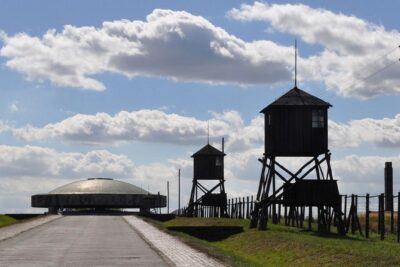
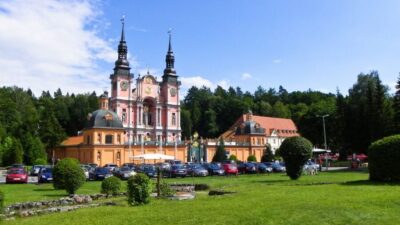

Jewish Warsaw, Ghetto & POLIN: the other contenders.
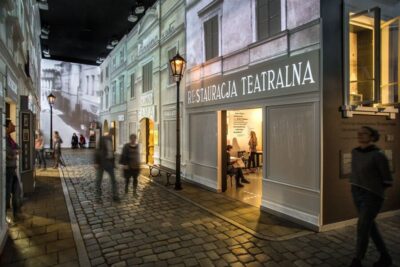 ★ 4.7POLIN Museum of the History of Polish Jews TicketFrom $121,142 reviews
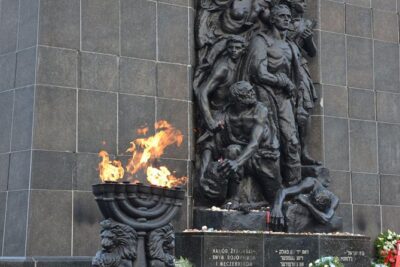 ★ 5.0Private Tour: Warsaw’s Jewish Heritage by Retro FiatFrom $108208 reviews
 ★ 4.8Ghetto, Jewish Cemetery & POLIN Museum Private TourFrom $112132 reviews
 ★ 4.7Jewish Heritage & Holocaust Walking TourFrom $20119 reviews
 ★ 5.0Tour of the Warsaw GhettoFrom $102119 reviews
 ★ 5.0Historical Walking Tour of Jewish WarsawFrom $2868 reviews
 ★ 4.9Jewish Heritage 4-Hour Private TourFrom $4226 reviews
 ★ 4.92-Hour Tour of Daily Life in the Ghetto WarsawFrom $7626 reviews
Browse the lists this tour appears in