

Reviewed · JEWISH WARSAW, GHETTO & POLIN
Warsaw: Jewish Heritage & Holocaust Walking Tour
Warsaw’s Jewish story is walked, not read. This 150-minute route strings together the 600-year history of Warsaw’s Jewish community and then centers on the Big Ghetto and the Warsaw Uprising sites, using old photos and maps to make the timeline feel tangible. What I like most is the way the guide keeps shifting your focus from everyday life to wartime reality, and the way the route uses contrasts like pre-war images versus places remade by conflict. One consideration: it’s a serious, mostly outside walk, so weather and time of day can make comfort tricky, especially in colder months or if your group runs larger.
You’ll meet at Castle Square by Sigismund’s Column and look for a guide holding an orange umbrella with a British flag. I also love how the tour is led in clear English by guides such as Magda, Gawel, Martin, Albert, Goska, and Peter Hardy, who are praised for being organized, personable, and ready to answer questions in a steady, compassionate way. If you’re walking with a wheelchair, you’ll be glad it’s listed as wheelchair accessible, and you can still get a lot out of it without rushing.
In This Review
- Key highlights you should know
- Castle Square Meeting Point and How the Walk Gets Started
- 150 Minutes That Covers Medieval to Holocaust Warsaw
- From Medieval Jewish Quarter to Jurydki and the Haskalah
- Using Pre-War Photos to Understand Daily Life
- Big Ghetto Walls, Treblinka Deportations, and the Human Cost
- Warsaw Uprising Places and How War Rewrote These Streets
- Price and Comfort: Is $20 Good Value?
- Should You Book This Walking Tour of Warsaw’s Jewish Heritage?
- FAQ
- Where does the tour meet?
- How long is the Warsaw Jewish Heritage & Holocaust Walking Tour?
- How much does it cost?
- What language is the tour in?
- Is the tour wheelchair accessible?
- What should I bring?
- Are entrance fees included?
- Can I cancel for a full refund?
- Is smoking allowed during the tour?
Key highlights you should know
- Castle Square meeting point: easy starting point by Sigismund’s Column, with an orange umbrella and British flag
- A real timeline, not trivia: from medieval origins through jurydki settlements and the Haskalah
- Old photographs used on the street: pre-war views set against the shapes of today’s Warsaw
- More than half on the Holocaust: Ghetto creation, conditions behind the wall, deportations to Treblinka
- Warsaw Uprising focus: you’ll visit major places connected to the uprising within the Ghetto area
Castle Square Meeting Point and How the Walk Gets Started
This tour begins in a spot that’s easy to find and hard to forget: Castle Square, by Sigismund’s Column (the tall 20-meter column with a statue on top). It’s one of those places that acts like a visual anchor for Warsaw history—so when you start there, the rest of the walk feels like it’s moving forward with purpose, not wandering.
Your job at the start is simple: find the guide with an orange umbrella and a British flag. That detail matters more than you’d think. Reviews repeatedly describe guides as organized and on-time, which helps when you’re joining a tight 150-minute schedule and you’d rather not spend it hunting for the right group.
Before you set off, keep the practical stuff ready. Wear comfortable shoes—you’re covering enough ground that sore feet can steal your attention from the story. Bring water, and add a head covering or kippah if that’s your practice. Smoking isn’t allowed during the tour, so keep your plan nicotine-free.
One more practical note: the tour is English-language, and it’s designed as a guided walking format, not museum-style pacing. That means you’ll be learning by moving. The best results come when you let the street views do their job—when you glance up at buildings and then look down at the guide’s photos and maps to connect past and present.
Further into Jewish Warsaw, the Ghetto and POLIN
- Warsaw: POLIN Museum of the History of Polish Jews Ticket★ 4.7 · 1,142 reviews
- Private Tour: Warsaw’s Jewish Heritage by Retro Fiat★ 5.0 · 208 reviews
- Warsaw: Ghetto, Jewish Cemetery & POLIN Museum Private Tour★ 4.8 · 132 reviews
150 Minutes That Covers Medieval to Holocaust Warsaw
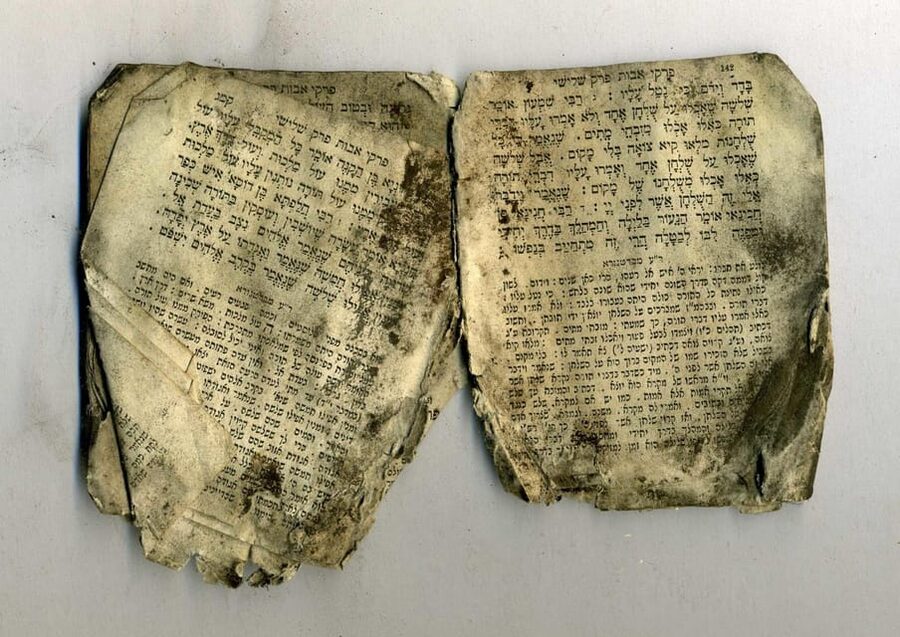
The first thing I’d tell you about expectations is the balance. This isn’t a quick tour of “a few important spots.” The structure is chronological, and it keeps expanding your context until the wartime chapters take over. You’re looking at a 600-year story—from medieval beginnings through later settlements—and then the Holocaust becomes the center of the tour, taking more than half of the time.
For you, that means two things. First, you’ll want enough emotional stamina to handle the weight of the material. Second, you’ll get a payoff that feels more meaningful than a site-only approach: you see how a community’s life formed over centuries, then how war crushed and shattered it.
A lot of the learning happens through visual aids. Guides often use photos and maps, and the key idea is contrast: you’re not just hearing that pre-war Jewish life existed—you’re shown what it looked like, then directed to how the same areas were reshaped by the war. That contrast is where the tour does its best work.
You’ll also see the route organized so you don’t get lost in dates. The story moves from origins and expulsions, to the idea of jurydki (Jewish settlement areas under the jurisdiction of Warsaw magnates), then to the Haskalah, or Jewish Enlightenment. Only after you’ve built that foundation does the tour pivot fully into the Ghetto.
From Medieval Jewish Quarter to Jurydki and the Haskalah
This tour starts at the beginning of the Warsaw Jewish story, not the beginning of World War II. In the early part of the walk, you focus on origins—how Polish Jewish life developed—and how the community took shape over time.
You’ll hear about life in the medieval Jewish quarter and the early disruptions, including references to the first expulsions. That part matters because it explains the push-and-pull behind where communities could live, work, and worship. It also helps you understand why later settlement patterns in Warsaw weren’t accidental.
Then the guide brings in the concept of jurydki. These were areas under the jurisdiction of Warsaw magnates—meaning not all neighborhoods were governed the same way. If you’ve ever wondered why cities feel like they have different rules in different blocks, jurydki is one of the clearest ways to grasp that idea in Warsaw’s Jewish history.
From there, the tour moves into the intellectual and social shift associated with the Haskalah (Jewish Enlightenment). You’re not just learning names and dates; you’re learning how attitudes and education changed what Jewish life looked like across time.
What I like about this approach is that it gives you something to hold onto during the later, darker chapters. When the tour reaches the Ghetto period, it doesn’t feel like history “starts over.” It feels like a system of long-term community life gets forced into a tiny, brutal space—because the groundwork has already explained how that community existed before.
Using Pre-War Photos to Understand Daily Life
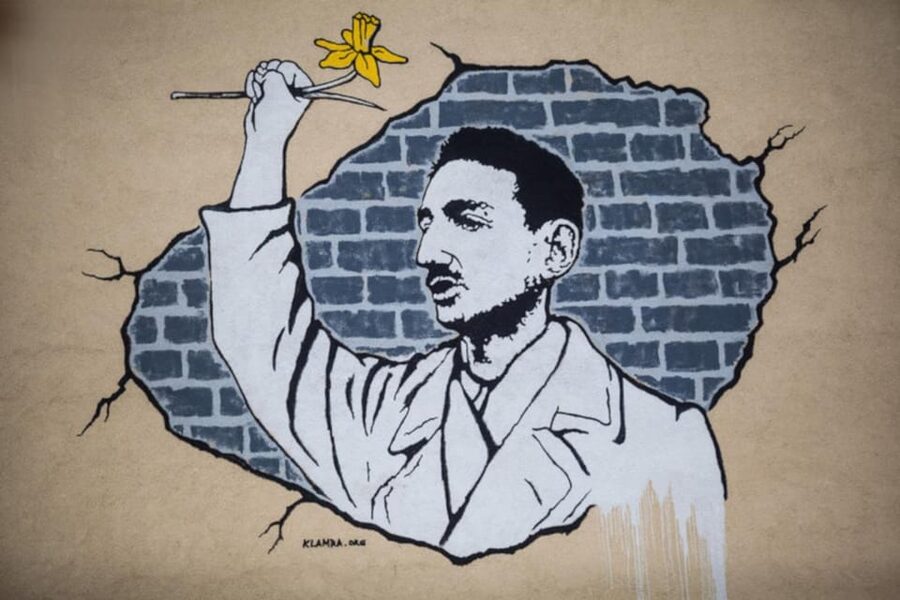
After the early timeline, the tour leans hard into a powerful technique: old photographs as a storytelling tool. You’ll see the 19th-century and pre-war Jewish district through images and then connect them to the streets and spaces around you.
This is more than a nice visual. For you, it changes the learning from abstract to personal. A photograph gives you everyday details—street scenes, people’s presence in public, signs of community life. Then the guide shows you how the war disrupted and erased parts of that everyday world.
One of the most valuable parts of this section is that the tour doesn’t treat the photos like museum objects. It treats them like evidence. The guide uses them to help you answer a key question: what did Warsaw Jewish neighborhoods feel like before the catastrophe?
If you’re the type who likes to ask why things changed, you’ll appreciate the structure. Many guides are praised for being willing to answer questions, and for keeping explanations fact-based and objective. That matters when you’re dealing with a period where history is sometimes oversimplified.
And yes, this is where you’ll likely notice how much effort the guide puts into clarity. Guides named in feedback—Magda, Gawel, Martin, Albert, and Goska—are repeatedly credited with clear English and a human, compassionate delivery, especially when the subject turns heavy. You’ll feel that tone most when the tour starts moving from “life before” to “what the war did to life.”
Big Ghetto Walls, Treblinka Deportations, and the Human Cost
Now comes the part that most strongly defines the tour: the Holocaust of the Warsaw Jews. The tour explains the creation of the Warsaw Ghetto, the conditions of life behind the wall, and the deportations to Treblinka death camp.
I’m going to be direct about how to approach this section. This isn’t a tour where you can skim or half-listen and still benefit. The guide’s job is to connect specific mechanisms—ghetto formation, restrictions, deportation routes—with the lived reality of those steps. If you want the tour to land, you’ll need to stay present.
What makes this part worthwhile is that it’s not just namedrop history. You’re guided to understand how the Ghetto wasn’t only a location—it was a policy and a system. Once you understand that, the later walk through uprising sites makes more sense because you’re seeing resistance in a context of escalating oppression.
You’ll also see how the tour uses the “then and now” method differently here. In earlier sections, photographs help you picture daily life. In the Ghetto section, the focus shifts to the physical and historical realities of enclosure and deportation. The same walking format becomes a kind of witness path—one where your eyes are doing work, not just your ears.
Because this is a large emotional topic, it can help to plan your day around it. If you’ve got another big museum visit right after, you might feel “news fatigue.” If you can, give yourself a calmer block afterward so your brain can process what you learned.
On foot through Warsaw: more guided walks



Warsaw Uprising Places and How War Rewrote These Streets
After the Holocaust chapter establishes the Ghetto’s formation and destruction, the tour turns to the Warsaw Ghetto Uprising. You’ll visit major places related to the uprising, and you’ll also get guided context for how resistance unfolded inside the Ghetto area.
This is often the moment when people start to remember why the tour insists on the chronological buildup. Resistance doesn’t appear out of nowhere. It emerges from desperation, identity, and a refusal to accept erasure—after years of worsening restrictions and terror.
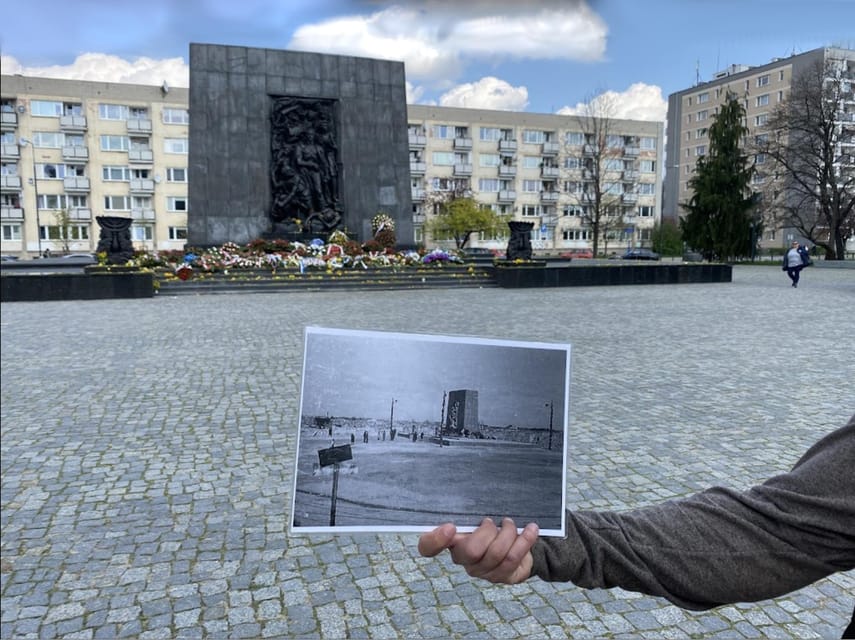
The tour also uses war contrast in a very practical way. You’ll spend time looking at spaces shaped by war and then connecting them to pre-war photographs you’ve already seen. That makes the idea of “rewriting” Warsaw feel concrete: not only did something terrible happen, but it also changed the way the city looks and how it can be remembered.
Some guides are specifically noted for adding warmth and a steady tone, even when talking about brutal facts. If you’re someone who needs information delivered without coldness, that approach can make the material easier to hold.
One real-world consideration: because the tour goes through a lot of exterior space, season matters. In winter, portions can feel cold and dim as time passes. If you’re traveling in December or you’re sensitive to the cold, plan for a heavier layer than you think you need.
Price and Comfort: Is $20 Good Value?
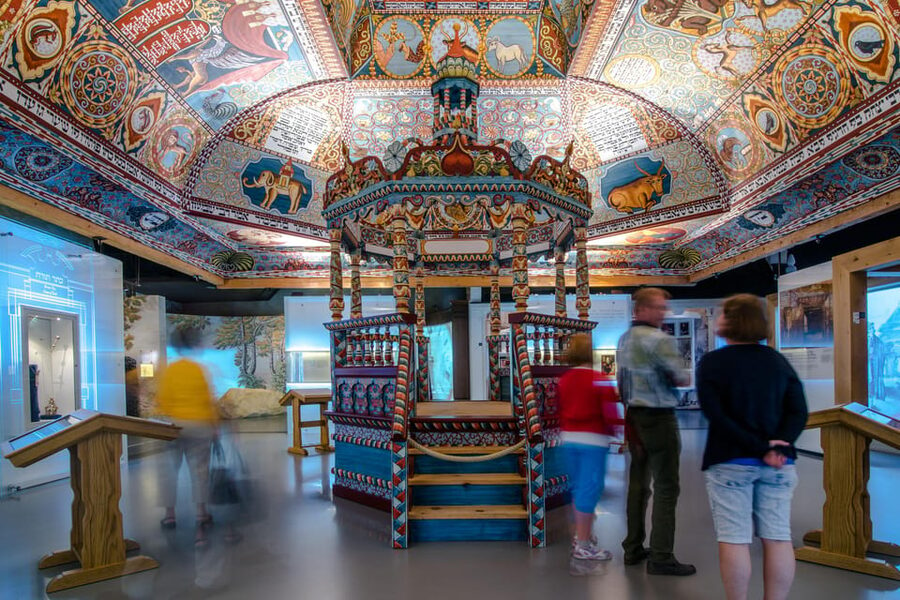
At $20 per person for 150 minutes, the price is positioned as a value option—especially because it includes a professional guide and the walking format. The tour isn’t leaning on entrance tickets (there are no entrance fees included, so you’re not paying extra for entry), which keeps the total cost easier to predict.
What you’re paying for is human explanation: the guide’s ability to stitch together centuries of change and then focus in on the Holocaust and the uprising sites, using photos and maps along the way. At this length, you’re not buying a quick overview. You’re buying structured context delivered in English.
Comfort-wise, make the math work for you. Bring comfortable shoes because you’ll be on your feet for the full run time, and bring water because learning + walking + cold weather can catch you off guard. A head covering/kippah is listed as something you should bring, so don’t show up unprepared if that matters to you.
Group size can vary. One review mentioned a larger group (around 30), which can reduce personal attention and make it harder to hear in windy or noisy outdoor sections. If you strongly prefer small-group Q&A energy, look for the smallest available departure when you can.
Should You Book This Walking Tour of Warsaw’s Jewish Heritage?
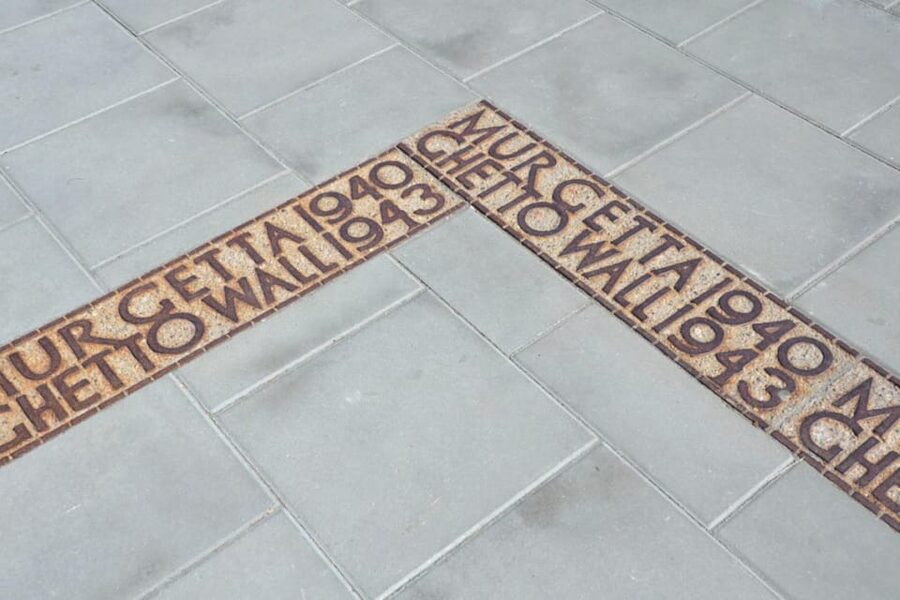
I think you should book this tour if you want a structured, street-level understanding of Warsaw’s Jewish past—starting centuries back and then focusing on the Holocaust and the Warsaw Ghetto Uprising. The tour’s biggest strength is that it doesn’t treat wartime history as an isolated chapter. It builds the background, then uses photographs and maps to connect what you’re seeing now with what existed before the catastrophe.
You might skip it if you want something lighter, more casual, or shorter. Since the Holocaust content takes more than half the tour time, it’s not a good fit if you’re looking for a quick cultural sampler. Also, it’s not suitable for children under 10, so families with younger kids should plan something else.
If you do book, I’d recommend you go in with a plan: wear layers, bring water and shoes that won’t punish you, and give yourself time afterward to decompress. And if this is a guide you feel genuinely helped you understand the material, tipping is worth considering—one note shared with you is that a large portion of the payment goes to broker/agency costs and taxes, so your tip is a direct way to support the person leading the story.
FAQ
Where does the tour meet?
It meets in Castle Square, by Sigismund’s Column. Look for a guide holding an orange umbrella with a British flag.
How long is the Warsaw Jewish Heritage & Holocaust Walking Tour?
The duration is 150 minutes.
How much does it cost?
The price is $20 per person.
What language is the tour in?
The tour is in English, with a live guide.
Is the tour wheelchair accessible?
Yes, the tour is listed as wheelchair accessible.
What should I bring?
Bring comfortable shoes, a head covering or kippah, and water.
Are entrance fees included?
No. Entrance fees to attractions are not included.
Can I cancel for a full refund?
Yes. There is free cancellation up to 24 hours in advance for a full refund.
Is smoking allowed during the tour?
No. Smoking is not allowed.
More Tours in Warsaw
- Warsaw: Old Town Highlights Walking Tour in English
★ 4.7 · 1,516 reviews - Warsaw: City Sightseeing Hop-On Hop-Off Bus Tour
★ 3.6 · 1,415 reviews - Warsaw: Polish Vodka Museum Tour with Tasting
★ 4.6 · 788 reviews - 3-Hour Guided Cycling Tour of Warsaw
★ 4.9 · 624 reviews
More Tour Reviews in Warsaw
- Warsaw: Chopin Concert in the Old Town
★ 4.8 · 2,287 reviews - Warsaw: Traditional Galar Cruise on The Vistula River
★ 4.6 · 1,640 reviews - Warsaw: Old Town Highlights Walking Tour in English
★ 4.7 · 1,516 reviews - Warsaw Concert: Chopin – Painted by Candlelights with Wine
★ 4.8 · 1,442 reviews
More of Jewish Warsaw and POLIN
- Warsaw: POLIN Museum of the History of Polish Jews Ticket
★ 4.7 · 1,142 reviews - Warsaw: Jewish History Guided Walking Tour in English
★ 4.7 · 324 reviews - Private Tour: Warsaw’s Jewish Heritage by Retro Fiat
★ 5.0 · 208 reviews - Warsaw: Ghetto, Jewish Cemetery & POLIN Museum Private Tour
★ 4.8 · 132 reviews
Fresh on the site: newer Warsaw reviews


Jewish Warsaw, Ghetto & POLIN: the other contenders.
 ★ 4.7POLIN Museum of the History of Polish Jews TicketFrom $121,142 reviews
 ★ 4.7Jewish History Guided Walking Tour in EnglishFrom $26324 reviews
 ★ 5.0Private Tour: Warsaw’s Jewish Heritage by Retro FiatFrom $108208 reviews
 ★ 4.8Ghetto, Jewish Cemetery & POLIN Museum Private TourFrom $112132 reviews
 ★ 5.0Tour of the Warsaw GhettoFrom $102119 reviews
 ★ 5.0Historical Walking Tour of Jewish WarsawFrom $2868 reviews
 ★ 4.9Jewish Heritage 4-Hour Private TourFrom $4226 reviews
 ★ 4.92-Hour Tour of Daily Life in the Ghetto WarsawFrom $7626 reviews
Browse the lists this tour appears in