
Reviewed · WALKING TOURS
Warsaw Private Walking Tour
Old Town looks best when you walk it, not when you rush through it. This private Warsaw walking tour is built for exactly that: key landmarks close together, smart pacing, and the bonus of door-to-door pickup so you don’t waste time getting started. I like tours that help you get your bearings fast, and this one does it with a guided route through Warsaw’s most important sites.
Two things I really like: you get a dedicated private guide who can tailor the walk to what you want, and the tour design is practical—many parts of Old Town are much easier on foot than by car or bus. One possible drawback to keep in mind: a few stops involve optional entries, so you’ll want to be ready for a possible entrance fee (where you choose to go inside).
The bottom line: if you want a guided, efficient walk through Warsaw’s core neighborhoods—with enough flexibility to adjust the focus—this is a strong way to spend half a day.
In This Review
- Key things to know before you go
- Door-to-door logistics that actually matter in Warsaw
- How this Old Town walk gives you context, not just photos
- Royal Castle and Old Town streets you’ll want to linger in
- Rynek Starego Miasta: the square that keeps pulling you back
- Warsaw Barbican (Barbakan Warszawski): fortification you can actually stand near
- University Quarter to Holy Cross Church: a more reflective pace
- University of Warsaw and the Academy of Fine Arts zone
- Holy Cross Church (Kosciol Swietego Krzyza) and Chopin’s heart
- Copernicus and the presidential area: big-state Warsaw
- Nicolaus Copernicus monument: when science meets the street
- Presidential Palace: the weight of power in plain sight
- Warsaw Uprising Monument and New Town: where the story turns serious
- Flexibility: customize the walk instead of just following a script
- How the entrance fees actually work (and when you can skip them)
- Price and value: is $168.58 per person fair?
- Best match: who should book this tour?
- Should you book this Warsaw private walking tour?
- FAQ
- How long is the Warsaw private walking tour?
- Is this tour private?
- Do you offer door-to-door pickup and drop-off?
- What languages is the guide available in?
- Are admission tickets included?
- Is there an extra fee for entrances?
- Can the tour be customized or redirected?
- What other tours can this be combined with?
- What is the cancellation window?
Key things to know before you go
- Door-to-door pickup and drop-off: meet you in Warsaw center and handle the logistics for you.
- A private, multi-language guide: tours are offered in English (and also Spanish, German, French, Italian).
- Old Town, walked: Royal Castle area, Old Market Square, and the City Walls/Barbakan zone.
- Optional entries may add cost: some tickets are listed as free or included, and there’s a 40 PLN/person entrance fee where possible and wanted.
- Flexible route options: you can customize on request, including a possible focus on the Jewish parts of the city.
- Often paired with other tours: it commonly fits into a same-day plan with bigger add-ons like Treblinka or a Chopin-focused experience.
Door-to-door logistics that actually matter in Warsaw
Warsaw can feel deceptively big. So I appreciate tours that remove friction up front. Here, you choose where you want to be picked up in Warsaw center, and you get door-to-door transfer at both start and finish. That means you’re not hunting for a meeting point after a long train ride, or timing trams around a deadline.
The tour also runs about four hours. That’s long enough to feel like you saw Warsaw, but short enough to keep the rest of your day open for other plans. It’s also a private activity, meaning it’s only your group—so the guide can set the pace and answer questions without working around a larger crowd.
One detail worth noting: it’s frequently booked. The average booking window is about 50 days in advance, so if you’re traveling in a busy season or on a tight schedule, don’t wait until the last minute.
On foot through Warsaw: more guided walks
- Warsaw: Old Town Highlights Walking Tour in English★ 4.7 · 1,516 reviews
- Warsaw: Old Town Guided Walking Tour★ 4.9 · 599 reviews
- Half-Day Polish Food Walking Tour with Guide and Dinner★ 4.5 · 381 reviews
How this Old Town walk gives you context, not just photos
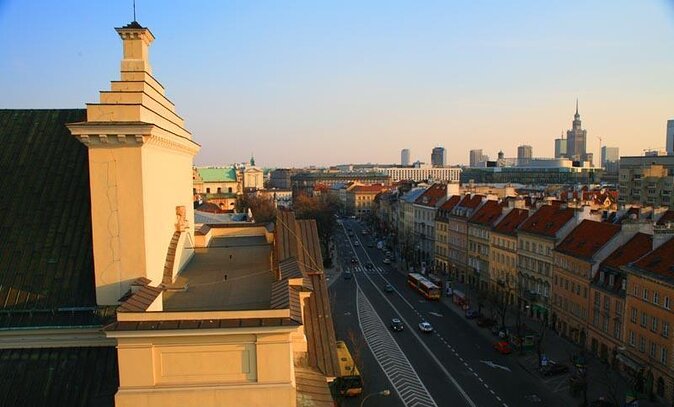
The heart of this tour is Warsaw’s Old Town area—where the city’s identity shows up in layers: monuments, restored spaces, and the street geometry that shapes how people moved through the city. The big win is that the route is designed for walking, which helps you notice details you’d miss if you only pass by.
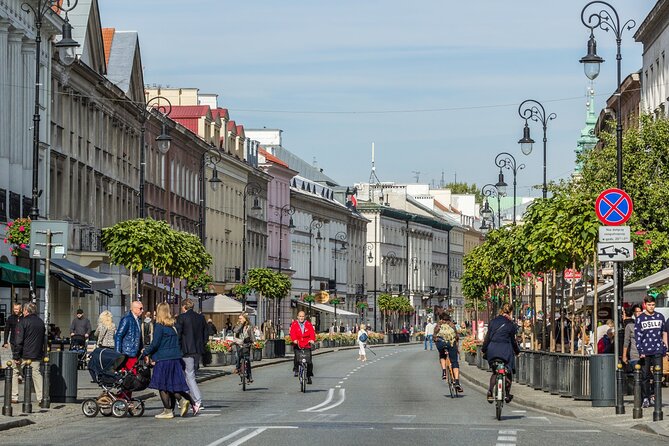
Another practical benefit: the sites on the route aren’t all easily reached by car or bus. By going on foot, you’re in the right pace for side streets, viewpoints, and those little “wait, look at that” moments near historic fortifications.
Royal Castle and Old Town streets you’ll want to linger in
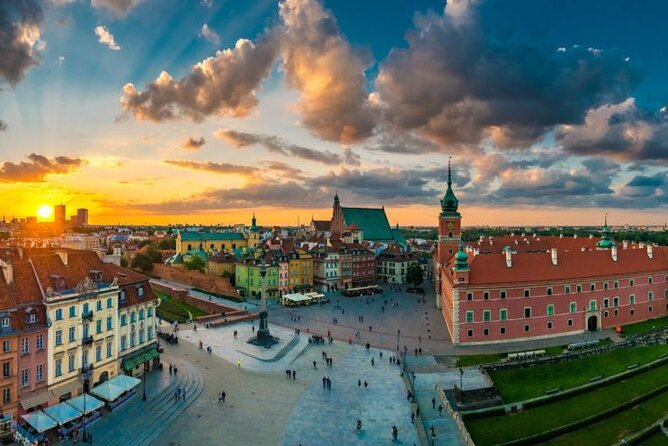
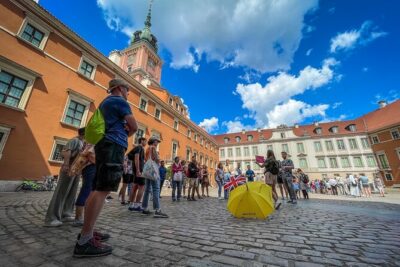
You start at The Royal Castle in Warsaw—one of the most recognizable anchors for the Old Town. From there, the walk connects into the classic Old Town cluster: Old Market Square, the City Walls, and the Barbakan area. Even when entries are listed as free or included, the real value is the guide’s ability to explain why these spaces matter together.
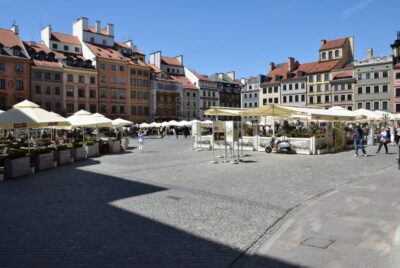
Old Market Square is more than an Instagram stop. It’s a scale model of Warsaw’s public life—where power, trade, and civic identity have always had to share the same ground. City walls and fortifications add the “how the city defended itself” layer, and they also help you understand why certain streets and passages exist where they do.
If you enjoy history you can see, this section is the core payoff. If you hate walking, you may still find it manageable because the tour is organized in short chunks rather than one long drag with no breaks in sight.
Rynek Starego Miasta: the square that keeps pulling you back
The tour specifically includes Rynek Starego Miasta (Old Town Market Square). This is the kind of place where the guide’s storytelling matters, because the square looks dramatic even without context—but with context, it turns into a living timeline.
You’ll also be within the same walking web that leads toward the castle area and the fortifications. That matters because Warsaw’s Old Town is best understood as a connected system, not as separate “random buildings.”
Warsaw Barbican (Barbakan Warszawski): fortification you can actually stand near
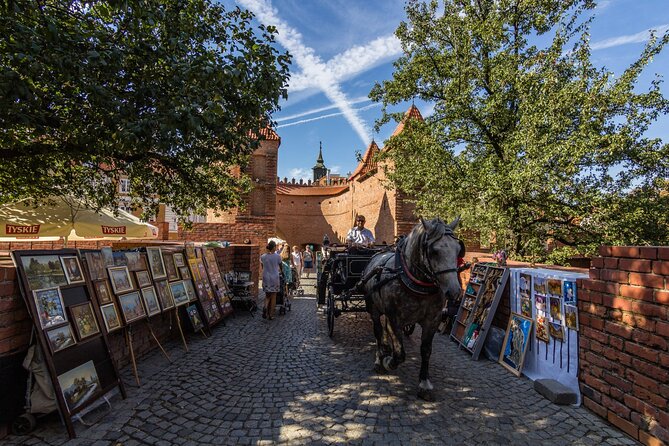
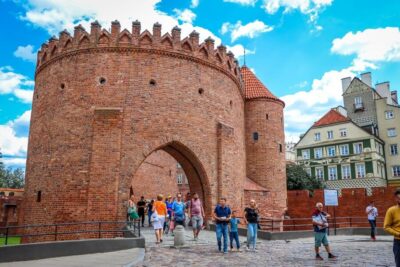
Next comes Warsaw Barbican (Barbakan Warszawski). It’s the sort of structure that’s easy to overlook if you’re rushing. But when you stop near it—when you’re physically close—you get a better sense of how defensive architecture guides movement through narrow corridors and controlled approaches.
If you want a guided walk that explains how people once navigated these spaces, this is a strong stop. The fortifications also help you connect the Old Town’s major sights to the city’s defensive logic, not just its political landmarks.
Just your group: more private Warsaw tours



University Quarter to Holy Cross Church: a more reflective pace
After the Old Town cluster, the tour shifts to stops that add a different tempo: education, art institutions, and a very personal connection to music history.
University of Warsaw and the Academy of Fine Arts zone
You’ll visit the University of Warsaw (Uniwersytet Warszawski), along with the Academy of Fine Arts. This portion isn’t about monuments only. It’s about how Warsaw’s intellectual life has shaped the city’s cultural identity.
Even without heavy museum-style entry fees, the setting gives you context. Universities and art schools tend to keep a city human-scale. They also make it easier to understand how ideas and creative work moved through Warsaw over time.
Holy Cross Church (Kosciol Swietego Krzyza) and Chopin’s heart
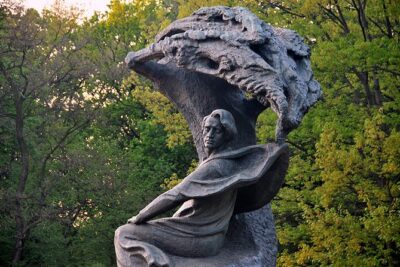
Then you’ll head to Holy Cross Church (Kosciol Swietego Krzyza). Here’s the standout detail: Chopin’s heart is buried there. That one fact changes the whole feel of the visit. This isn’t just another church exterior; it’s a place tied to one of Poland’s best-known composers, and that connection makes you want to slow down.
The stop is relatively short, so don’t expect a long sit-down experience. But it’s still a meaningful moment in the tour’s emotional arc—moving from civic spaces and fortifications to personal cultural memory.
Copernicus and the presidential area: big-state Warsaw
From sacred music space to science and then to government symbolism—this tour keeps widening the lens.
Nicolaus Copernicus monument: when science meets the street
You’ll see the Monument of Nicolaus Copernicus, including the Copernicus statue. This is a classic “you’re in the city, not just on a checklist” stop. Even if you don’t consider yourself a science-history person, the presence of Copernicus here signals how Warsaw places intellectual achievement into public space.
The stop is timed for a quick view and orientation. If you like reading the symbolism of monuments, you’ll get something out of this section even without extra ticketing.
Presidential Palace: the weight of power in plain sight
The tour also includes a look at the Presidential Palace. This isn’t meant to be a deep-dive museum stop. Instead, it works as a visual anchor for modern political identity, especially when you’ve already walked through historic civic centers earlier.
If you’re the type who likes understanding how eras of power overlap in a city layout, this is a helpful stop. It also gives you a natural break before you shift into 20th-century memory.
Warsaw Uprising Monument and New Town: where the story turns serious
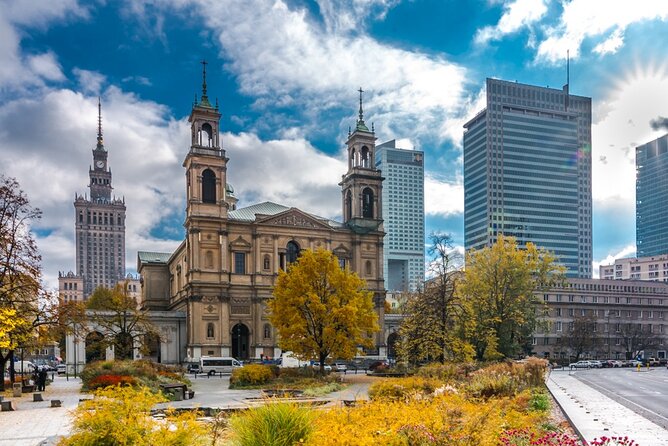
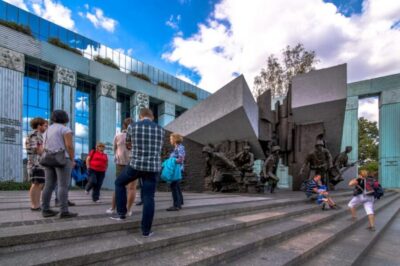
The tour ends with a move toward New Town, including the Warsaw Uprising Monument. This is where the walk becomes more than scenic. It becomes reflective, because the uprising sites are built around remembrance and survival.
The stop is short, but that’s part of the design. After hours of moving through historic spaces, you get a last concentrated moment that brings the city’s modern story into focus. For many people, that final emotional shift is the reason the tour feels complete.
Flexibility: customize the walk instead of just following a script
One of the best practical perks is that you can customize the tour on request. The tour notes that it can be modified and focused on the Jewish parts of the city, and that other places may be added or swapped in.
This is valuable because Warsaw has multiple “must-see” lanes. If you already plan to do a museum day later, you might prefer to use the walking tour to target neighborhood stories—especially if the Jewish cultural history is a priority for you. On the other hand, if your main interest is Old Town and major national landmarks, the default route already covers a lot of ground.
You also may find the tour works well if you’re traveling with mixed interests. One person wants castle and walls; another wants Chopin; someone else wants Copernicus and monuments. The format is designed so you can steer it rather than feeling stuck.
How the entrance fees actually work (and when you can skip them)
The tour includes some free or included admission based on the stop. It also clearly flags that there can be a 40 PLN/person entrance fee for entrances where possible and wanted.
Here’s the practical way to think about it: you’re not forced into extra costs at every stop. The guide can help you decide what’s worth paying for during your time window. If you’d rather focus on exteriors and walking context, you can likely keep extra fees down.
If you do want inside access at select places, plan for that 40 PLN/person possibility. It’s not a dealbreaker, but it’s smart to treat it like a variable in your budget rather than an afterthought.
Price and value: is $168.58 per person fair?
At $168.58 per person for about four hours, this isn’t a bargain-basement walking tour. But value here comes from the combination of factors:
- Private format: it’s only your group.
- Door-to-door pickup and drop-off: that saves time and removes hassle.
- Multi-language guide: the guide is part of what you’re paying for—stories, connections, and the ability to handle custom requests.
- Flexible stops: you might not always follow the exact same route as the standard plan, depending on what you ask for.
For people who hate wasting half a day figuring out transport and meeting points, the pickup alone can feel worth it. If you’re traveling solo or as a small group, compare the per-person price to the cost of taxis and individual entrance fees you’d pay while trying to DIY the route. You’ll often find this sits in a reasonable middle ground for a private guided experience.
Best match: who should book this tour?
This tour is a good fit if you:
- want a half-day plan that covers the classic Old Town core plus a few big landmark stops
- like guides who can connect sites into a story, not just point and move on
- care about personalization (including a possible focus on Jewish parts of the city)
- value getting to the start point easily with door-to-door pickup
It’s also a strong choice if you’re juggling multiple tours in one day. This one is often combined with bigger add-ons like Warsaw tour by car, Treblinka, or Chopin-focused experiences. It gives you Warsaw context early, then lets you go deeper elsewhere later.
Should you book this Warsaw private walking tour?
I’d book it if you want a guided route that respects your time. The pickup, the private pacing, and the mix of Old Town, culture (including the Chopin heart connection), science, and remembrance add up to a well-balanced orientation tour.
Don’t book it if you’re only looking for a fast self-guided checklist and you hate walking. The value here comes from context and flow, not from speed or minimal effort.
FAQ
How long is the Warsaw private walking tour?
It lasts about 4 hours (approx.).
Is this tour private?
Yes. It’s a private activity, and only your group participates.
Do you offer door-to-door pickup and drop-off?
Yes. Pickup and drop-off are offered door-to-door, with the pickup location set by you in Warsaw center.
What languages is the guide available in?
The guide is offered in English, and also Spanish, German, French, and Italian.
Are admission tickets included?
Some admissions are listed as free or included at specific stops, but there may be additional entrances where possible and wanted.
Is there an extra fee for entrances?
If you choose entrances where possible and wanted, there is a 40 PLN per person entrance fee.
Can the tour be customized or redirected?
Yes. The route can be modified on request, including a possible focus on Jewish parts of the city, and other places may be visited additionally or instead.
What other tours can this be combined with?
On the same day, it’s often combined with other Warsaw options such as a tour by car, Treblinka, Chopin’s tour, or others.
What is the cancellation window?
You can cancel for a full refund up to 24 hours before the experience start time.
More Guided Walks Around Warsaw
- Warsaw: Old Town Highlights Walking Tour in English
★ 4.7 · 1,516 reviews - Warsaw: Old Town Guided Walking Tour
★ 4.9 · 599 reviews - Half-Day Polish Food Walking Tour with Guide and Dinner
★ 4.5 · 381 reviews - Old Town Warsaw Walking Tour
★ 4.5 · 333 reviews
More Tours in Warsaw
- Warsaw: Old Town Highlights Walking Tour in English
★ 4.7 · 1,516 reviews - Warsaw: City Sightseeing Hop-On Hop-Off Bus Tour
★ 3.6 · 1,415 reviews - Warsaw: Polish Vodka Museum Tour with Tasting
★ 4.6 · 788 reviews - 3-Hour Guided Cycling Tour of Warsaw
★ 4.9 · 624 reviews
More Tour Reviews in Warsaw
- Warsaw: Chopin Concert in the Old Town
★ 4.8 · 2,287 reviews - Warsaw: Traditional Galar Cruise on The Vistula River
★ 4.6 · 1,640 reviews - Warsaw: Old Town Highlights Walking Tour in English
★ 4.7 · 1,516 reviews - Warsaw Concert: Chopin – Painted by Candlelights with Wine
★ 4.8 · 1,442 reviews
Fresh on the site: newer Warsaw reviews


Walking Tours: the other contenders.
 ★ 4.7Old Town Highlights Walking Tour in EnglishFrom $261,516 reviews
 ★ 4.9Old Town Guided Walking TourFrom $13599 reviews
 ★ 4.5Half-Day Polish Food Walking Tour with Guide and DinnerFrom $95381 reviews
 ★ 4.5Old Town Warsaw Walking TourFrom $26333 reviews
 ★ 4.7Jewish History Guided Walking Tour in EnglishFrom $26324 reviews
 ★ 4.7World War 2 in Warsaw walking tour in EnglishFrom $20237 reviews
 ★ 4.7Jewish Heritage & Holocaust Walking TourFrom $20119 reviews
 ★ 4.8Old and New Town Private Walking TourFrom $16116 reviews
Browse the lists this tour appears in