
Reviewed · JEWISH WARSAW, GHETTO & POLIN
Historical Walking Tour of Jewish Warsaw
Ghetto Warsaw is still written into the streets. This 3-hour walk threads together Jewish Warsaw and WWII-era reality through the spots you can still stand beside today, led by a guide and kept to a maximum of 10 people. You’ll get an orderly route with visual aids, so you don’t just see stone and brick—you understand what you’re looking at.
I especially like two things: the way the tour links everyday places to the ghetto story, and the heavy use of maps/photos/visuals that make each stop click. The Umschlagplatz segment alone is powerful because you’re given the numbers and the destination story, not just a vague “history happened here.”
One drawback to plan for: this is a long walk on uneven surfaces, so if walking long distances tires you, you may feel it by the end. Also, Warsaw’s ghetto buildings are mostly gone, so the route focuses on what survived and what can be traced through memorials.
In This Review
- Key highlights you can plan around
- Jewish Warsaw in 3 hours: what this walk is really for
- Meeting at Sienna 53 and the walking pace you should plan for
- Stop 1: Baguette Mi at Sienna 53—why the tour starts with food
- Stop 2: Nozyk Synagogue—one survivor you can still see
- Stop 3: A fragment of the ghetto wall—how to “read” what’s left
- Stop 4: The Warsaw Ghetto stretch—memorials, places, and hard context
- 1) Memorials aren’t decoration here
- 2) Ringelblum’s archive is a major clue
- 3) You’ll see how old and new Warsaw sit on top of each other
- 4) Miła 18 (Anielewicz’s Bunker) shifts the story toward resistance
- Stop 5: Laweczka Jana Karskiego—monuments tied to heroic struggle
- Stop 6: Umschlagplatz—where deportations began
- Price and value: why this walk costs about $29
- What to bring, and how to make the day feel manageable
- Who this tour suits best (and who should consider other options)
- Should you book this Jewish Warsaw walking tour?
- FAQ
- What’s the duration of the Historical Walking Tour of Jewish Warsaw?
- Where does the tour start and where does it end?
- Is the tour in English?
- Is there an admission fee for Nozyk Synagogue?
- What sites are included on the route?
- How big is the group?
- Do I need a mobile ticket?
- Is the tour suitable if I have limited mobility?
- What’s the cancellation policy?
Key highlights you can plan around
- Small group of up to 10 keeps the pace human and the questions possible
- Start at Sienna 53 at the corner of Jana Pawla II Avenue for an easy first step
- Only-war-surviving synagogue stop at Nozyk Synagogue (with a separate fee)
- Stop at Umschlagplatz tied directly to the transport story: 300,000 Jews to Treblinka
- Ghetto-wall remnant and major memorials help you “read” the area even without many original buildings
- Info pack + visual aids helps you connect the dots before and during the walk
Jewish Warsaw in 3 hours: what this walk is really for
This tour works best if you want more than a photo stop. The route is built to help you grasp how Warsaw’s Jewish community lived, how the ghetto system broke that life apart, and how resistance and deportation fit into the timeline.
You’re not looking at a neighborhood that still looks like 1940s Warsaw. The ghetto area was heavily destroyed, and that’s part of what makes this walk educational: you’ll learn to spot what remains—synagogues, monuments, wall fragments, and memorial markers—and then you’ll use the guide’s maps and context to reconstruct the missing parts in your mind.
The tone is serious. It’s also factual and grounded. If you come ready to listen and process, you’ll get a clearer sense of what happened, and why the street-level details still matter.
Further into Jewish Warsaw, the Ghetto and POLIN
- Warsaw: POLIN Museum of the History of Polish Jews Ticket★ 4.7 · 1,142 reviews
- Private Tour: Warsaw’s Jewish Heritage by Retro Fiat★ 5.0 · 208 reviews
- Warsaw: Ghetto, Jewish Cemetery & POLIN Museum Private Tour★ 4.8 · 132 reviews
Meeting at Sienna 53 and the walking pace you should plan for
The tour meets at Sienna 53 (00-820 Warszawa), right at the corner with Jana Pawla II Avenue. The end point is in front of the Umschlagplatz monument near Stawki 10 (00-178 Warszawa). That end location is convenient because it puts you near major transit lines for continuing your day.
Timing is simple: plan for about 3 hours (approx.). Even with frequent short moments to look and listen, you’re covering multiple locations in the former ghetto area. Cobblestones and uneven sidewalks are part of the experience, so I’d treat comfortable footwear as non-negotiable.
Also, this is not a “sit in a van and see it all” setup. It’s a walking tour, which means you’ll get the street feel of the area. In return, you’ll get context that makes the memorials and traces easier to place.
Stop 1: Baguette Mi at Sienna 53—why the tour starts with food
The meeting point area is connected to the tour’s opening stop at Baguette Mi / Banh mi bistro. You’ll start with a short introduction there—about five minutes—and then move on.
Why include a food spot at the start? It’s practical. You’re in the city, not in a museum hallway. Starting the walk in a normal Warsaw streetscape helps you get your bearings, and it sets up a contrast: later, the tour shifts from everyday Warsaw into the memory layers of the ghetto.
If you’re the type who likes to eat well during a walking day, this first stop also gives you a clue about where to grab something afterward. After the tour, you’ll have recommendations included in the info pack, so you’re not stuck guessing.
Stop 2: Nozyk Synagogue—one survivor you can still see
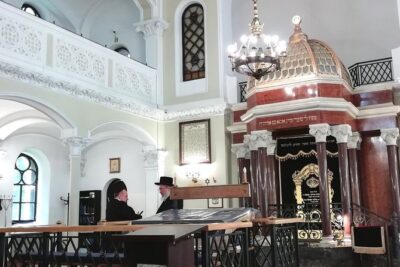
Next up is Nozyk Synagogue. The headline here is simple and important: it’s described as the only Warsaw synagogue that survived the war and remains today.
Two practical notes matter:
- The entry fee is not included. You’ll need about 20 PLN to go in.
- The stop is relatively short (around 10 minutes), so come prepared to take in the space efficiently.
What makes this stop valuable is the contrast with the rest of what you’ll see. Later stops focus on fragments and memorials because most original structures are gone. Nozyk gives you something physical and continuous—an actual surviving synagogue setting the emotional and historical tone for the rest of the walk.
Stop 3: A fragment of the ghetto wall—how to “read” what’s left
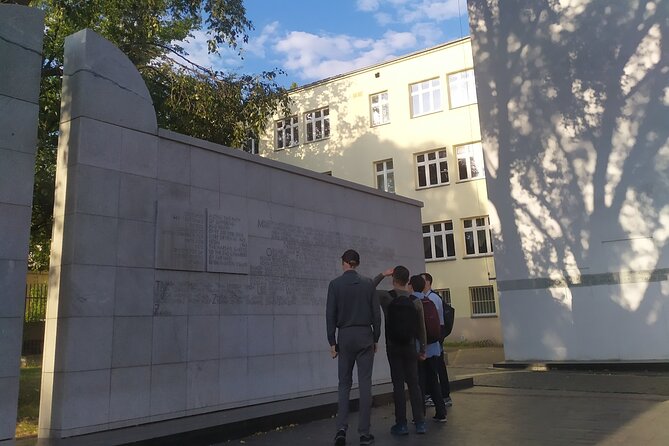
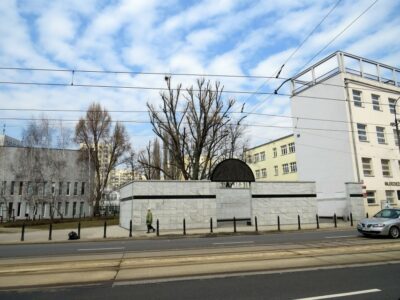
Then you’ll visit a fragment of the ghetto wall—one of the few remaining parts. It’s a small stop by time (about 15 minutes), but it’s big for understanding.
When the buildings are gone, your brain wants something solid to hold onto. A wall fragment does that. It marks where the ghetto boundary was, and it helps you visualize what it meant to live inside a controlled space.
Look at it like evidence. This isn’t a “random old wall.” It’s a remaining line drawn by policy, violence, and confinement—one reason the tour keeps it early enough for you to build a mental map.
On foot through Warsaw: more guided walks



Stop 4: The Warsaw Ghetto stretch—memorials, places, and hard context
This is the heart of the tour, and it’s the longest segment (about 2 hours 5 minutes). The stops here are designed to give you a stitched-together picture of the ghetto’s story across key sites.
You’ll see or pass key points tied to:
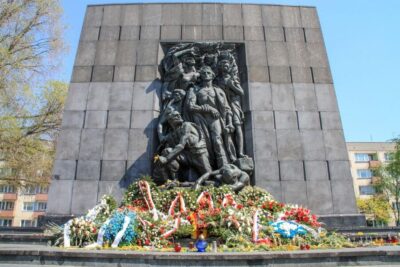
- the Jewish Ghetto memorial
- the courthouse on Solidarności Street
- the Muranów residential district
- the location of the discovery of Ringelblum’s archive
- the Church of St. Augustine
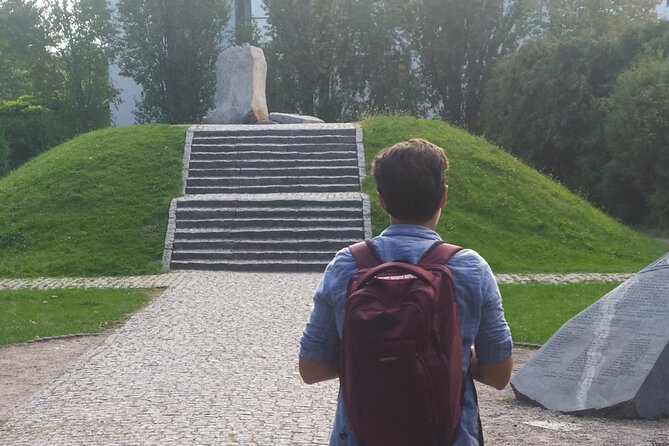
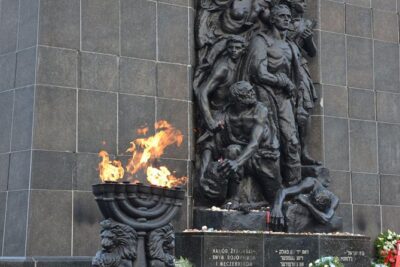
- the Heroes of the Jewish Ghetto memorial
- Miła 18 (Anielewicz’s Bunker)
A few things to keep in mind while you walk this section:
1) Memorials aren’t decoration here
These markers are there because whole communities were wiped out and surviving records were fragmentary. When you stand at a memorial, you’re standing at a point where the city agrees: this matters.
2) Ringelblum’s archive is a major clue
The tour flags the discovery location of Ringelblum’s archive. Even without museum time, this gives you a key idea: documentation existed, and people worked to preserve evidence and daily life accounts—so the story didn’t vanish completely.
3) You’ll see how old and new Warsaw sit on top of each other
The mention of Muranów and even the Church of St. Augustine helps show how Warsaw’s landscape kept evolving. The ghetto was carved into the city, and after the war, new layers came back—but memory markers keep the wartime geography visible.
4) Miła 18 (Anielewicz’s Bunker) shifts the story toward resistance
This stop matters because it doesn’t only describe deportation and victimization. It connects to armed resistance and leadership during the uprising era, with Anielewicz’s Bunker as a named focal point.
One practical tip: this section includes time for listening and short breaks. The pacing tends to stay steady, and the guide uses visual aids to help you keep up without feeling rushed.
Stop 5: Laweczka Jana Karskiego—monuments tied to heroic struggle
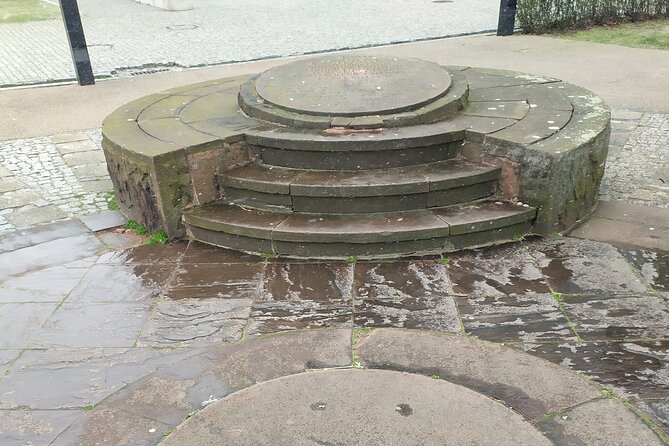
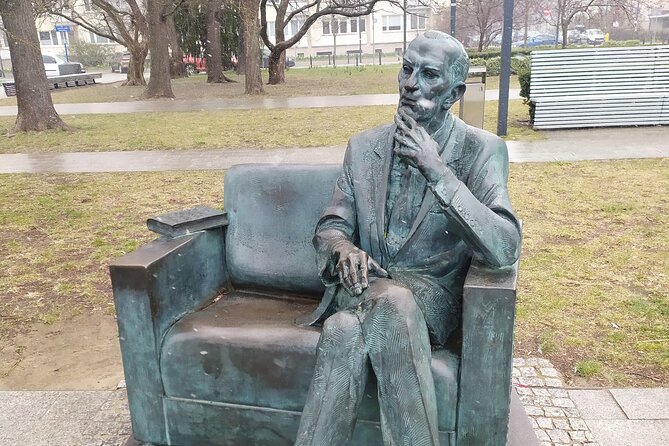
After the ghetto core, you’ll reach Laweczka Jana Karskiego. This part (about 15 minutes) focuses on monuments that remind you of the heroic struggle within the Warsaw Jewish Ghetto.
Jana Karski is often discussed in the context of reporting and rescue-era awareness. Here, the tour uses the monuments to keep the focus from drifting into abstract ideas. You’re pulled back to names, places, and the human fight to survive and to make the truth known.
Monuments can feel cold at first glance. The tour helps you read them. You’re not just looking at a sculpture; you’re learning what it’s tied to and why it’s placed where it is.
Stop 6: Umschlagplatz—where deportations began
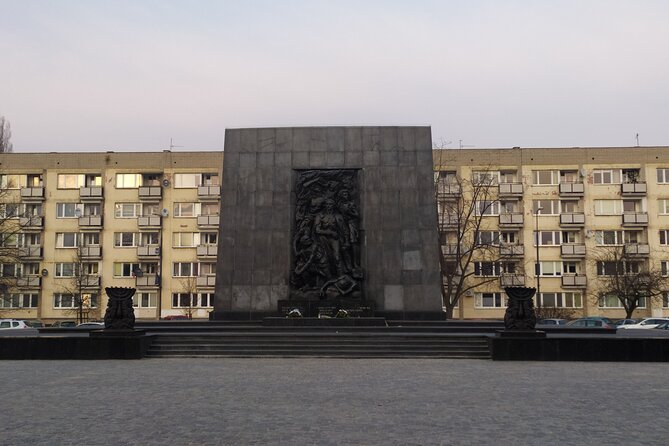
The final stop is Umschlagplatz—the place from where 300,000 Jews were transported to Treblinka.
This is the moment when the tour’s structure pays off. You start with a surviving synagogue, you mark the physical boundary with a wall fragment, you walk through ghetto-era memory points, and then you end with the deportation site. The route makes the timeline feel linear instead of scattered.
The stop is short (about 10 minutes), but it’s heavy. Even in a brief visit, you’ll get the key takeaway: this wasn’t just a rumor of what might happen—it was organized transfer to a specific extermination site.
Then the tour ends right in front of the Umschlagplatz monument, which is an efficient way to finish. You’re positioned to continue your day with transit close by, without having to backtrack through the ghetto area.
Price and value: why this walk costs about $29
At $28.87 per person, this tour sits in the budget-friendly range for a guided walking experience, especially one that covers a focused WWII geography for about 3 hours.
Here’s where the value really comes from:
- You get a full info pack with FAQ and useful links, plus recommendations on what else to do and where to eat or drink.
- You get visual aids during the walk (maps/photos and other presentation tools).
- Most stops are free of admission (with the clear exception of Nozyk Synagogue).
The one extra cost to know is the Nozyk Synagogue entrance fee of 20 PLN. If you want the surviving synagogue stop to be part of your experience, budget for it. It’s the only paid admission on the route, and it’s the most tangible surviving building you’ll see.
One more practical detail: this tour is booked in advance (on average around 46 days). That’s usually a sign that the route is popular and the schedule fills. If your dates are tight, it’s smart to reserve earlier rather than hoping for a same-week spot.
What to bring, and how to make the day feel manageable
Even if the route is well structured, your body still has to do the work. Here’s what I’d plan around:
- Sturdy shoes: cobblestones and uneven sidewalks are part of Warsaw.
- An umbrella: weather can shift fast, and you’ll be outside for most of the walk.
- A small water plan: the tour runs about three hours, and there’s a lot of standing and listening.
- If you have questions, ask early: smaller group size makes it easier to get clear answers instead of letting them pile up.
Also, it helps to know what is and isn’t on the walk. Because the ghetto buildings are mostly gone, this isn’t a stroll through intact pre-war streets. It’s a route through what remains and what can be traced. If you want still more detail, you’ll likely still want a museum day alongside this.
Who this tour suits best (and who should consider other options)
This is a great fit if you:
- want a structured way to understand Warsaw’s Jewish WWII geography
- enjoy walking with a guide who uses maps and visual aids
- care about seeing key memory points like Heroes of the Jewish Ghetto memorial and Miła 18
- prefer a smaller group (max 10) over big crowds
It’s less ideal if you:
- have trouble walking long distances or moving on uneven ground
- want mostly preserved buildings and streets rather than memorials and evidence traces
If you’re a serious history reader, you’ll likely appreciate the tour’s emphasis on named places and the link to Ringelblum’s archive. If you’re new to the topic, this walk gives you a framework so you can make sense of later reading and museum exhibits.
Should you book this Jewish Warsaw walking tour?
Book it if you want a focused, street-level way to understand Jewish Warsaw during WWII—ending at Umschlagplatz with the deportation number and destination story, and passing the surviving Nozyk Synagogue as a grounding point.
Pass or plan carefully if your main goal is scenery or if your walking limits are tight. This isn’t a light, casual stroll. It’s an educational walk with uncomfortable subject matter and real physical demand.
My practical suggestion: pair this tour with a museum visit on another day if your schedule allows. This walk helps you locate and interpret the city’s memory markers. A museum can then give you the deeper background and wider collection of artifacts and narratives.
If you can handle a steady 3-hour walk and you want the most meaningful, place-based overview of Jewish Warsaw, this is a strong choice.
FAQ
What’s the duration of the Historical Walking Tour of Jewish Warsaw?
It takes about 3 hours (approx.).
Where does the tour start and where does it end?
It starts at Sienna 53, 00-820 Warszawa and ends at the Umschlagplatz Monument (Stawki 10, 00-178 Warszawa). The tour ends in front of the Umschlagplatz monument.
Is the tour in English?
Yes, it’s offered in English.
Is there an admission fee for Nozyk Synagogue?
Yes. Entry to Nozyk Synagogue costs 20 PLN and is not included in the tour price.
What sites are included on the route?
You’ll see Nozyk Synagogue, a fragment of the ghetto wall, Warsaw Ghetto memorial sites including Miła 18 (Anielewicz’s Bunker), Laweczka Jana Karskiego, and Umschlagplatz.
How big is the group?
The tour has a maximum of 10 travelers.
Do I need a mobile ticket?
Yes, the tour uses a mobile ticket.
Is the tour suitable if I have limited mobility?
It’s not recommended if you have problems with walking long distances.
What’s the cancellation policy?
You can cancel for a full refund if you cancel at least 24 hours in advance of the experience start time. Free cancellation is available up to 24 hours before.
More Tours in Warsaw
- Warsaw: Old Town Highlights Walking Tour in English
★ 4.7 · 1,516 reviews - Warsaw: City Sightseeing Hop-On Hop-Off Bus Tour
★ 3.6 · 1,415 reviews - Warsaw: Polish Vodka Museum Tour with Tasting
★ 4.6 · 788 reviews - 3-Hour Guided Cycling Tour of Warsaw
★ 4.9 · 624 reviews
More Tour Reviews in Warsaw
- Warsaw: Chopin Concert in the Old Town
★ 4.8 · 2,287 reviews - Warsaw: Traditional Galar Cruise on The Vistula River
★ 4.6 · 1,640 reviews - Warsaw: Old Town Highlights Walking Tour in English
★ 4.7 · 1,516 reviews - Warsaw Concert: Chopin – Painted by Candlelights with Wine
★ 4.8 · 1,442 reviews
More of Jewish Warsaw and POLIN
- Warsaw: POLIN Museum of the History of Polish Jews Ticket
★ 4.7 · 1,142 reviews - Warsaw: Jewish History Guided Walking Tour in English
★ 4.7 · 324 reviews - Private Tour: Warsaw’s Jewish Heritage by Retro Fiat
★ 5.0 · 208 reviews - Warsaw: Ghetto, Jewish Cemetery & POLIN Museum Private Tour
★ 4.8 · 132 reviews
Fresh on the site: newer Warsaw reviews


Jewish Warsaw, Ghetto & POLIN: the other contenders.
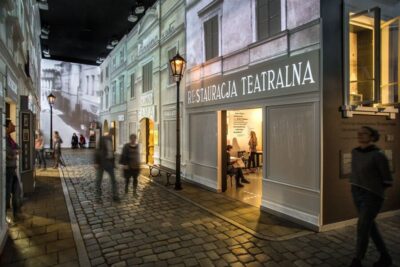 ★ 4.7POLIN Museum of the History of Polish Jews TicketFrom $121,142 reviews
 ★ 4.7Jewish History Guided Walking Tour in EnglishFrom $26324 reviews
 ★ 5.0Private Tour: Warsaw’s Jewish Heritage by Retro FiatFrom $108208 reviews
 ★ 4.8Ghetto, Jewish Cemetery & POLIN Museum Private TourFrom $112132 reviews
 ★ 5.0Tour of the Warsaw GhettoFrom $102119 reviews
 ★ 4.7Jewish Heritage & Holocaust Walking TourFrom $20119 reviews
 ★ 4.9Jewish Heritage 4-Hour Private TourFrom $4226 reviews
 ★ 4.92-Hour Tour of Daily Life in the Ghetto WarsawFrom $7626 reviews
Browse the lists this tour appears in