
Reviewed · JEWISH WARSAW, GHETTO & POLIN
Tour of the Warsaw Ghetto
Warsaw’s ghetto story lands fast. This 3-hour, English-language tour strings together key sites—synagogues that survived, street fragments, and memorial points—so the history feels concrete, not abstract. I especially like how the guide uses real locations and careful storytelling to connect daily life, resistance, and 1943 events.
My other big plus is the way the tour helps you see scale and layout, often with photos and maps that show what the neighborhood looked like before the war. One drawback to plan around: the tour does not include the main POLIN Museum exhibition, so if you want the full museum experience, you’ll need extra time after the walk.
In This Review
- Key Highlights You’ll Feel in the Streets
- Price and Time: What $102.78 Buys You in Warsaw
- How the Tour Starts: Próżna and the Meeting Point Reality
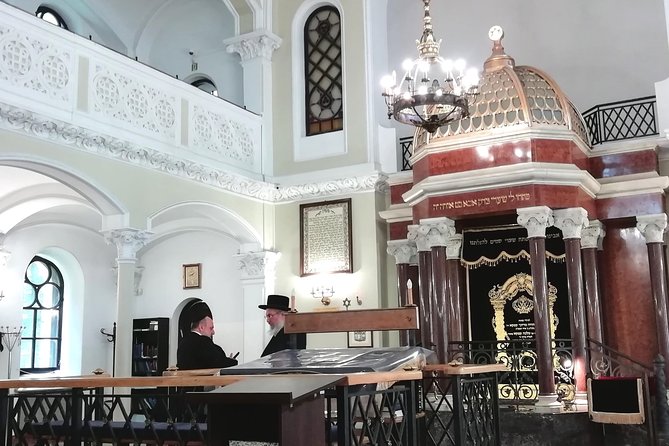
- Nożyk Synagogue: A Survivor Landmark Still in Use
- Próżna: Walking the Last Surviving Neighborhood Lines
- Waliców: Fragments of the Wall and the Weight of Placement
- Chłodna Street: The Bridge Symbol and the Pianist Connection
- Umschlagplatz: Where the Final Solution Became Action
- POLIN Museum Area: From the Uprising to Ghettohelden Memorial
- Pomnik Willy’ego Brandta: The Spot Connected to Kniefall
- Miła 18 Memorial: The Bunker Location and Resistance Under Pressure
- Pawiak Prison Museum: The Machinery of Imprisonment
- Getting the Most Out of a 3-Hour Ghetto Tour
- Who Should Book This Tour (And Who Might Prefer Something Else)
- Should You Book This Warsaw Ghetto Tour?
- FAQ
- How long is the Warsaw Ghetto tour?
- What does the tour cost?
- Is the tour offered in English?
- Is hotel pickup included?
- Where does the tour start and end?
- Do I need to pay for Nożyk Synagogue?
- Is the POLIN Museum main exhibition included during the tour?
- Will the tour visit the synagogue on Fridays, Saturdays, or Jewish holidays?
- Is there a lot of walking?
- Is this tour suitable for children?
Key Highlights You’ll Feel in the Streets
- Nożyk Synagogue: still operating, and one of the rare survivors that anchors the whole story
- Original street remnants around Próżna and Waliców: small fragments that make the ghetto feel real
- Chłodna Street and the bridge symbol linking the Small and Big Ghetto areas
- Umschlagplatz: the place tied to how the Nazi plan was carried out, not just “history talk”
- POLIN Museum memorial area: the setting that includes the Ghettohelden Memorial and Willy Brandt’s Kniefall moment
- Miła 18 and Pawiak Prison Museum: underground resistance and the machinery of imprisonment
Price and Time: What $102.78 Buys You in Warsaw
At about $102.78 per person for roughly 3 hours, this tour is priced like a guided, high-touch experience rather than a quick drive-by. You get hotel pickup from the city center (licensed city tour) and a route packed with major ghetto sites, which is a big deal in Warsaw where distances still matter.
It’s also a smart time saver. The format is mixed: about 2.5 hours on foot plus around 30 minutes using public transport (bus, tram, or metro). That mix helps you cover more ground without spending the whole day walking across the city.
One more practical note: admission isn’t fully included. Nożyk Synagogue costs €5 per person and is not included in the tour price.
Further into Jewish Warsaw, the Ghetto and POLIN
- Warsaw: POLIN Museum of the History of Polish Jews Ticket★ 4.7 · 1,142 reviews
- Private Tour: Warsaw’s Jewish Heritage by Retro Fiat★ 5.0 · 208 reviews
- Warsaw: Ghetto, Jewish Cemetery & POLIN Museum Private Tour★ 4.8 · 132 reviews
How the Tour Starts: Próżna and the Meeting Point Reality
You meet at Próżna 11 (00-107 Warszawa) and finish at the POLIN Museum area (Mordechaja Anielewicza 6, 00-157 Warszawa). Pickup works best when you’re staying in the city center—your guide meets you with a sign for PolinTours, either at the hotel reception or outside if you’re in an apartment.
This matters because it keeps you from wasting time figuring out transit and entrances right when you’re arriving. For a subject like the Warsaw Ghetto, you want your head in the story early, not hunting for the right street corner.
Nożyk Synagogue: A Survivor Landmark Still in Use
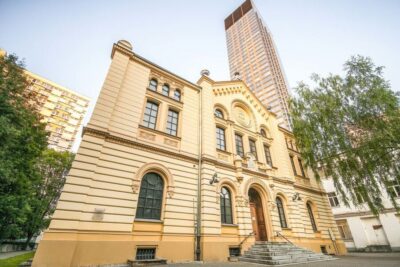
The tour begins at Nożyk Synagogue, described as the only synagogue that survived the Second World War and is still functioning today. This is not just a “cool building stop.” It’s your first anchor point for understanding what was destroyed—and what still remained.
Your time here is short (about 15 minutes), and admission isn’t included. On Friday afternoons (from 1 p.m.), Saturdays, and Jewish holidays, the tour runs without visiting the synagogue, so plan for that if you’re traveling around the weekend calendar.
Why I think this stop is powerful: it reminds you that Jewish life in Warsaw didn’t begin and end in 1943. Before the war, and even through survival, places like this held meaning that wasn’t only about tragedy.
Próżna: Walking the Last Surviving Neighborhood Lines
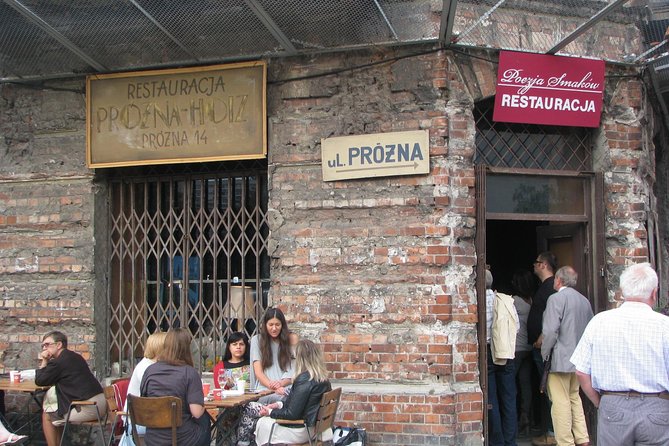
Next is Próżna, where you’ll explore some of the last surviving streets and neighborhood sections within the ghetto. This part of the route is brief (about 20 minutes), but it’s designed to give you something visual to hold onto while the guide explains what changed and what stayed.
You’re not seeing “a movie set.” You’re seeing real urban fabric, which makes the pacing feel more serious. The streets and building footprints help the guide explain how the ghetto worked in everyday life—where people moved, where pressure concentrated, and how confinement became normal.
Waliców: Fragments of the Wall and the Weight of Placement
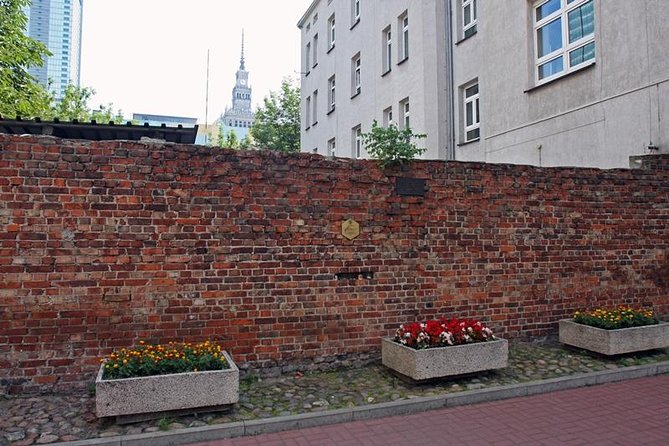
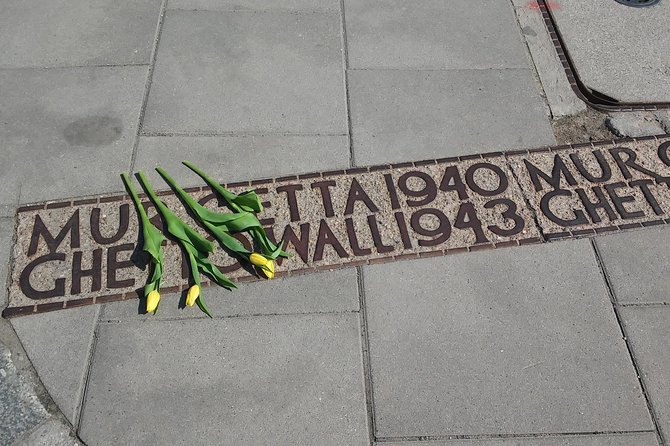
At Waliców, you’ll look at fragments of the ghetto wall and hear how the story fits together—its origins, daily routines, and the uprising of 1943. The stop is about 15 minutes, but wall remnants act like a shortcut to understanding the scale of confinement.
This is one of those moments where your brain catches up after the facts. When you see just a piece of something that once meant total restriction, you start to grasp what “limited space” meant when it was enforced by violence.




Chłodna Street: The Bridge Symbol and the Pianist Connection
At Chłodna Street, the tour focuses on the site where the connecting bridge between the Small and Big Ghetto was located. That bridge became a symbol—because a crossing point is never neutral. It’s where rules are tested, where movement is controlled, and where people’s lives get pulled into wider history.
You also get a literary link here through Władysław Szpilman, the title character connected to The Pianist by Roman Polański. It’s a helpful way to get people oriented, especially if you’ve seen the film. Just don’t let the cultural reference replace the reality of the streets under your feet.
Time on this stop is about 20 minutes, which is enough to connect symbol to place, not just name to monument.
Umschlagplatz: Where the Final Solution Became Action
Then comes Umschlagplatz, one of the most important emotional stops on the route. You’ll see the real places tied to how the Nazi plan was put into practice, and you’ll get the symbolic meaning explained—how bureaucracy and brutality worked together.
This stop is about 15 minutes, and most of the weight comes from what the guide connects: the transition from confinement to mass deportation. You’ll likely feel the starkness of how quickly history can shift gears when power decides it no longer needs human lives as individuals.
If you’re the type who likes to ask questions, this is the kind of stop where it helps. The guide’s structure tends to make the subject understandable without making it “easy.”
POLIN Museum Area: From the Uprising to Ghettohelden Memorial
The tour shifts into the era of the Warsaw Ghetto uprising at POLIN Museum of the History of Polish Jews. This is a key theme here: not only what happened, but why people chose armed resistance in the face of near-certain destruction.
Your guide also explains the symbolism around the Ghettohelden Memorial and the moment connected to Willy Brandt’s Kniefall, along with how the museum area functions as a remembrance landscape. Your time here is short (about 15 minutes), and it sets you up for what the museum can offer if you choose to go deeper.
One important planning point: the tour does not include the main exhibition inside POLIN Museum. The recommendation is to use audio guides (available in German) and allow about 2.5 hours for a proper visit. If you want the full picture, treat the walking tour as the “map,” and POLIN’s main exhibit as the “deep reading.”
Pomnik Willy’ego Brandta: The Spot Connected to Kniefall
After POLIN Museum, you stop at Pomnik Willy’ego Brandta, the point tied directly to Willy Brandt’s famous act of kneeling. This is only about 10 minutes, but it’s meaningful because it compresses an international moment of remembrance into a specific Warsaw location.
It also changes your perspective. Up to this point, you’ve been hearing about local suffering and local choices. This stop shows how the world later responded—sometimes late, but with lasting impact.
Miła 18 Memorial: The Bunker Location and Resistance Under Pressure
At Memorial at Mila 18 (Miła Street 18), you’ll see the former location of a bunker and learn the eventful history connected to it. The time here is about 10 minutes, and the point isn’t to overwhelm you with details. It’s to help you picture where people hid, planned, and tried to endure.
This is the kind of stop where the guide’s wording matters. You’ll get a sense that the ghetto wasn’t only a place of waiting. It was also a place where people acted, even when success was unlikely.
Pawiak Prison Museum: The Machinery of Imprisonment
The last major stop is Pawiak Prison Museum, where you learn more about Pawiak Prison. It’s about 10 minutes in this tour format, but it works as a final thematic piece: confinement, detention, and the system that enabled mass violence.
Even if you know the basic outline of WWII, this stop can add texture. It helps you understand that the ghetto wasn’t an isolated disaster. It was connected to networks of imprisonment and deportation across the region.
Getting the Most Out of a 3-Hour Ghetto Tour
This route is packed, so do yourself one favor: wear comfortable shoes and expect to be on your feet for much of the time. The itinerary hits multiple sites across the ghetto footprint, and the guide’s job is to connect them fast—but clearly.
Also, bring the right mindset. This is a subject with heavy emotional content, and the tour is described as not suitable for children. If you’re sensitive to atrocities and want the pace to feel respectful, that’s exactly the tone this format is built for.
If you like learning with visuals, you’ll probably appreciate the guide’s use of maps and historical photos to reconstruct the neighborhood’s layout. Seeing before-and-after helps you understand how dramatically the city was reshaped.
Who Should Book This Tour (And Who Might Prefer Something Else)
This is a great fit if you want one focused way to learn the Warsaw Ghetto story through real locations rather than only museum panels. It also suits you if you’re short on time in Warsaw but still want the route to feel organized and chronological, from surviving landmarks to deportation sites and remembrance points.
It’s less ideal if you’re traveling with kids, since the tour is not suitable for children. It may also feel like a lot if you prefer lighter historical topics, because the subject matter is intense and the stops are emotionally direct.
If you’re a “museum first” person, know that the tour ends at POLIN Museum but doesn’t include the main exhibition. You can absolutely pair this with extra museum time, and doing both is often the best use of a day.
Should You Book This Warsaw Ghetto Tour?
I think this is a strong choice if you want structure, context, and real places in one session. The hotel pickup, English guidance, and the emphasis on specific sites like Nożyk Synagogue, Umschlagplatz, Miła 18, and the Willy Brandt memorial moment make it efficient and meaningful.
If you can commit to extra time afterward, it becomes even better. Plan to visit POLIN’s main exhibition on your own, because that’s where you’ll likely want to slow down (audio guides are recommended, and about 2.5 hours is the suggested window).
One last decision helper: people book this tour about 64 days in advance, which is a clue that it’s popular and schedules can fill. If your travel dates are firm, booking early saves stress.
FAQ
How long is the Warsaw Ghetto tour?
It’s about 3 hours (approx.).
What does the tour cost?
The price is $102.78 per person.
Is the tour offered in English?
Yes. The tour is offered in English.
Is hotel pickup included?
Yes. Pickup is offered from city-center hotels. Your guide meets you with a sign for PolinTours, either at hotel reception or outside if you’re staying in an apartment.
Where does the tour start and end?
It starts at Próżna 11, 00-107 Warszawa and ends at Mordechaja Anielewicza 6, 00-157 Warszawa, at the POLIN Museum area.
Do I need to pay for Nożyk Synagogue?
Yes. Nożyk Synagogue admission is €5.00 per person, and it is not included in the tour price.
Is the POLIN Museum main exhibition included during the tour?
No. During the tour there is no visit to the main exhibition. The recommendation is to visit the main exhibition separately with audio guides (German available) and allow about 2.5 hours.
Will the tour visit the synagogue on Fridays, Saturdays, or Jewish holidays?
On Friday afternoons (from 1 p.m.), Saturdays, and Jewish holidays, the tour is conducted without visiting the synagogue.
Is there a lot of walking?
Yes. You’re about 2.5 hours on foot, plus about 30 minutes on public transport (bus/tram/underground).
Is this tour suitable for children?
No. It is not suitable for children.
More Tours in Warsaw
- Warsaw: Old Town Highlights Walking Tour in English
★ 4.7 · 1,516 reviews - Warsaw: City Sightseeing Hop-On Hop-Off Bus Tour
★ 3.6 · 1,415 reviews - Warsaw: Polish Vodka Museum Tour with Tasting
★ 4.6 · 788 reviews - 3-Hour Guided Cycling Tour of Warsaw
★ 4.9 · 624 reviews
More Tour Reviews in Warsaw
- Warsaw: Chopin Concert in the Old Town
★ 4.8 · 2,287 reviews - Warsaw: Traditional Galar Cruise on The Vistula River
★ 4.6 · 1,640 reviews - Warsaw: Old Town Highlights Walking Tour in English
★ 4.7 · 1,516 reviews - Warsaw Concert: Chopin – Painted by Candlelights with Wine
★ 4.8 · 1,442 reviews
More of Jewish Warsaw and POLIN
- Warsaw: POLIN Museum of the History of Polish Jews Ticket
★ 4.7 · 1,142 reviews - Warsaw: Jewish History Guided Walking Tour in English
★ 4.7 · 324 reviews - Private Tour: Warsaw’s Jewish Heritage by Retro Fiat
★ 5.0 · 208 reviews - Warsaw: Ghetto, Jewish Cemetery & POLIN Museum Private Tour
★ 4.8 · 132 reviews
Fresh on the site: newer Warsaw reviews


Jewish Warsaw, Ghetto & POLIN: the other contenders.
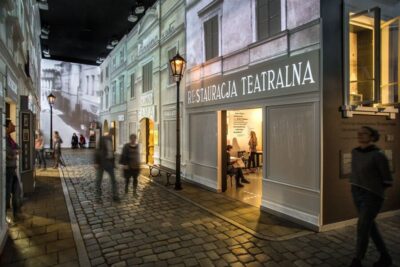 ★ 4.7POLIN Museum of the History of Polish Jews TicketFrom $121,142 reviews
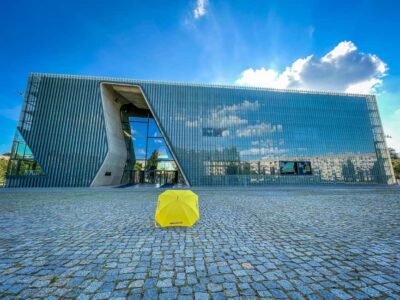 ★ 4.7Jewish History Guided Walking Tour in EnglishFrom $26324 reviews
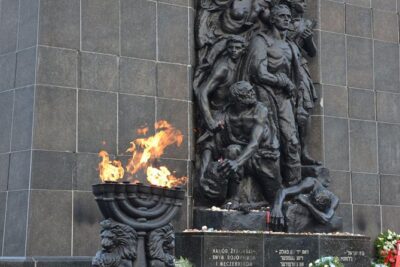 ★ 5.0Private Tour: Warsaw’s Jewish Heritage by Retro FiatFrom $108208 reviews
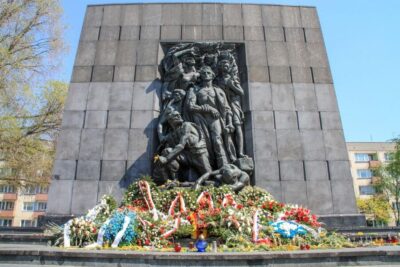 ★ 4.8Ghetto, Jewish Cemetery & POLIN Museum Private TourFrom $112132 reviews
 ★ 4.7Jewish Heritage & Holocaust Walking TourFrom $20119 reviews
 ★ 5.0Historical Walking Tour of Jewish WarsawFrom $2868 reviews
 ★ 4.9Jewish Heritage 4-Hour Private TourFrom $4226 reviews
 ★ 4.92-Hour Tour of Daily Life in the Ghetto WarsawFrom $7626 reviews
Browse the lists this tour appears in