
Reviewed · JEWISH WARSAW, GHETTO & POLIN
Warsaw: Jewish Heritage 4-Hour Private Tour
Warsaw’s Jewish sites hit hard, and fast. In just 4 hours, this private route strings together key landmarks so the story of Warsaw’s Jewish community lands clearly, from daily life to WWII devastation. It’s a private tour, so your guide can slow down when the subject matter needs it and move on when you want momentum.
I love the respectful stops at Umschlagplatz and how the Jewish Cemetery turns names on stone into real people, not just dates. The one possible drawback: entry fees aren’t included, so if you plan to go inside any religious or museum spaces, your total cost may creep up.
In This Review
- Key Points You’ll Care About
- A Four-Hour Walk Through Warsaw’s Jewish Memory
- Meeting Your Guide and Why Private Feels Better Here
- Trail of Jewish Monuments and the Pre-War Warsaw Context
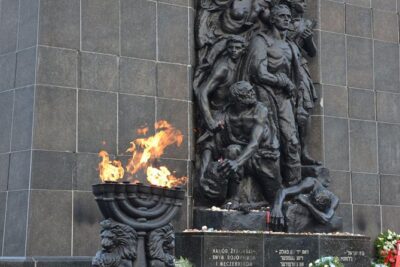
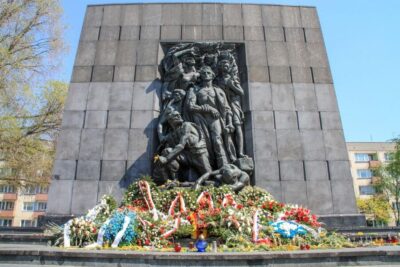
- Monument to the Ghetto Heroes and the 1943 Uprising Story
- Umschlagplatz: Paying Tribute at the Names Wall
- The Jewish Cemetery on Okopowa Street and Janusz Korczak
- Chłodna Street Footbridge and the Ghetto Boundary Lines
- Nożyk Synagogue and Próżna Street’s Preserved Atmosphere
- Time for POLIN Museum If You Want More
- Price and Value for a Private 4-Hour Tour
- Who Should Book This Tour (and Who Might Not)
- Should You Book This Warsaw Jewish Heritage Tour?
- FAQ
- How long is the Warsaw Jewish Heritage private tour?
- Is this tour private?
- What does the price include?
- Are entry fees included?
- Where do we meet the guide?
- What languages are available?
- Can I cancel for a refund?
- Can I reserve without paying right away?
Key Points You’ll Care About
- Hotel-lobby pickup so the tour starts smoothly without hunting down a meeting spot
- Umschlagplatz tribute with engraved names and a monument shaped to echo the ghetto and a railway wagon
- Jewish Cemetery on Okopowa Street with major figures and the scale of one of Europe’s largest kirkuts
- Footbridge of Remembrance at Chłodna Street connecting the small and large ghetto, with a multimedia installation
- Fragments of ghetto wall and boundary markers laid out as iron slabs in the pavement
- Nożyk Synagogue and Próżna Street atmosphere where the architecture and streetscape still help you feel continuity
A Four-Hour Walk Through Warsaw’s Jewish Memory
This is the kind of tour where you stop often, but you don’t feel stuck. The route is built like a guided timeline: you move through neighborhoods and monuments that help you picture how Warsaw’s Jewish life looked before the war, then how the ghetto system and deportations broke that world. The four hours works because the guide keeps pulling you back to the human scale—people, choices, resistance, and loss.
What makes it especially useful is that you’re not just collecting sights. You’re learning why each stop matters—what it represents, and what it helps you understand about the Warsaw ghetto and the Holocaust in Poland. The result is a route that feels grounded, not vague.
Also, you’re in a private format. That matters when the tour covers heavy material. It means your guide can answer the questions you actually have, and you can take a breath without the pressure of a big group moving on.
Further into Jewish Warsaw, the Ghetto and POLIN
- Warsaw: POLIN Museum of the History of Polish Jews Ticket★ 4.7 · 1,142 reviews
- Private Tour: Warsaw’s Jewish Heritage by Retro Fiat★ 5.0 · 208 reviews
- Warsaw: Ghetto, Jewish Cemetery & POLIN Museum Private Tour★ 4.8 · 132 reviews
Meeting Your Guide and Why Private Feels Better Here
Your guide meets you at the hotel lobby and comes with you for a fully private sightseeing experience. That setup is more than convenience. When you’re dealing with sacred sites and memorial spaces, having a guide who can manage pacing and context makes a real difference.
In past bookings, guides like Wojciech and Ziggy have been highlighted for the same things: adjusting the pace to your interests, explaining clearly, and sharing stories that add layers beyond bare facts. That kind of flexibility is what turns a walking tour into something you can actually process.
The tour includes transportation, which helps you cover more ground without turning your day into a long grind of transit. In a city with complex history, fewer logistics headaches means more attention for the places that deserve it.
Trail of Jewish Monuments and the Pre-War Warsaw Context
The tour begins with the idea that Warsaw was once one of Europe’s biggest centers of Jewish culture. The story isn’t limited to WWII. You’ll hear how Jewish traditions showed up across everyday life—through architecture, art, literature, and community rhythm—so the later tragedy doesn’t feel disconnected.
As you walk the trail of Jewish monuments, you’ll learn about the lives of Warsaw Jews across time, from the Middle Ages onward. That broad framing is practical: it gives you mental context for what you’re seeing today, especially when monuments and streets don’t scream their backstory at first glance.
This opening also helps you avoid a common problem. Without context, ghetto sites can feel like isolated shock-and-awe stops. With context, you see them as the end of a long, living history that was interrupted.
Monument to the Ghetto Heroes and the 1943 Uprising Story
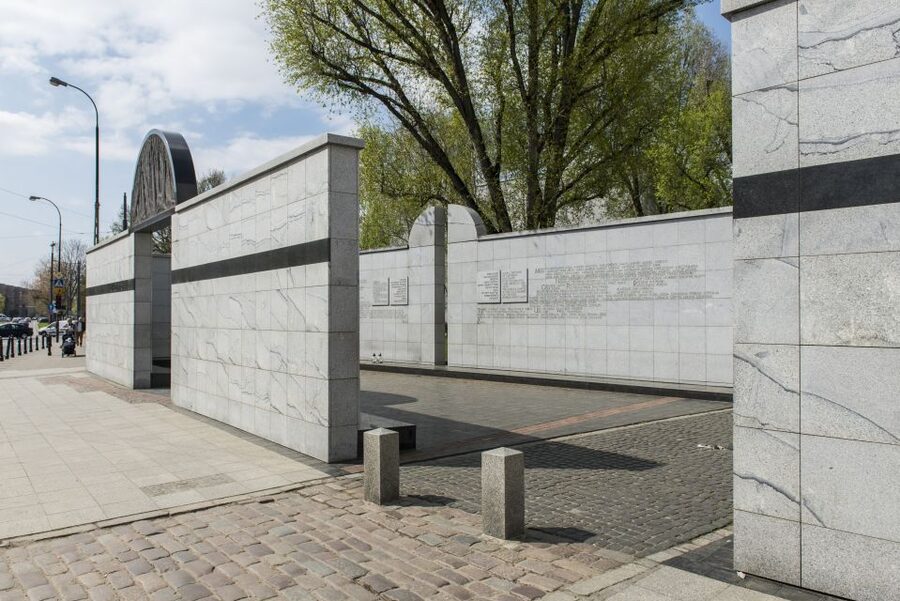
One of the core stops is the Monument to the Ghetto Heroes. The tour walks you through the area of the ghetto and connects the memorial landscape to specific moments—especially the Warsaw Ghetto Uprising of 1943.
You’ll hear the story of how a few hundred Jews fought back against a vastly stronger Nazi force, despite heavy artillery and dive bombers. That detail matters because it’s easy to remember the uprising only as a concept. Here it’s framed as an act of resistance carried out in impossible conditions.
As you move along the Memorial Route of the Martyrdom and Struggle of Jews, you’ll also pay attention to commemorative stones about important figures of the Warsaw ghetto. If you’re the type who likes to read and connect names to places, this is where the tour really gives you fuel.
Umschlagplatz: Paying Tribute at the Names Wall
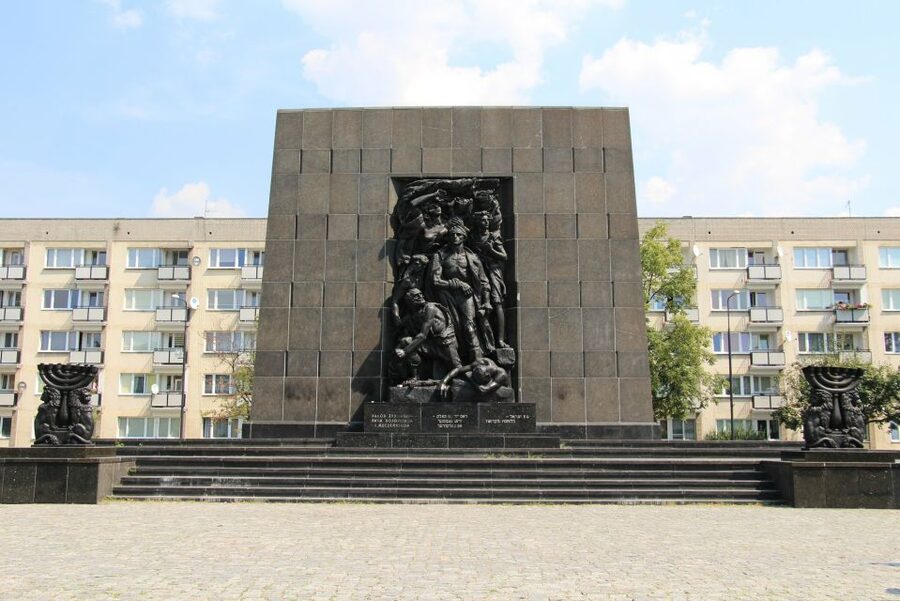
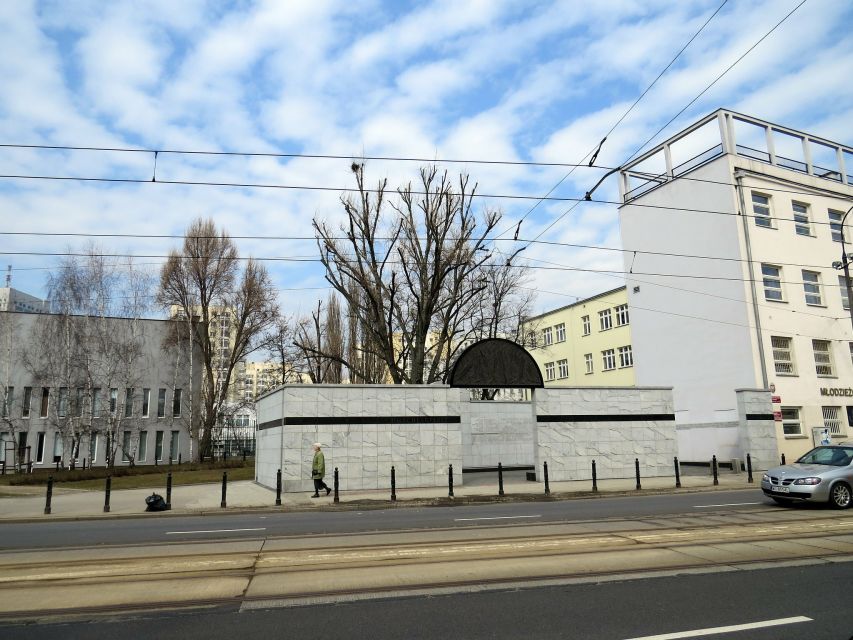
Then comes Umschlagplatz, one of the tour’s most powerful stops. You’ll pause at the Umschlagplatz monument and pay tribute for those sent to the extermination camps and who never returned.
The monument itself is designed with symbolism in mind. The shape resembles the walls of the ghetto and a railway wagon, and the walls have more than four hundred names of victims engraved on them. That’s not just decoration. It’s a way of slowing you down and making you confront scale.
The practical takeaway for you: don’t rush this portion. Even if you think you’re mentally prepared, the names and the design can hit harder than the facts. The guide’s job here is to keep you oriented—what the site represents and how it fits into the broader story you’ve been building since the start.
More of Warsaw and its long history




The Jewish Cemetery on Okopowa Street and Janusz Korczak
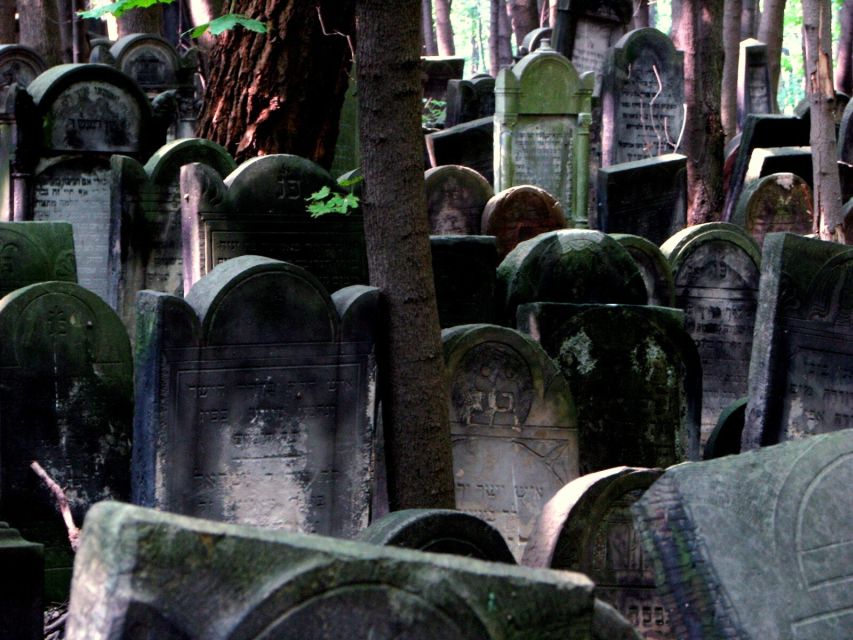
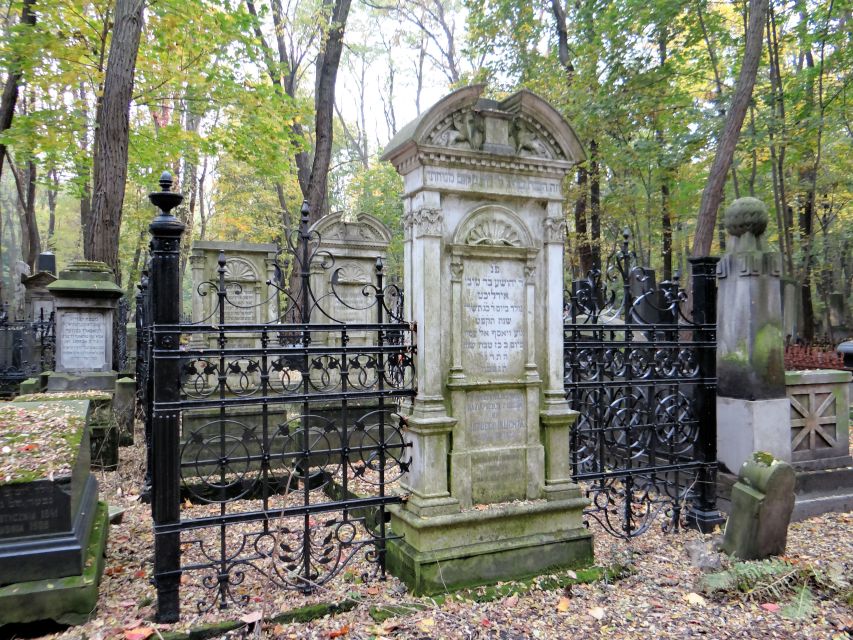
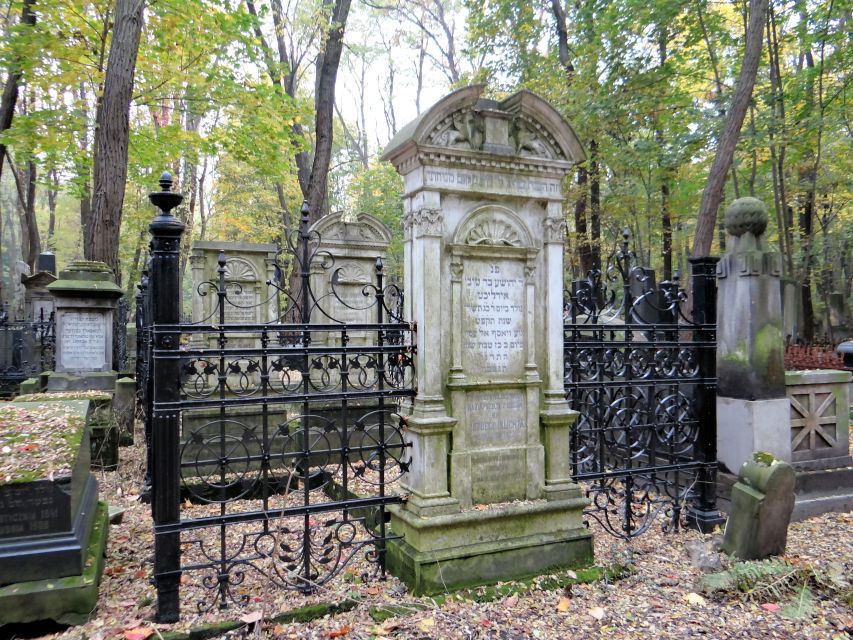
After the memorial intensity of Umschlagplatz, the tour shifts into a different kind of remembrance: the Jewish Cemetery on Okopowa Street. It’s described as one of the largest kirkuts in Europe, which gives you immediate scale before you even focus on individual graves.
You’ll learn about famous people buried there, including Ludwik Zamenhof (founder of Esperanto) and Ischok Leib Perec. The presence of figures like these helps you see how Warsaw’s Jewish community contributed to European culture far beyond Warsaw.
A standout moment is stopping by the symbolic grave of Janusz Korczak, the protector of children. You’ll hear that he was murdered in Treblinka along with the children in his care in a gas chamber. This stop can feel brutally direct, and it’s exactly the kind of reminder that history is not abstract.
If you’re curious about how a city keeps memory alive, cemetery visits can be the best places to learn. Stones don’t explain themselves, but with a guide you get the links between names, events, and the people they represented.
Chłodna Street Footbridge and the Ghetto Boundary Lines
One of the most striking transitions on the route is the Footbridge of Remembrance over Chłodna Street. It connects the small and large ghetto, and today it includes a multimedia art installation that reminds visitors of tragic events from that period.
This stop has two jobs. First, it helps you physically grasp the ghetto’s geography—how space was divided and controlled. Second, the multimedia element adds another layer of meaning without requiring you to be a specialist in history.
Next, you’ll see fragments of the Jewish ghetto wall and iron slabs set in the pavement marking the boundaries of the former ghetto. That’s a detail worth paying attention to because it changes how you look at the street. You start noticing what’s still visible, what’s been built over, and what survives only as embedded boundary lines.
Nożyk Synagogue and Próżna Street’s Preserved Atmosphere
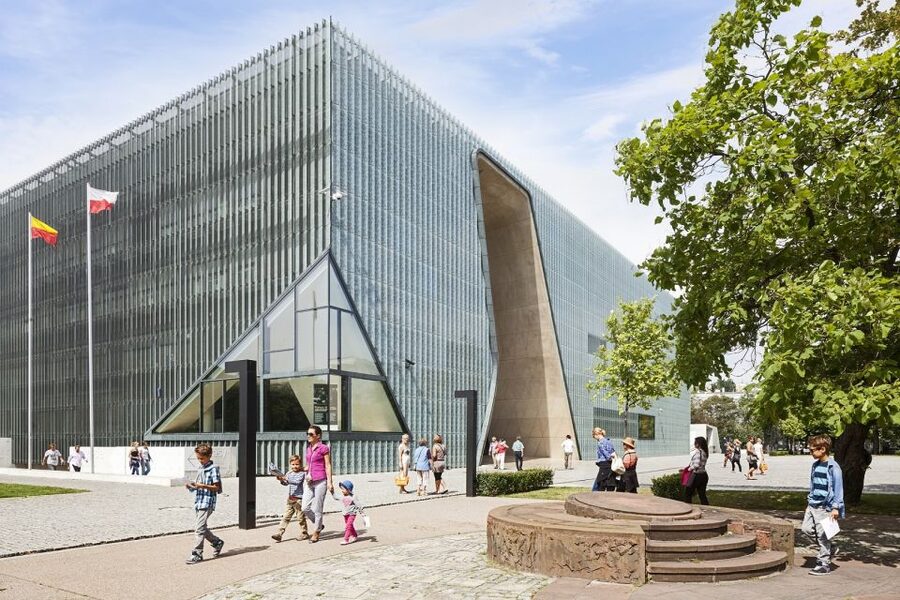
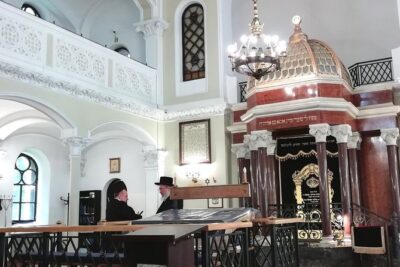
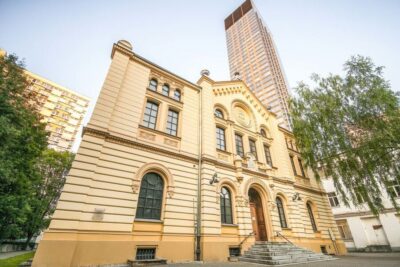
From the memorial zones, the tour brings you toward places where you can sense continuity. You’ll stop at Nożyk Synagogue, built in Neo-Romanesque style, and learn that it survived the Holocaust period.
Architectural survival matters because it creates a visual thread. Even when tragedy dominates the story, you can still see that the built environment carries memory—and in some cases, survival. For many visitors, seeing a surviving synagogue after the ghetto and deportation stops creates an emotional contrast that’s hard to forget.
You’ll also go to Próżna Street, where the atmosphere of Jewish Warsaw has been preserved. This is the part of the tour that can feel lighter—not in tone, but in the sense that you’re walking a place that still has character. It gives you a final reminder that this history isn’t only about loss. It’s also about culture that lived in real streets and everyday routines.
Time for POLIN Museum If You Want More
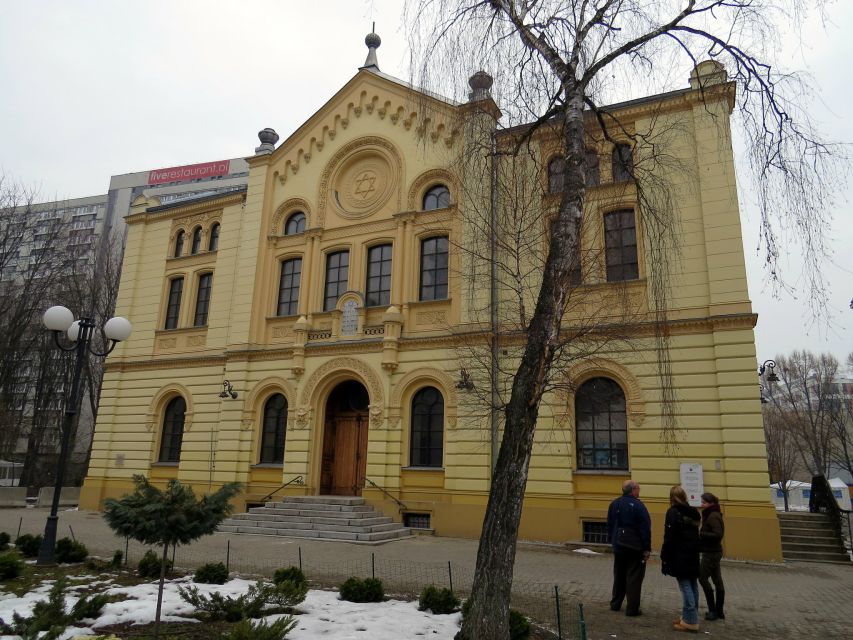
You may have the option to spend extra time at the POLIN Museum of the History of Polish Jews if you have more time. The tour framework includes the idea that after the walk, your guide can point you toward what else you can discover on your own.
This is useful because the four-hour route can’t cover everything. POLIN is where you can go deeper if you want more about themes, artifacts, and broader historical context. If you’re the kind of traveler who wants both a focused street-level story and a larger museum narrative, this pairing works well.
Price and Value for a Private 4-Hour Tour
At $42 per person for a 4-hour private tour, the price can feel very reasonable—especially because the experience includes a local guide and transportation. You’re paying for more than commentary. You’re paying for someone to connect places into a coherent story and to help you interpret sites that might otherwise feel like disconnected memorials.
The one cost note: entry or admission fees aren’t included. So your final spend depends on what you choose to enter beyond what’s covered in the walking stops and viewpoints.
So is it worth it? For me, the value is strongest if you want a guided route through major Jewish heritage sites in a limited time window. If you already know the history well and only want quick photo stops, you might feel it’s pricier than a standard walking tour. But if you want understanding—especially the sequence of ghetto life, uprising, deportations, and remembrance—it’s a solid use of a half day.
Who Should Book This Tour (and Who Might Not)
I’d point you to this tour if you:
- Want a structured route through Warsaw Jewish heritage sites in one go
- Prefer a private setting for a sensitive, emotional subject
- Like when a guide can tailor pace and answer real questions (guides such as Wojciech and Ziggy have been praised for this approach)
- Plan to combine street history with museum time later at POLIN
I’d hesitate if you:
- Want only light, upbeat sightseeing with minimal emotional content
- Are trying to keep costs ultra-low and prefer free-only experiences
- Don’t plan to spend time at memorial stops and would rather move fast
Should You Book This Warsaw Jewish Heritage Tour?
If you’re deciding between “a couple of major stops” and a real narrative route, I’d book this. The itinerary connects key sites—Umschlagplatz, the Jewish Cemetery, ghetto boundaries, and surviving religious architecture—into a story that makes sense without oversimplifying.
The price is fair for a private guide plus transportation, and the emphasis on proper context is exactly what helps these sites land with clarity. Just plan your schedule to give yourself room to absorb the memorials, and be ready for the day to feel heavy in the best, most honest way.
FAQ
How long is the Warsaw Jewish Heritage private tour?
The tour lasts 4 hours.
Is this tour private?
Yes, it’s a private group experience.
What does the price include?
The tour includes a local guide for 4 hours and transportation.
Are entry fees included?
No. Entry or admission fees are not included.
Where do we meet the guide?
Pickup is included, and the guide will wait for you at the hotel lobby with your name.
What languages are available?
The live tour guide can be in Spanish, English, German, Russian, Polish, French, Italian, or Portuguese.
Can I cancel for a refund?
Yes. Free cancellation is available up to 24 hours in advance for a full refund.
Can I reserve without paying right away?
Yes. The option is reserve now & pay later, so you can book your spot and pay nothing today.
More Tours in Warsaw
- Warsaw: Old Town Highlights Walking Tour in English
★ 4.7 · 1,516 reviews - Warsaw: City Sightseeing Hop-On Hop-Off Bus Tour
★ 3.6 · 1,415 reviews - Warsaw: Polish Vodka Museum Tour with Tasting
★ 4.6 · 788 reviews - 3-Hour Guided Cycling Tour of Warsaw
★ 4.9 · 624 reviews
More Tour Reviews in Warsaw
- Warsaw: Chopin Concert in the Old Town
★ 4.8 · 2,287 reviews - Warsaw: Traditional Galar Cruise on The Vistula River
★ 4.6 · 1,640 reviews - Warsaw: Old Town Highlights Walking Tour in English
★ 4.7 · 1,516 reviews - Warsaw Concert: Chopin – Painted by Candlelights with Wine
★ 4.8 · 1,442 reviews
More of Jewish Warsaw and POLIN
- Warsaw: POLIN Museum of the History of Polish Jews Ticket
★ 4.7 · 1,142 reviews - Warsaw: Jewish History Guided Walking Tour in English
★ 4.7 · 324 reviews - Private Tour: Warsaw’s Jewish Heritage by Retro Fiat
★ 5.0 · 208 reviews - Warsaw: Ghetto, Jewish Cemetery & POLIN Museum Private Tour
★ 4.8 · 132 reviews
Fresh on the site: newer Warsaw reviews

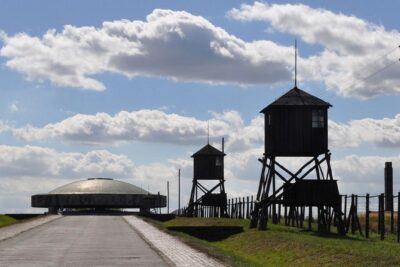

Jewish Warsaw, Ghetto & POLIN: the other contenders.
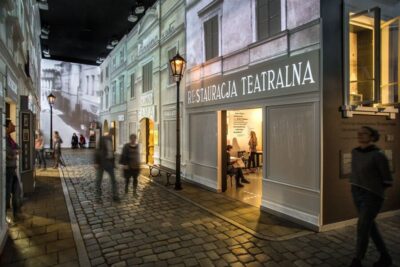 ★ 4.7POLIN Museum of the History of Polish Jews TicketFrom $121,142 reviews
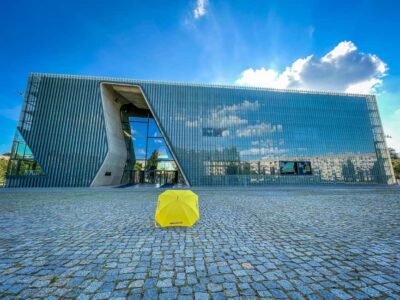 ★ 4.7Jewish History Guided Walking Tour in EnglishFrom $26324 reviews
 ★ 5.0Private Tour: Warsaw’s Jewish Heritage by Retro FiatFrom $108208 reviews
 ★ 4.8Ghetto, Jewish Cemetery & POLIN Museum Private TourFrom $112132 reviews
 ★ 5.0Tour of the Warsaw GhettoFrom $102119 reviews
 ★ 4.7Jewish Heritage & Holocaust Walking TourFrom $20119 reviews
 ★ 5.0Historical Walking Tour of Jewish WarsawFrom $2868 reviews
 ★ 4.92-Hour Tour of Daily Life in the Ghetto WarsawFrom $7626 reviews
Browse the lists this tour appears in