
Reviewed · JEWISH WARSAW, GHETTO & POLIN
Jewish Warsaw
Jewish Warsaw has layers you can walk through. This 3-hour route is a smart way to connect the streets you see today with the Jewish community that once shaped the city, with stops like Grzybowski Square and Nozyk Synagogue still in use. I also like how the visit keeps things human and specific, including the kind of storytelling that a guide named Mary is praised for.
There is one catch: a few key places are not included in the base price, including Nozyk Synagogue and the Jewish Cemetery, plus there is a Jewish Warsaw entrance fee listed as €5.00 per person. Plan for good weather too, since the tour requires it.
In This Review
- Key highlights you should care about
- Why a 3-hour Jewish Warsaw walk is great value
- Grzybowski Square: your first look at pre-war Jewish Warsaw
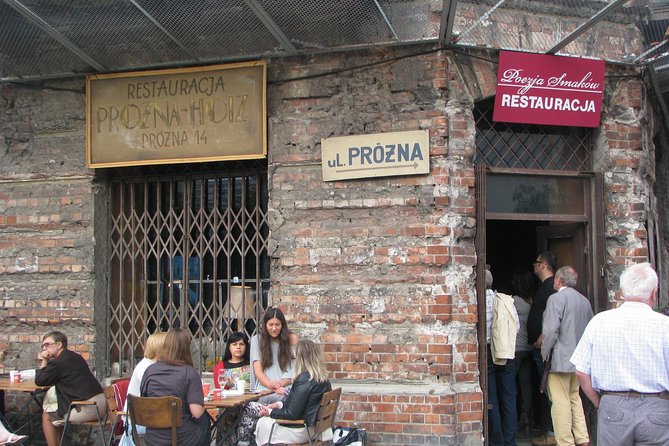
- Prozna Street (Ulica Prozna): shopping streets and real names
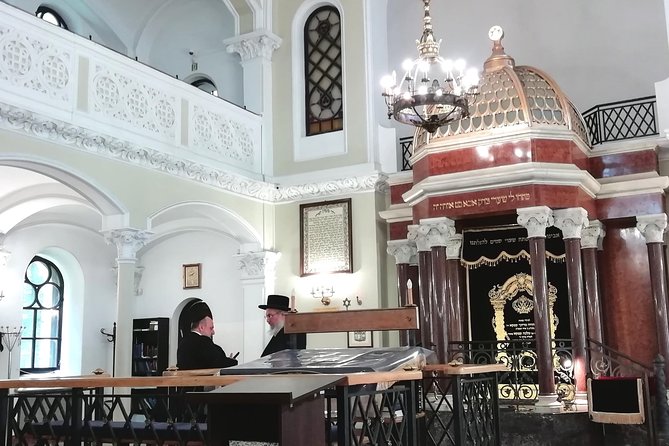
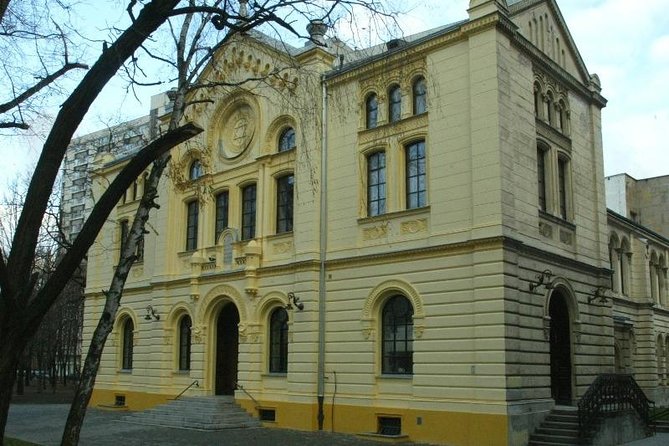
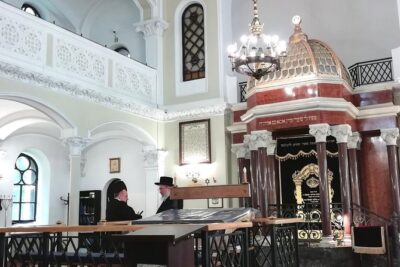
- Nozyk Synagogue: the survivor you can still visit in operation
- Krochmalna and Chlodna: Singer’s neighborhoods and Warsaw backyards
- Keret House: the narrowest house and why it matters
- Jewish Cemetery: famous rabbis, burials, and unexpected connections
- Pomnik Bohaterow Getta: Willy Brandt’s knee and Warsaw’s turning points
- POLIN Museum: finishing at the museum and using audio guides after
- Price and logistics: what you’re really paying for
- Pickup, meeting points, and how to not lose time
- Who should book this Jewish Warsaw route
- Should you book Jewish Warsaw with PolinTours?
- FAQ
- How long is the Jewish Warsaw tour?
- Where does the tour start and end?
- Is pickup available?
- What language is the tour in?
- What’s included in the price?
- Are there any entrance fees?
- Is lunch included?
- Is the tour outdoors?
- Can I cancel for a full refund?
Key highlights you should care about
- Grzybowski Square sets the tone for pre-war Jewish Warsaw, before you move onto street-level details
- Prozna Street shows everyday life, not only big events
- Nozyk Synagogue is the one you can still visit after World War II
- Krochmalna and Chlodna bring literature into the streets through the neighborhoods linked with Isaac Bashevis Singer
- Keret House turns history into a physical clue, including the narrow-house story
- POLIN Muzeum ties it together, with architecture symbolism and an audio-guide option after the tour
Why a 3-hour Jewish Warsaw walk is great value
At about 3 hours, this tour hits a lot of ground without turning into a sprint. You get an organized path through Warsaw’s Jewish sites, then you finish at the POLIN Museum, where the learning continues at your pace. For $89.35 per person, the price makes sense if you value context: this isn’t just photo stops. It’s a guided timeline you can actually track while you’re standing in the places.
You’ll also travel comfortably in an air-conditioned vehicle, and you can have the guide handle pickup. That matters in Warsaw, where weather and walking distances can swing your day fast—especially if you’re combining history with other sightseeing.
One more practical perk: it’s listed as private, meaning only your group participates. That tends to make the questions feel easier and the pacing more flexible, even on a tight schedule.
Further into Jewish Warsaw, the Ghetto and POLIN
- Warsaw: POLIN Museum of the History of Polish Jews Ticket★ 4.7 · 1,142 reviews
- Private Tour: Warsaw’s Jewish Heritage by Retro Fiat★ 5.0 · 208 reviews
- Warsaw: Ghetto, Jewish Cemetery & POLIN Museum Private Tour★ 4.8 · 132 reviews
Grzybowski Square: your first look at pre-war Jewish Warsaw
The tour starts at Grzybowski Square (Pl. Grzybowski 2), in the center of what was pre-war Jewish Warsaw. This first stop is useful because it gives you a mental map before you start threading through streets. Your guide brings you close to the big picture: Warsaw had the largest Jewish community in Europe until World War II, and the city’s Jewish life didn’t exist on the margins. It was part of how Warsaw worked.
Even if you already know the broad history, I like how this stop frames what you’ll see next. It prevents the later sites from feeling like isolated monuments. Instead, they become parts of a living neighborhood.
Drawback to consider: the tour moves quickly after this introduction, so if you’re the type who likes to linger and take long photos, plan on doing it again later at the museum finish.
Prozna Street (Ulica Prozna): shopping streets and real names
Next comes Prozna Street, a Jewish commercial street that’s been preserved in its original form. That detail matters. When streets survive in something close to their original layout, it helps your brain connect past and present. You’re not only hearing about community history—you’re also seeing the street geometry that shaped daily life.
This is also the kind of stop where your guide can point out the human side: world-famous families and notable names tied to Warsaw. Even without turning it into a genealogical lesson, it gives you a sense of scale—this was a city with networks, businesses, and identities that stretched far beyond local life.
Time is tight here (about 10 minutes), so I recommend keeping your questions short and focused. If you’re curious about the difference between commercial streets and residential blocks, ask that at the curb, not after you’ve already moved on.
Nozyk Synagogue: the survivor you can still visit in operation
The tour’s next anchor is Nozyk Synagogue, described as the only synagogue that survived the Second World War and is still operating. That’s a powerful distinction. Many places tell the story; this one also functions as a living religious site. Standing nearby while learning the context changes the tone of the history.
You should know the logistics: admission for Nozyk Synagogue is not included, so budget for the entrance fee there. The good news is that because it’s still in operation, the visit feels less like a staged memorial. It’s a place with continuity, not only remembrance.
If your goal is to understand how Jewish community life persisted and transformed through catastrophe, this stop is a must.
Krochmalna and Chlodna: Singer’s neighborhoods and Warsaw backyards
After Prozna, you pass through Krochmalna, then move to Chlodna Street. Here the tour slows down just enough to let you think about how literature can act like a map. You’ll hear about places described in the prose of Isaac Bashevis Singer, tied to the neighborhood atmosphere of Jewish Warsaw.
Then comes Chlodna Street, where you look at houses that are still in their original condition and explore the idea of Warsaw backyards. Those backyards can be key to understanding how cities actually work. They often hold the practical reality of domestic life: courtyards, service areas, and the spaces where community rhythms played out away from the street.
Potential consideration: since this segment is about passing and observing, you’ll want comfortable shoes more than anything. If your legs tire quickly, take a small water break when the guide stops speaking.

Keret House: the narrowest house and why it matters
Next you’ll hear the story of Keret House, noted as the narrowest house in the world. That kind of fact is memorable, and it gives you a physical detail to carry with you. But the tour also uses it as a doorway into local history—how modern Warsaw fits into the landscape of memory.
This is one of the shorter stops (about 10 minutes), so you shouldn’t expect a long explanation. Instead, think of it as a quick pause that turns information into an image.
Tip: if you enjoy street-level oddities and want one standout photo, this is your stop. It’s also a nice reset after the cemetery portion that comes later.
Jewish Cemetery: famous rabbis, burials, and unexpected connections
The tour gives one of its longest moments to the Jewish Cemetery (Cmentarz Zydowski). Expect about 40 minutes here, with the focus on famous rabbis, zaddiks, and Jewish families resting there. The visit also covers Jewish burial traditions, which is important because cemeteries aren’t only about names. They reflect belief, ritual, and community structure.
This stop also links to several wider topics, including the history of the Esperanto language, Janusz Korczak’s orphanage, and Jewish theater. Those connections may not be what you expect at a cemetery, and that’s exactly why the stop works. It reminds you that Jewish life in Warsaw wasn’t only religious. It extended into education, language experiments, and performance culture.
Admission for the cemetery is not included. So budget time and money for that extra entrance cost.
One practical note: if you’re sensitive to emotional themes, go in with the right mindset. This part is about remembrance, not sightseeing.
Pomnik Bohaterow Getta: Willy Brandt’s knee and Warsaw’s turning points
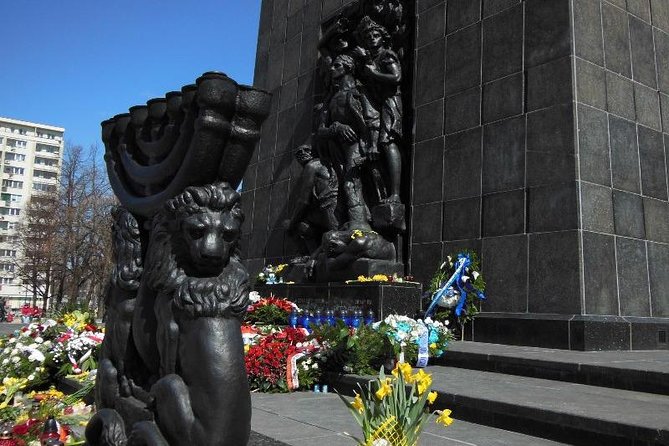
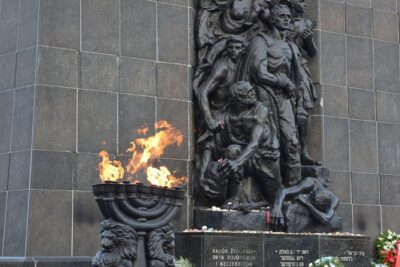
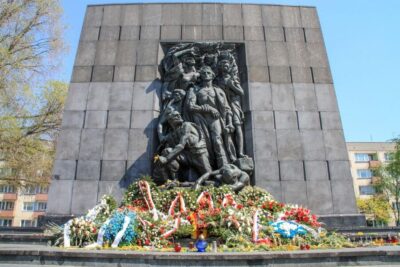
After the cemetery, the route includes a stop at Pomnik Bohaterow Getta. You’ll pause where Willy Brandt did his famous kneeling gesture. Even if you only know the story generally, the location gives it weight. It’s one of those moments where a public symbol and a specific historical event meet the physical city.
This is a shorter stop (about 15 minutes), so treat it like a punctuation mark. Use it to reset your understanding: this was not only a community that existed; it was also a community targeted for destruction.
POLIN Museum: finishing at the museum and using audio guides after
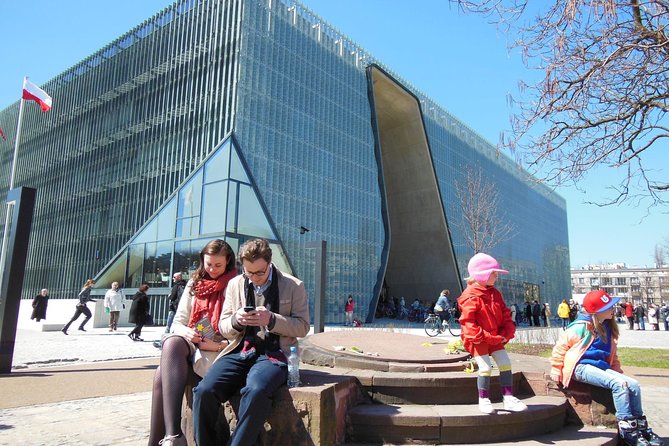
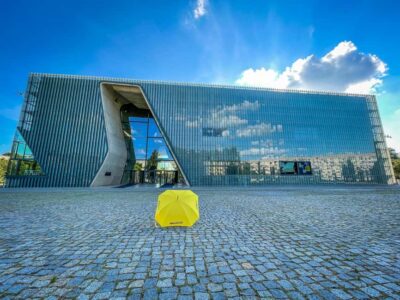
The tour ends at POLIN Muzeum Historii Zydow Polskich (POLIN Museum of the History of Polish Jews). The guide also points out the building itself—its symbolism and architecture—so you’re not just walking into a ticket line. You’ll hear why the museum looks the way it does, and that makes your later self-guided exploring easier.
The tour ends here, with the option to visit using audio guides. That’s a smart way to keep your pacing. You can zoom in on the themes you care about most instead of trying to cram everything into one guided 3-hour session.
Also, because this is the final stop, it gives you flexibility. If you want to move slowly, you can. If you’re running out of time, you at least start with context so the museum still feels meaningful.
Price and logistics: what you’re really paying for
Let’s talk value in plain terms. You pay $89.35 per person, and the tour includes an air-conditioned vehicle and is offered in English. Pickup is available, and you’ll get a mobile ticket. It’s also listed as a private tour, just your group.
Where you need to be ready for extra costs:
- An entrance fee for Jewish Warsaw is listed as €5.00 per person
- Nozyk Synagogue entrance is not included
- Jewish Cemetery entrance is not included
- Lunch is not included
So the real question is whether you want guided context for multiple sites in one tight timeline. If yes, the pricing is fair. If you’re trying to keep costs ultra-low and you plan to DIY every stop, you might spend less on entrances but you’ll miss the connective tissue that makes the places click.
Pickup, meeting points, and how to not lose time
The starting point is Grzybowski Square, Pl. Grzybowski 2, 00-824 Warszawa. The tour ends at POLIN Museum, Mordechaja Anielewicza 6, 00-157 Warszawa.
Pickup details are straightforward:
- If you stay in a hotel, the guide picks you up at reception with a PolinTours sign or waits in the car in front of your hotel.
- If you’re outside the city center, the meeting point is arranged by email, and the guide waits at the agreed location.
This matters because Jewish Warsaw sites can be spread across neighborhoods. A reliable start keeps you focused on learning, not navigating.
One more practical tip: the tour is near public transportation. If you choose not to use pickup, allow extra time to find the exact meeting location.
Who should book this Jewish Warsaw route
This tour is a good fit if:
- You want an efficient, guided route through Jewish Warsaw in about half a day
- You care about specific sites like Nozyk Synagogue, the Jewish Cemetery, and the finishing point at POLIN Museum
- You prefer context you can carry while you walk, rather than reading alone later
It’s especially helpful for first-timers. The starting point at Grzybowski Square builds your mental picture early, and the end at POLIN Museum gives you a natural place to expand what you learned.
If you’re the type who hates extra entrance fees, read the fine print ahead of time. The cemetery and synagogue entrances aren’t included, and the Jewish Warsaw fee is listed separately.
Should you book Jewish Warsaw with PolinTours?
I’d book it if your priority is a guided street-level approach to Jewish Warsaw that finishes at a major museum. The 3-hour format is tight but workable, and the mix of places—from a surviving synagogue to the cemetery to POLIN—creates a full story arc instead of random sightseeing.
Do book if you’re okay with a couple of extra entrances on-site and you can align with the requirement for good weather. Skip it only if you want a purely self-guided experience with no added fees and no live interpretation.
If you like learning as you walk, and you want your visit to feel connected rather than fragmented, this one is a strong choice.
FAQ
How long is the Jewish Warsaw tour?
The duration is approximately 3 hours.
Where does the tour start and end?
It starts at Grzybowski Square (Pl. Grzybowski 2, 00-824 Warszawa) and ends at the POLIN Museum of the History of Polish Jews (Mordechaja Anielewicza 6, 00-157 Warszawa).
Is pickup available?
Yes. There is hotel pickup where the guide meets you at reception with a PolinTours sign or waits in the car in front of your hotel. If your hotel is far outside the city center, the meeting point is agreed by email.
What language is the tour in?
The tour is offered in English.
What’s included in the price?
The included item listed is an air-conditioned vehicle. The tour also uses a mobile ticket, and pickup is offered.
Are there any entrance fees?
Yes. The Jewish Warsaw entrance fee is listed as €5.00 per person. Admission for Nozyk Synagogue is not included, and admission for the Jewish Cemetery is not included.
Is lunch included?
No, lunch is not included.
Is the tour outdoors?
You should count on good weather since the experience requires good weather. If it’s canceled due to poor weather, you’ll be offered a different date or a full refund.
Can I cancel for a full refund?
Yes. You can cancel up to 24 hours in advance for a full refund, and changes made less than 24 hours before the start time aren’t accepted.
More Tour Reviews in Warsaw
- Warsaw: Chopin Concert in the Old Town
★ 4.8 · 2,287 reviews - Warsaw: Traditional Galar Cruise on The Vistula River
★ 4.6 · 1,640 reviews - Warsaw: Old Town Highlights Walking Tour in English
★ 4.7 · 1,516 reviews - Warsaw Concert: Chopin – Painted by Candlelights with Wine
★ 4.8 · 1,442 reviews
More of Jewish Warsaw and POLIN
- Warsaw: POLIN Museum of the History of Polish Jews Ticket
★ 4.7 · 1,142 reviews - Warsaw: Jewish History Guided Walking Tour in English
★ 4.7 · 324 reviews - Private Tour: Warsaw’s Jewish Heritage by Retro Fiat
★ 5.0 · 208 reviews - Warsaw: Ghetto, Jewish Cemetery & POLIN Museum Private Tour
★ 4.8 · 132 reviews
Fresh on the site: newer Warsaw reviews


Jewish Warsaw, Ghetto & POLIN: the other contenders.
 ★ 4.7POLIN Museum of the History of Polish Jews TicketFrom $121,142 reviews
 ★ 4.7Jewish History Guided Walking Tour in EnglishFrom $26324 reviews
 ★ 5.0Private Tour: Warsaw’s Jewish Heritage by Retro FiatFrom $108208 reviews
 ★ 4.8Ghetto, Jewish Cemetery & POLIN Museum Private TourFrom $112132 reviews
 ★ 5.0Tour of the Warsaw GhettoFrom $102119 reviews
 ★ 4.7Jewish Heritage & Holocaust Walking TourFrom $20119 reviews
 ★ 5.0Historical Walking Tour of Jewish WarsawFrom $2868 reviews
 ★ 4.9Jewish Heritage 4-Hour Private TourFrom $4226 reviews
Browse the lists this tour appears in