
Reviewed · JEWISH WARSAW, GHETTO & POLIN
Past Meets Present in Warsaw’s Jewish Ghetto
A day in Warsaw can feel like layers on layers, and this walk through the former Jewish Ghetto is one of the most powerful. You’ll move between places of daily life, stolen time, and commemoration, guided by Mona in English with the kind of care that keeps the story clear. What makes it especially moving is how the route connects people, streets, and monuments into one timeline you can actually feel.
I especially liked the balance: you get documentary context at the start, then you stand in front of the memorial geography of the uprising and deportations. I also liked that the experience stays practical—free-entry stops, a manageable pace, and a small group—so it feels like learning you can use, not just facts on a screen. One consideration: this is emotionally heavy material, and it’s not recommended if you have mobility or walking limitations.
In This Review
- Key highlights worth showing up for
- Walking Warsaw’s Jewish Ghetto: what this 2.5-hour route really does
- Starting at Monument of Slowackiplac Bankowy: getting your bearings fast
- Zydowski Instytut Historyczny: where documentary memory meets a real building
- Długa and Nalewki area: street life in the places where it happened
- Ogrod Krasinskich: a calm pause outside the Ghetto boundary
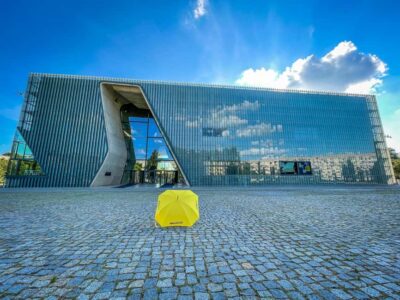
- Polin Museum square and the Ghetto Heroes: daffodils as living memory
- Mila 18 and Mordechaja Anielewicza: the uprising remembered in geography
- Umschlagplatz and Willy Brandt: facing deportation and honoring victims
- Price and logistics: is $112.43 worth it?
- Who this tour is best for (and who should consider another plan)
- Tips to get the most from the walk
- Should you book this Warsaw Jewish Ghetto tour?
- FAQ
- What language is the tour offered in?
- How long is the experience?
- Where does the tour start and end?
- Is admission included for the stops?
- What is included in the price?
- Is coffee or tea provided?
- How big is the group?
- Is it accessible for people with mobility issues?
- What is the cancellation policy?
Key highlights worth showing up for
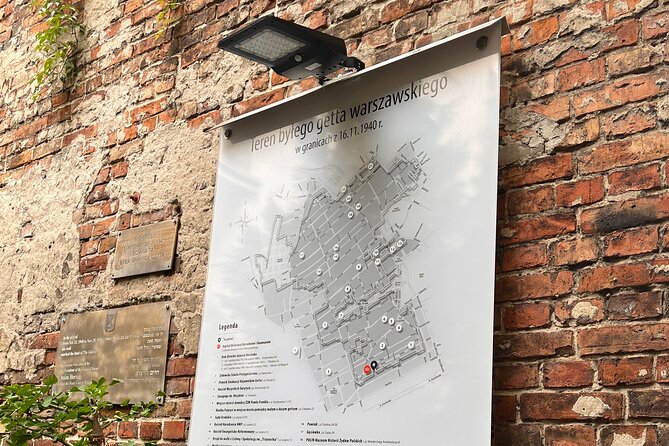
- Zydowski Instytut Historyczny: a Jewish documentary archive that turns memory into something you can read and understand
- Długa and Nalewki area: a street-life look at the northern Jewish quarter through the places themselves
- Ogrod Krasinskich: a rare calm pause at a spot excluded from the Ghetto during WWII
- Ghetto Heroes Monument at the Polin Museum square: commemorations made visible through the daffodils tradition
- Mila 18 and Mordechaja Anielewicza: the uprising’s leadership remembered at the mound
- Umschlagplatz: the deportation departure point, tied directly to Treblinka
Walking Warsaw’s Jewish Ghetto: what this 2.5-hour route really does
This walk is built around how places change meaning over time. One minute you’re looking at a site that once held daily life. The next you’re at a memorial that explains what that life was forced to endure, and what was fought for. That “past meets present” feeling is not vague here. It’s built into the sequence.
The tour runs about 2 hours 30 minutes, which is long enough to connect themes, but short enough that you won’t feel lost. It’s also offered in English, with a maximum group size of 10 travelers, so you can ask questions and actually hear the answers.
The price—$112.43 per person—isn’t cheap, but it also isn’t random. You’re paying for a certified guide, a tight route of major sites, and enough time at the most important stops to understand why they matter. If you’ve ever tried to self-guide this area, you’ll know the difference a guide makes. Memory sites can be powerful and still hard to interpret on your own.
Further into Jewish Warsaw, the Ghetto and POLIN
- Warsaw: POLIN Museum of the History of Polish Jews Ticket★ 4.7 · 1,142 reviews
- Private Tour: Warsaw’s Jewish Heritage by Retro Fiat★ 5.0 · 208 reviews
- Warsaw: Ghetto, Jewish Cemetery & POLIN Museum Private Tour★ 4.8 · 132 reviews
Starting at Monument of Slowackiplac Bankowy: getting your bearings fast
The tour meets at the Monument of Slowackiplac Bankowy (00-142 Warsaw). That matters because Warsaw’s layout can be confusing when you’re focused on history instead of directions. A guided start helps you set the “map” in your head early: where you are, what neighborhood you’re in, and what the ghetto story looks like geographically.
You’ll move with the group at a steady walking pace, and each stop is given enough time for the guide to explain what you’re seeing. Expect a mix of short and longer moments: some places are quick orientation points, and others are where you stop and let the meaning land.
Bring comfortable shoes. This is a walking experience, and it’s not the kind of route where you can comfortably pause every few minutes.
Zydowski Instytut Historyczny: where documentary memory meets a real building
The first stop is Żydowski Instytut Historyczny. During the war, the building served as a center of Jewish social life in the Warsaw ghetto. Today, it functions as an archive of Jewish documentary materials.
What I like about starting here is that it slows you down in a useful way. Before you hit the big memorial spaces, you get a sense of documentation—how history was recorded, preserved, and presented. It keeps the tour from becoming only a list of tragic events. You’re reminded that community and culture existed, not just catastrophe.
The stop is about 15 minutes, and entry is listed as free. That quick on-foot introduction gives you a foundation for the rest of the walk. You’ll likely find yourself watching the later sites with more precision, because you understand what kind of “evidence” the guide wants you to hold onto.
Długa and Nalewki area: street life in the places where it happened
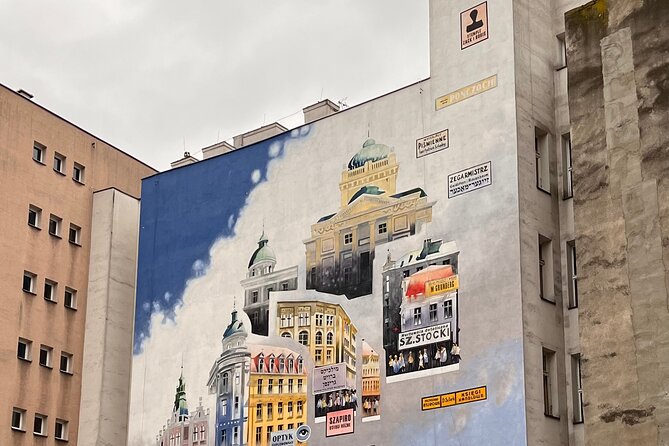
Next you’ll head to Długa and Nalewki Street, at their crossing. This stretch is described as the most lively and vibrant street in the northern Jewish quarter, with shops, manufactories, and stalls.
Even without reading every sign or shopfront, the place can teach you something. Streets like this help you imagine daily movement—commerce, conversation, and the ordinary rhythm of crowds. A guide is key because you’re not just walking a pretty intersection; you’re tracing a social system that was forcibly shattered.
This is a 10-minute stop with free entry. It’s short by design. It’s not a lecture block. It’s a “grounding” moment that shifts your perspective from institutions to street-level life.
If you prefer long museum-style stops, you might wish there were more time here. But the tradeoff is that you get stronger time at the memorials later, where the emotional weight and historical clarity require more space.
Ogrod Krasinskich: a calm pause outside the Ghetto boundary
Then comes Ogrod Krasinskich, known as an oasis of calm for Warsaw residents. The key detail is that during WWII it was excluded from the Ghetto.
That exclusion matters. It gives you a contrast point—one of those rare opportunities in this part of Warsaw to stand somewhere that wasn’t under the same restrictions. A quiet park doesn’t erase the tragedy around it. Instead, it helps you feel the difference between confinement and open space.
The stop is about 20 minutes with free entry. This is one of the best places on the route to take a breath and let the earlier details settle, especially if you’re traveling with someone who needs a slower emotional pace. Still, keep your eyes on the bigger picture. The guide’s commentary ties the calm setting back to the historical reality of separation.




Polin Museum square and the Ghetto Heroes: daffodils as living memory
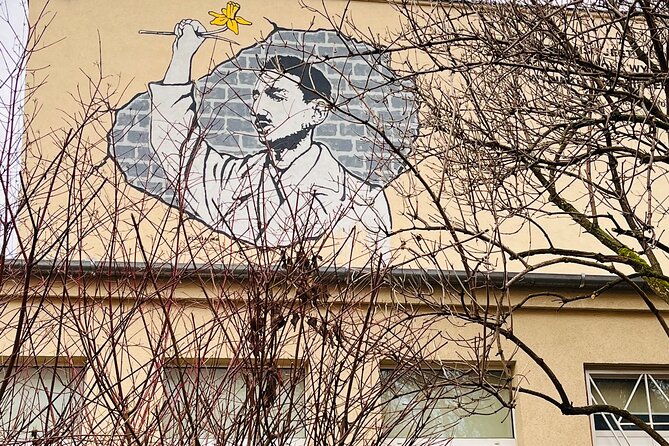
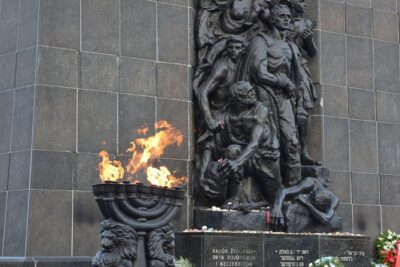
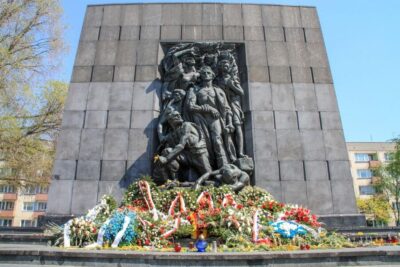
Next you’ll reach the Warsaw Ghetto commemorative area at the Polin Museum square, featuring the Monument to the Ghetto Heroes. One of the most striking details here is the practice of Varsovians placing daffodils at commemorations marking the anniversary of the Ghetto Uprising.
This is the kind of place where the guide’s words matter. Monuments can feel fixed and silent. With context, you understand the timeline behind them and what people continue to do in front of them. It stops being only “a statue.” It becomes a living ritual of remembrance.
The stop is about 30 minutes with free entry, which tells you how important this part is. You’ll likely linger because the guide connects the uprising’s meaning to the city’s later relationship with memory—how Warsaw keeps returning to these stories.
Mila 18 and Mordechaja Anielewicza: the uprising remembered in geography
After that, you’ll visit Mordechaja Anielewicza at the Anielewicz Mound near Mila 18. Anielewicz was the leader of the Warsaw Ghetto Uprising, and the mound commemorates the deaths of the uprising’s leaders.
This is one of the most emotionally direct stops. The ground is part of the message here, not just background. You’re standing at a commemorative site tied to leadership and the cost of resistance—made tangible in a specific location.
The stop is about 30 minutes with free entry. That time length is crucial. It lets the guide connect Anielewicz to the broader story without turning it into a quick hit of names. You’ll leave with a clearer sense of why the uprising is remembered the way it is: not only for tragedy, but for choice, courage, and the limits of what people could do under brutal conditions.
If you’re the type who likes to ask questions, this is also where you can get the most useful explanations. A good guide can steer those questions toward understanding rather than overload.
Umschlagplatz and Willy Brandt: facing deportation and honoring victims
Next is Umschlagplatz, marked as the departure point for Jews transported to Treblinka Extermination Camp, where around 300,000 Jewish people died. It’s a small place in physical size, but huge in historical weight.
Right after that, you’ll also visit the Pomnik Willy’ego Brandta. It’s a memorial to Willy Brandt’s tribute to the murdered Jews of Warsaw and all victims of World War II.
This pairing works well. Umschlagplatz forces you to look at the mechanics of deportation—the place where lives were sent away. Brandt’s memorial then widens the frame to how later generations honored the victims and remembered the crime.
Umschlagplatz is about 15 minutes. The Brandt memorial stop is also about 15 minutes, and entry is listed as free. Even with the shorter time blocks, the guide’s commentary makes these moments feel complete, not rushed.
Practical note: this is where you may want a moment to step back mentally. If you’re using the tour as your main history encounter in Warsaw, this is the part you’ll likely think about for days afterward. It’s not light, but it’s honest.
Price and logistics: is $112.43 worth it?
Let’s talk value in plain terms. $112.43 per person for roughly 2.5 hours includes a certified guide and a route that hits multiple cornerstone locations for the Warsaw Ghetto story. The group cap of 10 matters more than you might think. Small groups keep the tour from turning into a lecture, and it gives room for questions.
Also, many of the stops are listed as free admission, which helps you avoid the “hidden cost” problem. You’re paying primarily for interpretation and guidance—how to read the sites and connect them to the bigger story.
You’ll want to weigh this against self-guided sightseeing. If you like reading on your own and you already have strong background, you can absolutely do parts independently. But if you want a coherent storyline and clear explanations at each stop, this price becomes more reasonable fast.
One extra practical detail: the tour ends at Willy Brandt Square, and you’ll get recommendations for where to go for coffee in the neighborhood. Coffee is not included, but you get help finding a place afterward—useful when you’re finishing your tour with heavy thoughts and want something normal.
Who this tour is best for (and who should consider another plan)
This experience is best for you if you:
- Want a structured walk through major Warsaw ghetto memory sites in English
- Like learning on your feet, not only in museums
- Appreciate guides who balance facts with empathy and clarity
You might want to consider a different plan if:
- You have mobility or walking challenges, since it’s not recommended for those situations
- You’re looking for something strictly “touristy” or light-hearted. This is an emotionally serious route.
That said, it’s not designed to be chaotic or overwhelming in format. The pacing is manageable, and the route is built with short and longer stops so you’re not constantly rushing.
Tips to get the most from the walk
A few small things help a lot:
- Bring a layer for weather. You’ll spend real time walking between stops.
- Wear shoes that you trust for uneven sidewalks and sustained walking.
- If something hits you hard at a memorial, it’s okay to slow down. The tour gives you time at key sites, and you’ll get more out of it if you let meaning take its time.
- Use the end-of-tour coffee suggestions. It’s a simple way to reset your head while staying close to where you’ve been learning.
Should you book this Warsaw Jewish Ghetto tour?
If you want one high-impact, coherent introduction to the Warsaw Ghetto story, I think this is a strong choice. The small group size, the certified guide Mona, and the carefully chosen mix of documentary context, street-life location, park contrast, and major memorial sites make it feel both educational and deeply human.
Book it if you’re ready for an emotionally honest walk and you want help understanding the geography of memory. Skip it only if walking is a problem for you, or if you’re looking for something light. Otherwise, this is the kind of tour that leaves you with knowledge you can actually place in your mind—street by street, monument by monument.
FAQ
What language is the tour offered in?
The tour is offered in English.
How long is the experience?
It lasts about 2 hours 30 minutes.
Where does the tour start and end?
It starts at the Monument of Slowackiplac Bankowy (00-142 Warszawa) and ends at Willy Brandt Square, near Skwer Willy’ego Brandta and Mordechaja Anielewicza (01-999 Warszawa).
Is admission included for the stops?
Admission is listed as free for each of the listed stops.
What is included in the price?
A certified guide is included.
Is coffee or tea provided?
No, coffee and/or tea is not included.
How big is the group?
The tour has a maximum of 10 travelers.
Is it accessible for people with mobility issues?
It is not recommended for travelers with mobility or walking problems.
What is the cancellation policy?
You can cancel for a full refund up to 24 hours before the experience starts.
More Tour Reviews in Warsaw
- Warsaw: Chopin Concert in the Old Town
★ 4.8 · 2,287 reviews - Warsaw: Traditional Galar Cruise on The Vistula River
★ 4.6 · 1,640 reviews - Warsaw: Old Town Highlights Walking Tour in English
★ 4.7 · 1,516 reviews - Warsaw Concert: Chopin – Painted by Candlelights with Wine
★ 4.8 · 1,442 reviews
More of Jewish Warsaw and POLIN
- Warsaw: POLIN Museum of the History of Polish Jews Ticket
★ 4.7 · 1,142 reviews - Warsaw: Jewish History Guided Walking Tour in English
★ 4.7 · 324 reviews - Private Tour: Warsaw’s Jewish Heritage by Retro Fiat
★ 5.0 · 208 reviews - Warsaw: Ghetto, Jewish Cemetery & POLIN Museum Private Tour
★ 4.8 · 132 reviews
Fresh on the site: newer Warsaw reviews


Jewish Warsaw, Ghetto & POLIN: the other contenders.
 ★ 4.7POLIN Museum of the History of Polish Jews TicketFrom $121,142 reviews
 ★ 4.7Jewish History Guided Walking Tour in EnglishFrom $26324 reviews
 ★ 5.0Private Tour: Warsaw’s Jewish Heritage by Retro FiatFrom $108208 reviews
 ★ 4.8Ghetto, Jewish Cemetery & POLIN Museum Private TourFrom $112132 reviews
 ★ 4.7Jewish Heritage & Holocaust Walking TourFrom $20119 reviews
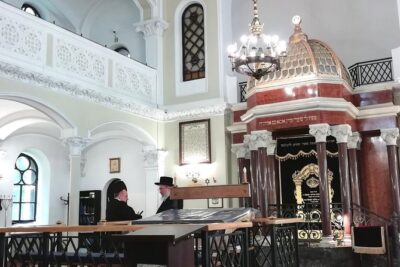 ★ 5.0Tour of the Warsaw GhettoFrom $102119 reviews
 ★ 5.0Historical Walking Tour of Jewish WarsawFrom $2868 reviews
 ★ 4.9Jewish Heritage 4-Hour Private TourFrom $4226 reviews
Browse the lists this tour appears in