
Reviewed · JEWISH WARSAW, GHETTO & POLIN
Jewish Legacy in Warsaw. Private Tour with the best local specialist.
Warsaw remembers in stone and street corners. This private tour threads Jewish legacy landmarks together, from the Old Town’s surviving synagogue to the transport sites and uprising memorials. You’ll also get a swing through Praga for the Roman Polański The Pianist filming-area streets, with an optional villa stop.
I like how the small private group format (up to 3 people) makes it easier to ask questions without feeling rushed. I also like the tight, logical route, where each stop explains what came next. One drawback to consider: it uses pickup across Warsaw, and there has been at least one reported instance where the guide did not show up on time, though the booking was refunded quickly.
In This Review
- Key highlights at a glance
- Private, 9:00am pickup: what you’re paying for (and getting)
- Nożyk Synagogue: starting with what survived
- POLIN Museum: getting the bigger picture before walking the streets
- Ghetto Wall Fragment and Umschlagplatz: where evidence and deportation meet
- Mila 18 bunker and the Heroes monuments: resistance, hiding, and memory
- Chłodna Street footbridge and Praga film streets: history plus cinematic Warsaw
- Why this route works: a story you can follow in order
- Should you book this Jewish Legacy in Warsaw tour?
- FAQ
- What is the meeting time for the tour?
- Do you get pickup in Warsaw?
- How many people are in the private group?
- What is the price?
- What language is the tour offered in?
- Is there a mobile ticket?
- Are service animals allowed?
- What are the main stops on the route?
- Is the villa visit in Praga included automatically?
- What is the cancellation window?
- How far in advance do people typically book?
Key highlights at a glance
- Pickup across Warsaw at 9:00 am so you can skip the stress of meeting points
- Nożyk Synagogue as a major starting anchor in the story, with a 20-minute stop
- POLIN Museum with time for a quick, guided look inside (50 minutes total)
- Ghetto remains you can stand next to including a surviving wall fragment and the Umschlagplatz transport area
- Mila 18 bunker and the uprising story with a 20-minute stop at the largest ghetto bunker site
- Chłodna Street plus Praga film locations including an optional villa visit depending on your interest
Private, 9:00am pickup: what you’re paying for (and getting)
This is a private tour for groups of up to 3, priced at $361.23 per group. That works out to about $120 per person if you’re maxed at three, but it rises if you come solo. The value is that you’re buying time with a local specialist and a route that hits the key physical sites without the drag of a large group.
The tour starts at 9:00 am, and you’ll get pickup from around Warsaw, which is a big deal if you don’t want to fight public transit early. You also get a mobile ticket, and the tour is offered in English. Service animals are allowed, and it’s set up so most people can participate.
One practical note: the tour has an overall rating of 4.6 from 9 reviews. That suggests the experience usually lands well, but there is at least one clear warning sign from a past booking about a guide failing to show on time. If timing is a big deal for you, keep the pickup instructions handy and confirm you’re reachable the morning of the tour.
Further into Jewish Warsaw, the Ghetto and POLIN
- Warsaw: POLIN Museum of the History of Polish Jews Ticket★ 4.7 · 1,142 reviews
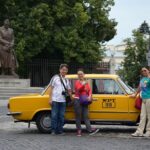
- Private Tour: Warsaw’s Jewish Heritage by Retro Fiat★ 5.0 · 208 reviews
- Warsaw: Ghetto, Jewish Cemetery & POLIN Museum Private Tour★ 4.8 · 132 reviews
Nożyk Synagogue: starting with what survived
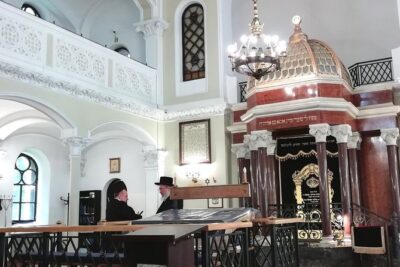
Your first stop is Nożyk Synagogue on Twarda 6, with about 20 minutes here. The reason this place matters is plain and powerful: it’s described as the oldest existing synagogue in Warsaw, and—critically—the Nazis did not destroy it because of its location and usefulness late in the ghetto period.
What I like about starting here is that it grounds the day in something physical that still works as a real-world landmark. It’s not only a memorial; it’s a functioning sign of Jewish religious life that endured. You’re not beginning with tragedy first—you begin with continuity and survival, then the rest of the route explains how the city’s Jewish story was broken and rebuilt.
The main consideration is time. 20 minutes is enough to understand why the building matters, but it won’t be enough if you want a slow, architecture-focused visit. If you’re the type who loves details, you’ll want to bring questions—this is the kind of stop where a good specialist can help you notice what to look for fast.
POLIN Museum: getting the bigger picture before walking the streets
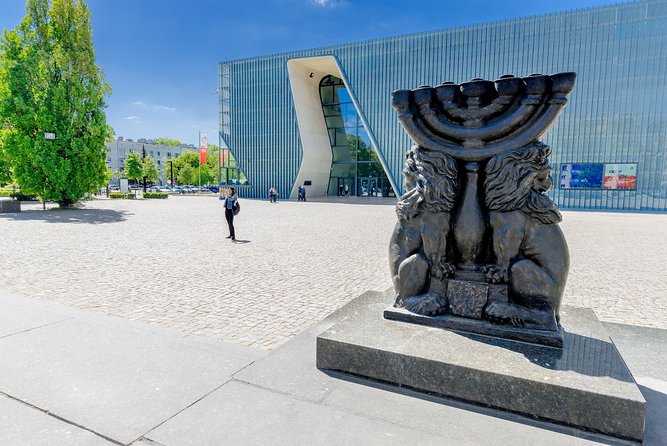
Next is POLIN Museum of the History of Polish Jews, at ul. Mordechaja Anielewicza 6. You’ll get about 50 minutes total, including time at the museum area and a quick look inside the interior design.
This museum stop is valuable because the rest of the day is mostly outdoors and site-based. A museum context helps you connect names, dates, and concepts to the places you’re about to stand in front of. The tour also frames POLIN as a major place for Jewish legacy in Poland—an early and influential effort to present the subject in a wide, proper perspective.
Here’s the tradeoff: the museum time is not a long, full exhibition experience. With only about 50 minutes, you’re getting a guided orientation rather than a deep, hour-by-hour read of every gallery. If you’re a museum-first person, you might feel this section is short; if you’re a street-and-sites person, it’s a smart setup that keeps the day from feeling random.
If you want to maximize this stop, it helps to decide in advance what you care about most—daily life, persecution, resistance, or post-war memory—then listen closely for what the guide points out.
Ghetto Wall Fragment and Umschlagplatz: where evidence and deportation meet
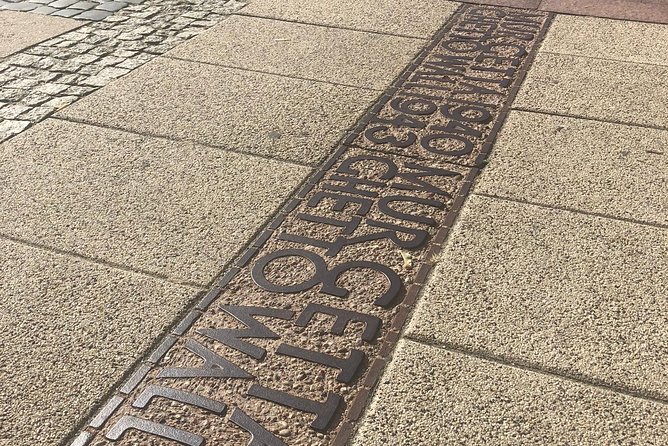
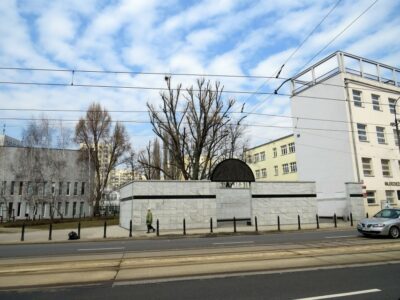
The tour then moves to a surviving piece of the ghetto’s physical edge: a fragment of ghetto wall on ul. Zlota 60, with about 20 minutes. This is described as the only remaining fragment of the largest Jewish ghetto that ever existed. It’s also noted as officially recognized by Chaim Herzog in 1992, and it’s visited by thousands each year.
Standing near a wall fragment like this changes how you understand the story. Words can feel abstract; walls are not. This kind of stop forces scale on you: boundaries were not symbolic. They were physical, enforced, and used to control movement.
After that comes Umschlagplatz (the “cargo railroad terminal”) at the corner of Stawki and Dzika, again about 20 minutes. This is the place where Jews were taken to the Treblinka death camp. The power of Umschlagplatz is that it connects the ghetto to the machinery of deportation—an ugly bridge between confinement and mass murder.
The practical caution here is emotional. Expect the day to get heavy. You’ll likely do a fair amount of standing and walking. If you know you’re sensitive to sites tied to genocide, plan a slower pace for the rest of Warsaw later in the day, so this doesn’t swallow your entire schedule.
Mila 18 bunker and the Heroes monuments: resistance, hiding, and memory
You’ll visit the Memorial at Mila 18, at the corner of Mila and Dubois, for about 20 minutes. This is described as the largest bunker in the Jewish ghetto in Warsaw. It was the place where uprising leader Mordechaj Anielewicz and nearly 30 other members of the Jewish fighting organization would hide from the Nazis.
This stop is one of the strongest “story turns” on the route. After you’ve seen the transport reality at Umschlagplatz, Mila 18 adds another dimension: resistance and organization, even when the odds were impossible. It shifts the day from only survival-by-time to survival-by-choice.
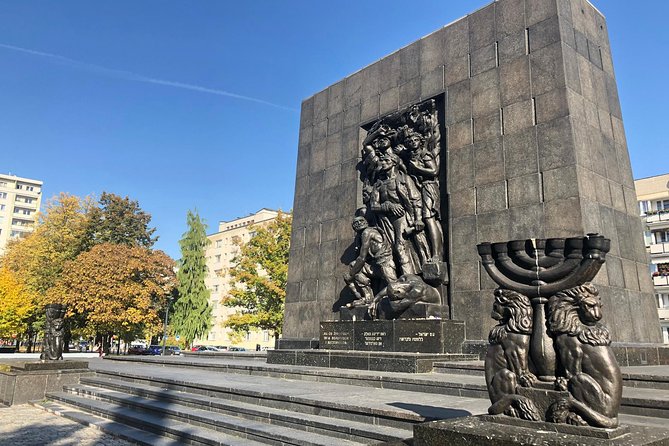
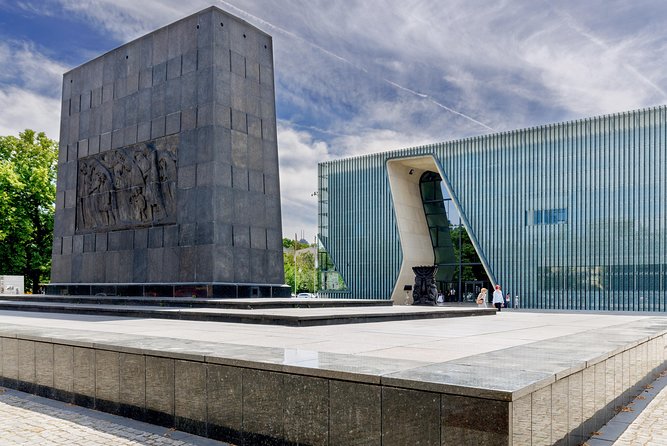
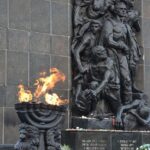
Then you head to the Monument to the Heroes of Warsaw on Nowy Przejazd for about 50 minutes. This monument is described as devoted to the memory of the Jews who went through the nightmare of the ghetto. There’s also a pass-by for Pomnik Willy’ego Brandta near POLIN, tied to the famous gesture of reconciliation—Brandt’s kneeling act symbolizing apology and acknowledgment of Jewish suffering.
One thing to consider: 50 minutes at a major memorial can feel long if you want lots of movement. But for many people, that extra time is precisely what makes the site sink in. It’s not a photo stop; it’s a thinking stop.
Just your group: more private Warsaw tours

Chłodna Street footbridge and Praga film streets: history plus cinematic Warsaw
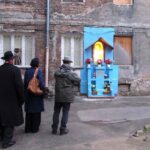
After the memorial focus, you’ll spend about 10 minutes at Chłodna Street (ul. Chłodna). This includes a footbridge that linked a smaller ghetto section with the larger ghetto area. The tour frames it as the liveliest area of the ghetto and also the most dangerous—a sharp reminder that activity and danger often lived side by side.
Even with only 10 minutes, this stop helps you understand how people tried to keep life moving within oppressive conditions. It’s a reminder that the ghetto wasn’t only a place of confinement; it was also a place where daily movement and survival required constant navigating.
Finally, you reach Praga Północ around ul. Ząbkowska for about 40 minutes. Here you’ll see streets associated with Roman Polański’s filming of The Pianist. There’s also an optional villa visit related to the book The Zoo Keeper’s Wife, depending on your interest.
I like this closing section because it gives you a different angle on Warsaw: not only memorial geography, but how later generations have used the city as a stage for remembrance. The option is key—if you’re more focused on the strictly Jewish legacy sites, you can treat this as a lighter chapter; if you’re into film history or storytelling, it adds another layer.
Why this route works: a story you can follow in order
What makes this tour feel satisfying is how the sites build on each other. You start with a surviving synagogue landmark, then you get museum context, then you move into the ghetto’s remaining physical traces. From there, the route tightens toward the mechanism of deportation at Umschlagplatz and the uprising and hiding at Mila 18. Then memory expands again with major monuments, and finally you end with street-level Warsaw via Praga and the The Pianist filming areas.
That sequencing matters because it prevents the common problem of seeing “a list of sad places” without the connecting thread. You leave each stop with the sense of what comes next—religious life, forced confinement, physical boundaries, deportation logistics, resistance, and then remembrance.
If you want to get the most out of it, go in with one small goal: pick the one theme you want to track through the day—survival, resistance, or how the Nazis controlled movement—and let that theme guide your attention at each stop. Your specialist’s job is to make the transitions make sense; your job is to listen for the links.
Practical tip: wear comfortable shoes. The day includes multiple sites with short durations, and you’ll spend time standing outside during heavier stops.
Should you book this Jewish Legacy in Warsaw tour?
If you want a private Jewish legacy route that hits the major Warsaw ghetto landmarks in one morning, this is a strong fit. The combination of POLIN context, the surviving wall fragment, Umschlagplatz, and the Mila 18 uprising memorial gives you a coherent arc without needing to plan multiple separate visits.
Book it if:
- you’re traveling in a small group (up to 3) and want personal pacing
- you like guided transitions from one site to the next
- you want the Praga film streets option at the end without committing to it
Consider booking something else (or adjusting expectations) if:
- you want a full museum immersion day, because POLIN here is a quick orientation
- you’re extremely strict about punctuality and hate pickup-based coordination risks, given the one reported guide non-show issue
My bottom line: for the price, you’re buying a focused, story-driven morning with pickup convenience and a route built around real locations. Just go in with eyes open about the realities of meeting logistics, and you’ll get a day that’s both moving and organized.
FAQ
What is the meeting time for the tour?
The tour starts at 9:00 am.
Do you get pickup in Warsaw?
Yes. Pickup is offered and the provider picks up guests from around Warsaw.
How many people are in the private group?
It’s a private tour for up to 3 people per group.
What is the price?
The price is $361.23 per group (up to 3).
What language is the tour offered in?
The tour is offered in English.
Is there a mobile ticket?
Yes, a mobile ticket is included.
Are service animals allowed?
Yes, service animals are allowed.
What are the main stops on the route?
Key stops include Nożyk Synagogue, POLIN Museum, a fragment of the Ghetto Wall, Umschlagplatz, the Memorial at Mila 18, the Monument to the Heroes of Warsaw, Chłodna Street, and Praga Północ film-location streets with an optional villa visit.
Is the villa visit in Praga included automatically?
The villa visit is optional and depends on your interest.
What is the cancellation window?
Free cancellation is available up to 24 hours before the experience’s start time for a full refund.
How far in advance do people typically book?
The experience is booked on average about 9 days in advance.
More Tours in Warsaw
- Warsaw: Old Town Highlights Walking Tour in English
★ 4.7 · 1,516 reviews - Warsaw: City Sightseeing Hop-On Hop-Off Bus Tour
★ 3.6 · 1,415 reviews - Warsaw: Polish Vodka Museum Tour with Tasting
★ 4.6 · 788 reviews - 3-Hour Guided Cycling Tour of Warsaw
★ 4.9 · 624 reviews
More Tour Reviews in Warsaw
- Warsaw: Chopin Concert in the Old Town
★ 4.8 · 2,287 reviews - Warsaw: Traditional Galar Cruise on The Vistula River
★ 4.6 · 1,640 reviews - Warsaw: Old Town Highlights Walking Tour in English
★ 4.7 · 1,516 reviews - Warsaw Concert: Chopin – Painted by Candlelights with Wine
★ 4.8 · 1,442 reviews
More of Jewish Warsaw and POLIN
- Warsaw: POLIN Museum of the History of Polish Jews Ticket
★ 4.7 · 1,142 reviews - Warsaw: Jewish History Guided Walking Tour in English
★ 4.7 · 324 reviews - Private Tour: Warsaw’s Jewish Heritage by Retro Fiat
★ 5.0 · 208 reviews - Warsaw: Ghetto, Jewish Cemetery & POLIN Museum Private Tour
★ 4.8 · 132 reviews
Fresh on the site: newer Warsaw reviews

Jewish Warsaw, Ghetto & POLIN: the other contenders.
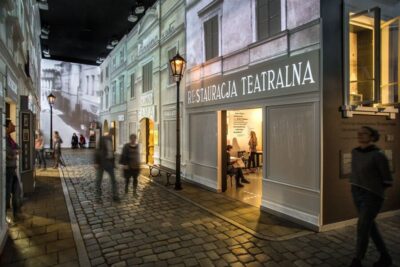 ★ 4.7POLIN Museum of the History of Polish Jews TicketFrom $121,142 reviews
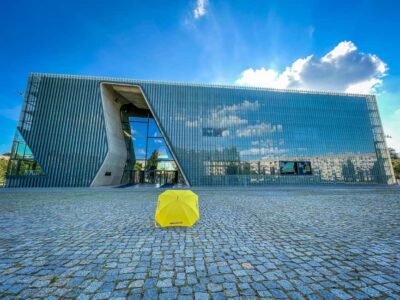 ★ 4.7Jewish History Guided Walking Tour in EnglishFrom $26324 reviews
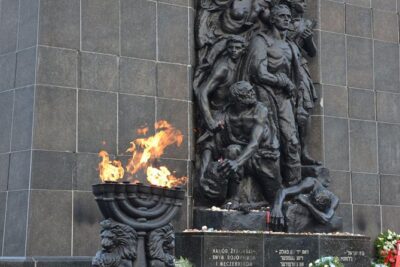 ★ 5.0Private Tour: Warsaw’s Jewish Heritage by Retro FiatFrom $108208 reviews
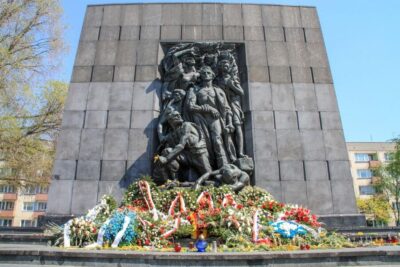 ★ 4.8Ghetto, Jewish Cemetery & POLIN Museum Private TourFrom $112132 reviews
 ★ 4.7Jewish Heritage & Holocaust Walking TourFrom $20119 reviews
 ★ 5.0Tour of the Warsaw GhettoFrom $102119 reviews
 ★ 5.0Historical Walking Tour of Jewish WarsawFrom $2868 reviews
 ★ 4.9Jewish Heritage 4-Hour Private TourFrom $4226 reviews
Browse the lists this tour appears in