
Reviewed · JEWISH WARSAW, GHETTO & POLIN
Private tour: Jewish heritage in Warsaw
A name you should know: Muranów. This private guided walk turns Warsaw’s Jewish heritage into something you can actually see, from ghetto-era remnants to commemorations tied to the 1943 uprising. You’ll cover the Muranów district and major memorial points with a guide who can answer questions as you go, not just recite dates.
I love how the route leans into the city’s “present meets past” feel, especially at Cinema Muranów, where street art adds context without turning the topic into a lecture. I also like that the tour hits the big, emotionally heavy sites—like Umschlagplatz—so you leave with a clear sense of what happened there and why it matters now.
One thing to plan for: Nozyk Synagogue requires an extra ticket cost, since it’s not included in the tour price.
In This Review
- Key points to know before you go
- Entering Warsaw’s Jewish Muranów district on foot
- Cinema Muranów: where street art carries memory
- Monuments to the Ghetto Heroes: the uprising’s starting point
- Umschlagplatz memorial: understanding deportation by standing there
- Fragment of the ghetto wall: a hidden piece you have to find
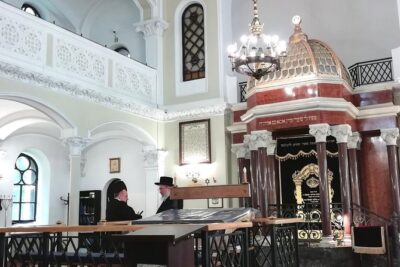
- Nozyk Synagogue: the only surviving wartime synagogue in Warsaw
- Private tour price: what $161.95 buys for up to 10
- Meeting point, timing, and how to plan your walk
- Who this tour fits best
- Book it? A quick decision guide
- FAQ
- How long is the Private tour: Jewish heritage in Warsaw?
- Is this a private tour, and how many people are in a group?
- How much does the tour cost?
- Do I need to buy tickets during the tour?
- Where do I meet and where does the tour end?
- Is the tour ticket mobile?
- What is the cancellation policy?
- Is the tour accessible for everyone?
Key points to know before you go
- Private group format: up to 10 people, so you can ask questions and move at a pace that fits your group.
- Ghetto uprising focus: you visit the place where the uprising began, plus the key deportation-linked sites afterward.
- Street art you might miss: the tour includes street art commemorating people who lived in the area.
- Real physical traces: you see fragments of the ghetto wall hidden in a backyard setting.
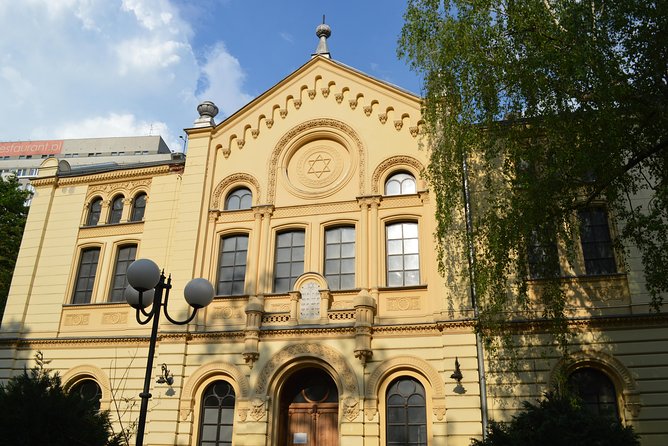
- One synagogue that survived: Nozyk Synagogue is the only synagogue reported to have survived WWII in Warsaw.
- Mobile ticket: no paper scramble on the day.
Entering Warsaw’s Jewish Muranów district on foot
Warsaw’s Jewish history can feel like it lives in museums and textbooks. This tour does something smarter: it plants you right on the ground where the story unfolded. You’re walking through Muranów, the district built on the ruins of the Warsaw ghetto, and the guide links what you see today to what happened before.
This is a great match for people who want more than a highlight reel. You get famous landmarks, yes, but you also get the smaller, less obvious corners—especially where street art marks memory in a way that looks more like the city talking to you than the city giving a speech.
Because it’s private, your group can pause and ask follow-ups. That matters here. A topic like this invites real questions about timeline, geography, and how different institutions changed over time.
Further into Jewish Warsaw, the Ghetto and POLIN
- Warsaw: POLIN Museum of the History of Polish Jews Ticket★ 4.7 · 1,142 reviews
- Private Tour: Warsaw’s Jewish Heritage by Retro Fiat★ 5.0 · 208 reviews
- Warsaw: Ghetto, Jewish Cemetery & POLIN Museum Private Tour★ 4.8 · 132 reviews
Cinema Muranów: where street art carries memory
The tour starts at Kino Muranów (Gen. W. Andersa 5). This stop is scheduled for about 40 minutes, and admission is free, which is a nice start when you want to spend your time on the storytelling rather than ticket lines.
The key idea at Cinema Muranów is how it helps you read the district. You’re in Muranów, built on the ruins of the Warsaw ghetto, and the guide points out how the modern layout connects back to the past. The street art plays an important role here. It’s not just decoration—it commemorates people who used to live here, most of whom were Polish Jews.
Why this stop is valuable: it sets the emotional and historical “lens” for the rest of the walk. After this, the monuments and memorial sites won’t feel like random points on a map. They’ll feel like chapters in one story.
Possible drawback: because it’s an early stop and a longer one, it may set the tone quickly. If your group is sensitive to history that moves fast, you might want to start with a slower pace and let the guide know you’d like extra context before moving on.
Monuments to the Ghetto Heroes: the uprising’s starting point
Next up is the Pomnik Bohaterów Getta (Monuments to the Ghetto Heroes), about 20 minutes with free admission. This is one of the most important places on the route because it’s tied to the moment when the ghetto uprising began.
Here, you’re not just looking at a monument. The guide explains what took place around 1942 and 1943—including deportations to Treblinka and the heroic fight of the Jewish insurgents against the Nazis. That pairing matters. You see the place, then you understand why it became a symbol of resistance and survival under extreme pressure.
Practical tip: this is a good stop to ask questions if you’re trying to understand the sequence of events. If you only remember one thing from this day, it should be the link between deportations and resistance—because the timeline is what turns tragedy into history with structure.
Time note: the stop is short, but that’s typical for street memorial points. If your group wants more time here, your private format is your advantage—ask, and your guide can often adjust.
Umschlagplatz memorial: understanding deportation by standing there
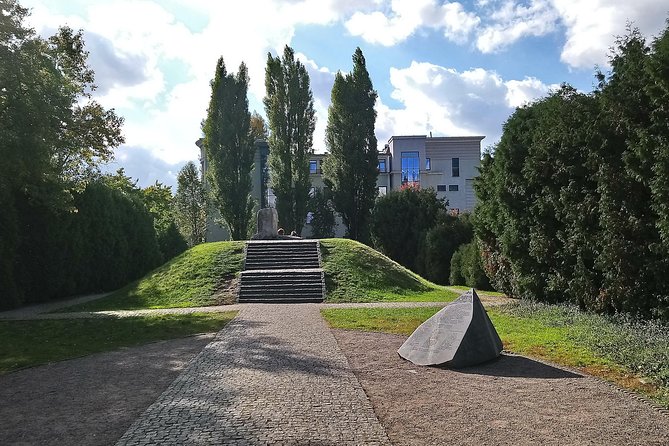
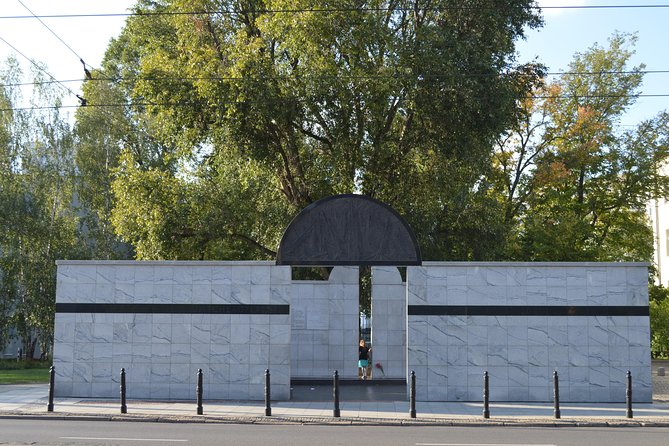
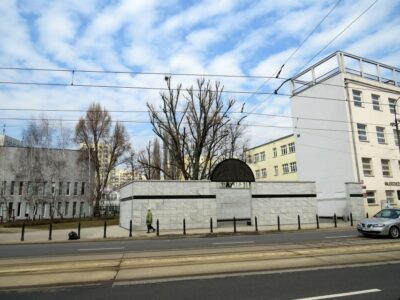
After that, you move to Umschlagplatz, another 20-minute stop with free admission. This is where thousands were deported to Treblinka in 1942, and today there’s a memorial space.
What I like about this stop is that it’s both specific and grounded. You’re given the historical meaning—Umschlagplatz as a deportation site—then you’re physically in a place designed to help you process it. Memorials work best when they don’t feel abstract, and that’s the strength here.
What to do as you’re there: take a slow scan of the space and let the guide’s explanation land before you start walking again. This isn’t the kind of stop you can “speed-run” and still feel like you got the point.
Possible drawback: this is emotionally heavy ground. If your group prefers lighter pacing, you can request a short pause or a quick moment to step back while still staying respectful.
Fragment of the ghetto wall: a hidden piece you have to find
One of the more surprising stops on the tour is the Fragment Of Ghetto Wall in a backyard. It’s scheduled for about 15 minutes and is free.
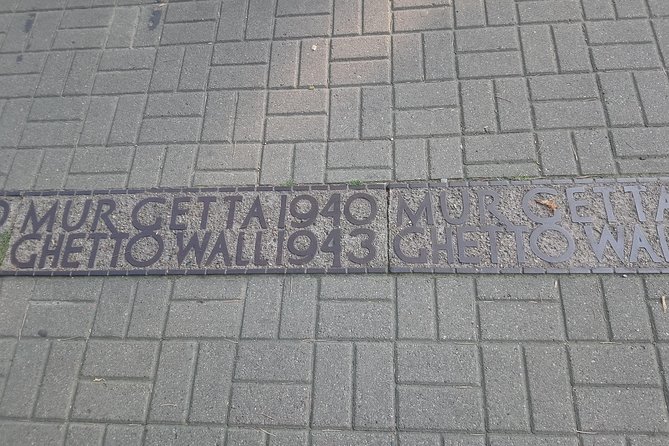
Instead of seeing one big, obvious landmark, you see two fragments of the ghetto wall tucked away in a backyard setting. That “hidden” quality changes the feel of the experience. It’s a reminder that the ghetto’s physical traces didn’t all get preserved in a single museum-like display. Some of what remains exists in more ordinary, local spaces—where you’d never look unless someone pointed you toward it.
Why this matters for you: it helps you understand the city as layered. Warsaw didn’t erase everything. It rebuilt around what it couldn’t fully undo, and some evidence of the ghetto still sits in place, even if it’s not always visible from the sidewalk.
Practical note: because this portion is shorter, it’s a moment to pay close attention. If you’re the type who takes photos constantly, consider slowing down for this one so you actually absorb what you’re seeing.
More of Warsaw and its long history




Nozyk Synagogue: the only surviving wartime synagogue in Warsaw
The last major historical stop is Nozyk Synagogue, about 15 minutes. The tour data notes that admission is not included, so you should expect to pay an additional ticket at the site.
Nozyk Synagogue is described as the only synagogue that survived WWII in Warsaw. That alone makes it a meaningful finish, because the tour has moved through memorials and fragments of what’s left. This stop shifts the focus from aftermath to endurance—one building that made it through when so much did not.
How to get the most from the visit: if you have any interest in religious community life beyond the war years, this is where you’ll likely want to ask questions. A short stop can still feel “complete” if you’re guided to the right details—what survived, why it mattered, and what role the synagogue plays in the story today.
Possible drawback: it’s a brief stop and the ticket is extra. If your group expects a long, in-depth synagogue visit, you may want to plan time to return later on your own.
Private tour price: what $161.95 buys for up to 10
The tour costs $161.95 per group for up to 10 people, lasting about 2 hours 30 minutes. Put that in plain terms: this is good value when you’re splitting cost with friends, a family group, or a small circle who wants one guide to cover multiple stops without sharing your experience with strangers.
If you’re traveling solo, the price might feel steep compared to a standard group walk. But the private format has a real payoff here: you can ask questions at each memorial point and keep the story coherent instead of breaking your attention between different guide styles.
Also worth factoring in: you’ll get multiple free-admission stops (the first four are listed as free), plus one paid site at the end (Nozyk Synagogue). So the money mostly goes toward guiding time, context, and keeping the flow of the route understandable.
A planning note: this tour is often booked around 63 days in advance. If you’re visiting in peak season or on a weekend, I’d book earlier rather than hoping for last-minute availability.
Meeting point, timing, and how to plan your walk
You’ll start at Kino Muranów (Gen. W. Andersa 5, 00-147 Warszawa) and end at Plac Grzybowski (Pl. Grzybowski). The tour is listed as about 2 hours 30 minutes, so you should treat it as a serious walking-and-standing itinerary, not a casual stroll that includes long sit-down breaks.
The tour uses a mobile ticket, which keeps day-of stress low. It’s also noted as near public transportation, which helps if you want to connect it with other plans in Warsaw afterward.
What to wear: comfortable shoes are a must. Even with shorter segments (15 to 40 minutes each), you’ll be standing at memorial points where it’s easy to feel stuck in place for a bit.
From a human standpoint, it’s also smart to plan for weather. One guide detail you may appreciate: the guide has shown flexibility about stopping for a cool drink in warm weather. That’s a good reminder to carry water if it’s hot and to dress for changing conditions.
Who this tour fits best
This private tour is best for you if:
- You want a clear, guided route through key Jewish heritage sites in Warsaw’s Muranów district.
- You care about understanding the timeline around the ghetto uprising and deportations, not just seeing monuments.
- You prefer a format where you can ask questions as you encounter emotionally significant places.
It’s also a strong choice if you’re traveling with a small group that wants shared learning without splitting up. And if you’re the type who enjoys street art and overlooked city details, the Cinema Muranów stop and the hidden wall fragments make the walk feel more like real Warsaw than a checklist.
Book it? A quick decision guide
I’d book this tour if you want a focused private walk that connects the dots across the ghetto uprising sites, deportation memorials, and the one surviving wartime synagogue in Warsaw. The structure makes it easier to understand what you’re seeing, and the private format makes it easier to ask questions when the topic gets complicated.
I’d think twice only if your group wants a longer museum-style experience at each stop, or if you’re not comfortable with heavy historical sites that include deportation context. In that case, you might still enjoy the walk, but you’d want to pace your day and build in quiet time afterward.
Overall, it’s a solid value for the money when shared among a small group, and it’s one of those tours where the city itself does the explaining—your guide just helps you read it.
FAQ
How long is the Private tour: Jewish heritage in Warsaw?
It’s approximately 2 hours 30 minutes.
Is this a private tour, and how many people are in a group?
Yes. It’s private, and the group size is up to 10 people.
How much does the tour cost?
The price is $161.95 per group (up to 10).
Do I need to buy tickets during the tour?
Admission is listed as free for Cinema Muranów, Pomnik Bohaterów Getta, Umschlagplatz, and the Fragment of Ghetto Wall. Nozyk Synagogue admission is not included.
Where do I meet and where does the tour end?
You start at Kino Muranów, Gen. W. Andersa 5, Warszawa, and the tour ends at Plac Grzybowski, Pl. Grzybowski, Warszawa.
Is the tour ticket mobile?
Yes, you’ll have a mobile ticket.
What is the cancellation policy?
You can cancel for a full refund up to 24 hours before the experience starts. If you cancel less than 24 hours before start time, the amount paid won’t be refunded.
Is the tour accessible for everyone?
Most people can participate. Service animals are allowed, and it’s near public transportation.
More Tours in Warsaw
- Warsaw: Old Town Highlights Walking Tour in English
★ 4.7 · 1,516 reviews - Warsaw: City Sightseeing Hop-On Hop-Off Bus Tour
★ 3.6 · 1,415 reviews - Warsaw: Polish Vodka Museum Tour with Tasting
★ 4.6 · 788 reviews - 3-Hour Guided Cycling Tour of Warsaw
★ 4.9 · 624 reviews
More Tour Reviews in Warsaw
- Warsaw: Chopin Concert in the Old Town
★ 4.8 · 2,287 reviews - Warsaw: Traditional Galar Cruise on The Vistula River
★ 4.6 · 1,640 reviews - Warsaw: Old Town Highlights Walking Tour in English
★ 4.7 · 1,516 reviews - Warsaw Concert: Chopin – Painted by Candlelights with Wine
★ 4.8 · 1,442 reviews
More of Jewish Warsaw and POLIN
- Warsaw: POLIN Museum of the History of Polish Jews Ticket
★ 4.7 · 1,142 reviews - Warsaw: Jewish History Guided Walking Tour in English
★ 4.7 · 324 reviews - Private Tour: Warsaw’s Jewish Heritage by Retro Fiat
★ 5.0 · 208 reviews - Warsaw: Ghetto, Jewish Cemetery & POLIN Museum Private Tour
★ 4.8 · 132 reviews
Fresh on the site: newer Warsaw reviews


Jewish Warsaw, Ghetto & POLIN: the other contenders.
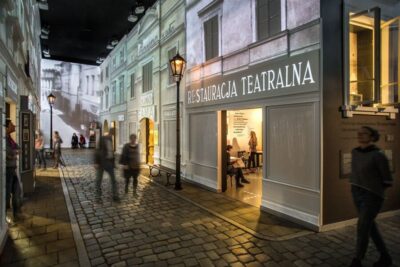 ★ 4.7POLIN Museum of the History of Polish Jews TicketFrom $121,142 reviews
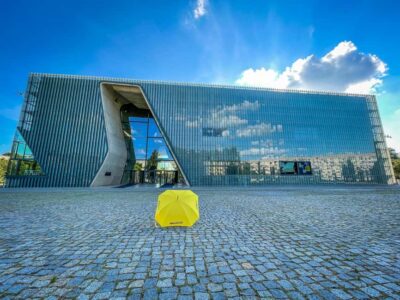 ★ 4.7Jewish History Guided Walking Tour in EnglishFrom $26324 reviews
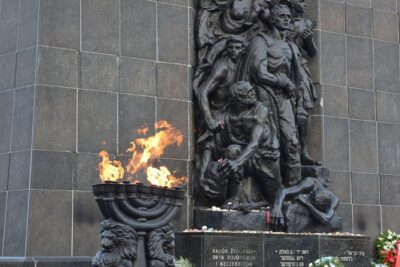 ★ 5.0Private Tour: Warsaw’s Jewish Heritage by Retro FiatFrom $108208 reviews
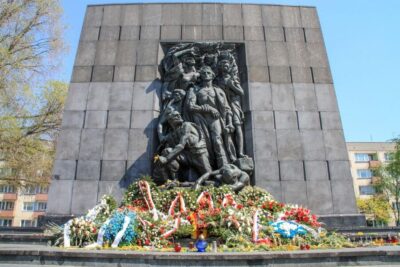 ★ 4.8Ghetto, Jewish Cemetery & POLIN Museum Private TourFrom $112132 reviews
 ★ 4.7Jewish Heritage & Holocaust Walking TourFrom $20119 reviews
 ★ 5.0Tour of the Warsaw GhettoFrom $102119 reviews
 ★ 5.0Historical Walking Tour of Jewish WarsawFrom $2868 reviews
 ★ 4.9Jewish Heritage 4-Hour Private TourFrom $4226 reviews
Browse the lists this tour appears in